Executive Overview
For international merchants eyeing expansion into the vast and lucrative United States retail market, the knee-jerk strategic playbook has historically pointed in one direction: Amazon. As the undisputed behemoth of American e-commerce, Amazon has long served as the default landing pad for foreign brands seeking scale, logistics infrastructure, and immediate access to high-intent shoppers.
However, the retail landscape is undergoing a structural evolution. Branded direct-to-consumer (DTC) e-commerce sites and hyper-dynamic social commerce ecosystems—most notably TikTok Shop—are rapidly emerging not merely as alternatives, but as superior launchpads for specific categories of goods.
Consider the modern trajectory of global e-commerce: cross-border merchants are discovering that while Amazon excels at capturing existing demand, it often struggles to manufacture emotional resonance. Conversely, social commerce platforms thrive on discovery, visual storytelling, and community-driven persuasion.
This shifting paradigm is perfectly illustrated by the journey of an international hair-care brand that chose to forgo the traditional Amazon-first route. Instead, it planted its flag in the fertile, albeit unpredictable, soils of Instagram, Shopify, and TikTok Shop. For two years, the brand engaged in unglamorous, iterative testing: partnering with micro-influencers, buying targeted ads, and fine-tuning affiliate structures with little immediate return.
Then came the inflection point: a single product video went viral. Sales skyrocketed 50-fold almost overnight, propelling the company past the coveted $1-million annual revenue milestone and drawing aggressive courtship from major domestic distributors.
Behind this headline-grabbing "overnight success" lies a masterclass in modern digital retail strategy—one defined by granular localization, micro-creator ecosystems, omnichannel synergy, and the relentless patience required to capture lightning in a bottle when it finally strikes.
Detailed Chronology: The Two-Year Build-Up to an Overnight Explosion
The anatomy of a viral retail success story is rarely born of blind luck. More often, it is the mathematical probability curve of preparation meeting opportunity.
When the anonymous international hair-care brand arrived in the United States market in 2021, its leadership team faced a crowded, hyper-competitive beauty landscape. Rather than sinking capital into costly traditional advertising or fighting for keyword supremacy on Amazon against entrenched domestic giants, the brand adopted a grassroots digital approach.
Phase One: Establishing the Infrastructure (2021–2022)
The company’s U.S. market entry began humbly on Instagram, quickly supplemented by a Shopify store to handle direct conversions and the emerging TikTok Shop infrastructure. With an average basket size of $59—a sweet spot for beauty and personal care items that balances impulse-buy accessibility with perceived premium quality—the brand set out to build its digital footprint.
For the first twenty-four months, progress was arduous. The company executed a textbook micro-influencer strategy:
- Identifying and gifting products to small, highly specialized creators.
- Purchasing localized ad placements to test audience reception.
- Pushing aggressive affiliate commission structures to incentivize creator-led sales.
For two solid years, nothing truly took off. Sales trickled in. The return on ad spend (ROAS) fluctuated, and the brand operated largely in the shadows of the broader American beauty market. Skeptics within the organization might have called for a pivot or a retreat. Yet, leadership maintained its course, focusing not on forcing virality—which is fundamentally impossible to script—but on perfecting the operational backend. They ensured their Shopify checkout was frictionless, their fulfillment logistics were watertight, and their content pipeline remained consistently active.
Phase Two: The Inflection Point
In late 2023, the compounding effect of dozens of small creators posting regularly finally breached the algorithm’s threshold. A seemingly routine product demonstration video—showcasing the immediate, tangible transformation of hair using the brand’s $59 formulation—began to circulate wildly across user feeds.
The algorithmic feedback loop took over. Within days, sales multiplied by a factor of 50. The brand’s existing infrastructure, meticulously stress-tested over the preceding two years, absorbed the sudden deluge of transactions without catastrophic fulfillment failures or customer service bottlenecks.
Phase Three: Scaling and Distribution
With annualized revenues quickly crossing the $1 million threshold, the brand transitioned from a scrappy digital experiment to a verified market player. The digital momentum did not go unnoticed; major U.S. distributors, traditionally hesitant to take chances on unproven foreign imports, initiated outreach. The brand had successfully de-risked its proposition through organic social validation, proving consumer demand before entering arduous negotiations with brick-and-mortar retail buyers.
Supporting Context & Metrics: The Mechanics of Modern Social Commerce
The success of this hair-care brand highlights several critical shifts in how international merchants must approach American consumers. Chief among these is the transformation of TikTok from an entertainment app into a formidable retail engine, particularly within the health and beauty sectors.

Why Health and Beauty Dominate Social Commerce
Beauty and personal care currently reign as TikTok Shop’s largest and most lucrative category. This is not accidental. Beauty products rely on a fundamental psychological and visual trigger: visible results on a real person, right now.
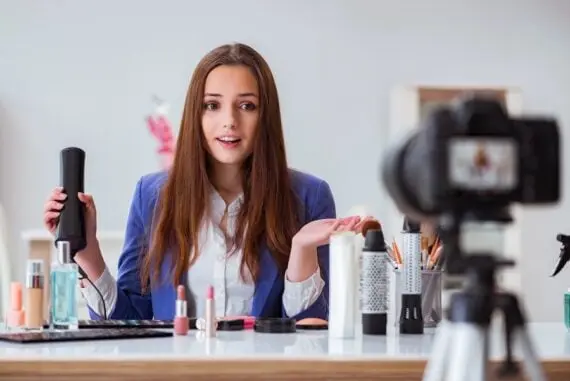
Consumers shopping for cosmetics, hair treatments, or skincare do not merely want to read a list of ingredients; they want to witness the transformation. When a creator with textured hair applies a $59 serum on camera and demonstrates an immediate, glossy transformation, the cognitive distance between desire and purchase collapses.
The Power of Niche and Localized Creators
A common pitfall for foreign brands entering the U.S. is the obsession with macro-influencers and celebrities. Big names come with exorbitant price tags, rigid contract terms, and audiences that are often broad and unengaged.
This brand took a radically different path, focusing exclusively on micro- and nano-creators—individuals with follower counts ranging from a few thousand to tens of thousands. These creators are inherently more accessible, highly flexible, and deeply trusted within their specific niches. Their endorsements read less like paid infomercials and more like genuine advice from a trusted friend, a licensed esthetician, or a hair-care specialist.
Furthermore, the brand unlocked a powerful, underutilized tactic: linguistic and cultural micro-targeting.
[Foreign Brand Market Entry]
       │
       ├──> Broad Macro-Influencers (High Cost, Low Trust) -> Avoided
       │
       └──> Niche Micro-Creators (High Trust, Flexible) -> Implemented
                 │
                 ├──> English-speaking beauty communities
                 ├──> Spanish-speaking U.S. melting pot demographics
                 └──> Russian- and Ukrainian-speaking immigrant enclaves
Recognizing that the United States is not a monolithic market but rather a mosaic of distinct language communities, the brand deliberately paired Spanish-speaking creators with Hispanic audiences, and Russian- and Ukrainian-speaking creators with their respective diaspora communities. Because TikTok’s recommendation algorithm naturally segments users based on linguistic and behavioral data, these localized campaigns achieved outsized engagement rates that broad-brush English campaigns failed to match.
The Omnichannel Halo Effect
One of the most persistent myths in modern retail is that digital channels operate in silos. Brands often debate whether to invest in TikTok, Amazon, or standalone DTC sites as if they are mutually exclusive choices.
In reality, digital ecosystems exhibit a powerful halo effect. Data and observation from omnichannel strategists reveal a striking correlation: a surge of 500,000 views on a TikTok video frequently coincides with an immediate spike of 5,000 additional branded searches on Amazon and Shopify.
Modern consumers rarely complete a linear purchase journey. A user might scroll past a hair-care review while relaxing on the couch, absorb the brand name subconsciously, and later open Amazon or Google to search for the product directly. TikTok serves a dual purpose: it functions simultaneously as a direct-to-consumer sales channel on-platform and as a high-octane demand generator for external marketplaces and physical retail shelves.
Official Perspectives & Strategic Insights
Industry analysts and cross-border consultants who advise international merchants on U.S. expansion emphasize that the old playbooks are rapidly expiring.
"When international merchants come to me wanting to break into the U.S. market, their instinctual reflex is to drop everything into an Amazon Seller Central account," notes an e-commerce growth consultant specializing in foreign brand migration. "While Amazon remains mandatory for search-driven commodities, it is a terrible place to build emotional equity for lifestyle, beauty, or visual consumer goods."
The consensus among digital marketing leaders is that channel selection must be dictated by consumer intent dynamics:
- Discovery-Driven vs. Search-Driven Goods: If a product requires visual proof, demonstrates an immediate physical transformation, or relies on emotional appeal, it belongs on discovery-first platforms like TikTok Shop and Instagram. If a product is utilitarian, highly technical, or fulfills an immediate functional need that consumers actively type into a search bar (e.g., replacement vacuum filters, specific household hardware), Amazon remains the undisputed king.
- The Infrastructure-First Mindset: Virality is a multiplier, not a foundation. Brands that chase viral moments without having localized fulfillment, responsive customer service, and optimized checkout funnels invariably burn through capital and destroy brand equity when customer service complaints outpace order fulfillment.
- Patience as Operational Capital: In the era of instant gratification, the two-year incubation period endured by the hair-care brand serves as a sobering reminder. Building a sustainable foreign footprint in the U.S. requires treating early-stage losses as R&D expenditures.
Future Outlook: The Next Wave of Cross-Border Commerce
As the U.S. e-commerce landscape matures through 2026 and beyond, the dividing lines between social media, search engines, and traditional marketplaces will continue to blur. Several key trends are projected to shape the strategies of successful international merchants:
- Hyper-Localization as Standard Practice: As demographic shifts accelerate across North America, generalized American marketing will yield diminishing returns. Brands that succeed will be those that treat the U.S. as a collection of vibrant micro-cultures, deploying linguistic and community-specific creator strategies from day one.
- The Maturation of Social Commerce Infrastructure: Platforms like TikTok Shop are refining their backend logistics, merchant tools, and fraud prevention measures. This will reduce friction for international sellers, making social-first launches even more viable relative to traditional brick-and-mortar or marketplace routes.
- Blended Omnichannel Strategies: The most resilient brands will reject the "either/or" fallacy of channel selection. They will use social video platforms to spark cultural relevance and top-of-funnel discovery, capture immediate impulse buyers via native social checkouts, satisfy high-intent transactional shoppers on Amazon, and anchor their brand identity on owned Shopify domains.
Ultimately, the journey of this international hair-care brand proves that while you cannot schedule a viral video, you can build the stage, tune the instruments, and keep playing until the spotlight finally finds you. For global merchants willing to embrace patience, community building, and cultural localization, the American market remains ripe for disruption.