Executive Overview
Washington — A recent high-stakes Senate hearing laid bare the intensifying friction between congressional oversight and executive branch public health policymaking. Amid mounting scrutiny over political influence in federal agencies, administration officials faced rigorous questioning regarding controversial presidential claims, vaccine administration strategies, and the abrupt leadership vacuum at the Food and Drug Administration (FDA).
The hearing underscored deep-seated anxieties among lawmakers concerning the erosion of scientific integrity within regulatory bodies. Senators from both sides of the aisle—though driven largely by Democratic interrogators—pressed nominees and administration representatives on whether political loyalty has superseded evidence-based public health guidance. The flashpoints of the session included the president’s unsubstantiated assertions linking pregnancy-related medications to autism, complex logistical debates surrounding childhood immunizations, and the sudden policy reversal on flavored vaping products following a high-profile corporate campaign donation.
As public health experts and federal watchdogs monitor these developments, the testimonies have catalyzed a broader debate regarding the boundaries of executive authority and the imperative to insulate America’s premier health agencies from political expediency.
Detailed Chronology of the Senate Interrogations
The Tylenol Controversy and the Pressures of Accountability
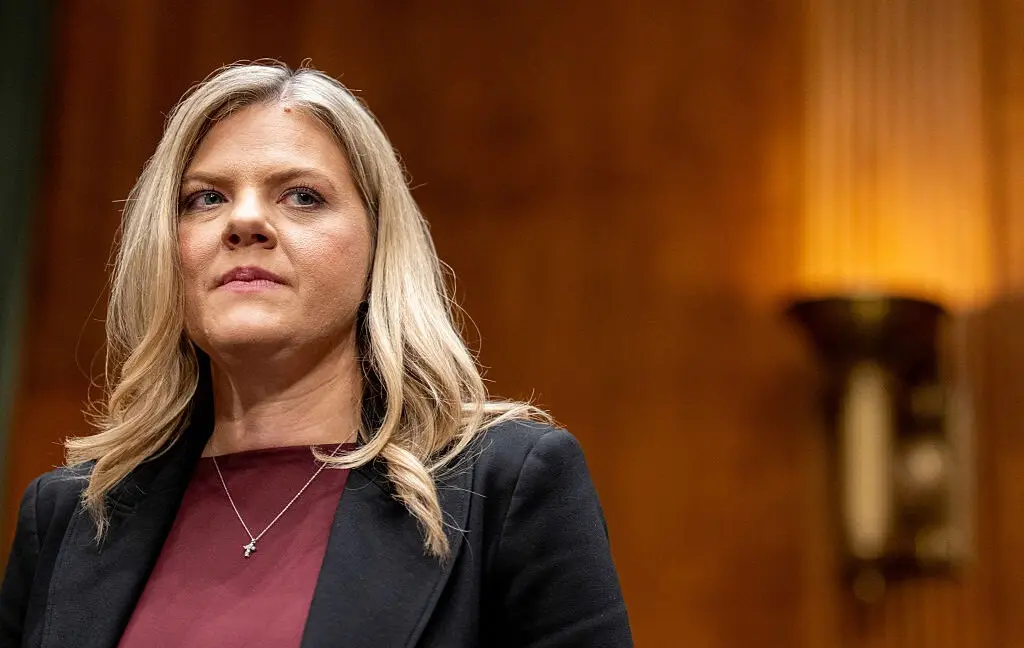
The tension within the hearing room reached an early boiling point when Senator Maggie Hassan (D-N.H.) pressed administration witness Overton on a series of medically debunked claims made by the president. Specifically, Hassan focused on the false assertion that taking Tylenol (acetaminophen) during pregnancy is causally linked to the development of autism in children—a claim thoroughly refuted by mainstream pediatric and obstetric organizations.
"Was he wrong when he said that? Yes or no?" Hassan demanded, seeking a direct acknowledgment of scientific reality from the administration representative.
Instead of a definitive affirmation or rejection of the president’s statement, Overton sidestepped the direct inquiry, offering a carefully measured response: "There is no current evidence of a causal link between Tylenol and autism."
Refusing to let the evasion stand, Hassan criticized the recurrent reluctance of administration officials to hold the executive branch accountable for spreading medical misinformation.
"I wish it wasn’t difficult for members of the administration to just plainly say that the president’s wrong," Hassan stated. "And it’s really concerning to me that you are equivocating on it here."
This exchange captured a central dilemma for modern federal officials: balancing professional scientific consensus with political fealty to an administration prone to making unverified public health declarations.
Vaccine Strategies and Logistical Impossibilities
The line of questioning soon shifted to pediatric immunization schedules, led by Senator Lisa Blunt-Rochester (D-Del.). Blunt-Rochester zeroed in on controversial claims made by the president regarding vaccines in August, highlighting reports that suggested Overton herself had floated the idea of splitting combination vaccines—such as the MMR (Measles, Mumps, and Rubella) shot—into separate, individual injections.
Public health experts have repeatedly noted that even if theoretical arguments could be made regarding patient comfort or specific exemptions, the operational reality of splitting approved combination vaccines is staggeringly complex. Such a pivot would require massive capital investments, multi-year clinical trials, and extensive re-approval processes through the FDA to ensure safety and efficacy standards are met for each isolated component.
"So obviously," Blunt-Rochester asked pointedly, "you think these were good options, correct?"
Overton deflected, asserting that within her official capacity, her primary duty is to present a broad array of options to the president.
Pushing further, Blunt-Rochester asked, "You wouldn’t have provided bad options, right?"
When Overton again declined to give a direct answer, the frustration in the room boiled over. "This is just a simple question," Blunt-Rochester interjected. "This, I thought, was the easy question."
The senator continued by questioning whether Overton had reviewed empirical data regarding vaccine formulation sizes—jokingly referencing absurd notions about doses the size of soda bottles—while emphasizing that the evasion of basic, fact-based inquiries compromises public trust in federal immunization strategies.
Supporting Context & Metrics: The FDA Leadership Crisis and Flavored Vapes
The turbulence within the executive health apparatus is perhaps best exemplified by the ongoing leadership vacuum at the FDA, which has remained without a confirmed permanent commissioner since May. The vacancy was precipitated by the sudden resignation of Dr. Marty Makary, who stepped down after fiercely resisting intense political pressure from the White House to greenlight the sale of flavored vaping products.
Despite bipartisan opposition and widespread consensus among public health advocates that flavored e-cigarettes are deliberately marketed to ensnare underage users, the FDA issued a controversial policy directive in early May clearing the path for their commercial distribution.
The Timeline of Influence
During the hearing, Senator Chris Murphy (D-Conn.) laid out a damning chronological narrative detailing the sequence of events that preceded the FDA’s sudden policy U-turn:
"On April 30th, it’s a Thursday afternoon, Reynolds, one of the biggest tobacco companies in the country, makes an $8 million donation to the president. Two days later on Saturday, because of that donation, they have lunch with the president and they tell him that they want a change in FDA rules, especially regarding flavored vapes. The president calls the FDA commissioner, he calls the secretary of [the health department], and three days later on Tuesday, new guidance is issued that paves the way to the sale of flavored vapes."
The stark juxtaposition of an eight-figure corporate political donation followed immediately by high-level executive intervention and a regulatory reversal drew sharp rebukes from lawmakers concerned about corporate capture of federal oversight agencies.
When Murphy directly asked Overton whether she perceived a causal connection between the financial contribution and the swift policy change—and whether she believed that was how the machinery of the FDA ought to operate—Overton offered a defensive pivot.
"I reject the framing of that question," Overton replied, maintaining that the president remains "committed to the best possible outcomes for Americans."
Official Statements and Institutional Repercussions
The standoff on Capitol Hill reflects a deepening institutional rift. Career scientists, public health advocates, and academic researchers have watched with growing alarm as political directives increasingly override empirical data.
Representatives from major medical associations released statements following the hearing, reiterating that public health guidance must be anchored strictly in peer-reviewed science rather than political calculus or corporate lobbying. The American Academy of Pediatrics, among others, issued renewed warnings regarding the re-emergence of discredited vaccine myths, emphasizing that public hesitation born of political rhetoric poses a direct threat to herd immunity and child safety.
Meanwhile, defenders of the administration argue that the executive branch possesses the constitutional prerogative to direct agency priorities and explore alternative policy options. They contend that questioning established norms is a manifestation of responsive governance aimed at cutting through bureaucratic inertia. However, critics counter that questioning bureaucratic norms is fundamentally different from amplifying scientifically unfounded claims or fast-tracking commercial products in apparent exchange for political patronage.
Future Outlook and Ongoing Oversight
As the dust settles from this contentious hearing, congressional committees are signaling that their investigative work is far from over. Lawmakers have pledged to issue further subpoenas and document requests concerning the communications between major tobacco entities, White House officials, and health regulators leading up to the May vape policy directive.
Furthermore, the prolonged vacancy at the helm of the FDA continues to cast a long shadow over the agency’s credibility. Finding a nominee who can pass Senate confirmation while assuring lawmakers of their independence from executive overreach will prove an increasingly daunting task for the administration.
Ultimately, the clash over Tylenol misinformation, vaccine logistics, and flavored e-cigarettes has transformed into a referendum on the future of federal science administration. As public health challenges continue to evolve, the ability of regulatory bodies to function as objective arbiters of safety remains one of the most critical battlegrounds in contemporary American governance.