








Executive Overview
Despite Europe’s dense urban centers, walkable historic districts, and robust public transit networks, the private automobile remains the undisputed king of urban mobility. City planners and environmental advocates have spent decades attempting to nudge citizens out of cars and onto two-wheeled alternatives, yet adoption rates often stall when consumers confront a fundamental logistical hurdle: carrying capacity. Traditional motorcycles and electric scooters offer speed and agility, but they lack the trunk space required for the realities of modern daily life—groceries, weekend luggage, professional gear, and family essentials.
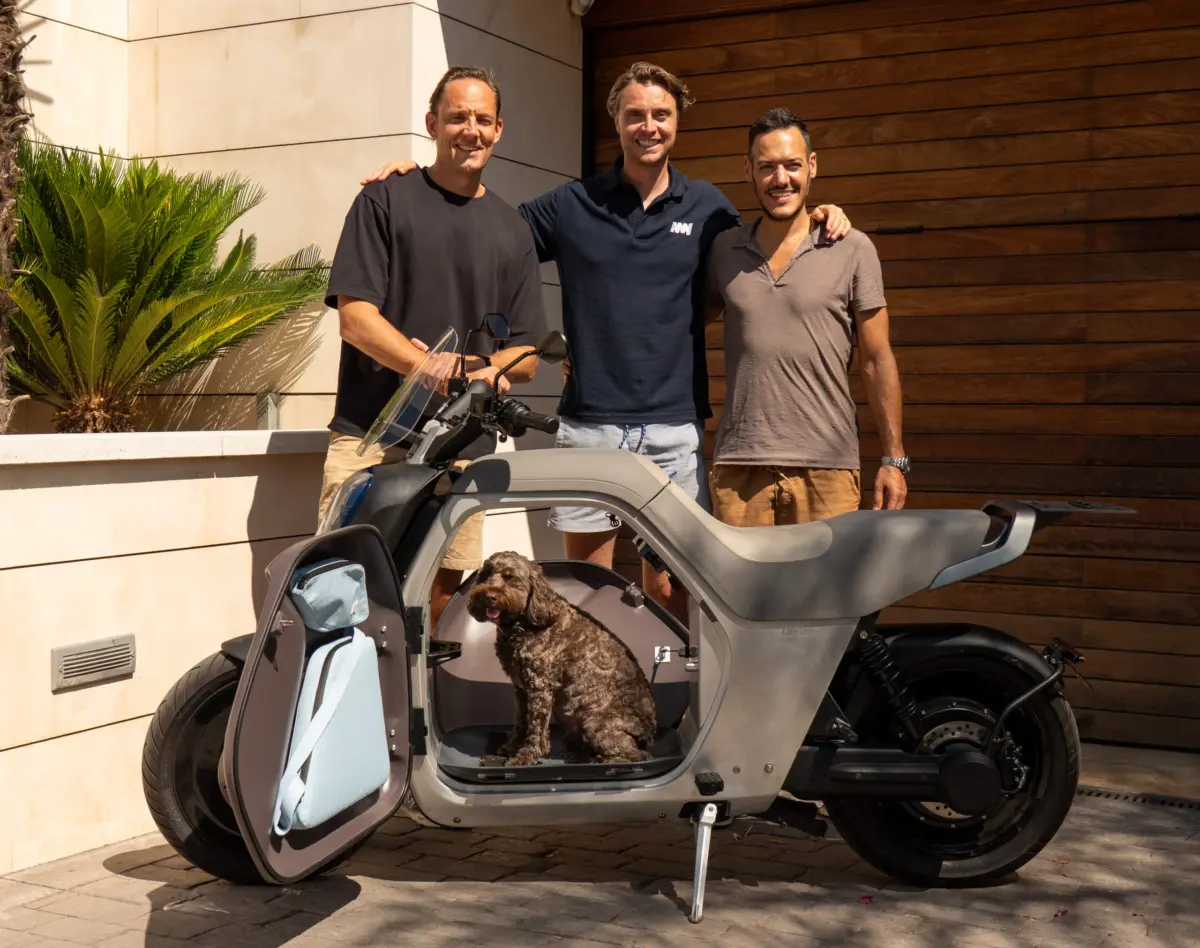
Enter Any, an ambitious Belgian startup looking to systematically dismantle the dominance of the car by redefining what a two-wheeler can achieve. By introducing a hybrid category they call the "Life Utility Vehicle" (LUV), Any is challenging the status quo. Their flagship product, the modular LUV1, bridges the missing link left by car trunks, merging the massive storage capabilities of a heavy-duty cargo bike with the performance, range, and excitement of a light motorcycle.
Priced starting at €7,000 (approx. $8,150) and requiring only an accessible A1 driver’s license, the LUV1 has already generated significant industry buzz. Following its high-profile debut at Milan Design Week, the startup secured over 600 customer reservations within its first 100 days. Backed by €2.75 million in early venture capital, led by automotive industry heavyweights, and helmed by a veteran team including former Pininfarina design director Lowie Vermeersch and veteran engineering talent from Ferrari, Aprilia, and Piaggio, Any is positioning itself at the vanguard of Europe’s transition to sustainable, all-electric urban transport. As the company prepares for its upcoming Series A funding round to scale production, it stands at the precipice of transforming how city dwellers move, pack, and commute.
Detailed Chronology: From Concept to Commercial Momentum
The genesis of Any did not stem from a desire to build a faster motorcycle or a sleeker e-bike; rather, it was born out of a pragmatic design question regarding everyday human behavior.
The Milan Design Week Breakthrough
The journey of the LUV1 truly captured the public imagination in May, when its striking prototype made its global debut during Milan Design Week. Conceived under the creative direction of Lowie Vermeersch—founder of Granstudio and former design director at legendary Italian design house Pininfarina—the vehicle immediately drew international media attention. Vermeersch’s involvement was not merely consultative; as a key investor and creative lead at Any, his design philosophy anchored the vehicle’s identity in both high aesthetics and extreme functional utility.
Following the Milan showcase, Any launched an interactive online configurator alongside a strategic preorder campaign. To secure a spot in the production queue, customers were asked to place a fully refundable €49 ($57) reservation fee, which is directly credited toward the final purchase price. The campaign outperformed internal projections: Chief Commercial Officer (CCO) Erik de Winter confirmed that the startup amassed more than 600 verified reservations within its first 100 days on the market.
Funding Milestones and Leadership Realignment
To turn Vermeersch’s vision into an industrial reality, Any needed robust financial backing and operational structuring. The startup’s fundraising trajectory began in earnest in November with a €1.5 million seed injection, followed by a €1.25 million strategic top-up in May, bringing total early-stage funding to €2.75 million ($3.2 million).
Concurrently, the executive team underwent critical expansions. One year prior to its current scaling phase, the startup enlisted former venture capitalist Pieter Van de Velde as Chief Executive Officer. Van de Velde brought a sharp strategic lens to the company’s financial roadmap, aligning investor relations with hardware execution timelines. Furthermore, Any bolstered its technical credibility by recruiting Alessandro Mangano as Head of Engineering. Mangano brought a formidable pedigree to the young startup, having previously honed his craft at iconic automotive and two-wheeler institutions including Ferrari, Aprilia, and the Piaggio Group.
Supporting Context & Metrics: Engineering the "Life Utility Vehicle"
To understand why the LUV1 represents a genuine paradigm shift in urban transportation, one must examine the metrics underpinning its design and the structural market gaps it aims to close.

The 120-Liter Philosophy
The core differentiator of the LUV1 is its storage capacity—specifically, its ability to hold up to 120 liters of cargo. According to statements published by the startup on LinkedIn, this figure was not chosen arbitrarily to sound impressive on a spec sheet. Instead, it was derived from an empirical assessment of weekly consumer demands.
"It came from asking a simple question: what does a real week actually need? Groceries, weekend bags, suitcases—the stuff you don’t want to leave behind just because you’re on two wheels, not four," the company noted.
By matching the volumetric cargo capacity typically associated with compact car trunks or heavy utility cargo bikes, the LUV1 eliminates the friction that prevents commuters from ditching their automobiles.
Modularity and Customization
Modularity is woven into the DNA of the LUV1 architecture. Customers can tailor the vehicle’s frame to suit radically different lifestyles. Options range from an open frame for minimalist urban commuting to enclosed panels configured specifically for transporting pets, professional trade equipment, or bulky camping gear.
This functional flexibility extends across the entire vehicle ecosystem. The configurator allows buyers to add optional accessories, including:
- Custom windshields for all-weather commuting
- Heavy-duty cargo racks
- Integrated rain ponchos and weatherproofing kits
- Specialized modular storage compartments
Performance and Powertrain Specifications
Despite its heavy utility load, the LUV1 does not compromise on dynamic performance. Powered by a robust electric powertrain, it achieves a top speed of 100 km/h (62 mph), allowing it to comfortably navigate ring roads and suburban arteries alongside traditional traffic.
Energy storage is handled by a dual-battery system featuring swappable units, providing a cumulative range of up to 87 miles (approx. 140 kilometers) per full charge. This range, combined with quick-swap battery infrastructure potential, addresses range anxiety while keeping downtime to an absolute minimum.
Financial Accessibility and Regulatory Compliance
Pricing for the LUV1 starts at €7,000 ($8,150), positioning it competitively below the cost of even budget-friendly new automobiles, while aligning closely with high-end electric cargo bikes.
Crucially, the vehicle has been engineered to comply with the European A1 driver’s license classification. Because obtaining an A1 license involves a relatively straightforward administrative and testing process compared to heavy motorcycle certifications, the LUV1 opens up its addressable market to ordinary drivers who possess no prior motorcycle experience.

Official Statements and Industry Positioning
The leadership team at Any is acutely aware that breaking deeply ingrained car-centric habits requires more than clever engineering—it requires strategic positioning within a rapidly evolving European regulatory and industrial landscape.
Beyond the Traditional Rider
CCO Erik de Winter emphasized in interviews that the LUV1 is explicitly designed to expand the boundaries of the traditional two-wheeler demographic. Rather than marketing solely to motorcycle enthusiasts, Any is targeting families, urban commuters, and outdoors enthusiasts. Furthermore, the company has already received inbound interest from commercial entities operating within the last-mile delivery sector, signaling strong B2B monetization pathways.
Navigating an Electrifying Market
The European Association of Motorcycle Manufacturers (ACEM) projects that the powered two-wheeler market will be predominantly electric by 2030. Established legacy manufacturers—ranging from the Piaggio Group to legacy American icons like Harley-Davidson—are aggressively rolling out their own urban EV solutions.
To maintain a competitive edge, Any is leveraging its automotive-grade pedigree. The synthesis of Lowie Vermeersch’s industrial design genius, Alessandro Mangano’s Italian motorcycle engineering background, and Erik de Winter’s operational background (including his work with Dutch e-cargo bike-sharing pioneer Cargaroo) gives the startup a distinct operational maturity.
Future Outlook: Scaling Up and the Horizon Ahead
As Any transitions from prototype validation to mass commercialization, the immediate operational bottleneck is no longer ideation or initial marketing—it is industrial scaling.
The Series A Horizon
Having secured nearly €2.75 million in seed funding, Any is now preparing for its next major financial leap. The startup is actively seeking to raise €10 million ($11.65 million) or more in a Series A funding round, with a target closure date by the end of the year. This capital influx will be directly channeled into establishing manufacturing infrastructure, securing supply chain resilience, and preparing the factory floor for the first wave of customer deliveries.
Portfolio Expansion
The LUV1 is intended to be merely the opening salvo in a broader corporate strategy. De Winter and the executive team have outlined a vision to build a comprehensive "portfolio of vehicles." Belgian financial media reports have already hinted at advanced concepts in the pipeline, including a potential three-wheeled variant designed to offer even greater stability and commercial utility.
For now, however, the spotlight remains firmly on the LUV1. If Any can successfully execute its manufacturing ramp-up and deliver on its promise of combining car-like utility with two-wheeled freedom, it may well provide the missing link that finally tips the scales away from the urban automobile and toward a sustainable, agile future.