Executive Overview
For decades, the standard playbook for email marketing has preached caution. Conventional wisdom dictated that sending too many emails would destroy list health, inflate unsubscribe rates, and trigger deliverability penalties from major ESPs (Email Service Providers) like Klaviyo, Mailchimp, and ActiveCampaign. Marketers were warned to protect their sender reputations by strictly pruning inactive subscribers and keeping sending cadences to a polite once or twice a week.
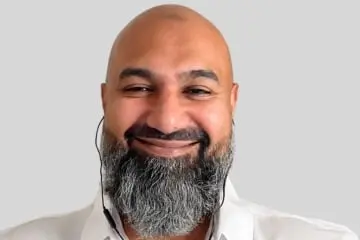
Nabeel Azeez is here to tell you that the playbook is broken.
As the co-owner of Dropkick Copy—a Dubai-based agency managing email and copywriting strategies for global brands across ecommerce, SaaS, and private equity—Azeez advocates for a radically aggressive approach. He routinely scales client email programs to daily frequencies, and in extreme cases, dispatches up to eight distinct emails per day to hyper-targeted segments.
In a wide-ranging conversation with Eric Bandholz, Azeez pulled back the curtain on his unconventional framework. By challenging foundational digital marketing dogmas—such as treating open rates as actionable metrics and prematurely purging unengaged subscribers—Azeez’s methods offer a blueprint for brands looking to unlock trapped revenue. Rather than focusing on vanity metrics, Azeez argues that modern ecommerce email marketing must pivot entirely toward granular behavioral segmentation, aggressive frequency scaling, and a singular north star: top-line revenue generation.
Detailed Chronology of the Strategy: From Onboarding to Maximum Velocity
Understanding how Dropkick Copy transforms a stagnant or underperforming email list into a revenue-generating engine requires examining the step-by-step chronology of their client onboarding and execution roadmap.
Phase 1: The Diagnostic and the Nine-Word Wake-Up Call
When onboarding a new client—particularly in a B2B or hybrid setting—Azeez does not waste time easing the audience into a gentle nurture sequence. Instead, the first operational move is to aggressively test the responsiveness of the existing database.
Azeez deploys a psychological tactic known as the "nine-word email" to all subscribers who have yet to make a purchase. The core objective of this brief, plain-text message is simple: get prospects to raise their hands. The email typically asks a direct, low-friction question: "Are you still interested in what we’re selling?"
Despite the perceived risk of waking up dormant contacts, this single initiative regularly yields hundreds of direct responses depending on list size. It instantly separates active prospects from dead weight, providing immediate data on who is ready to buy and who requires targeted re-engagement.
Phase 2: Flow Audit and Infrastructure Installation
For ecommerce clients, the initial phase shifts immediately to the foundational backend infrastructure. Azeez and his team audit existing lifecycle flows to identify missing revenue drivers. Crucial automated sequences—such as abandoned cart recovery, browse abandonment, post-purchase follow-ups, and win-back flows—are installed, optimized, and stress-tested before any broadcast strategy is dialed up.
Phase 3: Scaling Frequency Through Granular Segmentation
Once the automated baseline is secured, Dropkick Copy ramps up the sending cadence. While the average ecommerce brand settles into a comfortable rhythm of three emails per week, Azeez’s framework blasts past this ceiling, scaling to daily dispatches or higher.
The secret sauce that prevents this high volume from burning out the audience is meticulous, non-overlapping segmentation. Rather than blasting the entire database with the same daily message, Azeez splits lists into precise behavioral buckets. For one high-volume ecommerce client, this strategy manifests as up to eight distinct emails sent concurrently every single day—with each email engineered for a completely unique subscriber segment.
Such aggressive tactics inevitably draw friction. Azeez openly recounts instances where platforms like Klaviyo have flagged his accounts for emailing unengaged subscribers too frequently. His response is unapologetic:
"Klaviyo ought to know that open rate is a vanity metric. The only thing that matters is revenue."
Supporting Context & Metrics: Decoding the Behavioral Segmentation Matrix
To sustain a high-frequency email strategy without triggering massive unsubscribe spikes, marketers must master the art of advanced segmentation. Azeez categorizes customer databases far beyond basic demographic data, breaking lists down into hyper-specific behavioral and transactional cohorts.
The Anatomy of High-Value Segments
Dropkick Copy structures its segmentation strategy around distinct customer value tiers, ensuring that no two segments receive an identical pitch unless heavily personalized:
- Engagement Recency Windows: Subscribers are automatically bucketed based on their most recent interaction—whether they engaged within the last 7 days, 30 days, or fell into a 60-to-90-day window.
- The "Whales": These are the high-value power users who purchase frequently and boast high average order values (AOV). Their messaging focuses on VIP perks, exclusive launches, and loyalty rewards.
- Potential Whales: Customers who buy frequently but spend less per transaction than true whales. Azeez deploys targeted incentives—such as product bundles or free gifts triggered at specific minimum order values (MOVs)—to successfully scale their basket sizes.
- Loyal Customers: Regular buyers who purchase consistently in smaller amounts.
- Lapsed or Churned Whales: High-value customers who have historically spent large amounts but have gone quiet. These require aggressive, personalized win-back sequences before they slip away permanently.
Dynamic Personalization at Scale
Managing eight segments a day does not necessarily mean writing eight entirely different email drafts from scratch. Modern enterprise email platforms like Klaviyo feature advanced dynamic content selectors. Azeez utilizes these tools to inject customized copy, product recommendations, or incentive blocks into a single master template based on the recipient’s precise segment or custom data field.
Scaling from $10k to $20k in Monthly Revenue
When smaller brands operating at a $10,000 monthly email revenue threshold ask how to double their output, Azeez evaluates two primary variables: product type and list acquisition velocity.
- Consumable vs. One-Off Products: Brands selling consumable, repeat-purchase goods can sustain much higher email frequencies because their customers naturally re-order over time. One-off luxury or durable goods require a different pacing strategy focused on cross-sells and accessory marketing.
- List Growth Rate: "The more new subscribers you have, the more aggressively you can email them," Azeez explains. Fast-growing lists can absorb a higher churn rate among older, fatigue-prone subscribers because fresh inbound traffic continuously replenishes the audience.
Furthermore, Azeez urges merchants to evaluate how their email marketing amplifies performance across external acquisition channels. A robust, aggressive email program directly improves Return on Ad Spend (ROAS) and Marketing Efficiency Ratio (MER) on paid channels like Meta Ads. To accurately measure this halo effect, Azeez recommends shifting email attribution models from misleading "last-click" parameters to "first-click" analysis.
Official Insights & Controversial Industry Takes
Throughout his conversation with Bandholz, Azeez did not shy away from challenging orthodoxies held sacred by traditional digital marketers. His contrarian viewpoints offer a sobering look at what actually moves the needle in modern ecommerce.
1. The Open Rate Illusion
In an industry obsessed with tracking open rates, click-through rates (CTR), and delivery percentages, Azeez dismisses open rates as a dangerous vanity metric. Apple’s Mail Privacy Protection (MPP) and automated bot activity have rendered traditional open tracking unreliable at best. For Azeez, optimizing campaigns for higher open rates often leads copywriters to rely on clickbait subject lines that fail to convert. The only metric that warrants executive attention is net attributable revenue.
2. Never Unsubscribe Dormant Recipients
Traditional email hygiene dictates that marketers should permanently sunset and suppress subscribers who have not interacted with an email in 60 to 90 days. Azeez rejects this blanket rule.
While Dropkick Copy utilizes automated sunset workflows to pause unengaged users after 90 days of absolute silence, they deliberately avoid unsubscribing them. Instead, these dormant accounts are placed into a quarterly or monthly reactivation pool.
"In my experience, around 10% of unengaged folks will come back eventually," Azeez notes.
To recapture these dead segments, Azeez relies on long-form, educational, plain-text emails. Stripped of heavy HTML graphics and promotional imagery, these text-only messages are structurally designed to bypass spam filters and land squarely in the primary inbox, prompting higher response rates.
3. Pop-Up Fatigue and Discount Addiction
Many ecommerce brands handicap their long-term growth by defaulting to generic pop-up offers—most commonly a lazy "10% off your first order." Azeez warns that this trains shoppers to expect continuous discounts, severely eroding profit margins.
Merchants must rigorously A/B test their opt-in mechanisms. This includes experimenting with unconventional incentives—such as free shipping, complimentary starter gifts, curated product bundles, or even testing the removal of pop-ups entirely—to measure the true impact on customer lifetime value (LTV) and net margins.
4. The Power of Omnichannel Synergy: Email Meets SMS
While email forms the backbone of Dropkick Copy’s client strategies, Azeez treats SMS as an elite revenue accelerator. When brands need an immediate cash injection, SMS is frequently deployed because it consistently outperforms email in immediate conversion velocity.
However, SMS requires strict discipline. While email volume can easily scale to daily frequencies, SMS cadence is typically capped at two to three times per week to prevent intrusive consumer annoyance. Because SMS messaging incurs higher per-message carrier costs than email, promotional texts must remain razor-sharp, concise, and high-converting.
Future Outlook: The Evolution of High-Frequency Retention Marketing
As privacy regulations tighten, third-party cookies crumble, and customer acquisition costs (CAC) on paid social platforms continue their relentless upward trajectory, the future of ecommerce profitability will rely almost entirely on owned media channels. In this environment, relying on polite, infrequent email cadences is no longer a viable growth strategy.
Nabeel Azeez’s methodology points toward an inevitable industry maturation: the shift toward hyper-personalized, high-frequency, data-driven relationship marketing. Brands that continue to treat their email lists like fragile crystal—protecting unengaged metrics at the expense of top-line revenue—will find themselves outpaced by competitors willing to segment deeply and execute aggressively.
For ecommerce operators, the takeaway is clear. The path to scaling past plateaued revenue thresholds does not lie in sending fewer emails to keep everyone comfortable; it lies in sending smarter, highly segmented emails to the right people, at the right frequency, driven by a relentless focus on revenue over vanity metrics.