









Executive Overview
For decades, the cognitive boundary separating humanity from the animal kingdom has been anchored to a single, defining characteristic: the manufacture and utilization of tools. When legendary primatologist Jane Goodall first witnessed a wild chimpanzee modifying a twig to fish for termites in 1960, the scientific establishment was forced to reconsider the very definition of humanity. Today, that evolutionary narrative has taken yet another profound leap forward.
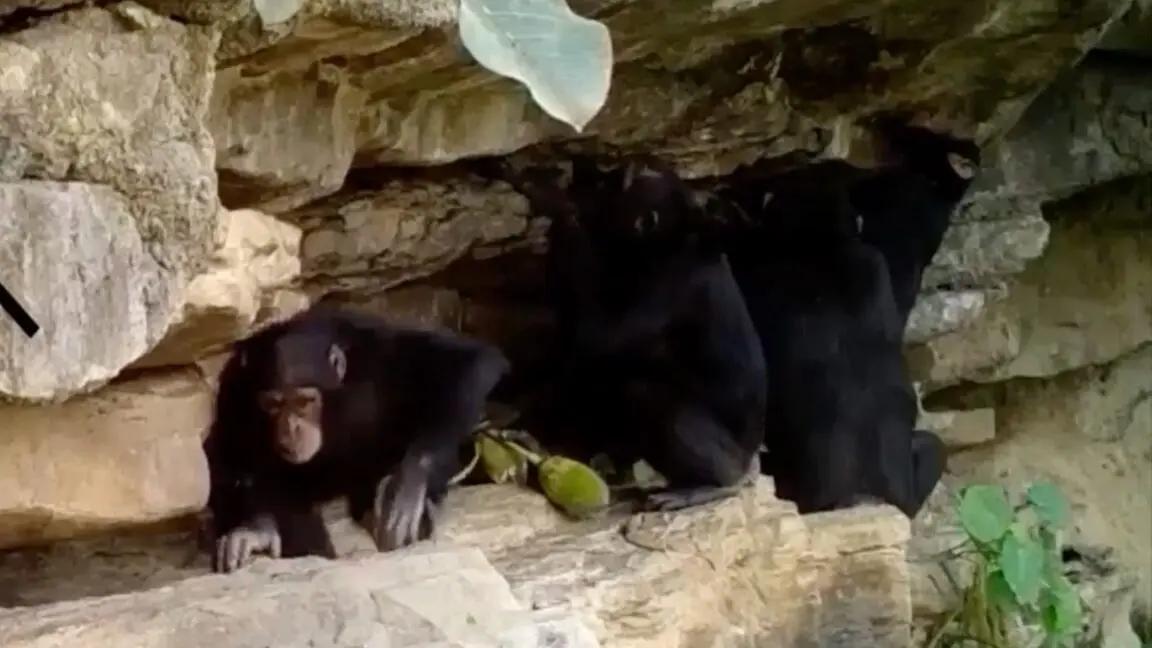
According to groundbreaking research recently published in the journal Frontiers in Psychology, chimpanzees do not merely inherit the capacity for rudimentary tool use through passive observation or genetic predisposition; they actively teach it. A collaborative team of international researchers has documented concrete evidence that adult chimpanzees—predominantly mothers—deliberately model complex foraging behaviors, purposefully relinquishing their instruments into the hands of their offspring to facilitate hands-on practice.
This sophisticated knowledge transfer constitutes a rudimentary form of pedagogy long thought unique to human societies. By breaking down the mechanics of food and tool transfers, the study illuminates the deep evolutionary roots of teaching, social learning, and cultural transmission. As researchers peel back the layers of primate intelligence, the boundaries of animal cognition continue to expand, offering a compelling glimpse into the ancient ancestral origins of human education, technology, and culture.
Detailed Chronology: From Darwin’s Pebbles to Active Primate Pedagogy
To fully appreciate the weight of this new discovery, it is essential to trace the historical timeline of animal tool use research. For generations, Western philosophy and science maintained an unyielding wall between human innovation and animal instinct.
1871: The First Observations
Long before modern primatology established formal methodologies, visionary naturalists caught glimpses of our closest evolutionary relatives manipulating their environments. In 1871, Charles Darwin noted in The Descent of Man that wild chimpanzees utilized stones to crack open hard nuts. While Darwin recognized the cognitive implications of this behavior, the broader scientific community largely dismissed these accounts as isolated anomalies or mere instinctual quirks rather than genuine cultural practices.
1960: The Breakthrough That Shook Science
The paradigm shifted permanently in July 1960, when a young, self-taught researcher named Jane Goodall arrived at the Gombe Stream Game Reserve (now Gombe Stream National Park) in Tanganyika (now Tanzania). Working under the guidance of renowned paleoanthropologist Louis Leakey, Goodall observed a male chimpanzee—whom she named David Greybeard—carefully snapping the leaves off a slender twig, stripping it bare, and inserting it into an active termite mound. He then licked the insects off the modified stick with practiced ease.
When Goodall cabled Leakey with the news, his legendary response captured the magnitude of the moment:
"Now we must redefine ‘tool,’ redefine ‘man,’ or accept chimpanzees as humans."
The Decades of Discovery (1970s–2010s)
Following Goodall’s revelations, researchers across Africa documented an astonishing array of localized chimpanzee "cultures." Primatologists observed communities crafting leaf-sponges to soak up drinking water from hollow tree trunks, fashioning customized sticks to scoop up subterranean algae, and even sharpening wooden spears to hunt small mammalian prey like bushbabies.
Despite these discoveries, a central question remained unanswered: How did young chimpanzees acquire these complex skills? Did they learn purely through passive observation—staring over an adult’s shoulder until they figured it out—or was there a more active, intentional form of instruction at play?
The Present: Uncovering Primate Pedagogy
The new study published in Frontiers in Psychology provides the definitive answer to that lingering question. By systematically analyzing the behavioral interactions between adult chimpanzees and their offspring in Senegal, researchers have confirmed that older generations engage in deliberate behavioral scaffolding. Adults not only demonstrate how to access hard-to-reach food sources, but they actively hand their tools over to the juveniles, effectively inviting them to step into the role of the learner.
Supporting Context & Metrics: The Mechanics of Primate Technology
To understand the evolutionary significance of this active teaching, one must examine the specific mechanics of what scientists term "tool and food transfer."
The Cost-Benefit Analysis of Sharing
In the harsh realities of the wild, energy conservation is paramount. Foraging for difficult-to-access foods—such as termite mounds, nut-bearing trees, or deeply embedded honeycombs—requires immense caloric expenditure and specialized physical tools. When an adult chimpanzee pauses its own feeding to fashion a tool, uses it successfully, and then hands the instrument over to a juvenile, it is engaging in an act that carries a high energetic cost.
According to the study’s authors, this apparent self-sacrifice is actually an investment in the survival of the next generation. By lowering the steep learning curve associated with complex tool use, adults ensure that their offspring gain the proficiency required to survive independently.
Beyond Primates: Tool Use Across the Animal Kingdom
While chimpanzees and other great apes represent the pinnacle of non-human mammalian tool use, they are not entirely alone in their technological capabilities. Over the past several decades, marine biologists, ornithologists, and marine mammalogists have documented remarkable instances of tool use and object manipulation across a diverse array of taxa:
- Bottlenose Dolphins (Tursiops truncatus): Marine researchers have observed dolphins engaging in complex object play, frequently tossing sponges, shells, and seaweed. Some populations utilize marine sponges as protective "gloves" while foraging along the abrasive ocean floor to flush out hidden fish. When dolphins toss objects during social interactions, scientists believe these actions serve multifaceted communicative, bonding, or aggressive purposes.
- Cephalopods (Octopuses): Far outside the vertebrate lineage, octopuses have stunned marine biologists with their cognitive agility. Field observations have captured octopuses vigorously gathering and throwing debris—including silt, shells, and stones—at one another. This throwing behavior, often directed during territorial disputes or mating interactions, demonstrates an advanced capacity for weaponization and spatial manipulation in an invertebrate species.
- Avian Innovators: Certain captive and wild bird species—most notably New Caledonian crows and African grey parrots—have demonstrated an astonishing capacity to manufacture and utilize tools. Crows in particular can bend straight wire into hooks to retrieve out-of-reach food, a cognitive feat that rivals the problem-solving skills of human toddlers.
However, what sets the chimpanzee research apart is not merely the use of the tool, but the social transmission of the knowledge required to make it.
Official Statements and Expert Analysis
The implications of the Frontiers in Psychology study extend far beyond behavioral ecology, touching upon anthropology, evolutionary psychology, and philosophy.
Co-author Andreu Sánchez-Megías, a graduate researcher affiliated with both the University of Barcelona and the Jane Goodall Institute Spain in Senegal, emphasized the structural importance of these interactions:
"Receiving food and tools from experienced individuals, which we call food or tool transfer, may help chimpanzees learn to use technology to extract foods that are difficult to access," Sánchez-Megías explained.
He further elaborated on the pedagogical nature of these exchanges:
"Tool transfers thus appear to be a form of teaching, together with observation and supervised practice. It appears that mothers are the main models and teachers for young chimpanzees in this manner."
The centralization of maternal instruction highlights a deep evolutionary parallel between human and chimpanzee mother-infant bonding. Just as human mothers guide their children through the foundational steps of writing, eating with utensils, or operating machinery, chimpanzee mothers act as the primary engineers of generational knowledge.
Primate behaviorists note that this maternal scaffolding drastically reduces the time it takes for a young chimp to master resource extraction. Without such active intervention, juveniles might spend years fumbling through trial-and-error learning, exposing themselves to malnutrition or predation. By stepping in, mothers create a protected learning environment—a literal classroom in the wild.
Future Outlook: What This Means for Evolutionary Science
As the scientific community digests the findings of Sánchez-Megías and his colleagues, the trajectory of future research is shifting toward several critical frontiers.
1. Re-evaluating the Evolution of Human Culture
If active teaching and tool-sharing are present in our closest living evolutionary relatives, it strongly suggests that the last common ancestor shared by humans and chimpanzees—living roughly 6 to 8 million years ago—already possessed the cognitive foundations for pedagogical instruction. Culture, therefore, did not suddenly emerge ex nihilo with the advent of Homo sapiens; rather, it was built upon an ancient, shared primate scaffold.
2. Conservation Implications
Understanding the intricacies of cultural transmission among chimpanzees carries profound implications for wildlife conservation. Chimpanzee tool-use behaviors are not monolithic; different regional communities possess entirely distinct "technological repertoires" (e.g., some populations crack nuts with stone hammers, while others use wooden clubs, and some ignore nut-cracking entirely).
When a wild chimpanzee population is decimated by habitat destruction, poaching, or disease, humanity does not merely lose individual animals; we lose unique, irreplaceable cultural traditions passed down across hundreds of generations. Recognizing chimps as cultural beings with active educational structures underscores the moral and ecological urgency of preserving their rapidly shrinking natural habitats.
3. Broadening the Definition of Cognition
Finally, these revelations compel researchers to abandon outdated, anthropocentric hierarchies of intelligence. For decades, science struggled to find a single trait that definitively separated humans from the rest of nature. As boundary after boundary falls—from language-like vocalizations and emotional grief to tool-making and now active teaching—we are forced to view the animal kingdom not as a collection of unthinking automata, but as a rich, diverse tapestry of conscious, learning minds.
In the words of Louis Leakey, the challenge set before us more than half a century ago remains open: as our understanding deepens, we are continually forced to redefine our place in the natural world, recognizing that the qualities we once thought uniquely our own are deeply rooted in the ancient shared history of life on Earth.