Executive Overview
The modern battlefield is undergoing a fundamental, unforgiving transformation. For over a century, the Main Battle Tank (MBB) has reigned supreme as the undisputed apex predator of ground combat—a rolling fortress combining heavy armor, unmatched firepower, and tactical mobility. Today, however, that dominance is being profoundly challenged. Across the blood-soaked plains of Eastern Europe and the rugged terrain of Southern Lebanon, the proliferation of low-cost, highly maneuverable First-Person View (FPV) drones and loitering munitions has exposed critical vulnerabilities in even the most advanced armored fleets.
Active Protection Systems (APS)—long hailed as the technological silver bullet designed to intercept incoming anti-tank guided missiles (ATGMs) and rocket-propelled grenades (RPGs)—are struggling to adapt to the drone revolution. Whether examining Russian efforts to scale up the Arena-M system, the battlefield performance of Israel’s elite Merkava 4 tanks equipped with Rafael’s Trophy APS, or the stunning tactical defeat of a U.S. Army tank brigade during wargames in Germany, military planners worldwide are confronting an uncomfortable reality. Traditional heavy armor, designed to defeat horizontal kinetic threats and shaped charges, is largely blind and defenseless against top-attack drone swarms and high-tech countermeasure-resistant UAVs.
This comprehensive investigation explores the systemic limitations of current active protection suites, analyzes the tactical shifts observed in active conflict zones through 2026, and evaluates how global militaries are racing to adapt to a battlespace increasingly dominated by autonomous and semi-autonomous aerial threats.
Detailed Chronology: The Evolution of the Drone Threat to Heavy Armor
To understand the current crisis facing armored formations, one must trace the rapid technological and tactical convergence that brought small, commercial-grade UAVs from hobbyist workshops to the front lines of peer and asymmetric conflicts.
Phase I: The Ukrainian Crucible and the Limits of Russian APS
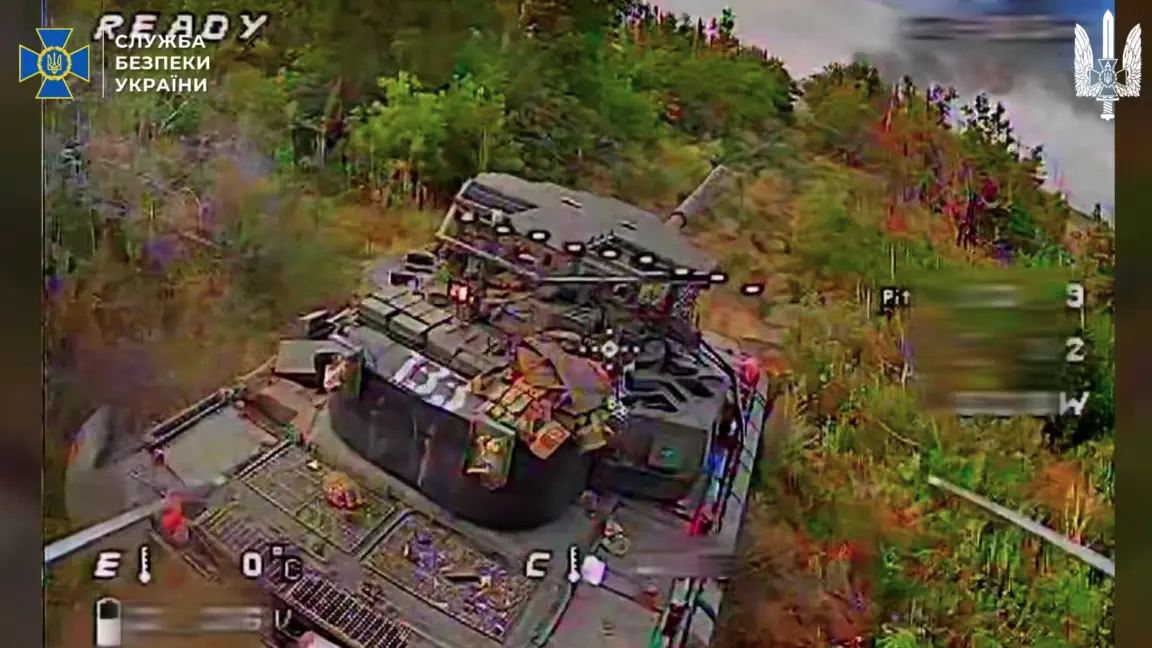
The vulnerability of conventional armor first captured global attention during the early years of the full-scale war in Ukraine. Cheap, off-the-shelf quadcopters modified to drop improvised munitions or rigged with high-explosive anti-tank (HEAT) warheads quickly neutralized multi-million-dollar T-72, T-80, and T-90 tanks.
In response, Russian military engineers began exploring internal and external modifications, most notably increasing the density of the Arena-M active protection system. Designed to automatically detect, track, and destroy incoming projectiles using dedicated radar and directional countermunitions, the Arena-M theoretically offered a robust shield.
However, as military analysts at Euromaidan Press and other defense publications highlighted, the physical architecture of turret-mounted projectile launchers presented severe geometric and mechanical bottlenecks. Simply adding more countermunitions to counter swarming drones created critical space constraints, weighed down the turret ring, and failed to solve the fundamental radar-signature processing challenges associated with slow, small-radar-cross-section (RCS) targets hovering at unusual vertical angles.
Phase II: The Middle Eastern Theater and the Trophy System Under Fire
The limitations of contemporary APS were not confined to Eastern Europe. During the intense engagements of the U.S.-Israeli war against Iran and its regional proxies, Israeli ground forces pushed into Southern Lebanon to confront Hezbollah. The backbone of the Israel Defense Forces (IDF) armored corps—the Merkava 4—relied heavily on the Trophy active protection system, developed by Rafael Advanced Defense Systems and widely regarded as the gold standard of APS technology.
Yet, combat footage published by Hezbollah militants in mid-2026 revealed a starkly different reality than marketing brochures suggested. Multiple videos demonstrated small, explosive-laden quadcopters successfully striking Merkava 4 tanks whose Trophy systems were fully active and loaded with countermunitions. According to reports from Ukrainian defense media outlet Defense Express, the empirical evidence suggested that Trophy’s radar processing and directional countermeasures struggled to reliably detect, track, and intercept ultra-low-speed, highly agile micro-drones approaching from non-traditional trajectories.
Phase III: The Fiber-Optic Revolution and Evasion of Jamming
Compounding the tactical crisis for armor operators was an unprecedented battlefield innovation imported directly from the Ukrainian theater: fiber-optic-guided FPV drones.
As electronic warfare (EW) systems and radio-frequency (RF) jammers became ubiquitous on modern front lines, conventional wireless FPV drones frequently fell victim to signal disruption. To circumvent this, designers began spooling miles of ultra-thin fiber-optic cable directly from the drone in flight. This physical tether completely bypassed traditional electronic countermeasures, rendering radio signal jamming obsolete.
According to research published by the Institute for the Study of War (ISW), Hezbollah’s rapid adoption of fiber-optic FPV drones between March and June 2026 transformed their asymmetric campaign against Israeli armor. By maintaining an unbroken, jam-proof data link with human operators, these drones could execute precise terminal-guidance maneuvers against tanks, bypassing reactive armor bricks and exploiting the vulnerable top surfaces of turret structures.
Supporting Context & Metrics: Tactical Impact and Global Procurement
While the exact number of Israeli tanks knocked out or permanently disabled by Hezbollah’s drone campaign remains classified or subject to operational security, open-source intelligence and reports from The Wall Street Journal indicate that drone strikes rapidly escalated into the single greatest threat to IDF forces in Southern Lebanon. Following the implementation of a temporary ceasefire in April, drone-related casualties accounted for the majority of fatalities among Israeli ground troops, forcing a radical reevaluation of infantry-armor coordination and urban combat doctrines.
The European Procurement Paradox
Despite mounting questions regarding the efficacy of active protection systems against micro-drones, European defense ministries continue to invest heavily in the technology. Driven by a renewed urgency to deter potential Russian aggression, several European nations have committed to retrofitting their fleets.
According to Breaking Defense, the EuroTrophy joint venture anticipates equipping approximately 400 European Leopard tanks with the Trophy system. Following the initial delivery of upgraded tanks to Norway, the consortium is aggressively expanding its production footprint. Military planners argue that while Trophy may face challenges against novel FPV tactics, it remains an indispensable baseline defense against conventional ATGMs, rocket-propelled grenades, and older tank-killing munitions that still dominate modern battlefields.
The United States Dilemma: The Combined Resolve Wake-Up Call
The United States military has spent the past several years integrating the Trophy system onto several hundred M1 Abrams tanks, seeking to close the survivability gap identified during post-Cold War counter-insurgency operations. However, recent large-scale military exercises have proven that hardware upgrades alone are insufficient to counter systemic tactical obsolescence.
During the Combined Resolve military exercises held in Germany, Ukrainian drone operators acting as opposing forces achieved a devastating tactical milestone: they completely wiped out an entire brigade of U.S. Army tanks and armored vehicles. As reported by Ars Technica, the exercise laid bare the harsh reality that conventional armored formations—even those equipped with advanced composite armor and active protection suites—remain critically vulnerable when operating without absolute local air supremacy, robust multi-layer electronic warfare protection, and continuous short-range air defense (SHORAD) integration.
Official Statements and Industry Responses
As the gap between technological promises and battlefield realities widens, defense contractors and military leadership are under intense pressure to address the vulnerabilities exposed by recent conflicts.
Rafael Advanced Defense Systems and EuroTrophy
In official statements, representatives for Rafael and EuroTrophy have maintained that the system remains modular, adaptable, and continuously updated through software patches. In marketing communications throughout 2024 and 2025, Rafael asserted that Trophy was engineered with inherent growth potential to handle emerging threats, including slow-moving aerial targets.
However, defense analysts note that software modifications can only achieve so much when constrained by physical hardware limitations. The radar arrays optimized for detecting fast-moving, high-velocity projectiles (such as incoming ATGMs traveling at hundreds of meters per second) inherently struggle to isolate the faint, erratic Doppler signatures of small, slow-hovering quadcopters against ground clutter.
Military Leadership and Institutional Adaptations
Pentagon and NATO leadership have increasingly acknowledged that the traditional doctrine of mechanized warfare requires a generational overhaul. Speaking on condition of anonymity, senior U.S. Army modernization officials noted that future force design concepts are shifting away from standalone heavy platforms toward networked combat ecosystems.
"We are no longer asking how to make a tank invincible," a senior defense official involved in armored vehicle modernization remarked during a recent defense symposium. "The objective now is distributed survivability. A tank operating without organic, close-in kinetic and electronic counter-drone coverage is essentially operating in the dark."
Future Outlook: The Next Generation of Armored Defense
The challenges witnessed in Ukraine, Lebanon, and European wargames signal not the death of the Main Battle Tank, but rather the urgent necessity of its evolution. To survive on the drone-dominated battlefields of the late 2020s and beyond, military technologists and defense contractors are actively exploring several paradigm shifts:
- Directed-Energy Weapons (DEW): The integration of high-energy lasers and high-powered microwave (HPM) emitters directly onto armored chassis or accompanying support vehicles. Unlike kinetic interceptors, directed-energy systems offer virtually limitless magazines and instantaneous engagement speeds, making them uniquely suited to swarming micro-drones.
- Enhanced Electronic Countermeasures: The development of localized, vehicle-mounted smart-jamming suites capable of automatically identifying and disrupting drone control frequencies, alongside specialized optical-dazzlers designed to blind the digital cameras of fiber-optic and autonomous FPV systems.
- Redesigned Top-Armor Architecture: Moving away from flat, exposed turret roofs toward sloped, reactive, and cage-armor configurations specifically engineered to detonate shaped charges at a safe standoff distance from the primary hull.
- AI-Driven Multispectral Sensors: Upgrading APS radar and optical suites with artificial intelligence algorithms trained to classify small, slow, and erratic targets instantly, differentiating between falling debris, birds, and lethal drone threats.
Conclusion
The crucible of modern conflict has delivered an uncompromising verdict: active protection systems as they are currently deployed represent a necessary but incomplete shield against the democratization of precision aerial strike capabilities. As state and non-state actors continue to innovate with fiber-optic tethers, swarming tactics, and asymmetric attack vectors, the survival of armored forces will depend entirely on how rapidly defense industries can transition from single-system solutions to integrated, multi-layered defensive ecosystems. Until then, the undisputed reign of the tank remains under existential threat.