Executive Overview
In a sweeping hardware and software announcement that cements its dominance in the personal health and consumer technology sectors, Apple has officially unveiled its next-generation wearable lineup: the Apple Watch Series 12 and the Apple Watch Ultra 4. Building upon years of iterative refinement, this latest generation represents a massive leap forward, moving beyond basic fitness tracking into the realms of predictive wellness, AI-driven contextual awareness, and clinical-grade diagnostics.
At the core of the new hardware release is a redesigned biometric sensor array that Apple asserts delivers the most accurate heart rate sensing ever achieved in a wearable device. This hardware milestone is matched by advanced software updates across watchOS and iOS, including the introduction of real-time "readiness" scoring, a novel "Health Age" metric, AI-powered movement evaluations, and a direct integration with diagnostic laboratory giant Quest Diagnostics.
Simultaneously, Apple is aggressively weaving its proprietary Apple Intelligence suite into the wearable ecosystem. By leveraging on-device machine learning and advanced neural processing, the Apple Watch Series 12 and Ultra 4 introduce powerful contextual tools such as Live Rewind conversation transcription, Siri Recap summaries, and native Shazam integration—all accessible straight from the wrist.
Both the Apple Watch Series 12 and the rugged, titanium-clad Apple Watch Ultra 4 are available for preorder immediately, with official retail availability and shipping slated for September 18. Pricing remains anchored to previous generations, with the entry-level Series 12 starting at $399 and the flagship Ultra 4 starting at $799. This deep-dive report examines the technological breakthroughs, clinical implications, AI integrations, and market positioning of Apple’s newest flagship wearables.
Detailed Chronology of the Announcement
The rollout of the Apple Watch Series 12 and Ultra 4 follows a meticulously orchestrated product lifecycle that highlights Apple’s growing emphasis on preventative healthcare.
The Lead-Up and Clinical Validation
Months prior to the official reveal, rumors circulated across the tech industry regarding major sensor overhauls and deeper artificial intelligence integration within Apple’s health ecosystem. Apple’s quiet clinical research initiatives culminated in a rigorous validation study. According to company disclosures, the foundational architecture of the new heart rate monitoring system was tested on a remarkably diverse population exceeding 1,000 participants. This extensive clinical trial allowed Apple to fine-tune its optical and electrical sensors to minimize movement artifacts and maximize reading fidelity across skin tones, body types, and high-intensity workout profiles.
Unveiling the Hardware Portfolio
During the keynote presentation, Apple executives showcased the physical designs of the new devices. The Apple Watch Series 12 continues Apple’s tradition of sleek, ergonomic design language, while the Apple Watch Ultra 4—aimed at endurance athletes, divers, and extreme-environment explorers—debuts in two distinct, striking colorways: "Natural Titanium" and a sleek, matte "Black Titanium."
Immediately following the keynote, preorders went live globally. Retail shelves and customer doorsteps are scheduled to receive the first wave of devices on September 18, setting up a major consumer electronics push heading into the holiday shopping season.
Software Rollouts and Ecosystem Integration
While the hardware commands immediate attention, the accompanying software rollout is equally ambitious. Apple confirmed that an upcoming update to the iOS Health app later this year will unlock advanced diagnostic and analytical tools exclusively for users pairing an iPhone with a Watch Series 12 or Ultra 4. This staged software deployment underscores Apple’s hardware-software synergy, ensuring that processing-heavy features like vision-based AI movement evaluations utilize the combined computational power of the iPhone and Apple Watch.
Supporting Context & Metrics: The Science of Modern Wearables
The introduction of the Apple Watch Series 12 and Ultra 4 marks a pivotal evolution in how consumer technology measures, interprets, and acts upon human biological data.
Precision Heart Rate Sensing
For a smartwatch, heart rate monitoring is the foundational metric upon which sleep tracking, calorie burn, cardio fitness, and stress metrics are calculated. Apple’s claim that the Series 12 and Ultra 4 feature the "most accurate heart rate sensing in any wearable" is backed by the aforementioned study of over 1,000 diverse participants. By redesigning the photoplethysmography (PPG) sensor layout and optimizing the underlying machine learning algorithms that filter out motion noise, Apple has significantly closed the gap between wrist-based optical sensors and traditional medical-grade chest straps.
The Introduction of "Readiness" Scores
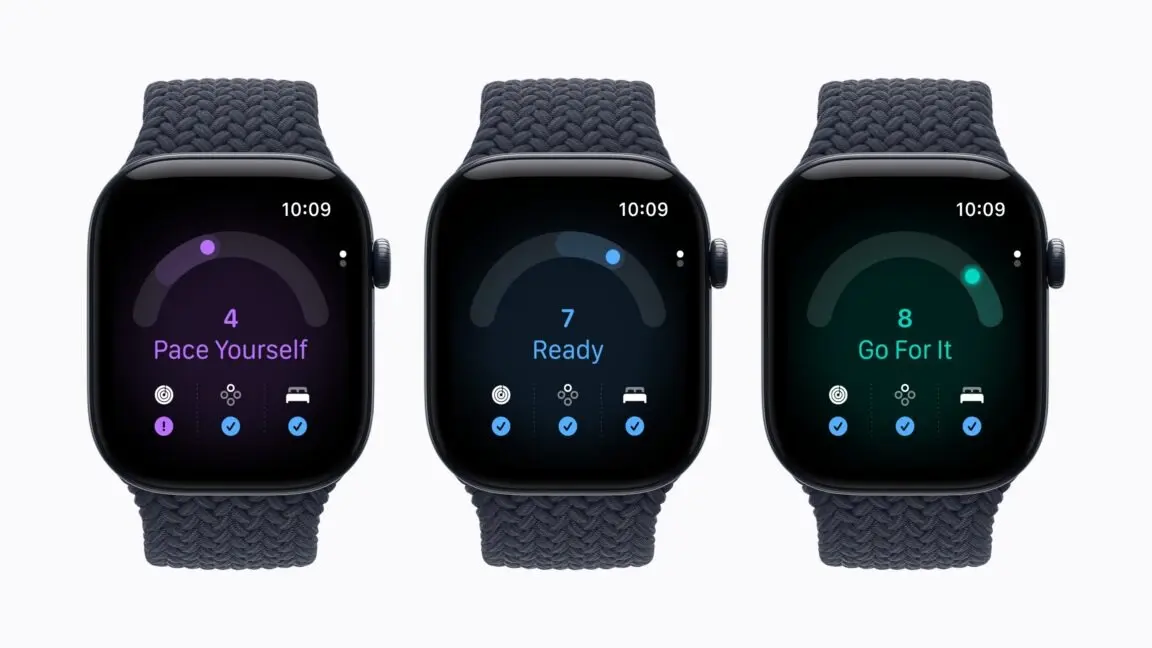
For years, competing fitness platforms—such as Garmin, Oura, and Whoop—have popularized "readiness" or "recovery" metrics. Apple is now entering this space with its own nuanced implementation. The new watches introduce a Readiness score measured on a scale from 0 to 10.
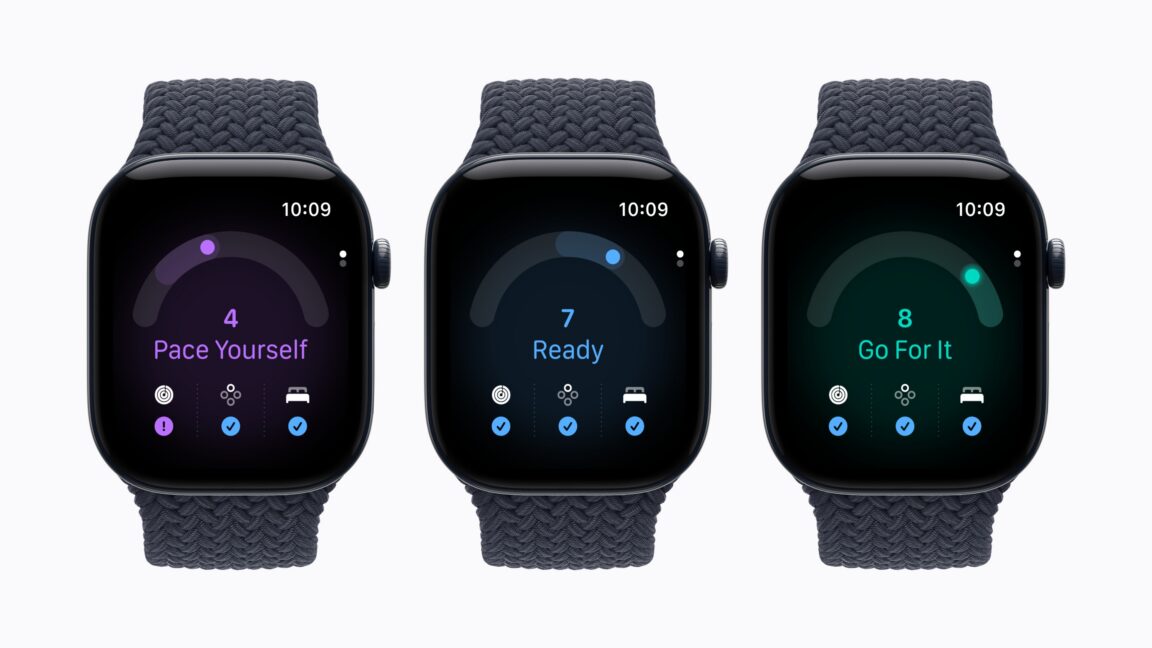
- How it works: The algorithm performs a holistic analysis of a user’s recent physical activity, cumulative training load, key vitals, and sleep score.
- Dynamic Updates: Unlike static morning reports offered by some competitors, Apple’s readiness score continuously updates throughout the day based on real-time activity and physiological stress, giving users an accurate reflection of their capacity for upcoming physical and mental demands.
"Health Age" and Vision-Based AI Movement Evaluations
In an effort to translate raw biometric data into actionable longevity insights, Apple is introducing a "Health Age" score within the iOS Health app. While specific algorithmic weights remain proprietary, the score is designed to give users a high-level perspective on their physiological vitality compared to chronological norms.
Furthermore, the Health app is expanding its functional capabilities through vision-based AI models operating locally on the iPhone. By combining computer vision analysis of a user’s gait and posture with continuous heart rate data from the Apple Watch, the system performs comprehensive movement evaluations. These evaluations meticulously measure:
- Flexibility: Assessing range of motion across major muscle groups.
- Strength: Evaluating functional power output during standard physical tasks.
- Balance: Monitoring stability metrics critical for fall prevention, particularly among aging populations.
Direct-to-Consumer Clinical Diagnostics
Perhaps the most disruptive health-related announcement is Apple’s partnership with Quest Diagnostics. Users can now schedule and purchase comprehensive lab work directly through the iOS Health app.
- The Panels: These specialized lab packages feature over 50 key biomarkers.
- Pricing & Accessibility: Priced at $119, these tests can be seamlessly booked through the app and fulfilled at approximately 2,000 Quest Diagnostics locations across the United States.
- Ecosystem Synergy: Once lab results are processed, they can be securely imported back into the Health app, creating a centralized digital health dossier that bridges consumer wearables with professional clinical diagnostics.
Apple Intelligence Features: Ambient Computing on the Wrist
Wearable technology has historically struggled with utility constraints due to small form factors and limited input methods. By integrating Apple Intelligence, the Series 12 and Ultra 4 effectively overcome these barriers, turning the wrist into an active, intelligent communication hub.
Shazam Integration
Music identification has always required unlocking a phone or opening a specific app. With the new Apple Watch lineup, native Shazam integration powered by Apple Intelligence allows users to identify surrounding music instantly and discreetly via wrist-based prompts.
Live Rewind Conversation Transcription
In high-stakes professional or fast-paced social environments, missing a crucial detail in a conversation can be costly. Apple has introduced Live Rewind, a tool designed to capture and transcribe audio context on the fly.
- When a user double-presses the Digital Crown, Live Rewind instantly displays the previous 15 seconds of a conversation as a text snippet on the watch face.
- This feature provides an immediate textual safety net for individuals who may have misheard a statement or need to quickly verify spoken details.
Siri Recap
Complementing Live Rewind is Siri Recap, an advanced conversational summarization tool. Siri Recap leverages on-device generative models to analyze lengthy discussions or meetings and distill them into high-level, digestible summaries. Users can review these summaries later in the day to jog their memory without wading through raw transcripts or audio recordings.
Official Statements and Industry Impact
While Apple executives emphasized the seamless harmony between hardware engineering and software intelligence during the unveiling, independent industry analysts have been quick to dissect the broader implications of these announcements.
Industry observers note that by introducing clinical lab integration via Quest Diagnostics, Apple is crossing a definitive threshold. No longer content with merely tracking wellness, Apple is actively positioning the iPhone and Apple Watch as central gateways to formal healthcare services. The $119 biomarker panel lowers the friction of routine bloodwork, encouraging preventative medicine through consumer-friendly digital infrastructure.
Regarding the incorporation of Apple Intelligence, software engineers point out that running complex generative models and vision-based AI routines while maintaining all-day battery life is a monumental engineering feat. By distributing computational loads between the Apple Watch and the paired iPhone, Apple has successfully circumvented the thermal and power constraints that typically plague small wearable form factors.
Future Outlook: The Trajectory of Smart Wearables
The launch of the Apple Watch Series 12 and Ultra 4 signals where the consumer health technology market is heading over the next decade.
- The Convergence of Consumer Tech and Clinical Medicine: The boundary between consumer wellness gadgets and medical devices continues to dissolve. With advanced optical sensors, AI movement evaluations, and direct lab testing access, the Apple Watch is rapidly evolving from a fitness companion into a comprehensive preventative health dashboard.
- Ambient Artificial Intelligence: As features like Live Rewind and Siri Recap mature, the reliance on active touchscreens will diminish. The future of wearables lies in ambient, context-aware intelligence that anticipates user needs, transcribes reality in real-time, and provides proactive health interventions before symptoms manifest.
- Market Dominance and Pricing Strategy: By holding the entry price points at $399 for the Series 12 and $799 for the Ultra 4, Apple maintains its aggressive pricing posture, threatening dedicated fitness-band competitors while exerting pressure on traditional watchmakers.
As preorders flood in ahead of the September 18 shipping date, the tech world will be watching closely to see how consumers adopt these sophisticated health and AI features in daily life. One thing is certain: the standard for what a smartwatch can—and should—do has officially been rewritten.