
Executive Overview
The intersection of video game development and generative artificial intelligence has long been a flashpoint for industry-wide debate, but a recent controversy surrounding Saber Interactive’s Rideshare “Stimulator” has elevated these tensions from philosophical disagreements to a direct, public clash between corporate leadership and creative talent.
The controversy erupted following public allegations made by veteran narrative designer and game writer Stella Sacco. Utilizing social media platforms, Sacco alleged that during her tenure as the lead writer on Rideshare “Stimulator”—developed in partnership with Unigine—she and her human writing team were abruptly sidelined and replaced by OpenAI’s ChatGPT midway through production. Furthermore, Sacco claimed that the game’s passenger voice acting was heavily reliant on generative AI, an inclusion she argued was obscured from prospective players on the title’s official Steam storefront.
In response, Saber Interactive has mounted a vigorous defense. While acknowledging that generative AI tools are used within the game’s framework—specifically to power an "experimental free-ride mode" that procedurally generates an infinite roster of passengers—the publisher categorically denies that human writers were ever laid off or substituted for automated technologies. Saber maintains that its writing staff has expanded significantly since 2003 and that the game’s narrative core was authored entirely by human hands. Furthermore, the company has committed to updating the game’s Steam store page to explicitly reflect its AI feature set once development finalizes.
However, the dispute extends far beyond the mechanics of scriptwriting. The public feud has dragged in high-profile industry executives, including Saber CEO Matt Karch, whose subsequent remarks regarding both the whistleblower and separate corporate rivalries have further inflamed the situation. As video game developers grapple with widespread contraction, job insecurity, and growing consumer skepticism regarding artificial intelligence, the Rideshare “Stimulator” controversy serves as a complex case study in the friction defining modern game development.
Detailed Chronology: From Development to Public Fallout
To understand how Rideshare “Stimulator” became the epicenter of an industry-wide debate, it is necessary to examine the timeline of events, stretching from early development cycles to the explosive disclosures made on social media.
The 2023 Development Period and Internal Disagreements
According to contemporaneous records and documentation shared by Stella Sacco, the foundational creative decisions regarding Rideshare “Stimulator” were established during the 2023 production window. Sacco, who initially stepped into the project as a lead writer, claims that early warnings regarding player pushback against generative AI were brought directly to executive leadership, including CEO Matt Karch.
According to Sacco’s accounts on Bluesky, the directive to integrate generative AI deeper into the project—not merely as a behind-the-scenes text tool, but as an active component of gameplay and dialogue generation—came from the top down. Sacco asserts that as these integration efforts intensified, her role as lead writer was effectively marginalized, leading to her departure and subsequent replacement by automated systems, specifically ChatGPT, mid-way through the production cycle. To substantiate her claims, Sacco published period-accurate Facebook screenshots from 2023 documenting her internal communications and reactions to being replaced in the workplace.
The Steam Storefront Reveal and Silence on AI
As development progressed toward a public reveal, Saber Interactive and Unigine launched the Steam page for Rideshare “Stimulator”, inviting players to wishlist the simulation title. At the time of its initial listing, the store page lacked explicit disclosures regarding the integration of generative AI technologies, despite the game relying on procedural and AI-driven systems to sustain its core gameplay loop.
This omission became a central pillar of Sacco’s public critique. In her posts, she noted that not only was the narrative text managed by generative systems, but the passenger voices heard throughout the game were likewise synthesized via AI—a detail she argued should have been transparently communicated to consumers prior to pre-orders or wishlisting campaigns.
Public Escalation and Executive Retaliation
The dispute entered the public consciousness when Sacco published a detailed thread on Bluesky outlining her experiences. The thread quickly caught the attention of trade publications like Game Developer, prompting formal inquiries into Saber Interactive’s development practices.
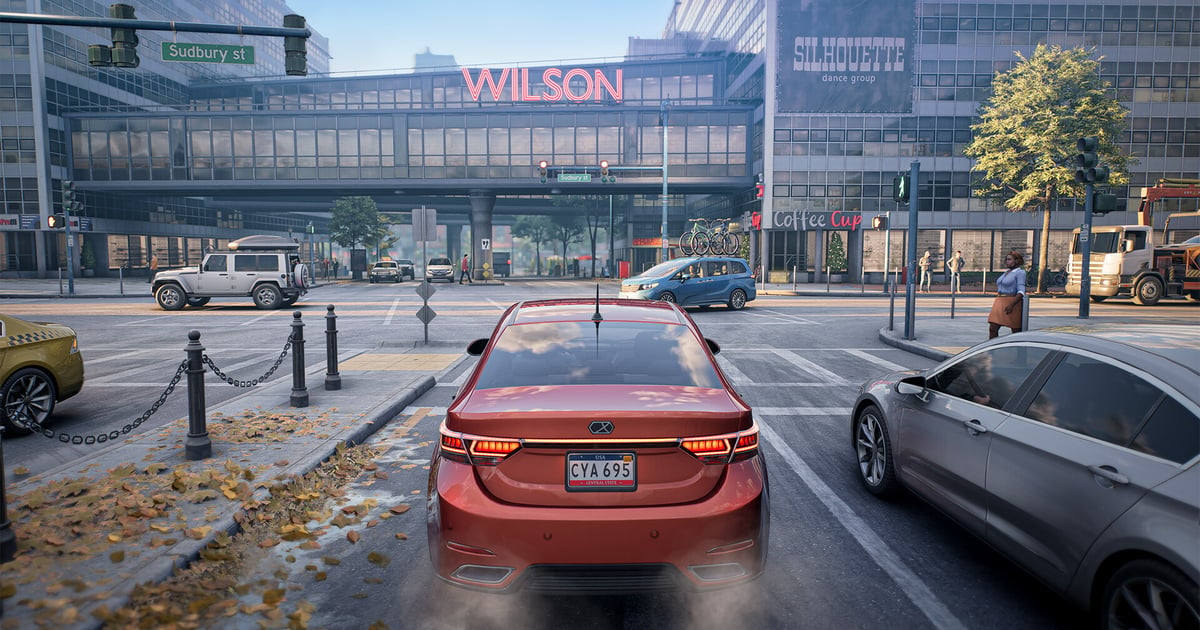
Rather than dampening the flames, the media inquiry triggered a cascade of public statements from Saber leadership. CEO Matt Karch addressed not only the generative AI allegations but also drew media attention for unrelated provocations embedded within the game’s marketing. Specifically, Karch confirmed that the Rideshare “Stimulator” reveal trailer featured a joke license plate explicitly mocking Gearbox CEO Randy Pitchford—a retaliatory jab stemming from historical criticisms Pitchford had leveled against Embracer Group, Saber’s former parent company.
When pushed on the AI controversy, Karch and Saber’s official spokespeople issued strong denials regarding the displacement of human writers, while simultaneously casting doubt on Sacco’s professional narrative. This back-and-forth culminated in sharp, disparaging remarks directed at Sacco by executive leadership, prompting a final, defiant response from the writer affirming the veracity of her statements and criticizing the conduct of Saber’s management team.
Supporting Context & Metrics: The Generative AI Landscape in Gaming
The conflict surrounding Rideshare “Stimulator” does not occur in a vacuum. It arrives at a critical juncture for the interactive entertainment industry, which is simultaneously grappling with a protracted wave of studio closures, mass layoffs, and the rapid, often controversial adoption of generative AI tools.
Industry Sentiment: Productivity Tool vs. Creative Threat
Recent industry data paints a complex picture of how game developers view artificial intelligence. According to multiple developer surveys and market analyses conducted over the past two years:
- Widespread Adoption: Roughly one-third of surveyed game industry professionals report utilizing generative AI tools in some capacity within their daily workflows, primarily for rapid prototyping, placeholder asset creation, and coding assistance.
- Profound Skepticism: Conversely, nearly half of all industry workers believe that generative AI will ultimately have a net-negative impact on the video game sector.
- Quality Concerns: A growing consensus among developers suggests that reliance on generative models lowers the overall artistic and narrative quality of games, flattening unique creative voices in favor of homogenized, algorithmic output.
The Economic Reality of Studio Contraction
Compounding these technical anxieties is an unforgiving macroeconomic climate. Over the last several years, the video game industry has shed tens of thousands of jobs due to post-pandemic market normalization, rising development budgets, and corporate restructuring. Major conglomerates—including Embracer Group (Saber’s former parent company) and media giants like Netflix—have shuttered historic development studios, leaving thousands of developers unemployed.
Within this environment of severe job insecurity, allegations that human writers are being actively replaced by large language models like ChatGPT carry profound emotional and professional weight. While Saber Interactive insists that its overall headcount has grown—asserting that its employee base has tripled since 2023 and that its 3,000+ employees face no threat of AI displacement—the mere perception of automation replacing creative labor is enough to ignite severe public backlash.
Official Statements and Corporate Defense
Faced with mounting scrutiny from both trade media and consumer communities, Saber Interactive issued formal clarifications outlining its stance on generative AI, its treatment of creative staff, and the specific functional role that AI plays within Rideshare “Stimulator”.
Saber’s Position on Generative AI and Staffing
In an official statement provided to industry press, a Saber Interactive spokesperson forcefully rejected the narrative that human writers were discarded in favor of automated systems:
"Neither Saber nor Unigine have replaced any writers with AI for Rideshare or any other game. Our writing staff has actually tripled since 2023, and the game’s story was written entirely by real people."
The publisher emphasized a distinction between utilizing AI as a foundational replacement for human creativity and employing it as an enhancement tool for dynamic gameplay systems. According to Saber, the integration of AI within Rideshare “Stimulator” is strictly confined to an "experimental free-ride mode." In this specific mode, AI is utilized "by necessity" to dynamically generate an infinite, unpredictable array of virtual passengers, allowing players to experience continuous, non-linear pickups and drop-offs without exhausting pre-scripted dialogue trees.
"We are firm believers in using AI tools to improve or enhance gameplay experiences and improve NPC behavior as we have done since Saber was founded in 2001," the spokesperson stated. "As the industry has continued to contract, Saber continues to hire. None of our 3,000+ employees have to worry about being replaced by AI."
The Steam Transparency Commitment
Acknowledging consumer demands for clarity, Saber confirmed that it would adjust its public-facing documentation to better reflect the game’s technological makeup.
"The Steam page will be updated once the feature set is finalized," the spokesperson confirmed. "We are touting this experimental mode as a feature, not shying away from it."
This commitment to updating the Steam page directly addresses regulatory and platform-specific pressures regarding artificial intelligence disclosure. Major storefronts, including Valve’s Steam, have increasingly tightened their guidelines, requiring developers to clearly disclose whether and how generative AI is utilized during the creation of game assets, narrative text, or audio performance.
Future Outlook: Precedent and Consumer Trust
The fallout from the Rideshare “Stimulator” dispute highlights several critical challenges that publishers, developers, and platform holders will continue to navigate in the coming years.
The Imperative of Transparency
As platforms enforce stricter disclosure mandates, publishers can no longer afford ambiguity regarding their technical pipelines. While Saber Interactive has promised to update its Steam page once its feature set is finalized, the initial omission of these details served as fertile ground for speculation and distrust. Moving forward, early and unambiguous transparency regarding generative AI components—whether used for procedural NPC generation, dynamic text, or synthetic voice work—will be essential to mitigating public relations crises before they erupt.
Navigating the Human Element
The emotional core of the Rideshare “Stimulator” controversy rests on the fear of vocational displacement. In an industry marked by systemic layoffs and volatile corporate restructuring, creative professionals are hyper-vigilant regarding the corporate deployment of automation. Even when corporate leadership insists that human headcounts are growing and that AI is strictly supplemental, the scars left by industry-wide contraction ensure that developers will closely scrutinize every implementation of generative technology.
Ultimately, Rideshare “Stimulator” stands as a bellwether for the modern gaming landscape. As developers experiment with the boundaries of procedural generation and artificial intelligence, the success of their titles will depend not only on technical innovation, but on maintaining trust, respecting creative labor, and fostering transparent communication with the audience that plays them.