Executive Overview
The landscape of mobile operating systems has long been dominated by walled gardens, with Google’s Play Store and Apple’s App Store acting as the primary gatekeepers for software distribution. For Android users seeking an alternative, sideloading and independent repositories have always offered a breath of fresh air. Among these, F-Droid has stood out as the premier community-driven, trustworthy repository exclusively dedicated to Free and Open Source Software (FOSS).
However, prestige and utility have historically collided with technical stagnation. For an astonishing ten years, the official F-Droid client plodded along without a major architectural update. Its interface, while functional, belonged to a bygone era of Android design, and its underlying codebase presented mounting hurdles for developers and users alike.
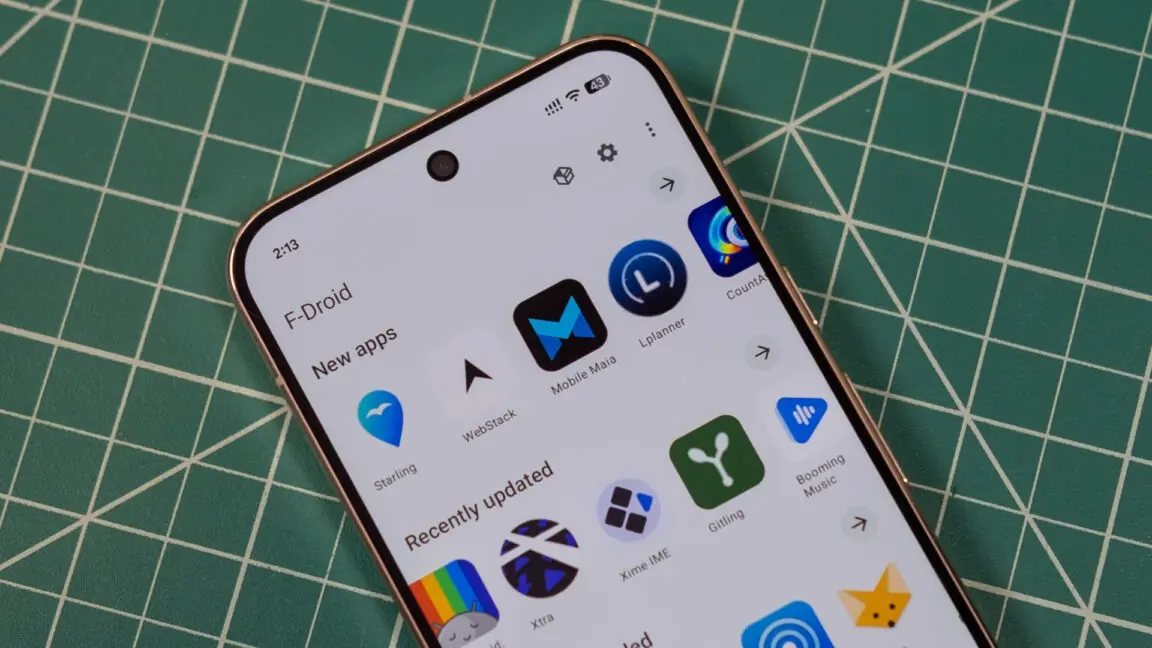
That era has officially drawn to a close. Following a grueling, multi-year developmental overhaul, the F-Droid team has announced the global rollout of F-Droid 2.0. Built entirely from scratch using modern Android development frameworks like Kotlin and Jetpack Compose, this release represents far more than a mere cosmetic facelift. It is a vital modernization effort designed to streamline discovery, enhance privacy, and navigate an increasingly hostile regulatory and technical environment imposed by major platform holders like Google.
This comprehensive report examines the structural evolution of F-Droid 2.0, the technological leaps that enabled its rebirth, the privacy-first philosophy driving its existence, and the shifting geopolitical and technical battlegrounds of Android sideloading.
Detailed Chronology: Ten Years of Stagnation to a Modern Renaissance
The Genesis and Stagnation of a FOSS Pioneer
When F-Droid first emerged onto the Android scene over a decade ago, the mobile ecosystem looked radically different. Smartphones were rapidly evolving, and Google’s Play Store—then still known as the Android Market—was solidifying its monopoly. F-Droid carved out a vital niche: a repository where every single application was open-source, compiled from source code by the project maintainers, and entirely free of telemetry, tracking, and advertisements.
Yet, as Android evolved through dozens of iterative updates—introducing complex design languages like Material Design, shifting to new API levels, and overhauling background processing and user interface paradigms—the official F-Droid client lagged behind.
Under the hood, the legacy app relied on older programming practices that made maintenance increasingly difficult. While the catalog of open-source applications swelled from a modest handful to thousands of utilities, games, and privacy tools, the storefront itself felt archaic. Users encountered sluggish response times, rudimentary search capabilities, and an interface that felt completely disconnected from contemporary Android aesthetics. A decade passed without a foundational update, leading many within the FOSS community to wonder if the flagship client would ever catch up to the modern era of mobile software.
The Multi-Year Rebuild
Recognizing that community trust and technical debt could not coexist indefinitely, the F-Droid core team quietly initiated a multi-year modernization project. The goal was unambiguous: throw away the legacy codebase and rebuild the application from the ground up to meet contemporary standards of performance, security, and design.
The transition to Kotlin—Google’s preferred language for Android development—combined with Jetpack Compose, the modern declarative UI toolkit, transformed the project. This rewrite was not just about making the app look prettier; it was about establishing a robust, maintainable foundation that could adapt to future iterations of the Android operating system without requiring exhaustive architectural rewrites.
By shifting to Compose, the developers eliminated the jank and sluggishness that plagued the legacy client. The application is now remarkably responsive, rendering complex lists, application detail pages, and search matrices with buttery-smooth animations. Furthermore, the integration of optional Material You theming ensures that F-Droid 2.0 dynamically adapts its color palette to match the user’s wallpaper, blending seamlessly into modern Android environments.
Supporting Context & Metrics: The Philosophy and Mechanics of F-Droid 2.0
Discovery and Curation: Taming the FOSS Catalog
As F-Droid’s repository expanded to encompass thousands of applications, discovery became a critical bottleneck. In the legacy app, finding a specific tool often felt like searching for a needle in a haystack.
F-Droid 2.0 directly addresses this friction by completely revamping its categorization and search engines. The new Discover page serves as a high-level curation hub, surfacing notable applications, editor picks, and community highlights. Meanwhile, the specialized search tab dives deep into granular niches, offering dedicated categories for advanced tools such as local firewalls, encrypted password managers, offline mapping utilities, and robust VPN clients.
Crucially, the search engine has been upgraded to index and parse complete application descriptions rather than relying solely on package names and brief titles. This semantic shift means users can search for functional capabilities—such as "markdown editor," "audio normalizer," or "two-factor authentication"—and receive accurate, comprehensive results.
The Anti-Tracking Advantage
To fully appreciate the significance of F-Droid 2.0, one must examine the economic and operational model that underpins it, contrasted against mainstream alternatives like the Google Play Store or Apple App Store.
| Feature | F-Droid 2.0 | Google Play Store |
|---|---|---|
| Primary Focus | Free & Open Source Software (FOSS) | General software distribution & monetization |
| Telemetry & Tracking | Zero tracking, zero analytics | Extensive user profiling and behavioral tracking |
| Monetization | Donation-driven, non-profit | Ads, in-app purchases, commission on sales |
| App Auditing | Built from source code; transparent builds | Automated and manual review (closed ecosystem) |
| UI Framework | Jetpack Compose (Modern Kotlin) | Proprietary/Native Google codebase |
While the Google Play Store constantly monitors user taps, search queries, installation histories, and session lengths to feed ad-targeting algorithms and push unsolicited recommendations, F-Droid operates on a fundamentally different ethos. It helps users find the software they need and immediately gets out of the way. There are no sponsored listings, no targeted pop-ups, and no data harvesting operations running in the background.
Official Statements and Industry Implications
Navigating the Sideloading Battlefield
The launch of F-Droid 2.0 arrives at a precarious moment for the Android ecosystem. For years, Google has maintained a tight grip on software distribution while officially supporting "sideloading"—the ability to install applications from sources outside the official Play Store. However, this support has increasingly come with friction.
Under the banner of user security, Google has systematically introduced roadblocks designed to deter casual users from installing third-party APKs. These warnings, often filled with alarming language regarding malicious software and data privacy risks, create psychological barriers to alternative app stores. This defensive posture has escalated recently with Google’s introduction of controversial developer verification systems and proactive scanning mechanisms aimed at tightening control over non-Play software distribution.
Speaking on these regulatory and technical hurdles, open-source advocates and the F-Droid team have repeatedly called attention to anti-competitive practices. The weaponization of security warnings to disadvantage independent app repositories threatens the core open nature upon which Android was originally built.
Streamlining Installation via Google’s Pre-Approval API
Despite these systemic friction points, F-Droid 2.0 introduces a clever workaround to significantly ease the installation burden for end users.
Historically, installing an app from F-Droid required a multi-step, cumbersome dance: downloading the APK file, opening a file manager or download manager, tapping the file, encountering a warning prompt regarding unknown sources, navigating into system settings to grant temporary installation permissions for that specific session, and finally confirming the installation.
F-Droid 2.0 leverages Google’s pre-approval API to streamline this workflow. Instead of forcing the user to manually download an APK and interact with multiple scary system pop-ups, the application integrates more cleanly with the operating system’s native package installer flow. Users can initiate an installation directly from within F-Droid, verify the action with a single prompt, and complete the process. While it still requires one more tap than the deeply integrated Play Store experience, it drastically reduces user friction, effectively lowering the barrier to entry for non-technical users looking to adopt open-source software.
Future Outlook: What F-Droid 2.0 Means for the Mobile Landscape
The release of F-Droid 2.0 is not merely an isolated software update; it is a vital defensive and offensive maneuver for the open-source community. As mobile operating systems become increasingly locked down—mirrored by Apple’s tightly controlled iOS ecosystem and Google’s continuous tightening of Android security paradigms—the survival of independent app distribution channels relies heavily on usability and professional execution.
By shedding its decade-old interface and embracing modern development frameworks like Kotlin and Jetpack Compose, the F-Droid project has signaled that open-source software can match, and often exceed, the polish of commercial proprietary alternatives.
Looking forward, the roadmap for F-Droid 2.0 focuses on community-driven expansion, improved mirror reliability, and enhanced cryptographic verification tools to ensure that users receive uncompromised, pristine source builds. As regulatory bodies around the globe—particularly within the European Union via the Digital Markets Act (DMA)—begin to clamp down on gatekeeper monopolies and mandate fair access for alternative app stores, F-Droid is uniquely positioned to capitalize on a freer, more open digital future.
For Android purists, privacy advocates, and lovers of open-source technology, F-Droid 2.0 is more than an update—it is the renaissance of mobile freedom.