







Executive Overview
The landscape of enterprise software security is undergoing a profound and unsettling transformation. In a joint announcement that has sent ripples through the cybersecurity and software engineering communities, technology giants IBM and Red Hat revealed that their collaborative Lightwell initiative has successfully identified and remediated more than 400 previously unknown vulnerabilities within essential Java libraries.
Launched earlier this year, the Lightwell project was designed to tackle a ticking time bomb in the modern software supply chain: the vast, unvetted ocean of legacy open-source code upon which global enterprises rely. The discovery of more than 400 zero-day-equivalent flaws in Java alone—double the initial projections—underscores a systemic vulnerability crisis. Compounding this milestone, the companies announced that the Lightwell Clearinghouse, a dedicated program allowing IT organizations to submit specific open-source software dependencies for priority review and remediation, is now generally available for enterprise deployment.
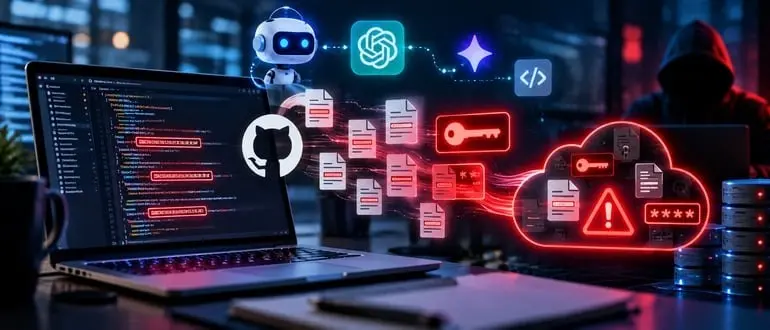
However, this achievement is a double-edged sword. According to senior Red Hat leadership, these findings are merely the tip of the iceberg. As malicious actors and security researchers alike weaponize artificial intelligence (AI) to scour legacy codebases, enterprises face an unprecedented deluge of vulnerabilities. The economics of modern cybercrime have tilted dangerously in favor of the attacker, with the cost of discovering a critical software flaw plunging as low as $30.
For DevSecOps teams accustomed to monthly patching cycles and leisurely vulnerability validations, the age of AI demands an immediate paradigm shift toward continuous remediation. Organizations clinging to outdated security assumptions are sleepwalking toward a crisis, ignoring the reality that application security is no longer just about compliance—it is an existential enterprise risk.
Detailed Chronology and the Genesis of the Lightwell Initiative
The roots of the Lightwell initiative trace back to a growing industry-wide realization that traditional application security testing (AST) tools were failing to keep pace with the exponential growth of software dependencies. Modern applications are rarely built from scratch; instead, they are assembled like digital skyscrapers using thousands of pre-existing open-source blocks, libraries, and modules. While this accelerates time-to-market, it also introduces a vast, largely invisible surface area for exploitation.
Recognizing this systemic vulnerability, IBM and Red Hat pooled their resources, engineering talent, and threat intelligence networks to launch the Lightwell initiative earlier this year. The core objective was clear: proactively hunt down hidden, unknown vulnerabilities (zero-days) in widely used open-source ecosystems before bad actors could weaponize them.
The initiative’s focal point became the Java ecosystem—a foundational pillar of enterprise application architecture. As engineering teams deployed advanced code-analysis techniques, the scale of the hidden threat quickly surpassed expectations. By the close of this reporting period, IBM and Red Hat confirmed the remediation of over 400 unique, previously undocumented flaws in Java libraries alone.
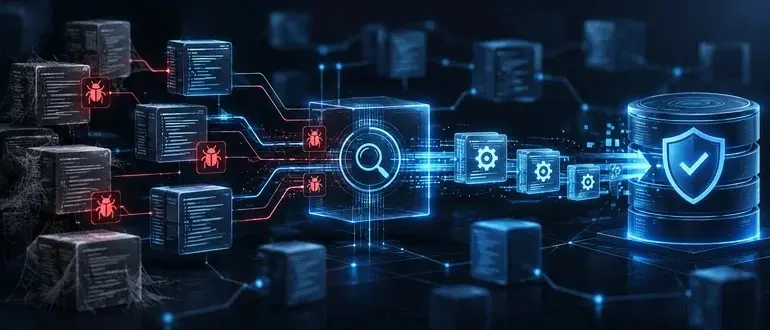
Crucially, the scope of Lightwell expanded with the commercial and operational rollout of the Lightwell Clearinghouse. This newly general-available program bridges the gap between enterprise security needs and upstream open-source maintenance. Through the Clearinghouse, IT organizations can submit specific open-source software dependencies vital to their tech stacks for priority review, auditing, and remediation by IBM and Red Hat security experts.
Rather than keeping these fixes proprietary—a move that would run counter to the ethos of open-source collaboration—the patches developed through Lightwell are contributed back to upstream open-source projects under responsible disclosure protocols. This ensures that the entire global developer ecosystem benefits from the hardening of foundational libraries, creating a virtuous cycle of collaborative defense.
Supporting Context, Metrics, and the Mechanics of Modern Remediation
The operational mechanics behind how enterprises consume these remediated assets are as critical as the vulnerabilities themselves. IBM and Red Hat have deliberately kept the exact number of enterprise clients utilizing the Lightwell Network confidential. However, industry analysts note that the service is architected to integrate seamlessly into existing enterprise pipelines.
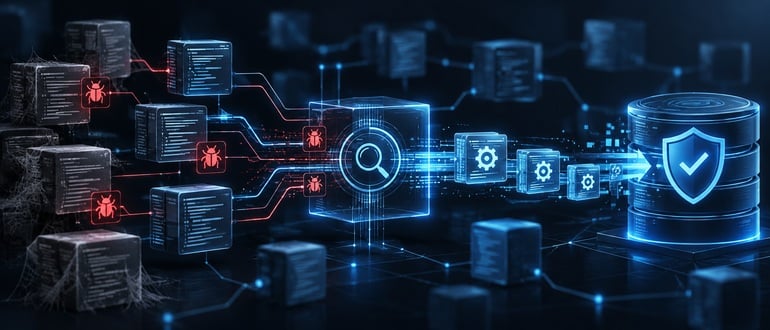
Remediated code and verified patches are delivered via secure, enterprise-grade repositories that connect directly into existing continuous integration/continuous deployment (CI/CD) workflows. Through the Lightwell Network, IT and DevSecOps teams can pull verified patches, ingest them into their build environments, and establish an ongoing operational cadence for addressing software debt.
However, ingesting patches is only half the battle; the speed of validation is becoming the ultimate bottleneck in enterprise security. According to Ben Bread, senior principal product manager for Red Hat, the traditional enterprise approach to vulnerability management is fundamentally broken.
"Organizations that today require three months to validate a code fix are simply not going to be able to keep pace with the vulnerability deluge," Bread warns.
In many legacy enterprise environments, validating a single patch involves a grueling manual gauntlet of regression testing, compliance checks, and bureaucratic sign-offs. In the era of automated, AI-driven cyberattacks, a three-month validation window is an eternity. Bread emphasizes that the sheer volume of legacy vulnerabilities being uncovered will serve as a stark tipping point, forcing organizations to aggressively adopt automated code scanners, test automation platforms, and continuous integration testing tools. The manual review process must evolve into an automated engineering workflow if businesses hope to survive.
Furthermore, the mechanics of modern remediation require a fundamental cultural shift within engineering departments. Historically, patching was treated as an IT chore—a disruptive maintenance window scheduled during off-peak hours. Today, continuous patching must become an inherent, real-time component of the software development lifecycle (SDLC).
Official Perspectives and Expert Insights
The implications of the Lightwell findings extend far beyond Java libraries. Speaking on the broader trajectory of application security, Red Hat’s Ben Bread offered sobering insights into what enterprise security teams should anticipate in the near future.
"The 400 unknown vulnerabilities we’ve uncovered in Java represent roughly twice the number that initial models projected," Bread noted. "And there is undoubtedly more to come as artificial intelligence tools are deployed to analyze legacy codebases across every major programming language."
Bread highlighted that DevSecOps teams should prepare for a parallel wave of discoveries in libraries built using Python, C++, Go, and other popular enterprise languages. The underlying codebase of the digital economy is riddled with architectural oversights, logic errors, and memory-safety issues that went unnoticed by human reviewers for decades. Now, AI models are reading that code with tireless precision, exposing flaws at a velocity that completely overwhelms human security analysts.
This velocity is supercharged by a terrifying economic reality: the cost of discovering a vulnerability has plummeted to approximately $30.
In the past, finding a zero-day exploit required deep technical expertise, specialized fuzzing equipment, and weeks or months of manual reverse engineering. Today, an attacker can leverage off-the-shelf AI models and automated scanning scripts to discover exploitable flaws for the price of a tank of gas or a modest dinner out. This dramatic democratization of offensive cyber capabilities means that the economics of application security are overwhelmingly skewed in favor of the threat actor.
Despite these alarming market dynamics, Bread expressed profound concern over the corporate complacency he continues to witness.
"There are still far too many organizations that are not taking the threats AI poses to application security seriously enough," Bread asserted. "Many of those organizations are going to wake up and discover just how many vulnerabilities exist in codebases that they blindly assumed were secure simply because they hadn’t been breached yet."
The illusion of security often shatters only when organizations use advanced AI tools to preview the vulnerabilities hiding in plain sight within their own repositories. It is only when executives see firsthand what an automated AI model can uncover—and how quickly it can draft an exploit—that the true scope of enterprise risk becomes painfully apparent.
Future Outlook: The AI Threat Horizon and the Imperative for Proactive Defense
As we look toward the horizon of enterprise technology, the intersection of artificial intelligence and cybersecurity defines a new era of digital warfare. The traditional cat-and-mouse game between hackers and defenders has accelerated into an algorithmic arms race.
The AI-Powered Attack Vector
In the age of AI, threat actors no longer need to spend weeks probing network perimeters. Cybercriminal syndicates and nation-state actors are deploying autonomous AI agents designed to perform continuous reconnaissance, vulnerability discovery, and exploit generation. Where human hackers might take weeks to weaponize a newly discovered flaw, autonomous AI models can analyze a patch, reverse-engineer its underlying vulnerability, and deploy automated exploits within hours of public disclosure.
Consequently, the traditional vulnerability lifecycle—where software is patched once a month during scheduled patch Tuesdays—is dead. DevSecOps teams must transition to continuous patching, treating software hygiene as an ongoing, automated bloodstream rather than periodic maintenance.
The Imperative for Cultural and Technical Transformation
The findings from the IBM and Red Hat Lightwell initiative serve as an urgent wake-up call. The critical question facing chief information security officers (CISOs) and technology executives is no longer if a breach will occur, but how severe the impact will be when an exploited vulnerability meets an unpatched system.
To navigate this treacherous landscape, enterprise leadership must take decisive action:
- Embrace Automated Remediation: Organizations must integrate clearinghouse services, secure repositories, and automated patch-validation pipelines directly into their CI/CD workflows to compress the time between vulnerability discovery and production deployment.
- Shatter the Myth of Legacy Security: Enterprises must abandon the dangerous assumption that older, stable codebases are inherently secure. Legacy code must be aggressively audited using the same AI-driven tools that attackers use to target them.
- Redefine DevSecOps Metrics: Security performance must be measured not by the absence of alerts, but by the velocity and agility with which the organization can ingest, test, and deploy software patches.
Ultimately, the cybersecurity community must hope that the eye-opening data from initiatives like Lightwell acts as a catalyst for proactive defense. Waiting for a catastrophic, industry-shaking security event to mandate application security reform is a dangerous gamble. In the age of AI, vigilance, automation, and continuous adaptation are the only shields standing between enterprise stability and digital chaos.