







Executive Overview
In what international maritime security experts are calling a chilling and unprecedented escalation of the conflict in Eastern Europe, coordinated sea and aerial drone attacks have struck three commercial cargo ships within the exclusive economic zones (EEZs) of NATO member states Bulgaria and Romania. The devastating sequence of events marks the first time that active hostilities in the Black Sea have directly breached the maritime sovereign economic zones of the transatlantic alliance, resulting in at least two confirmed fatalities, multiple critical injuries, and the complete loss of two vessels.
The coordinated strikes—unfolding over a frantic forty-eight-hour window on October 5 and 6—have fundamentally transformed the geopolitical risk landscape of the Black Sea. For over two years since the onset of the full-scale Russian invasion of Ukraine, maritime commerce has faced persistent threats, floating naval mines, and localized artillery engagements. However, these risks were largely confined to Ukrainian territorial waters or disputed contested corridors. The targeting of civilian merchant vessels flying foreign flags deep inside the recognized EEZs of NATO allies Bulgaria and Romania represents a qualitative leap in aggression.
The incidents have sent shockwaves through Brussels, Washington, and national capitals along NATO’s eastern flank. European Union leadership has condemned the attacks as an alarming normalization of violence against civilian infrastructure, while defense analysts warn that the strikes carry all the hallmarks of "hybrid warfare"—a deliberate campaign designed to test NATO’s Article 5 thresholds, disrupt vital supply chains, and intimidate regional economies without triggering a direct, all-out military confrontation.
As joint naval investigations scramble to piece together telemetry, radar data, and wreckage, the international community is left grappling with an urgent, high-stakes question: How will the Western alliance respond to a creeping maritime war that has finally crossed the threshold into NATO waters?
Detailed Chronology of the Attacks
The synchronized devastation unfolded across two consecutive days in early October, shattering the fragile illusion of safety in the western half of the Black Sea.
October 5: The Assault in Romania’s Exclusive Economic Zone
The crisis began on the morning of October 5 within the exclusive economic zone of Romania, a key NATO frontline state sharing a substantial border with Ukraine. The target was the Royad Mammadov, a Turkish-owned cargo ship quietly traversing international commercial lanes.
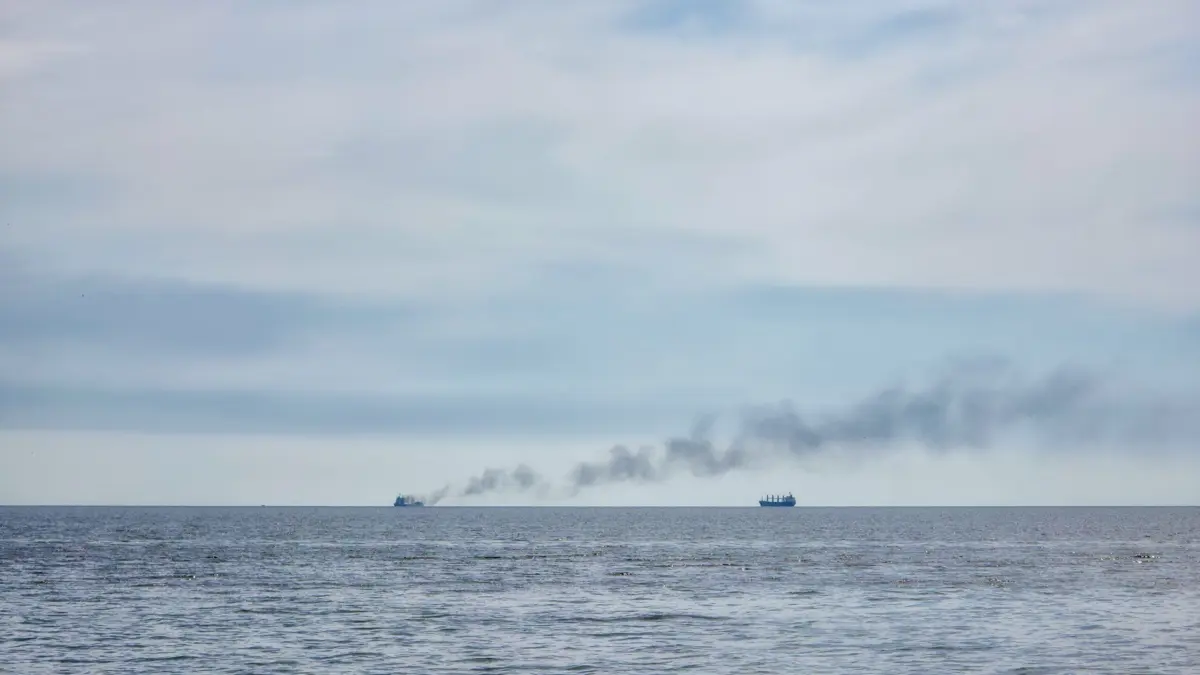
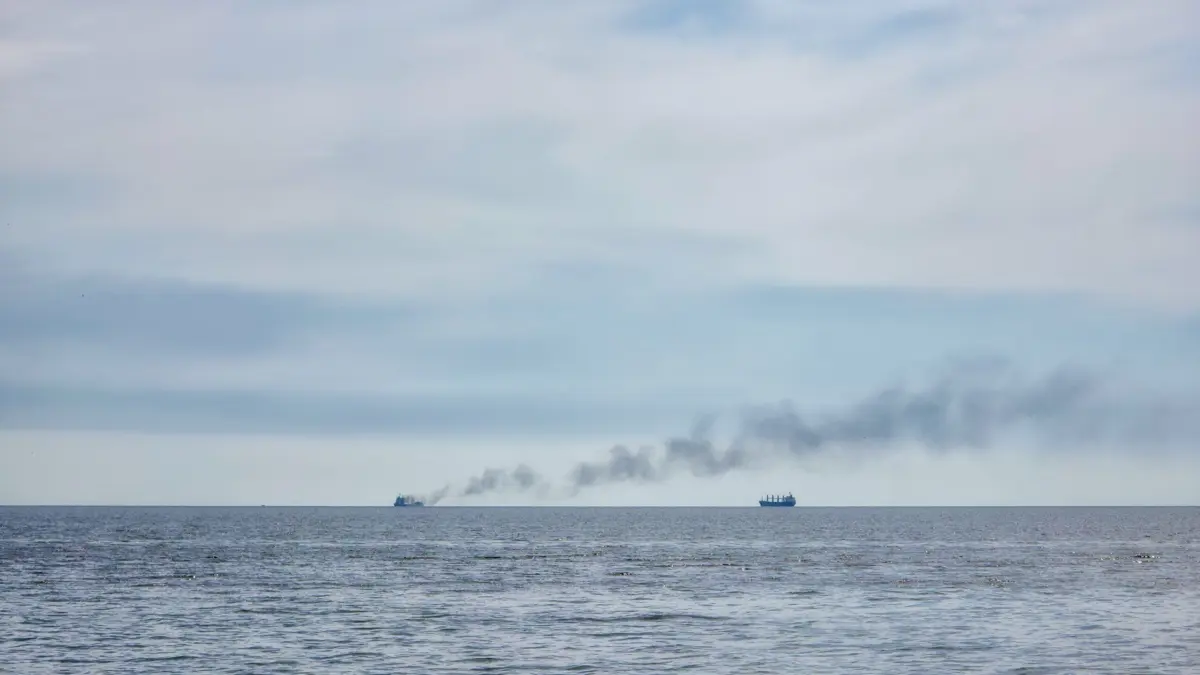
According to regional monitoring reports and maritime safety updates compiled by Euronews, the vessel was suddenly intercepted by unidentified aerial drone assets. Witnesses reported the terrifying hum of incoming loitering munitions moments before precision impacts rocked the ship’s superstructure. The subsequent explosions triggered catastrophic fires that quickly engulfed the cargo holds.
As black smoke billowed across the horizon, the ship’s crew fought a desperate, futile battle against the blaze before abandoning ship. A complex rescue operation involving Romanian naval vessels and emergency search-and-rescue helicopters was swiftly mounted. Authorities successfully plucked 11 crew members from the freezing waters and life rafts, though many suffered from varying degrees of smoke inhalation, burns, and hypothermia.
Tragically, the human cost was immediate and severe. Two crew members were confirmed dead at the scene, their bodies recovered by Romanian responders. Compounding the tragedy, a twelfth crew member vanished during the chaos, prompting a multi-day air-and-sea search that yielded no further trace of the missing mariner. The Royad Mammadov, structurally compromised and completely gutted by fire, eventually succumbed to the elements and slipped beneath the waves.
October 6: The Double Strike off the Coast of Bulgaria
If the attack on the Royad Mammadov was viewed by some initial observers as an isolated tragic deviation, the events of October 6 shattered that hope. Roughly 80 miles (128 kilometers) off the coast of Bulgaria—deep within Sofia’s sovereign exclusive economic zone—a dual assault targeted two additional merchant vessels in rapid succession.
The targets were the Alfa Watan, a cargo vessel flagged under Togo, and the Able, sailing under the flag of Palau. According to detailed accounts from the Associated Press, the ships were set upon by a sophisticated, multi-vector swarm combining high-speed surface sea drones (uncrewed surface vessels, or USVs) and loitering aerial drones.
The Alfa Watan took the brunt of the kinetic force. Struck by multiple explosive-laden sea drones near its waterline, the Togo-flagged freighter suffered catastrophic hull breaches. The water influx was too rapid for the damage-control systems to manage, and the ship sank within hours. As of this writing, the precise fate and whereabouts of the Alfa Watan’s entire crew remain shrouded in uncertainty, with maritime rescue coordinators desperately combing the surrounding international shipping lanes for survivors or life rafts.
Simultaneously, its sister-in-peril, the Able, was targeted by aerial munitions. The resulting strikes ignited massive fuel and cargo fires, turning the Palau-flagged vessel into a blazing beacon in the middle of the Black Sea. Only quick-thinking and heroic intervention by a Bulgarian passenger and vehicular ferry prevented an even greater loss of life. The ferry diverted from its route, braving hazardous conditions to rescue all 18 crew members aboard the burning Able. Among the survivors, two mariners sustained severe, life-threatening trauma and burns; they were immediately transferred via emergency medical evacuation flights to specialized trauma centers in the coastal city of Varna.
Supporting Context & Metrics: The Geopolitics of Black Sea Shipping
To fully grasp the gravity of the October 5–6 drone strikes, one must understand the vital economic and strategic arteries of the Black Sea basin. Prior to the outbreak of full-scale war in 2022, the Black Sea was one of the world’s most dynamic maritime trade corridors, moving tens of millions of tons of agricultural commodities—wheat, corn, and barley—alongside industrial metals, oil, and manufactured goods from Ukraine, Russia, and Central Asia to global markets across Europe, North Africa, and the Middle East.
[Black Sea Maritime Corridor Security Breakdown]
┌───────────────────────────────────────┬────────────────────────────────────────┐
│ Zone Classification                   │ Operational Risk Level                 │
├───────────────────────────────────────┼────────────────────────────────────────┤
│ Ukrainian Territorial Waters          │ Extreme (Active Combat / Sea Mines)    │
│ Western Black Sea / Open Corridor     │ High (Recurrent Drone & Missile Threats)│
│ NATO Member EEZs (Bulgaria / Romania) │ Severe (Elevated Following Oct 5-6)    │
└───────────────────────────────────────┴────────────────────────────────────────┘
The destruction of the Royad Mammadov, Alfa Watan, and Able threatens to unravel the delicate maritime equilibrium that has been painstakingly maintained since the collapse of the UN-backed Black Sea Grain Initiative. Commercial insurers have already begun recalibrating risk premiums for vessels operating in eastern European waters. Marine war risk insurance—already exorbitantly high for voyages approaching Ukrainian ports—is projected to spike across the entire western Black Sea basin, potentially pricing out smaller operators and sending shockwaves through international grain markets.
Furthermore, the choice of targets highlights an insidious tactical evolution. Maritime security analysts point out that exclusive economic zones are not territorial waters; under the United Nations Convention on the Law of the Sea (UNCLOS), coastal states enjoy sovereign rights over the economic exploration and use of these waters (such as fishing and energy harvesting), but freedom of navigation is legally guaranteed to all nations. By attacking civilian cargo ships within these zones, the perpetrators are intentionally blurring the lines between international shipping lanes and active combat theaters, effectively creating a de facto blockade zone without formally declaring one.
The inclusion of sea drones—increasingly sophisticated uncrewed watercraft capable of carrying hundreds of kilograms of high explosives over hundreds of kilometers—represents a democratization of asymmetric naval warfare. Once the exclusive domain of advanced state navies, long-range maritime drone technology is now reshaping modern naval combat, rendering traditional capital ships vulnerable and making commercial shipping an exceptionally soft, high-impact target.
Official Statements and Diplomatic Fallout
The international response to the Black Sea drone attacks has been swift, sharp, and deeply polarized, underscoring the delicate geopolitical fault lines running through the NATO alliance.
Bulgarian and Romanian Condemnations
In Sofia, the reaction was immediate and uncompromising. Bulgarian Prime Minister Rumen Radev addressed the nation and international press corps, labeling the strikes as an "unacceptable attack in Bulgaria’s exclusive economic zone" and a "blatant violation of international law and maritime law." Radev emphasized that his government would not tolerate foreign military actions threatening civilian lives and sovereign economic spaces within striking distance of European population centers.
In Bucharest, Romanian defense officials held emergency security briefings to review radar telemetry surrounding the downing of the Royad Mammadov. While Romanian forces played a vital role in rescuing the surviving crew members, the realization that an explosion of this magnitude occurred within their maritime jurisdiction has sparked intense domestic debate regarding air defense coverage and maritime patrol frequency along NATO’s eastern flank.
European Union Leadership
From Brussels, European Commission President Ursula von der Leyen took to social media to voice the bloc’s profound anxiety. In a strongly worded statement published on the platform X (formerly Twitter), von der Leyen described the succession of drone strikes as "increasingly concerning," noting that the attacks on civilian shipping are fundamentally "unacceptable."
However, von der Leyen maintained a measured diplomatic posture regarding attribution, noting that the precise forensic circumstances and origin points of the attacks were "still being established" by investigative teams. She concluded with an unequivocal pledge of support: "We stand in full solidarity with our Member States on the Eastern flank."
Kyiv’s Assessment and Attribution
While European leaders urged caution regarding definitive attribution, Ukrainian President Volodymyr Zelenskyy adopted a far more direct and accusatory stance. Citing the preliminary findings of a joint intelligence and naval investigation conducted alongside the Bulgarian navy, Zelenskyy asserted that the strikes were indisputably the result of a "Russian combined attack using both sea and aerial drones."
In public briefings, the Ukrainian leader underscored that Ukraine’s armed forces were not conducting any military operations in that specific sector of the western Black Sea, effectively refuting any suggestions of friendly-fire accidents or counter-offensive collateral damage. Kyiv argues that the pattern of strikes fits squarely within Moscow’s broader strategy of economic strangulation, designed to intimidate shipowners, inflate shipping costs, and undermine international confidence in Black Sea maritime commerce.
As of press time, official representatives of the Russian Federation have not issued a formal acknowledgement or denial regarding the specific targeting of the Royad Mammadov, Alfa Watan, or Able, maintaining their established rhetorical stance regarding maritime incidents in contested zones.
Future Outlook: The Strategic Implications for NATO and Global Trade
The crossing of the NATO EEZ threshold marks a perilous new chapter in the geopolitical fallout of the war in Ukraine. As investigators continue to scour the debris fields off the coasts of Varna and Constanța, defense strategists are warning of several critical ramifications for the immediate future:
- Militarization of NATO’s Maritime Borders: Pressure is mounting on NATO’s Supreme Allied Commander Europe (SACEUR) to enhance surveillance, intelligence-sharing, and active naval patrols across the Black Sea under the banner of the "Black Sea Enhanced Vigilance Activity." Expect calls for increased deployments of maritime patrol aircraft, anti-drone naval corvettes, and coastal radar installations in Bulgaria and Romania.
- Insurance Crises and Trade Disruption: The psychological impact on civilian mariners cannot be overstated. Seafarer unions are already demanding hazard pay increases and enhanced evacuation guarantees for voyages near eastern European waters. If marine insurance underwriters classify the entire western Black Sea as a high-risk war zone, regional shipping volumes could plummet, exacerbating global food and commodity price volatility.
- The Gray-Zone Dilemma: The attacks highlight the persistent challenge of "gray-zone warfare"—hostile actions that fall just below the threshold of an outright armed attack under NATO’s Article 5. Because the strikes targeted commercial vessels in exclusive economic zones rather than sovereign territorial land or warships, Western leaders face a complex diplomatic puzzle: how to mount a robust, credible deterrence response without inadvertently escalating into a direct hot war between NATO and nuclear-armed Russia.
Ultimately, the sinking of the Alfa Watan and Royad Mammadov, alongside the near-destruction of the Able, serves as a grim reminder that modern conflicts do not respect neat geographic boundaries. As unmanned technology reshapes the maritime domain, the safety of civilian sailors and the integrity of international trade routes hang dangerously in the balance, demanding an urgent, united response from the international community.