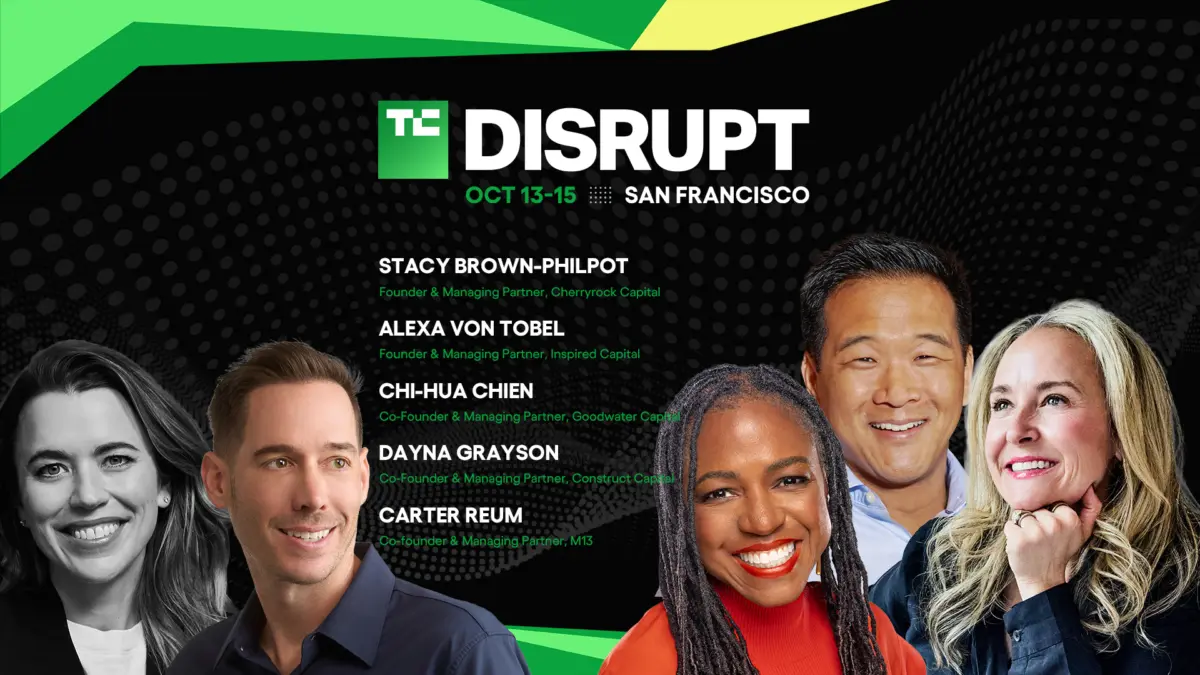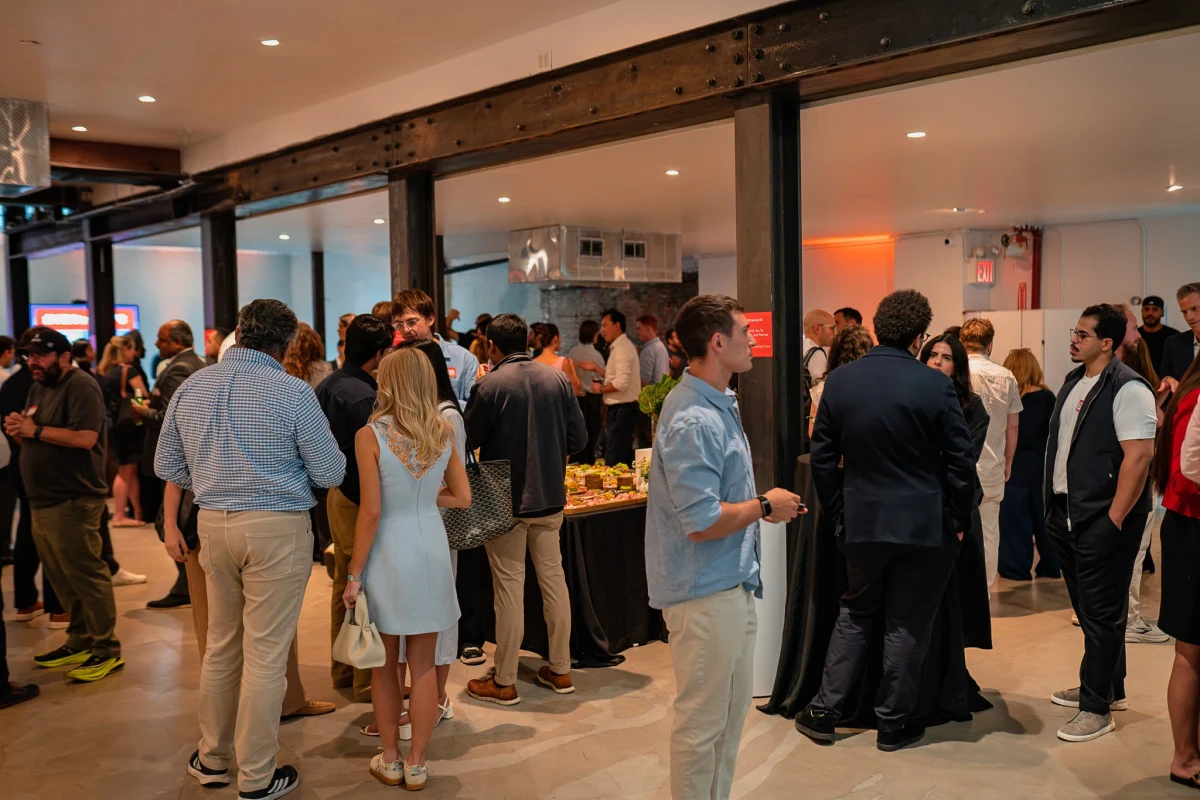







SAN FRANCISCO — As the technology landscape pivots from the speculative frenzy of foundational model development into an era defined by brutal economic realities, practical execution, and infrastructure ROI, the global tech community is preparing for its definitive annual gathering. TechCrunch Disrupt 2026 is returning to Moscone West in San Francisco from October 13 to 15, drawing more than 10,000 founders, investors, operators, and enterprise leaders.
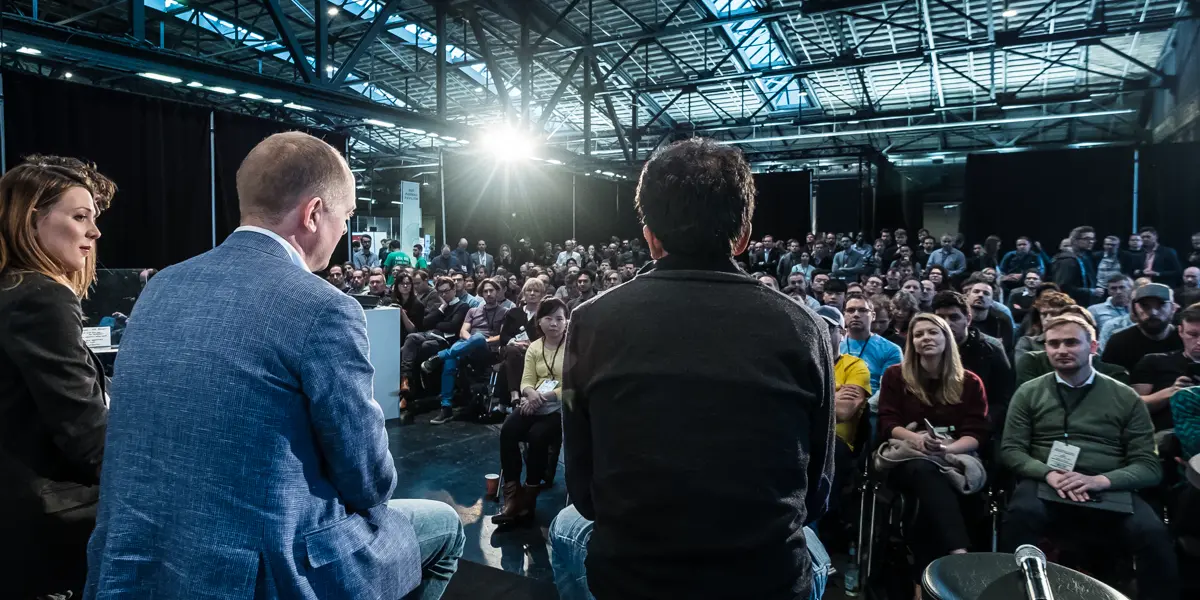
While the main stages will host visionary macro-conversations on the future of global innovation, the true tactical heavy lifting will occur behind closed doors. Disrupt’s highly anticipated breakout sessions are engineered to bypass high-level platitudes, offering intimate, 50-minute deep dives where attendees can cross-examine industry pioneers. Featuring a blend of expert insight and rigorous audience Q&A, these limited-capacity, first-come, first-served sessions are designed to deliver actionable frameworks that founders and operators can implement immediately.
Executive Overview: The Shift from Theory to Execution
The overarching theme of TechCrunch Disrupt 2026 centers on a singular, urgent realization: the honeymoon phase of generative AI is over. The tech ecosystem has graduated from asking what large language models can generate to questioning how they can be monetized, operationalized, and embedded safely into the physical and digital architecture of the global economy.
From the economics of the inference economy to the operational complexities of physical AI and multi-agent workflows, this year’s breakout agenda targets the exact friction points keeping founders awake at night. Attendees will grapple with shifting investor expectations, structural changes in capital allocation, and the tactical realities of scaling high-performance organizations in a world reshaped by machine intelligence.
Detailed Chronology & Agenda Breakdown: The 2026 Breakout Tracks
To help attendees navigate the dense three-day schedule, TechCrunch has curated a diverse slate of breakout sessions led by top-tier technologists, venture capitalists, and operational experts. Below is the comprehensive guide to the sessions defining the Disrupt 2026 agenda.
1. What Is Physical AI, Anyway?
- Speakers: Susan Schofer (Partner & Chief Science Officer, SOSV HAX) and Duncan Turner (General Partner & Managing Director, SOSV HAX)
- Sponsored by: SOSV
Artificial intelligence is rapidly breaking out of digital silos and migrating into physical machinery. Schofer and Turner will dismantle the hype surrounding "Physical AI," defining what it actually takes for autonomous systems to perceive, reason, and execute tasks within highly unpredictable environments. The session will explore the hardware-software integration playbook and outline what venture capitalists are actively searching for in startups looking to anchor this emerging category.

2. Outnumbered Either Way: How an Engineer and an Architect Run Their Jobs on Agents
- Speakers: Steve Androulakis and Sachin Malhotra (Members of Technical Staff, Anthropic)
What happens when the people who build frontier AI models try to live inside AI-driven workflows? Anthropic engineers Androulakis and Malhotra pull back the curtain on how they deploy multiple Claude agents in parallel. They will share tactical advice on delegating engineering tasks, reviewing automated output, recovering from agentic errors, and fundamentally transforming daily engineering productivity.
3. How to Build AI We Can Trust
- Speaker: Robbie Goldfarb (Co-founder, Forum AI)
As artificial intelligence systems are granted autonomy over high-stakes decisions, raw predictive accuracy is no longer sufficient. Drawing on deep industry experience spanning online safety, misinformation mitigation, and collaboration with top-tier foundation labs, Goldfarb explores how human expertise can be scaled into robust evaluation frameworks. This session offers a masterclass in building reliable AI systems that enterprise clients and consumers can genuinely trust.
4. The Inference Economy: Why AI’s Next Trillion Dollars Won’t Look Like Its First
- Speakers: Hagay Lupesko (SVP, AI Cloud, Cerebras Systems) and Rudina Seseri (Founder & Managing Partner, Glasswing Ventures)
The economic gravity of the artificial intelligence sector is undergoing a massive migration. As frontier models increasingly become commoditized, the financial windfall is shifting decisively from training to inference. Lupesko and Seseri analyze the new economic realities of the AI stack: where market defensibility originates when the underlying model isn’t a moat, why low latency is evolving into a core product feature, and how infrastructure choices dictate startup survival.
5. Building Then vs. Now
- Speakers: Dr. Rumman Chowdhury (CEO & Co-founder, Humane Intelligence), Payal Kadakia (Founder, ClassPass), Cassie Kozyrkov (Founder, Kozyr), and Holly Ransom (CEO, Emergent)
- Sponsored by: Signify Business Cash World Elite Mastercard by Wells Fargo
While the foundational laws of company-building remain constant, the velocity and toolsets have been revolutionized. This all-star panel of data scientists, entrepreneurs, and strategists evaluates how modern founders leverage AI to accelerate decision-making while safeguarding against algorithmic bias, maintaining human judgment, and preserving workplace culture.
6. Best Practices for Running a Successful Fundraise: From Preparation to Investor Engagement
- Speakers: To be announced
- Sponsored by: Fidelity Private Shares
A successful capital raise is won long before the slide deck reaches an investor’s inbox. This interactive workshop deconstructs the fundraising lifecycle from both sides of the table. Attendees will explore target investor mapping, relationship nurturing, momentum management, data room hygiene, cap table structuring, and due diligence optimization.
7. From Founder to Investor: The Next Act — What Happens After You Win?
- Speakers: Bruce K Lee (CEO & Founder, Keebeck Wealth Management) and Abhi Tiwari (Co-founder & General Partner, Blank Ventures)
Transitioning from building a venture-backed startup to allocating capital as an investor requires a radical psychological and operational shift. Lee and Tiwari dissect the post-exit mindset, advising entrepreneurs on why wealth preservation, asset allocation, and post-exit strategy must be contemplated long before the liquidity event materializes.

8. Breaking Into Space: The AI Builder’s Opportunity
- Speakers: Dr. Brian Cameron (Interim CTO, The Aerospace Corporation), Bosco Lai (CEO, Little Place Labs), and Shawn Sloan (Corporate Fellow for AI, The Aerospace Corporation)
- Sponsored by: The Aerospace Corporation
Space is frequently dismissed as an isolated, ultra-niche sector, yet its operational hurdles mirror those faced by terrestrial AI developers: massive influxes of unstructured telemetry, autonomous decision-making demands, and complex multi-agent architectures. This session bridges aerospace engineering with commercial AI development, illuminating lucrative government and private-sector opportunities.
9. Fundraising Mistakes That Will Kill Your Round, and How to Avoid Them
- Speakers: Dr. Irena King (Founder & CEO, Surgicure Technologies), Dr. Richard Munassi (Accelerator Managing Director & Chief Strategy Officer, Tampa Bay Wave), Ashley Paston (Partner, General Catalyst), and Emily Zhen (Principal, HealthQuest Capital)
- Sponsored by: Tampa Bay Wave
Even exceptional products can fall victim to catastrophic fundraising blunders. This candid session exposes the fatal missteps—ranging from poor market positioning to erratic execution—that cause venture rounds to collapse. Panelists deliver hard-nosed, real-world frameworks to guide founders smoothly from initial pitch to signed term sheet.
10. Building a Growth Engine in the AI Era: Lessons from a Bootstrapped Unicorn
- Speaker: Patrick Burke (Managing Director, Hostinger)
- Sponsored by: Hostinger
AI has radically shortened the distance between identifying a market gap and launching a product. Utilizing the hyper-growth trajectory of Hostinger as a case study, Burke examines how lean startups can exploit underpriced distribution channels, compress feedback loops, run high-frequency experiments, and deploy agentic marketing funnels to scale efficiently without burning through venture capital.
11. Physical AI Isn’t a Model Problem. It’s an Execution Problem.
- Speakers: Ethan Batraski (Partner, Venrock), Ivan Poupyrev (Founder & CEO, Archetype AI), and Ian Rountree (General Partner, Cantos)
The true bottleneck of physical AI is not found within transformer architectures; it resides in execution. Builders and investors examine the fragile execution layer bridging sensory perception, localized decision-making, physical action, and verification, highlighting why mastering this feedback loop creates durable industrial empires.
12. Talent as the Operating System: How High-Performance Teams Scale in the AI Era
- Speaker: Nomi Khedawala (Senior Technical Program Manager, Reddit)
While automation redefines task execution, organizational resilience still depends heavily on human trust, alignment, and accountability. Khedawala investigates how modern engineering leaders can foster organizational cohesion, detect operational bottlenecks before escalation, and build resilient management systems capable of sustaining high performance during rapid hyper-growth.
Supporting Context & Ecosystem Metrics
TechCrunch Disrupt 2026 arrives at a crucial inflection point for venture capital and enterprise technology. Recent industry data underscores a bifurcated market: while overall venture deal counts have normalized from the hyper-inflated peaks of 2021–2022, capital concentration in generative AI, physical automation, and national security tech continues to break records.

According to recent macroeconomic trackers, early-stage valuations for AI infrastructure and agentic workflow startups remain robust, though institutional investors are enforcing stringent thresholds regarding unit economics, gross margins, and clear paths to profitability. The breakout sessions at Disrupt 2026 directly address this market maturation, providing founders with the tactical weaponry needed to navigate rigorous investor due diligence and hyper-competitive talent markets.
Future Outlook: What to Expect in San Francisco
As the global tech ecosystem converges on Moscone West this October, the overarching sentiment is one of pragmatic optimism. The speculative noise has subsided, leaving room for durable architectures, scalable enterprise applications, and deeply technical innovations.
For founders, investors, and operators aiming to stay ahead of the technological curve, securing a spot in these limited-capacity breakout rooms will be essential. Disrupt 2026 is not merely a conference to observe the future; it is an operational laboratory designed to build it.
Registration and Attendance Information
TechCrunch Disrupt 2026 takes place October 13–15 at Moscone West in San Francisco. Attendees can currently save up to $100 on standard passes, alongside a 50% discount on a second ticket for co-founders or colleagues. Group discounts are available for teams of four or more, and specialized $75 Expo+ passes remain available for tech professionals impacted by recent industry layoffs.