







Executive Overview
In the modern landscape of preventive medicine, wellness, and biotechnology, the human gut is rapidly being recognized as the epicenter of overall health. Housing trillions of microorganisms that govern everything from metabolic processing to immune defense and cognitive function, the gastrointestinal tract is no longer viewed merely as a digestive tube. It is a complex, living ecosystem.
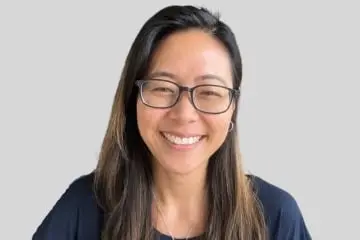
Enter Austin, Texas-based serial entrepreneur Cheryl Sew Hoy, who likes to summarize her life’s work with blunt candor: "We deal with poop."
As the founder and CEO of Tiny Health, Sew Hoy has spearheaded a quiet revolution in personal genomics and microbiome diagnostics. Founded in 2020, the company bypasses the traditional, often cumbersome clinical hurdles associated with stool analysis—such as multi-visit doctor appointments and archaic collection devices—in favor of a streamlined, direct-to-consumer, at-home testing model. Utilizing advanced shotgun metagenomic sequencing, Tiny Health maps the microscopic inhabitants of the human large intestine, giving everyday consumers, elite professional athletes, and progressive medical practitioners unprecedented visibility into the body’s internal micro-universe.
What began during the COVID-19 pandemic as a bootstrapped startup funded with just $50,000 of Sew Hoy’s personal savings has rapidly scaled into a major industry player. Following a recently closed $33 million Series B funding round, Tiny Health stands at the vanguard of consumer health tech. This deep-dive feature explores the journey of Tiny Health, unpacking the science of the gut microbiome, the company’s strategic funding milestones, its sophisticated customer acquisition engine, and the broader implications of direct-to-consumer health diagnostics in an era dominated by artificial intelligence and digital discovery.
Detailed Chronology: From a Newborn’s Nursery to a $33 Million Enterprise
The genesis of Tiny Health is as much a story of maternal instinct and academic rigor as it is of seasoned entrepreneurial execution.
Phase I: Inception and R&D (2020–2022)
The company was officially born in 2020 when Sew Hoy—a seasoned veteran of the tech industry who previously founded a digital wallet and daily deals company acquired by Walmart Labs in 2013—was caring for her newborn son, who was just a week old. Recognizing early signs of developmental health vulnerabilities and the profound impact of the infant microbiome on lifelong wellness, Sew Hoy turned her formidable business acumen toward biotechnology.
Unlike many tech founders who immediately begin writing code or launching marketing campaigns, Sew Hoy dedicated the first two years of Tiny Health’s existence exclusively to research and development, quietly avoiding public launch until 2022.
- Self-Education in Microbiology: Though not a scientist, microbiologist, or physician by training, Sew Hoy enrolled in PhD-level online classes to master the nuances of microbiome science.
- Building an Elite Advisory Board: She intentionally surrounded herself with institutional heavyweights, recruiting clinical mentors and scientific advisors from premier medical centers including the Mayo Clinic and Johns Hopkins University.
- The $50,000 Proof-of-Concept: Operating on a shoestring budget, Sew Hoy deployed $50,000 of her own capital. Unable to afford competitive tech and research salaries initially, she structured equity compensation packages to attract foundational scientific talent. This capital successfully funded a pilot study involving nine human subjects, proving that her nascent platform could accurately collect, process, and sequence biological data.
Phase II: Seed Funding and Early Scaling (2021)
Armed with empirical data generated from her initial cohort, Sew Hoy transitioned from research to commercial scaling. In 2021, Tiny Health successfully closed a $4.5 million seed funding round.
This influx of capital allowed the company to transition from a conceptual pilot to a functional operational entity. Sew Hoy hired her first dedicated software engineer and her first full-time staff scientist, laying the technical and operational bedrock required for nationwide scale.
Phase III: Public Launch and Explosive Growth (2022–Present)
Following two years of rigorous scientific validation, Tiny Health made its public debut in 2022. By offering a friction-free consumer experience backed by institutional-grade clinical rigor, the company rapidly captured market share. The validation of its business model culminated in the recently closed $33 million Series B funding round, cementing Tiny Health’s status as a formidable force in the personalized medicine sector.
Supporting Context & Metrics: The Science and Mechanics of Tiny Health
To understand why investors have poured tens of millions of dollars into Tiny Health, one must understand the profound biological significance of the human microbiome and the technological edge the company employs.
The 38 Trillion-Microbe Ecosystem
The human body is home to roughly 38 trillion microbes—bacteria, archaea, fungi, viruses, and parasites—the vast majority of which reside within the large intestine (the gut). According to Sew Hoy, roughly 80% of the human immune system lives within the gut.
When balanced, these microorganisms perform vital life-sustaining functions:
- Nutritional Extraction: They digest complex food particles and micronutrients that human enzymes cannot break down independently.
- Metabolite Production: They synthesize essential metabolites and short-chain fatty acids that regulate inflammation, metabolic health, and neurological signaling via the gut-brain axis.
- Immune Modulation: They train the immune system to distinguish between harmless dietary components and pathogenic invaders.
When this ecosystem falls out of balance—a state known as dysbiosis—it can become a root driver of chronic conditions, ranging from autoimmune disorders and metabolic syndrome to persistent gastrointestinal distress and inflammatory diseases.
Shotgun Metagenomic Sequencing vs. Traditional Diagnostics
Traditional stool analysis performed in standard medical settings often targets specific pathogens or relies on older, culture-based methods that capture only a fraction of the gut’s biodiversity.
Tiny Health elevates diagnostic standards by deploying shotgun metagenomic sequencing. This advanced genomic technology sequences the entire DNA present in a stool sample. As a result, the test does not merely check for a handful of bad bacteria; it provides a comprehensive census of every living microbe in the sample—including bacteria, fungi, viruses, and archaea—offering an unprecedentedly granular molecular profile of the patient’s internal ecosystem.
Beyond the Clinic: Elite Athletic Optimization
While gut testing historically conjures images of clinical settings and sickly patients, Tiny Health has expanded its footprint into performance optimization. The company regularly works with professional sports teams and elite athletes. Because high-level athletes subject their bodies to extreme physical stress, rigorous training schedules, and frequent travel—all of which disrupt gut integrity—optimizing the microbiome has become a secret weapon for accelerating recovery and maximizing endurance.
The User Experience: From Q-Tip to Lab Report
Recognizing that the prospect of collecting stool samples is a major psychological barrier for consumers, Tiny Health invested heavily in user experience innovation:
- The At-Home Kit: Customers order a sleek testing kit online, which arrives containing a small, discreet collection swab resembling an ordinary Q-tip.
- Friction-Free Collection: The user collects a minuscule sample using the swab, places it into a specialized stabilizing tube, and seals it in a prepaid USPS shipping container.
- Laboratory Analysis: The sample is mailed directly to the laboratory, where shotgun metagenomic sequencing is performed.
- Actionable Insights: The customer receives a comprehensive digital report outlining their microbial makeup, potential areas of dysbiosis, and actionable lifestyle, dietary, and supplement recommendations.
- Clinical-Grade Alternatives: For licensed medical practitioners requiring advanced diagnostic pathways, Tiny Health also provides a clinical-grade test featuring a more extensive collection protocol and expedited two-day shipping.
Official Statements and Founder Insights
In an exclusive conversation with Eric Bandholz, Cheryl Sew Hoy offered deep insights into her entrepreneurial philosophy, operational strategies, and the realities of building a biotech company from the ground up.
On the Blunt Realities of the Industry
When asked by Bandholz to define her company’s mission, Sew Hoy embraced the unvarnished truth of her product category:
"I’m the founder and CEO of Tiny Health. Bluntly speaking, we deal with poop. Customers send us swabs of their poop. We analyze it in a lab and produce a report about what’s in the poop and the gut microbiome, the 38 trillion health-related microbes living inside humans."
On the Limitations of Traditional Medicine
Sew Hoy was careful to delineate the boundary between diagnostic wellness and acute medical intervention:
"It depends on the stool analysis. Persistent diarrhea or constipation may require a doctor’s diagnosis and treatment, which might include antibiotics. What we do with the stool analysis is different. We use a technology called shotgun metagenomic sequencing that detects all the bugs in your gut, including bacteria, parasites, viruses, archaea, and fungi… Conventional medical education and public discourse often miss this. The bacteria in our guts digest our food and nutrients, and produce metabolites and enzymes that support overall health."
On Bootstrapping and Corporate Evolution
Reflecting on her journey from a single mother funding a pilot study with $50,000 to closing a $33 million Series B round, Sew Hoy highlighted the value of patience, deep academic immersion, and equity sharing:
"I started the company in 2020 when my son was just a week old. I spent the first two years, before our public launch in 2022, understanding microbiome research and science. I took PhD-level classes online to educate myself and understand our staffing needs… I launched the company with $50,000 of my own money. I offered equity initially to team members because I didn’t have the cash to pay them… This is my second venture-funded company. I built my first, a digital wallet and daily deals company, in New York in 2010 and sold it to Walmart Labs in 2013."
Marketing, Customer Acquisition, and the B2B Ecosystem
Building an innovative diagnostic tool is only half the battle; scaling it requires a sophisticated omnichannel marketing engine. Tiny Health has engineered a balanced acquisition model divided roughly into paid performance channels and organic, community-driven strategies.
1. Paid Performance Marketing (50% of Acquisition)
- Meta Ads and Google Search: Paid digital advertising serves as the primary engine for top-of-funnel customer acquisition, accounting for roughly half of all incoming consumers.
- Emerging Platforms: The company is actively expanding its paid acquisition footprint into visually driven social platforms such as TikTok and Pinterest, capturing younger, health-conscious demographics.
2. Organic Discovery, Content, and AI Adaptation (50% of Acquisition)
- Content and GenAI Visibility: Tiny Health is aggressively adapting its marketing infrastructure to accommodate Large Language Models (LLMs) and generative AI visibility, moving beyond legacy search engine optimization (SEO) to ensure brand authority in AI-driven health queries.
- Email Marketing and Influencers: Strategic partnerships with prominent health and wellness influencers on Instagram, coupled with targeted retention-focused email campaigns, drive substantial organic volume.
- B2B Practitioner Network: Beyond direct-to-consumer sales, Tiny Health operates a thriving business-to-business (B2B) ecosystem, partnering directly with functional medicine doctors, registered dietitians, and clinical practitioners who utilize the company’s clinical-grade kits in their practices.
- Thought Leadership: Sew Hoy and her scientific team regularly participate in industry trade shows, medical conferences, and speaking engagements to educate both practitioners and consumers on the clinical utility of microbiome testing.
Future Outlook: The Horizon of Personalized Medicine
As Tiny Health integrates its recent $33 million Series B capital injection, the company is uniquely positioned to capitalize on macro-trends sweeping the global healthcare landscape.
The traditional reactive healthcare model—wait until a patient falls catastrophically ill, then treat symptoms with pharmaceuticals—is buckling under its own weight. Consumers are increasingly demanding proactive, personalized, and data-driven wellness solutions. By democratizing access to clinical-grade metagenomic sequencing, Tiny Health bridges the gap between esoteric academic research and daily kitchen-table health choices.
Looking forward, the roadmap for Tiny Health includes expanding its clinical validation studies, deepening its integration within conventional and functional medical practices, and leveraging artificial intelligence to deliver hyper-personalized dietary and therapeutic recommendations based on real-time microbial shifts.
For consumers eager to take control of their biological destiny—and for medical professionals seeking deeper diagnostic clarity—Tiny Health has transformed what was once a clinical taboo into an accessible, actionable roadmap for lifelong wellness.
To learn more about Tiny Health’s testing kits or to explore their extensive scientific library, visit TinyHealth.com. Connect with founder Cheryl Sew Hoy directly via her LinkedIn profile.