









Executive Overview
Enthusiasm does not run artificial intelligence workloads—infrastructure does. Across industries, corporate boardrooms are electric with anticipation over the transformative potential of generative AI, machine learning, and automated intelligence. Yet, as organizations rush to deploy these next-generation technologies, a harsh operational reality is setting in: enterprise facilities are hitting a wall.
Limitations in existing data centers and on-premise environments are rapidly surfacing. Insufficient power grids, severe cooling shortfalls, operational bottlenecks, and complex new security risks threaten to derail even the most well-funded initiatives. If these fundamental requirements are not addressed aggressively, AI projects will inevitably stall, fail to scale, or, worse, expose sensitive corporate data to unprecedented vulnerabilities.
AI holds the unmistakable promise of driving long-term competitiveness and unlocking hyper-growth, but it remains entirely contingent upon a sobering, honest evaluation of organizational readiness. IT leaders must carefully balance their ambitious software strategies against physical reality: what infrastructure is already in place, how capital is being allocated, and what the trajectory of future demand looks like. Miscalculating these variables is not a minor operational setback; it is the definitive fault line separating an AI investment that delivers measurable business value from one that never gets off the ground.
Before committing another dollar of capital expenditure, technical leadership must methodically audit their environments. To cut through the noise, organizations can rely on a five-step framework designed to pinpoint where infrastructure upgrades are desperately needed, transforming AI readiness from an abstract ambition into concrete operational results.
Detailed Chronology: The Evolution of the AI Infrastructure Crisis
To understand how modern enterprises arrived at this critical juncture, one must examine the rapid acceleration of compute requirements over the past half-decade. The infrastructure crisis did not materialize overnight; it is the culmination of a widening gap between software capability and hardware accommodation.
Phase 1: The Software Gold Rush (2020–2022)
When generative models and large-scale deep learning frameworks first captured the enterprise imagination, the focus was almost exclusively on software development, algorithmic accuracy, and use-case discovery. Companies repurposed existing cloud instances and legacy server racks to run initial proof-of-concept models. During this era, compute density was manageable, and standard enterprise data centers—built largely for traditional web applications and relational databases—suffered few visible strains.
Phase 2: The Hardware Density Shock (2023–2024)
As models scaled from millions to hundreds of billions of parameters, enterprises transitioned from CPU-heavy environments to dense GPU clusters. This shift triggered an immediate physical shock. Standard server racks designed to draw 5 kilowatts (kW) were suddenly asked to house nodes demanding 20 kW, 40 kW, and eventually upwards of 100 kW per rack. Air-cooling systems designed for standard office computing could no longer keep pace with the massive thermal output of modern AI accelerators. Data center floors across the globe began experiencing localized hot spots, thermal throttling, and unexpected hardware failures.
Phase 3: The Enterprise Reckoning (2025 and Beyond)
Today, enterprises are moving past the pilot phase and attempting enterprise-wide deployments. This is where theory collides with friction. Organizations are discovering that isolated GPU purchases are useless if storage throughput chokes data pipelines or if local power grids cannot supply the steady, uninterrupted amperage required to train and run inference models continuously. The current landscape is defined by a frantic race to retrofit aging facilities, rethink financial models, and establish rigorous security frameworks before AI initiatives collapse under their own weight.
Supporting Context & Metrics: The Anatomy of an AI Bottleneck
To navigate this crisis, IT and facilities leaders must dissect the five core pillars of AI infrastructure readiness.
1. Set the Right Foundation
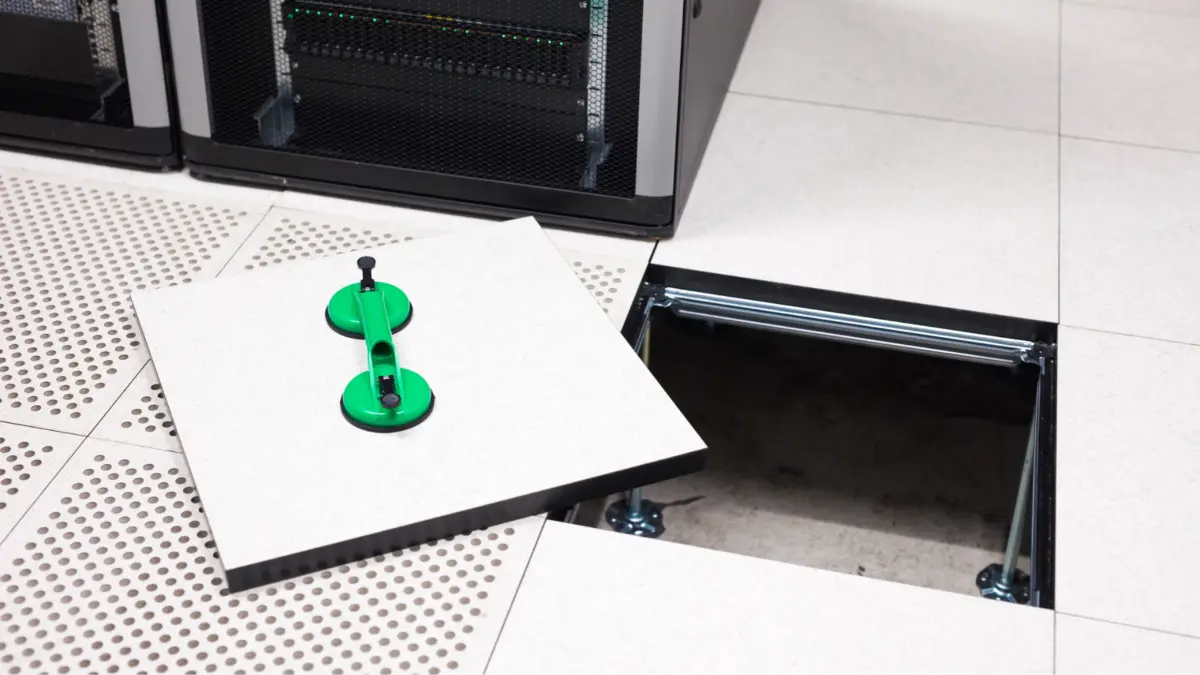
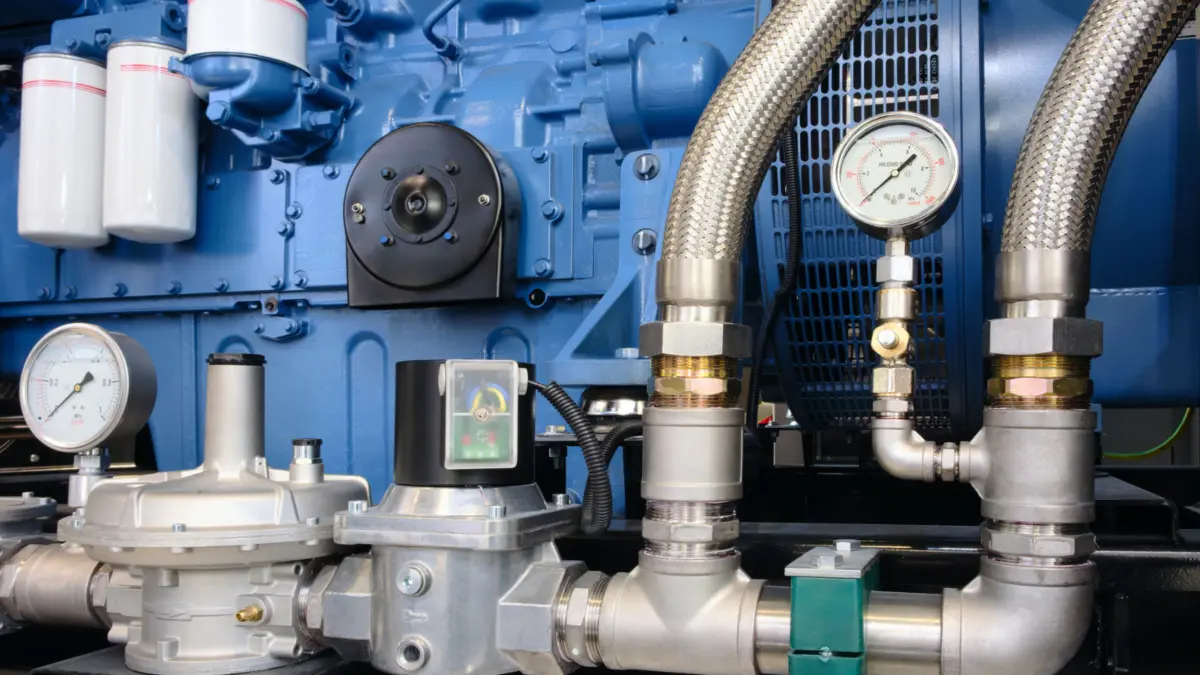
AI performance is only as good as the underlying plumbing. Servers, high-speed storage arrays, and network fabrics must seamlessly handle extreme compute density and massive data flows without overheating or dropping packets. Even the most advanced AI algorithms will underperform if foundational elements lag behind.

Consider a real-world automated quality inspection use case on a high-speed manufacturing line. High-resolution industrial cameras, low-latency edge storage, and heavy compute nodes must synchronize perfectly with the physical speed of the conveyor belt to execute real-time inference. If any single component in that pipeline stutters, defective products slip through un-inspected.
The exact same principle applies within the enterprise data center: a state-of-the-art GPU cluster can be severely throttled by slow storage throughput, network congestion, or thermal limits. Organizations must evaluate how hardware, software, and networking layers work in concert, rather than treating them as isolated line items.
2. Prioritize Power and Cooling Capacity
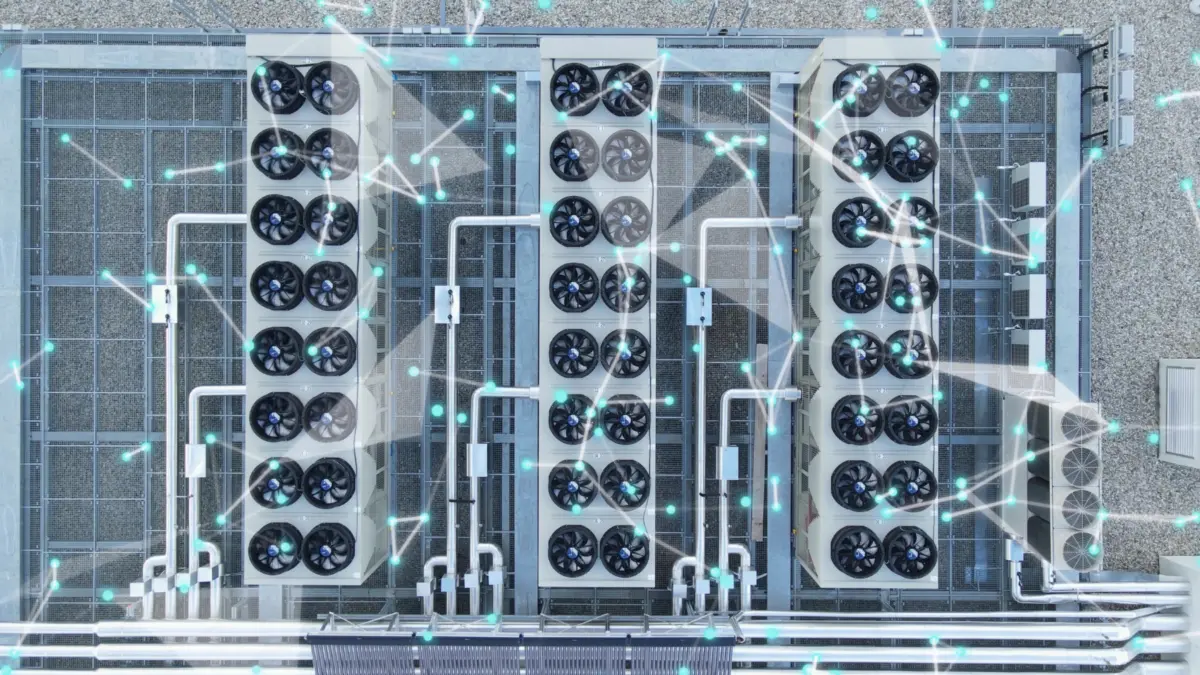
Power is the new currency of enterprise AI. A careful, unvarnished examination of power capacity and thermal management systems is mandatory to determine whether an organization’s facility can support the heavy lifting demanded by modern workloads.
A traditional rack designed for 5 kW is utterly incapable of sustaining a modern 20-kW or higher AI node. Without robust power supplies behind it, an enterprise AI rollout stalls before deployment even begins. Furthermore, reliable power delivery is just as critical as raw capacity. Organizations must audit how much electricity their current environment can consistently supply and determine whether their cooling mechanisms—ranging from advanced air handling to direct-to-chip liquid cooling—can dissipate the immense heat generated. Power and cooling must scale in lockstep; a deficiency in either variable will rapidly compromise the entire processing pipeline.
3. Establish Security Across the AI Environment
AI applications inherently process massive volumes of sensitive, proprietary, and regulated data. Protecting these valuable assets requires a defense-in-depth strategy encompassing physical security, robust network defenses, and granular, role-based access controls. A single vulnerability in any of these layers exposes the entire ecosystem to exploitation.
Beyond traditional cybersecurity, organizations must actively mitigate AI-specific vectors, including prompt injection, model manipulation, training data poisoning, and data leakage. Compliance with regional and industry-specific regulations—such as the EU AI Act or sector-specific financial mandates—adds another layer of complexity. Security cannot be bolted on as an afterthought; it must be treated as a foundational pillar of the AI architecture.
4. Decide Between Predictable and Flexible Costs
Financial strategy is just as vital as electrical engineering when scaling AI. Different organizations possess vastly different risk tolerances and budgeting structures. Some enterprises require steady, predictable spending to satisfy rigid annual budgets, while others prioritize financial agility and accept variable operational expenditure.
Fluctuating cloud pricing models and variable utility spikes can introduce devastating financial uncertainty. Finance and engineering teams must align early in the planning lifecycle to avoid costly mismatches. Organizations that require strict budget certainty should not be blindsided by unpredictable infrastructure bills, while those requiring rapid elasticity should avoid locking themselves into rigid, over-provisioned long-term contracts. Implementing robust FinOps principles allows enterprises to set necessary financial guardrails while preserving the agility required for continuous innovation.
5. Build Room to Grow
AI workloads are living, breathing systems; they rarely remain static. As organizations expand existing applications, roll out new vertical use cases, or experience surges in user demand, infrastructure requirements will inevitably compound. An environment built solely to accommodate today’s workload will inevitably become a hard operational ceiling tomorrow.
True scalability requires not only expanding processing and storage capacity, but also ensuring that supporting network fabrics and cooling distribution units can grow proportionally. Flexibility must be engineered into the infrastructure design from day one, providing a clear, unimpeded pathway to scale as organizational AI maturity evolves.

Official Perspectives: Industry Leadership Insights
Addressing these systemic challenges requires cross-disciplinary executive leadership. Patrycja Sobera, Senior Vice President and General Manager of the Digital Workplace Solutions business unit at Unisys, emphasizes that modernizing user experiences and driving business breakthroughs through technology requires an uncompromising focus on operational readiness.
"Enthusiasm doesn’t run AI workloads—infrastructure does," notes Sobera, whose extensive two-decade career spans cutting-edge technology transformations across banking, capital markets, and telecommunications. "As more organizations adopt AI, limitations in existing facilities are surfacing: insufficient power, cooling shortfalls, operational complexities, and new security risks. If these needs aren’t addressed, AI initiatives will stall, become hard to scale, or, worse, put sensitive data at risk."
Sobera stresses that achieving long-term competitiveness demands an honest internal audit: "Getting this wrong isn’t a minor setback; it’s the difference between an AI investment that delivers and one that never gets off the ground. Before committing budget, organizations must use a structured approach to pinpoint where infrastructure improvements are truly needed."
Industry analysts echo this sentiment, pointing out that the enterprise market is currently undergoing a painful maturation process. The initial wave of unbridled experimentation is giving way to stringent financial and operational scrutiny. Chief Information Officers (CIOs) and Chief Technology Officers (CTOs) are increasingly held accountable for the return on investment (ROI) of their AI implementations, making infrastructure audits an absolute prerequisite for career and corporate survival.
Future Outlook: Navigating the Road Ahead
Looking forward, the success of enterprise artificial intelligence will depend almost entirely on how quickly organizations can bridge the widening chasm between software ambition and physical reality. As models continue to grow larger, more multimodal, and deeply integrated into core business operations, the strain on enterprise data centers and hybrid cloud architectures will only intensify.
Over the next three to five years, we can expect several defining trends to shape the AI infrastructure landscape:
- Mainstream Adoption of Liquid Cooling: As air-cooling reaches its absolute thermodynamic limits in dense GPU deployments, direct-to-chip liquid cooling will transition from a specialized enterprise feature to an industry standard.
- Edge-Core Convergence: Organizations will increasingly decentralize their AI architectures, pushing processing closer to the point of data creation—such as factories, retail outlets, and remote offices—while upgrading core facilities to handle heavy model training.
- Integrated FinOps and Green IT: Financial management of AI will merge with sustainability metrics. Enterprises will face mounting pressure to track not only the financial cost of inference and training, but also their carbon footprints, driving investments in energy-efficient hardware and renewable power sourcing.
- Automated Infrastructure Governance: Security and compliance frameworks will evolve to incorporate real-time monitoring of AI models, automatically detecting data drift, model poisoning, and infrastructure bottlenecks before they cause catastrophic failures.
From Readiness to Results
Ultimately, the trajectory of corporate AI investments relies on an infrastructure foundation that supports the entire lifecycle—from initial proof-of-concept deployment through enterprise-wide scaling. IT leaders must leverage comprehensive frameworks to identify where their current operating environments fall short and prioritize targeted capital improvements.
Before committing corporate budgets to the next wave of AI hardware or software licenses, executive leadership must rigorously assess their infrastructure readiness and close existing operational gaps. Failure to do so risks turning the technology department into the primary bottleneck holding back the entire organization’s future.