









Executive Overview
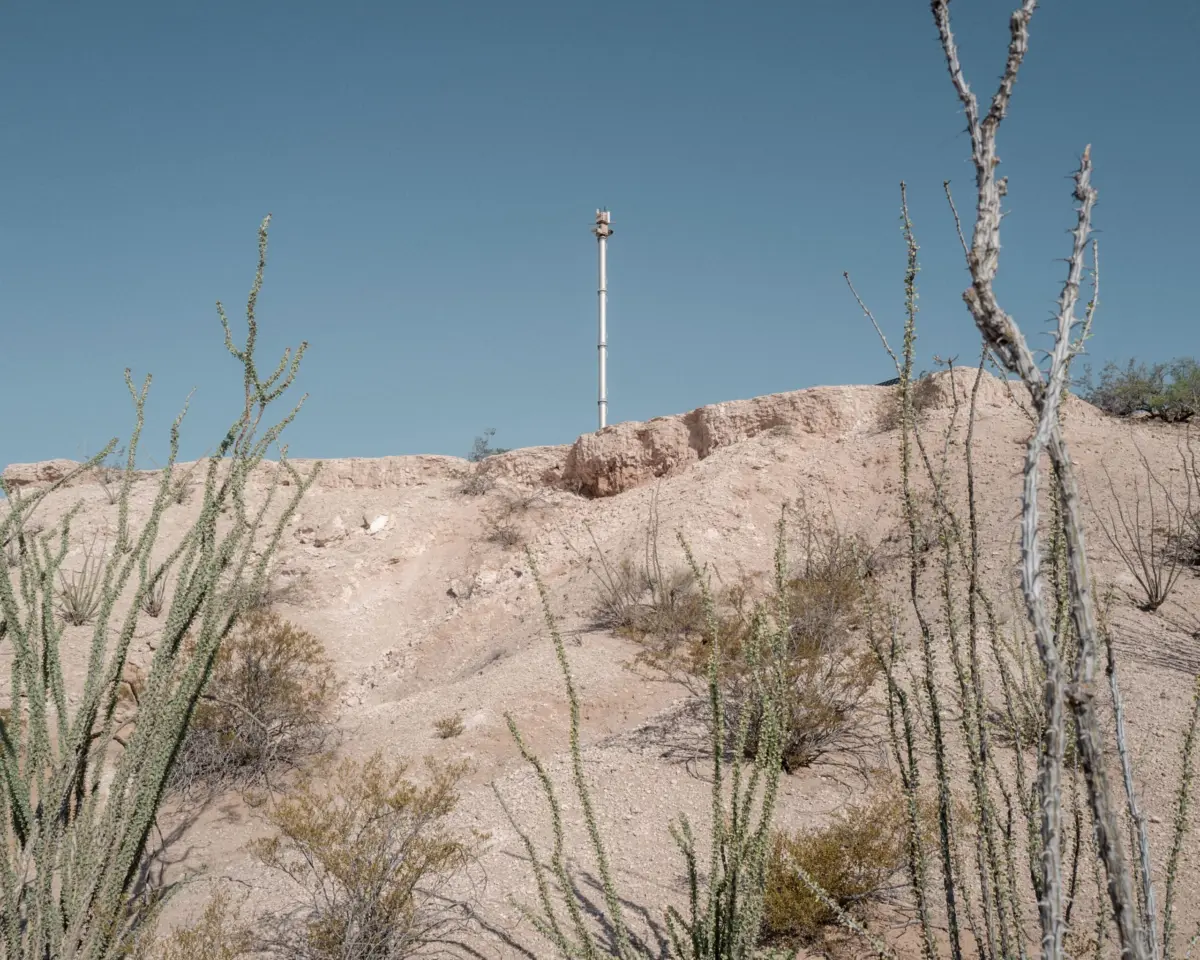
For decades, the United States southern border has served as a crucible for technological innovation. Faced with the staggering logistical challenge of securing nearly 2,000 miles of remote, rugged terrain, successive presidential administrations have poured billions of dollars into high-tech solutions. Today, this effort has culminated in the "virtual wall"—a vast, multi-billion-dollar network of hundreds of surveillance towers equipped with long-range cameras, thermal imaging, radar, and cutting-edge artificial intelligence.
Yet, an extensive investigative analysis reveals a sobering reality: this technological fortification is fundamentally failing. Despite broad political support, skyrocketing federal expenditures, and claims that automated systems save lives, hundreds of migrants continue to die of exposure, dehydration, and drowning within direct line of sight of these sophisticated watchtowers.

Interviews with more than 45 individuals—including current and former White House advisors, presidential appointees, Border Patrol agents, medical examiners, local sheriffs, humanitarian volunteers, and technology contractors—expose a dual system failure. The surveillance technology routinely fails to detect crossers due to algorithmic blind spots, terrain obstructions, and maintenance lapses, while agents on the ground frequently fail to respond. Furthermore, an institutional culture of poor oversight means that neither Customs and Border Protection (CBP) nor its defense contractors formally investigate these surveillance failures when bodies are recovered beneath the towers’ watch.
Detailed Chronology: The Evolution of Border Surveillance
To understand the current crisis, one must trace the historical trajectory of how enforcement policy and technology intertwined along the U.S.–Mexico border.

The 1990s: The Push into Rural Terrain
The modern era of border technology was born out of policy shifts in the mid-1990s. Under President Bill Clinton, massive enforcement surges in urban centers like El Paso, Texas, effectively closed off traditional, populated crossing points. Smugglers and migrants were forced into remote, unpopulated desert regions characterized by extreme temperatures, scarce water resources, and unforgiving topography.
Early operations relied on primitive tools. Gerardo Galvan, who joined the Border Patrol in 1995 and later became head of operations for the El Paso sector, recalls relying on radios and Vietnam War-era underground seismic sensors.

The First Generation: The Remote Video Surveillance System (RVSS)
The first major technological leap occurred around 1998, when the Border Patrol began installing pan-tilt-zoom video cameras atop 60- to 80-foot metal structures. Managed primarily through contracts that eventually expanded under defense giant General Dynamics, these systems formed the Remote Video Surveillance System (RVSS).
While the towers allowed operators to monitor large swaths of land from central dark rooms, they immediately suffered from severe information overload. Matthew Hudak, a former deputy chief of Border Patrol, notes that operators sat before walls featuring dozens of screens, tasked with monitoring up to 850 square miles of terrain simultaneously. As Mark Borkowski, former head of CBP contracting, bluntly assessed: "What are the chances after 20 minutes that those Border Patrol agents would see an explosion on one of those screens? About zero."

Compounding this cognitive overload was systemic hardware failure. By 2024, congressional reports indicated that more than 66% of the agency’s first-generation towers were unusable at any given time, severely undermining operational readiness.
The 2010s: Integrated Fixed Towers and the Promise of Radar
Recognizing that human operators could not continuously monitor dozens of video feeds, the Border Patrol sought automated assistance. In 2011, the agency contracted Israeli defense contractor Elbit Systems to install Integrated Fixed Towers (IFTs) in Arizona. These towers used radar to automatically detect motion and slave cameras directly to the movement, covering over 7,000 square miles of terrain.

While the IFTs reduced the need for constant human monitoring, they introduced new vulnerabilities. Radar systems could detect movement, but they struggled to classify what was moving, generating a flood of false alerts triggered by cattle, wildlife, and tumbleweeds. Moreover, mountainous terrain and deep brush frequently created visual blind spots, rendering proximity to a tower insufficient for actual visibility.
The Modern Era: The Age of Autonomous AI
Around 2018, under the guidance of CBP’s newly minted Innovation Team, the government turned to Silicon Valley startup Anduril Industries, founded by Palmer Luckey. Anduril introduced solar-powered, modular Sentry towers standing 33 feet tall, driven by advanced computer vision algorithms designed to automatically classify, track, and alert agents to humans and vehicles.

By 2020, Anduril’s autonomous surveillance towers (ASTs) moved into an official program of record, backed by contracts exceeding $1 billion. Proponents argued that autonomous AI would finally rid control centers of information overload, freeing agents to conduct rapid search-and-rescue operations. Yet, field deployment exposed persistent algorithmic failures: AI models routinely misclassified groups as cattle or failed to detect targets obscured by tarps, blankets, or clever evasion tactics employed by smugglers.
Supporting Context & Metrics: The Human Toll
The human cost of these technological and operational gaps is staggering. An exhaustive spatial analysis matching GPS coordinates of human remains with tower locations reveals that between 500 and 700 people have died within range of RVSS and IFT towers since 2015.

Even when focusing exclusively on rural areas with minimal obstruction, more than 300 individuals died in places where cameras had a clear line of sight—frequently less than three miles, and often within a half-mile, of a tower standing up to 200 feet tall.
Case Studies in Systemic Failure
- The Lenda Family Tragedy (2022): Near Del Rio, Texas, Daniel Lenda attempted to cross the Rio Grande carrying his two-year-old daughter, Eloah, on his shoulder. Swept away by the current, the father drowned. The mother, Thais Natali Montenegro Lenda, managed to pull the unresponsive toddler ashore just 100 feet from one camera system and a third of a mile from two others. Despite clear topographical lines of sight, tower operators failed to dispatch immediate aid. Thais Natali was forced to walk to a bridge to wave down an agent; the toddler did not survive. Local sheriff Joe Frank Martínez noted that while Border Patrol allegedly spotted the family fall, no answers were ever provided regarding why agents were not dispatched, and requested surveillance footage was never surrendered to local law enforcement.
- The Sunland Park Discoveries (2024–2025): In the Santa Teresa station sector of New Mexico—a showcase region for Anduril’s autonomous towers—multiple bodies were found within direct sight of operational AI towers. José Morales Bernal died in April 2024 within sight of a tower, his body discovered only after landfill workers stumbled upon it. Subsequent months yielded similar grim discoveries of migrants whose final hours went completely unacted upon by the automated systems designed to protect them.
Official Statements and Institutional Accountability
The widening chasm between public relations claims and ground-level realities is underscored by conflicting statements from government officials, contractors, and independent experts.

- Customs and Border Protection (CBP): In response to extensive inquiries, Hilton Beckham, CBP’s assistant commissioner for public affairs, maintained that autonomous surveillance towers successfully "complement physical barriers and other border security infrastructure by improving detection and situational awareness between ports of entry." He emphasized that the agency evaluates technology based on its impact on detection, response coordination, and agent safety, noting that "the technology does not make law enforcement decisions."
- Anduril Industries: Company representatives emphasized that once a tower is delivered, it is operated exclusively by CBP. They noted that surveillance ranges vary based on physical terrain, obstructions, and virtual boundaries set by CBP for privacy or operational reasons, while alleging inaccuracies in reporting that went unclarified upon follow-up.
- Independent Research and Oversight: Academic experts offer a starkly different evaluation. Geoff Boyce, an assistant professor of geography at University College Dublin, observes that while surveillance assets enhance efficacy under specific conditions, "it is not delivering the level of operational support, information, or efficacy that either the companies delivering these infrastructures or the Border Patrol and Department of Homeland Security claim."
- Legislative Reaction: Delia Ramirez, a U.S. Representative from Illinois serving on the House Homeland Security Committee, offered a scathing critique: "AI-powered surveillance technologies are not making us safer. Yet DHS continues to spend millions of taxpayer dollars on these ineffective, negligent technologies, with no commitment to oversight or transparency… It is clear we must terminate CBP’s integrated surveillance tower program and dismantle DHS."
Future Outlook
Despite mounting evidence of structural and algorithmic failures, federal enthusiasm for border surveillance technology remains undiminished.
Following historic funding injections, CBP plans to spend $1 billion to deploy an additional 1,497 towers by 2034, with federal legislation now mandating that all new towers incorporate artificial intelligence. General Dynamics has entered the fray with its own AI-powered towers under a $115 million contract, while legacy defense contractors continue to market these technologies internationally.

Yet, this rapid technological expansion occurs against a backdrop of diminishing oversight. In October 2025, the Department of Homeland Security dissolved its internal office dedicated to overseeing major spending programs. Compounding the issue, CBP maintains no formal institutional mechanism to investigate whether surveillance systems failed when human remains are discovered beneath their gaze.
As long as institutional accountability remains sidelined in favor of continuous technological acquisition, the virtual wall will remain an expensive monument to systemic failure—capturing everything on screen except the human lives slipping away in its shadow.