








Executive Overview
As B2B and artificial intelligence companies finalize their event budgets for 2027, a familiar and expensive cycle is repeating itself. Most organizations will scatter their capital across an unsustainable portfolio of conferences. They will pick events off lists compiled from organizer press releases, relying on inflated hype, only to discover by the third quarter that half their booths produced little to no pipeline.
The conference circuit has evolved into an echo chamber of self-reported metrics. Event organizers routinely broadcast attendance figures that lack independent audits, while AI-generated guides and SEO-driven listicles dutifully repeat these numbers as gospel. For a modern tech company balancing burn rates with high customer acquisition costs (CAC), this lack of transparency is no longer just an annoyance—it is a fiscal hazard.
This report cuts through the marketing noise. By examining actual floor traffic, verified sponsor outcomes, organizer financial health, and buyer-density metrics, we provide a strategic framework for allocating a 2027 event budget. Whether you are selling autonomous agents, revenue acceleration suites, or developer infrastructure, knowing where the decision-makers actually congregate is the difference between a thriving pipeline and an empty trade show floor.
Detailed Chronology: The 2027 Event Calendar & Strategic Tiers
Navigating the conference circuit requires a strict chronological understanding of when and where the market gathers. Below is the evaluated landscape for 2027, categorized by strategic value for B2B and AI organizations.
Tier 1: Events Built Around AI and Go-To-Market (GTM) Buyers
These are the primary battlegrounds where software buyers, revenue leaders, and technical founders converge with active budgets.
- AI for GTM Festival (GTM Alliance) — January 21, 2027 | San Francisco, CA
- Focus: Co-located alongside RevOps and Sales Enablement summits. Highly targeted for teams selling directly into operational revenue roles, though executive-level buyers appear in smaller volumes.
- AI for Marketers Summit — February 24–25, 2027 | Las Vegas, NV
- Focus: A hyper-specialized environment. Highly recommended only if your Ideal Customer Profile (ICP) sits strictly within enterprise marketing departments.
- Adobe Summit — March 23–25, 2027
- Focus: A major platform event serving enterprise experience makers, digital marketers, and commerce leaders. Essential for ISVs integrated into the Adobe Experience Cloud.
- Google Cloud Next — April 13–15, 2027 | Las Vegas, NV
- Focus: A massive gathering of CIOs, CTOs, cloud architects, and developers. While general revenue leaders are sparse here, it is a mandatory stop if you sell through the Google Cloud Marketplace or rely on co-selling motions with Google’s field teams. Pay special attention to the Partner Summit on April 12.
- SaaStr AI Annual — May 11–12, 2027 | SF Bay Area
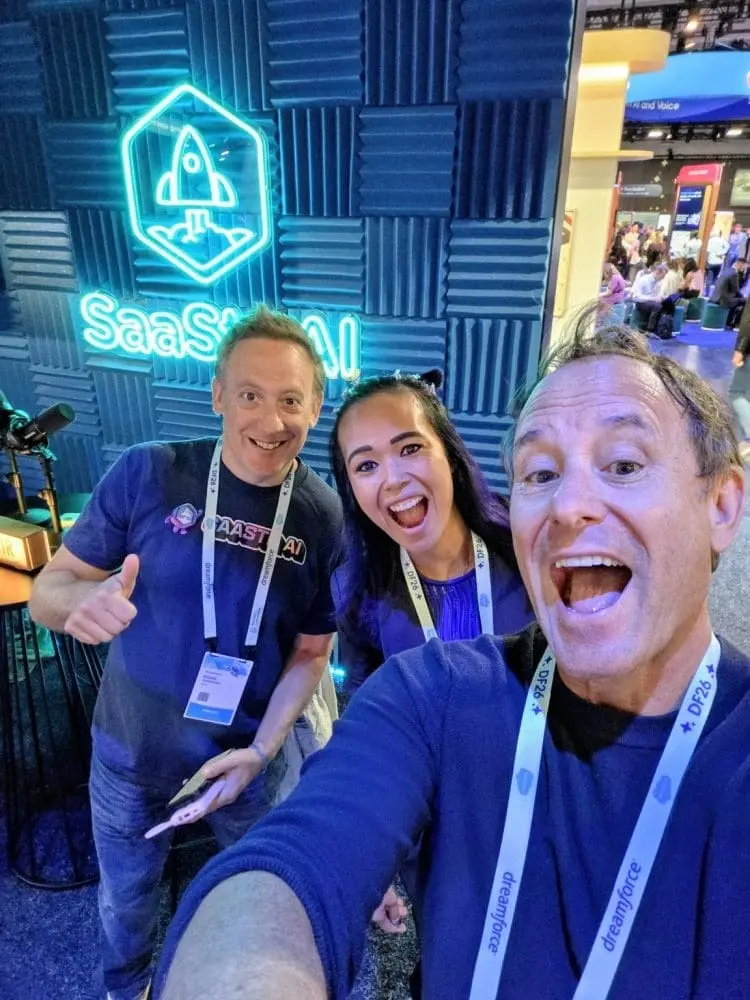
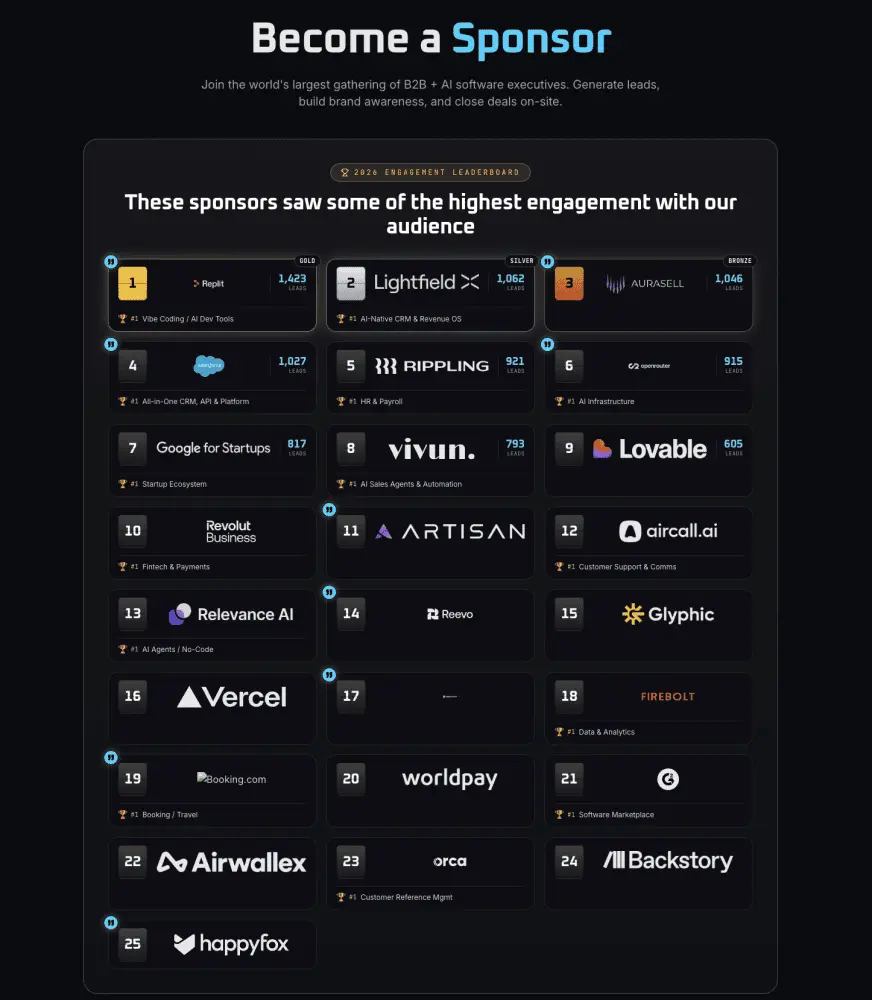
- Focus: Built explicitly around agents, GTM execution, and revenue organization deployment. Bringing together founders, CROs, CMOs, and VCs, past iterations have proven that top-tier sponsors across diverse sectors (from infrastructure builders to HR tech and revenue automation) can capture hundreds of qualified leads per booth.
- Gartner CSO & Sales Leader Conference — Spring 2027 (Historically May) | Las Vegas, NV
- Focus: The closest a conference gets to a pure, unadulterated room of revenue leaders. With an audience strictly limited to CSOs, heads of sales, and enablement executives, it commands a high price tag backed by Gartner’s growing enterprise influence.
- Gartner Marketing Symposium/Xpo — June 7–9, 2027 | Denver, CO
- Focus: Hosted at the Gaylord Rockies, this is the premier destination for enterprise marketing leaders. It represents a healthier, more analyst-driven alternative to competing marketing summits.
- Go-to-Market Festival (GTM Alliance) — June 16, 2027 | London, UK
- Focus: The European counterpart to the San Francisco GTM event, ideal for expanding cross-Atlantic pipeline.
Tier 2: Specialized and Platform-Driven Conferences
- HumanX — March 7–10, 2027 | Las Vegas, NV
- Focus: Returning to Las Vegas after a stint in San Francisco, this event has faced scrutiny over inflated attendance claims and heavy sponsor crowding. Vendors should approach with caution, prioritizing structured meeting programs (SolutionBridge and VentureConnect) over costly floor booths.
- Forrester B2B Summit — May 2–4, 2027 | Phoenix, AZ
- Focus: Aimed squarely at enterprise marketing organizations. However, falling corporate event revenues and a strategic shift toward smaller formats mean sponsors must rigorously verify past ROI before signing contracts.
- Major Enterprise Ecosystems (Dreamforce, ServiceNow Knowledge, SAP Sapphire, HubSpot UNBOUND)
- Focus: These mega-events operate under strict platform dynamics. They are exceptionally lucrative for ISVs deeply embedded in their respective ecosystems, but difficult to justify for horizontal SaaS solutions.
Tier 3: Vertical Scale Events (Where Industry Buyers Actually Transact)
If your B2B solution targets a specific industry vertical, horizontal tech shows cannot compete with the buyer density found in these sector-specific environments.
- Shoptalk Spring — March 22–24, 2027 | Las Vegas, NV
- Focus: The unrivaled heavyweight for retail and e-commerce technology. Its structured matchmaking model—where qualified retail buyers receive all-access tickets and travel stipends in exchange for pre-booked vendor meetings—represents the gold standard of trade show ROI.
- POSSIBLE — April 5–7, 2027 | Miami Beach, FL
- Focus: A rapidly expanding marketing and ad-tech festival drawing consumer brands, agencies, and creators. For B2B tech vendors, participation should be tightly filtered, focusing on invitation-only forums like the CMO Lab.
- Money20/20 USA — October 2027 | Las Vegas, NV
- Focus: The definitive nexus for banking, payments, and fintech infrastructure. Backed by rigorous matchmaking platforms, it remains the ultimate destination for companies selling into financial institutions.
Supporting Context & Metrics: Unmasking the Numbers Game
To protect corporate balance sheets, marketing leaders must adopt a healthy skepticism toward trade show marketing materials. The metrics underpinning the event industry require a forensic approach.
The Illusion of Self-Reported Attendance
Nearly every attendance figure featured in "best conference" roundups originates directly from the event organizers themselves. Independent third-party audits of trade show floors are remarkably rare.
Consider the discrepancies observed across recent major AI summits. Organizers frequently publish figures that defy the spatial reality of the venue. When third-party AI writing tools and search engines ingest these press releases, they codify unverified claims into permanent search results.

“Ignore the headline attendance number. Find someone who walked the floor last year and ask them.”
The Five-Point Evaluation Framework for 2027 Budgets
Before committing capital to any 2027 sponsorship contract, revenue leaders should run every prospective event through a strict analytical filter:
- Who controls the budget in that room?
A single Chief Revenue Officer or VP of Sales with discretionary software spend is worth fifty individual practitioners. A focused room of 2,000 revenue leaders vastly outperforms a 30,000-person convention center packed with junior engineers. - What were the audited, sponsor-specific lead counts from last year?
Demand itemized lead counts broken down by sponsor tier, rather than accepting broad, directional ranges in sales decks. Cross-reference these claims by speaking directly with previous sponsors off the record. - What is the sponsor density?
When an AI conference boasts upwards of 700+ sponsors, market saturation dilutes visibility. At that density, only the highest-tier, multi-hundred-thousand-dollar packages break through the noise. - Is it a platform-centric event?
Conferences tied to major tech ecosystems (such as Google Cloud, Salesforce, and HubSpot) only yield returns if your product natively integrates with and sells directly into that platform’s installed base. - What is the organizer’s financial trajectory?
Publicly traded conference and analyst firms (such as Gartner and Forrester) report their event segment earnings quarterly. A shrinking events P&L often signals a declining physical footprint, regardless of how grand the marketing deck appears.
Official Statements and Industry Insights
The dialogue surrounding event ROI has shifted from passive acceptance to aggressive scrutiny. Industry operators are increasingly vocal about the mechanics of trade show success.
Analyzing the performance data from prior flagship gatherings reveals clear patterns regarding what drives pipeline. Stage time and active participation consistently outperform passive logo placement. For instance, companies utilizing live, on-stage product demonstrations—such as autonomous BDR applications or real-time workflow agents—frequently capture hundreds of qualified enterprise leads and accelerate contract closures within days of the event’s conclusion.
Furthermore, event marketing leaders report that the busiest booths are rarely the largest ones, but rather those strategically positioned with clear messaging that addresses an immediate operational pain point for buyers. As Aurasell’s event marketing leadership noted in post-event reviews, proximity to high-intent buyer flows routinely converts into closed-won pipeline faster than multi-channel digital campaigns executed over the same timeframe.
On the macroeconomic front, analyst firms are publicly adapting to shifting enterprise spending habits. Forrester’s reported contraction in conference revenues highlights a broader industry trend: enterprise buyers are rejecting bloated, unfocused gatherings in favor of concise, high-density networking and deal-making environments.
Future Outlook: Allocating the 2027 Event Capital
As the B2B and AI sectors mature, the era of "spray-and-pray" event marketing is coming to an end. CFOs and CROs are demanding attribution modeling that connects trade show expenditures directly to closed-won ARR and net-new pipeline velocity.
For a mid-market B2B AI company targeting revenue leaders in 2027, an optimized budget should look disciplined and highly concentrated. Rather than spreading thin across twenty minor regional meetups and over-hyped horizontal expos, capital should be deployed into a barbell strategy:
- Core Anchor Investments: Secure one or two Tier-1 GTM-focused events (such as SaaStr AI Annual or the Gartner CSO Conference) where executive buyer density is guaranteed.
- Targeted Vertical Insertion: Select a single industry-specific show (like Shoptalk or Money20/20) only if your ICP demands vertical-specific penetration.
- Structured Matchmaking: Allocate remaining funds into pre-scheduled executive meeting programs rather than expensive, passive booth real estate.
The events that thrive in 2027 will not be those boasting the highest self-reported headcounts, but those delivering the most friction-free pathway between software buyers and software sellers. By stripping away the marketing fluff and demanding hard, verified sponsor metrics, B2B leaders can turn their 2027 event calendars from cost centers into predictable revenue engines.