









Executive Overview
In a resounding testament to the surging enterprise appetite for verticalized artificial intelligence, EliseAI announced a massive $350 million funding round on Tuesday, September 29, 2026. The financing catapults the company’s valuation to an impressive $4 billion—precisely double the valuation it commanded just over a year ago during its Series E raise in August 2025.
The latest capital injection was co-led by venture capital heavyweights Andreessen Horowitz and Bessemer Venture Partners, signaling supreme institutional confidence in EliseAI’s dual-market strategy. Founded in 2017, the company has steadily carved out a dominant niche by building sophisticated AI-driven administrative and operational infrastructure for two of the most complex, cost-heavy sectors in the American economy: residential housing and healthcare.
By targeting industries traditionally plagued by heavy paperwork, fragmented communication systems, and workforce shortages, EliseAI has scaled at an astonishing pace. The company crossed the coveted $200 million Annual Recurring Revenue (ARR) threshold earlier this summer, fortified by a market footprint that now touches roughly one in every six apartments across the United States.
With this fresh influx of $350 million, EliseAI plans to accelerate its research and development initiatives, expand its workforce, and deepen its product integration across both property management and specialty healthcare operations. This milestone underscores a broader macroeconomic shift: venture capital is increasingly flowing away from generalized, horizontal chat interfaces and toward specialized, deeply integrated domain-specific operating systems capable of automating complex, multi-step human workflows.
Detailed Chronology and Growth Trajectory
The journey of EliseAI from a nascent tech startup to a $4 billion enterprise operating system is a study in calculated focus and steady market penetration.
The Foundation and Early Years (2017–2020)
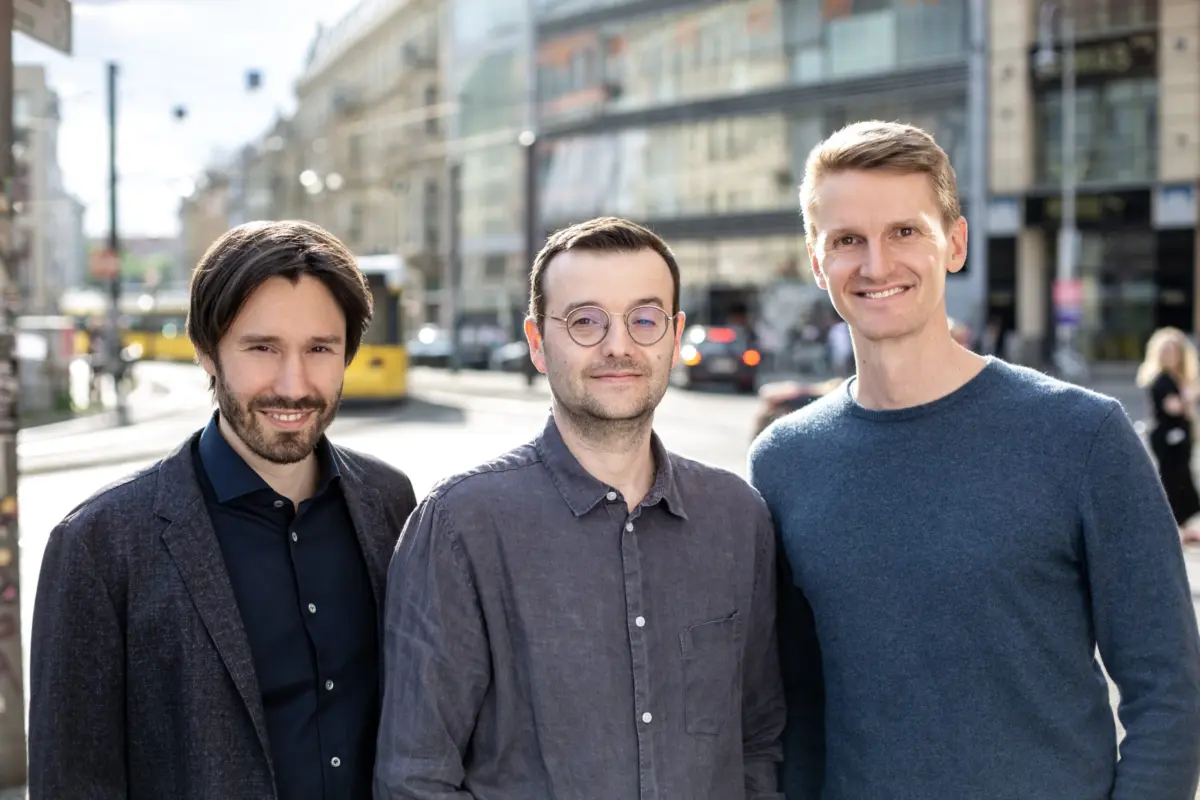
Launched in 2017 by co-founders Minna Song and Sundeep Sanghavi, EliseAI initially set out to solve a ubiquitous urban problem: finding housing. Early iterations of the platform focused heavily on streamlining the apartment leasing process through conversational AI. Recognizing that property managers and landlords were bogged down by repetitive inquiries, scheduling viewing appointments, and processing tenant applications, the founders built natural language processing models tailored specifically to real estate jargon and workflows.
Scaling Through Pandemic Headwinds (2021–2023)
As the COVID-19 pandemic accelerated the digitization of traditional property management, EliseAI found a receptive market. Labor shortages in the real estate sector created an acute demand for automated solutions that could maintain high customer service standards without inflating overhead. The company steadily expanded its capabilities beyond mere leasing chatbots, pushing deeper into the operational backbone of residential communities by integrating automated maintenance ticketing, rent collection inquiries, and lease renewals.
The Hyper-Growth Phase and Healthcare Expansion (2024–2025)
By mid-2024, EliseAI’s momentum became impossible for the venture capital ecosystem to ignore. In August 2024, the company secured a substantial $75 million funding round to scale its property owner chatbots. Building on this momentum, the company executed a strategic diversification playbook, carrying its conversational AI and automation engine over into the healthcare sector.
By August 2025, EliseAI closed its Series E round, establishing a $2 billion valuation. Over the ensuing twelve months, the company experienced exponential adoption, officially passing the $200 million ARR milestone in the summer of 2026. This explosive financial growth set the stage for Tuesday’s mega-round, which successfully doubled the company’s valuation to $4 billion in a compressed timeframe.
Supporting Context and Metrics: Housing, Healthcare, and "Apollo"
To understand EliseAI’s meteoric rise, one must examine the specific market mechanics driving its software adoption. According to co-founder and CEO Minna Song, the company deliberately zeroed in on housing and healthcare because they represent the two largest and most complex expenditure categories for American households.
The Residential Housing Footprint
In the residential real estate sector, administrative drag has historically squeezed property management margins. Leasing agents spend countless hours answering repetitive questions, coordinating maintenance requests, and chasing documentation for lease renewals.
EliseAI’s software has effectively embedded itself into the operational fabric of the American rental market. Today, the platform powers automated workflows for roughly one in every six apartments across the United States. This staggering market penetration gives the company an immense proprietary dataset, allowing its machine learning models to optimize everything from vacancy pricing insights to tenant communication cadence with unprecedented precision.
The Healthcare Operations Push
While residential real estate established the company’s foundation, healthcare represents its highest-stakes frontier. Specialty physician groups face immense administrative burdens, ranging from inbound patient triage and insurance verification to multi-step referrals, scheduling, and post-visit follow-ups.
EliseAI’s healthcare solutions are designed to sit natively within medical administrative workflows, ensuring that critical patient data does not fall through the cracks. By automating the preliminary patient journey—from the initial phone call to chart preparation—the platform drastically reduces administrative burnout among medical staff while accelerating patient access to care.
The Introduction of "Apollo"
Earlier this month, EliseAI signaled its technological evolution with the launch of Apollo, a native AI "teammate" embedded directly into the company’s software platform.

Unlike traditional software add-ons or standalone chatbots, Apollo is architected to function as a collaborative digital colleague. Because it is built natively into the same platform that already orchestrates leasing, maintenance, and renewals, Apollo possesses systemic awareness of ongoing property operations. It can reason across every distinct role on a property team, delegating tasks, summarizing communications, and preemptively flagging operational bottlenecks before they escalate into costly tenant disputes or vacancies.
Official Statements and Industry Insights
The infusion of $350 million from Andreessen Horowitz and Bessemer Venture Partners highlights a broader thesis among top-tier investors: the era of surface-level AI wrappers is over, and the era of deep, workflow-embedded vertical AI has arrived.
In statements accompanying the funding announcement, leadership from both investing firms emphasized EliseAI’s unique capability to bridge the gap between complex software architecture and tangible, real-world operational savings.
Reflecting on the company’s core mission, CEO Minna Song explained the philosophical underpinnings of their multi-industry approach during a recent interview:
"It’s built natively into the same platform that already runs leasing, maintenance, and renewals, so it can act across every role on a property team."
Elaborating on the strategic expansion into the medical field, Song noted that the underlying inefficiencies plaguing healthcare mirror those found in housing:
From the first inbound call through referrals, scheduling, insurance verification, chart prep, and follow-up, so nothing falls through the cracks. We targeted housing and healthcare because they are two of the largest expenses for American households.
Industry analysts point out that EliseAI’s success hinges on its ability to transcend basic conversational capabilities. By replacing disparate legacy software tools with a unified, AI-native operating layer, the company has transformed itself from a vendor into an indispensable operational utility.
Future Outlook
As EliseAI absorbs its newly acquired capital and adjusts to its loftier $4 billion valuation, the company stands at a pivotal crossroads in its corporate evolution.
Scaling Enterprise Infrastructure
The primary challenge for any hyper-growth AI firm is maintaining system reliability, data security, and regulatory compliance as it scales. Given that EliseAI handles sensitive tenant financial records as well as HIPAA-protected healthcare data, maintaining airtight cybersecurity protocols will remain paramount. The new funding will likely be deployed heavily toward bolstering infrastructure resilience, expanding engineering talent pools, and enhancing enterprise-grade security frameworks.
Product Roadmap and Market Expansion
With Apollo now deployed in the wild, the company is expected to iterate rapidly on its agentic AI capabilities. Future roadmap milestones will likely focus on deeper autonomous decision-making for property managers and healthcare administrators—shifting the software from a reactive assistant to a proactive orchestrator of business processes.
Furthermore, while EliseAI’s current footprint is heavily concentrated in the United States, the underlying operational inefficiencies it targets are universal. International expansion into European, Canadian, or Asian-Pacific residential and healthcare markets could represent the next logical vector for hyper-growth.
The Broader Vertical AI Landscape
EliseAI’s mega-round serves as a bellwether for the venture capital market at large. It demonstrates that institutional investors are willing to back category-defining vertical AI platforms with immense sums of capital, provided they can demonstrate clear, verifiable unit economics—such as EliseAI’s milestone of surpassing $200 million in ARR.
As vertical AI continues to mature, companies that successfully embed themselves into the essential workflows of legacy industries will likely dominate the next decade of enterprise technology. For EliseAI, the challenge ahead will be living up to a $4 billion valuation by continuing to prove that its AI teammates can fundamentally reshape how America lives and heals.