








Executive Overview
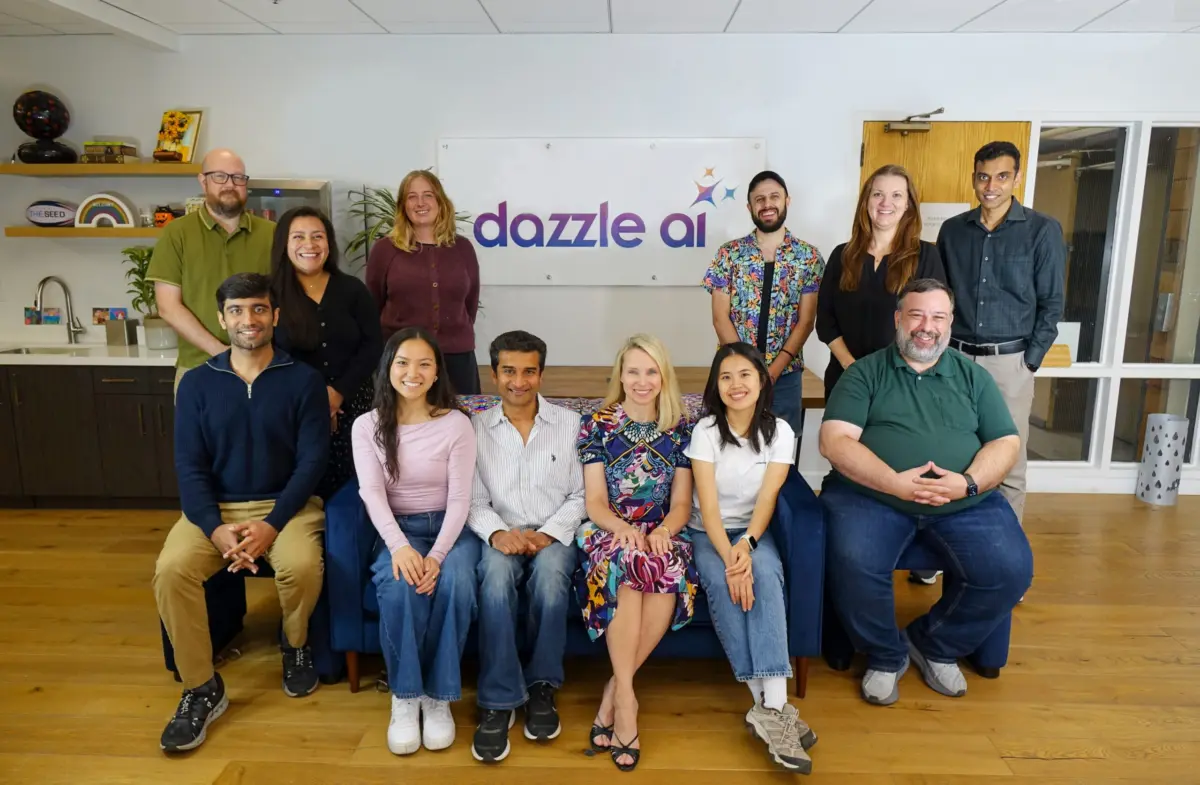
The landscape of personal artificial intelligence is undergoing a seismic shift, moving away from simple text-based command executors toward deeply contextual, autonomous companions. In a market recently saturated by text-harvesting tools—such as Meta’s Muse and Instinct—former Yahoo CEO Marissa Mayer is carving out an entirely different category. Backed by an $8 million seed round secured late last December and led by Forerunner’s Kirsten Green, Mayer’s new startup has officially stepped out of stealth mode to unveil Dazzle: a personal AI assistant that derives its entire worldview not from your emails, calendar invites, or search histories, but from a single, vastly underappreciated source—your phone’s camera roll.
For years, the tech industry has treated personal data as a text-first ecosystem. Assistants sifted through conversational threads, flight confirmations, and dense document folders to understand who we are and what we need. Mayer argues this is a fundamentally flawed paradigm. "Photos are an underappreciated source of information," Mayer asserts. "You’ll be surprised what we can learn about you and how good a job we can do with your photos."
By positing that a camera roll is worth millions of words, Dazzle analyzes visual artifacts to infer user hobbies, lifestyle choices, dietary habits, travel patterns, and interpersonal relationships. However, Dazzle enters a crowded and deeply competitive arena. It follows the quiet demise of Mayer’s previous venture, Sunshine, and its ill-fated group-sharing app, Shine. While Shine struggled with consumer adoption and outdated design philosophies, Mayer insists the ordeal yielded valuable intellectual property.
As privacy concerns surrounding text-scraping agents mount, Dazzle proposes a novel trade-off: is handing over your photo library safer, and ultimately more revealing, than granting an AI open access to your private correspondence? This report explores Dazzle’s underlying technology, early hands-on performance, privacy architecture, and what this launch signals for the future of consumer AI.
Detailed Chronology: From Sunshine to Dazzle
To understand the strategic design choices behind Dazzle, one must trace the winding trajectory of Marissa Mayer’s post-Yahoo entrepreneurial career. Following her high-profile tenure at Yahoo, Mayer turned her attention to consumer-facing artificial intelligence and social organization tools through her startup, Sunshine.
The Sunshine and Shine Era
In March 2024, Sunshine rolled out Shine, an ambitious app designed for group photo sharing and event planning. The internet greeted the product with a mixture of curiosity and skepticism. Critics pointed to an interface that felt visually dated, while mainstream consumers failed to establish daily usage habits. Despite initial venture capital optimism, Shine’s trajectory faltered in a rapidly evolving generative AI landscape.
By September 2025, the writing was on the wall. Mayer made the strategic decision to shutter Sunshine as a cohesive entity, selling off key assets and intellectual property to her newly formed venture. While the closure of Sunshine was viewed in some circles as a setback, it served as a crucial incubation period for the underlying computer vision and machine learning models that would eventually give birth to Dazzle. The IP harvested from Shine provided the foundational architecture needed to process unstructured visual data at scale.
Securing Seed Capital and Stepping Out
With a refined vision centered exclusively on visual context, Mayer took Dazzle to the venture capital market. In December, the startup successfully closed an $8 million seed funding round, spearheaded by prominent venture firm Forerunner, known for backing consumer-facing disruptors like Warby Parker, Glossier, and Chime.
For months, industry observers wondered what Mayer’s next act would look like, particularly as tech giants rolled out aggressive conversational tools. The speculation ended when Mayer began private demonstrations, showcasing an assistant that deliberately rejects the text-heavy approach of its competitors in favor of deep visual intelligence.
Supporting Context & Metrics: The Mechanics of Visual AI
Dazzle’s operational footprint is divided into two distinct functional pillars designed to bridge immediate reactivity with long-term predictive personalization. Users can interact with the assistant via a dedicated mobile application or through standard text messaging interfaces.
1. Immediate Reactive Tasks
For day-to-day friction points, Dazzle acts as a visual triage unit. By scanning recent additions to a user’s camera roll, the assistant can automatically extract actionable details:
- Calendar Automation: Snapping a picture of an event flyer, a handwritten school schedule, or a local festival poster allows Dazzle to parse the dates, times, and locations, instantly populating the user’s digital calendar.
- Problem Resolution: Spotting a structural issue in the background of a photo—such as a broken garage door, a leaking pipe, or a fading paint job—prompts Dazzle to proactively source local repair professionals, pull reviews, and draft contact messages.
2. Long-Term Predictive Personalization
Beyond immediate tasks, Dazzle mines historical photo libraries to construct a multidimensional consumer profile. According to early demonstrations, the AI can deduce sophisticated behavioral nuances:
- Recreational Preferences: By analyzing the background elements of vacation photos, sporting equipment, or outdoor gear, the system accurately identifies whether a user enjoys skiing, hiking, or niche activities like escape rooms.
- Family Dynamics: The assistant tracks children’s ages, growth milestones, and emerging hobbies based on chronological photo clusters, allowing it to tailor recommendations for birthdays, holidays, and family outings.
Financial and Market Metrics
- Seed Funding: $8 Million USD secured in December.
- Lead Investor: Forerunner (Kirsten Green).
- Core Technological Pivot: Transitioning from Shine’s social event-planning framework to Dazzle’s singular camera-roll telemetry.
- Competitive Landscape: Directly challenging Meta’s Muse, Instinct, and a broad cohort of text-mining consumer assistants.
Official Statements and Industry Perspectives
Marissa Mayer has been vocal about the strategic differentiation of Dazzle, defending its narrow data-sourcing model against privacy critics and skeptics of visual AI.

"I think that photos are an underappreciated source of information," Mayer stated during an exclusive product demonstration. "You’ll be surprised what we can learn about you and how good a job we can do with your photos."
Mayer emphasizes that while competitors rely on scraping dense, text-based repositories like email clients and messaging apps, photos capture authentic, lived experiences that users rarely articulate in writing.
"We understand whether or not you like to ski, where your most recent trip was, what types of things your kids are into," she explained, pointing to the granular detail extracted from casual snapshots rather than formal surveys or logged search queries.
Addressing the Privacy Paradox
In an era defined by consumer surveillance anxiety, asking users to hand over their entire camera roll—often containing intimate family photos, sensitive documents, and private moments—might sound counterintuitive. However, Mayer contends that camera rolls represent a safer alternative to email and text message scrapers.
While emails contain passwords, financial statements, medical records, and legal correspondence, photos are primarily experiential. To address these concerns head-on, Mayer emphasized that Dazzle is built with privacy-first guardrails. The system actively screens ingested imagery and is programmed to discard any personal information or sensitive visual data flagged during processing.
Hands-On Testing: Promise Versus Reality
To evaluate how Dazzle performs in the wild, early testers put the assistant through rigorous trial runs, uncovering a fascinating mixture of uncanny precision and occasional operational blind spots.
Brainstorming and Recommendations
When tested for family outings and vacation ideas, Dazzle demonstrated the strength of its visual memory. For instance, when Mayer herself used the app to brainstorm activities, the assistant successfully deduced a family fondness for escape rooms—gleaned entirely from past photo backgrounds—and surfaced multiple obscure San Francisco Bay Area locations previously unknown to her.
When an external tester requested Mediterranean vacation recommendations, Dazzle correctly identified past trips to Spain and Greece. More impressively, it suggested Sicily, a destination the user had visited four years prior, proving the AI’s ability to recall long-term chronological data embedded in metadata and image content. Furthermore, lifestyle suggestions—such as recommending a local pottery studio or organizing a bioluminescent kayak tour in Tomales Bay—felt sharply curated and genuinely personal.
The Blind Spots and Limitations
Despite these flashes of brilliance, Dazzle is not without its operational hiccups. During testing, the assistant exhibited notable comprehension gaps:
- Missed Milestones: When asked whether to purchase roller skates for a daughter’s upcoming birthday, the AI failed to recognize or remember that the child already knew how to roller skate, demonstrating a current inability to connect isolated physical skills across years of photographic evidence.
- Scope Constraints: Compared to mature enterprise assistants that manage multi-app workflows seamlessly, Dazzle remains relatively narrow in scope. It cannot yet orchestrate complex multi-step logistical operations spanning airline bookings, hotel reservations, and calendar conflicts with the fluency of text-heavy ecosystems.
Yet, despite these early growing pains, testers noted that Dazzle’s suggestions carry a distinctly human flavor—avoiding the generic, algorithmic blandness often produced by AI tools tethered exclusively to corporate email threads and search histories.
Future Outlook: The Evolution of Contextual AI
The launch of Dazzle arrives at a watershed moment for consumer technology. As major platforms race to build the ultimate personal assistant, the industry is splitting into distinct philosophical camps: those betting on text, metadata, and communication logs (such as Meta with Muse and Instinct), and those betting on visual memory and ambient intelligence.
Dazzle’s success will ultimately depend on two critical factors: consumer trust and technical refinement. Granting an early-stage startup access to a personal camera roll requires a profound leap of faith. While Mayer’s emphasis on privacy controls and sensitive data deletion is a step in the right direction, widespread adoption will hinge on absolute transparency regarding how machine learning models ingest, process, and store visual assets.
As the underlying computer vision models continue to mature, Dazzle offers a compelling glimpse into the next phase of human-computer interaction. In this impending paradigm, artificial intelligence will no longer serve merely as a reactive task-executor that waits for typed prompts; instead, it will possess an ambient, intuitive understanding of who we are, where we’ve been, and how we live our lives through the silent, enduring testimony of our captured moments.