






Executive Overview
The global music industry’s long-running legal battle against stream-ripping and digital media extraction tools has entered a significantly more aggressive phase. In a formal policy submission for the European Commission’s upcoming 2027 EU Counterfeit and Piracy Watch List, the International Federation of the Phonographic Industry (IFPI)—the primary lobbying body representing the worldwide recording industry—has taken direct aim at yt-dlp, the immensely popular open-source media download utility.
For years, record labels and trade groups focused their ire on commercial web-based services like Savefrom.net and Y2mate. However, the IFPI’s latest filing marks a historical escalation: it is the first time a major industry organization has explicitly targeted an open-source project and its core maintainers in a regulatory watch-list consultation. Accusing yt-dlp of facilitating large-scale copyright infringement by bypassing platform protection measures, the IFPI has not only flagged the software alongside traditional stream-ripping platforms but has also explicitly named four lead developers via their public GitHub handles.
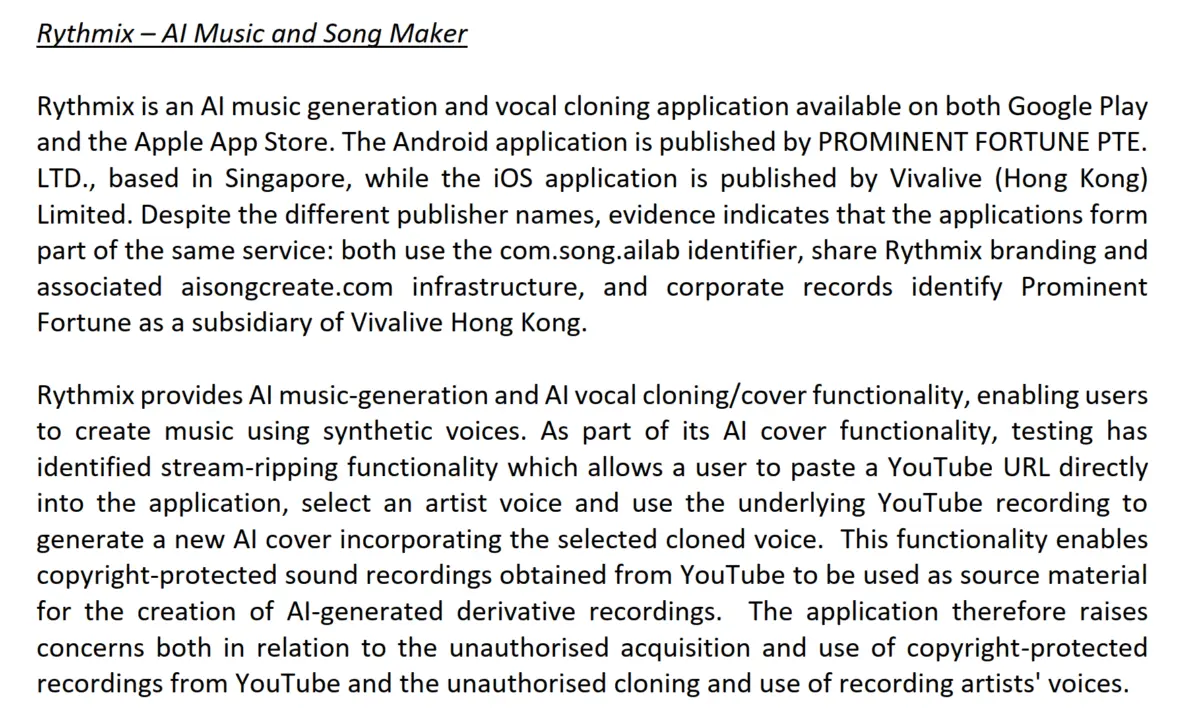
This development signals a profound shift in how rights-holders intend to combat decentralized tools. Rather than attempting to block individual websites—a game of digital whack-a-mole that yielded mixed results—the music industry is setting its sights squarely on the collaborative infrastructure, open-source repositories, and individual contributors driving modern media-extraction technology. Alongside traditional software extraction, the IFPI’s filing also turns its lens toward emerging artificial intelligence threats, calling out mobile apps that ingest YouTube streams to generate unauthorized AI cover songs using cloned artist voices.
Detailed Chronology: From youtube-dl to yt-dlp
To understand the weight of the IFPI’s current maneuver, it is necessary to examine the turbulent history of the codebase from which yt-dlp emerged.
The 2020 RIAA Crackdown on youtube-dl
The modern conflict between media extractors and the music business erupted in October 2020. The Recording Industry Association of America (RIAA)—the American affiliate of the IFPI—triggered an industry earthquake by issuing a Digital Millennium Copyright Act (DMCA) takedown notice to GitHub. The target was youtube-dl, a command-line tool that had spent over a decade acting as the ubiquitous backbone for downloading videos and audio from YouTube and hundreds of other platforms.

The RIAA argued that youtube-dl violated anti-circumvention provisions under the DMCA by bypassing YouTube’s rolling cipher technology. The move shocked the developer community, outraging software engineers and even prompting GitHub’s then-CEO to step in. Within weeks, GitHub reversed its decision, reinstated the repository, and established a $1-million developer defense fund to protect open-source creators from similar aggressive legal claims.
The German Legal Front
While the RIAA’s copyright strike in the United States ultimately stalled, European music labels found greater success in continental courts. Record labels launched a multifaceted legal campaign in Germany targeting Uberspace, the independent hosting provider servicing the official website of youtube-dl (youtube-dl.org).
Arguing that the host was legally liable for aiding and abetting copyright circumvention, the music labels secured favorable rulings in lower courts. The legal pressure culminated in November 2024, when the Hamburg Court of Appeal definitively rejected Uberspace’s appeal. Today, visitors navigating to the original youtube-dl.org domain are automatically redirected to its spiritual successor, yt-dlp.
The Rise of yt-dlp
Although youtube-dl was never formally dismantled, active maintenance of the core codebase effectively stalled under the weight of regulatory scrutiny. Recognizing the vacuum, independent developers launched yt-dlp in 2021 as an open-source fork.
Designed to be backwards-compatible with youtube-dl while adding performance enhancements, speed improvements, and rapid patches for changing platform APIs, yt-dlp exploded in popularity. It has since eclipsed its predecessor, cementing itself as an indispensable tool for archivists, researchers, journalists, and everyday consumers.
Supporting Context & Metrics: The Scale of yt-dlp
The IFPI’s acute focus on yt-dlp is driven by staggering adoption metrics that illustrate just how deeply embedded the software has become in the global digital ecosystem.
According to public repository metrics on GitHub:
- Forks: The yt-dlp project has amassed over 16,000 forks, indicating a vast network of independent developers maintaining personal adaptations and extensions.
- Stars: The project boasts over 190,000 stars, making it the 32nd most-starred repository on the entire GitHub platform. This places an open-source media extractor in the upper echelon of global software projects alongside programming languages, operating systems, and enterprise frameworks.
- Hosting Ecosystem: While mirrors and pre-compiled binaries exist across various mirrors, GitHub (owned by Microsoft and headquartered in the United States) remains the official home for the project’s source code, update scripts, and installation guides.
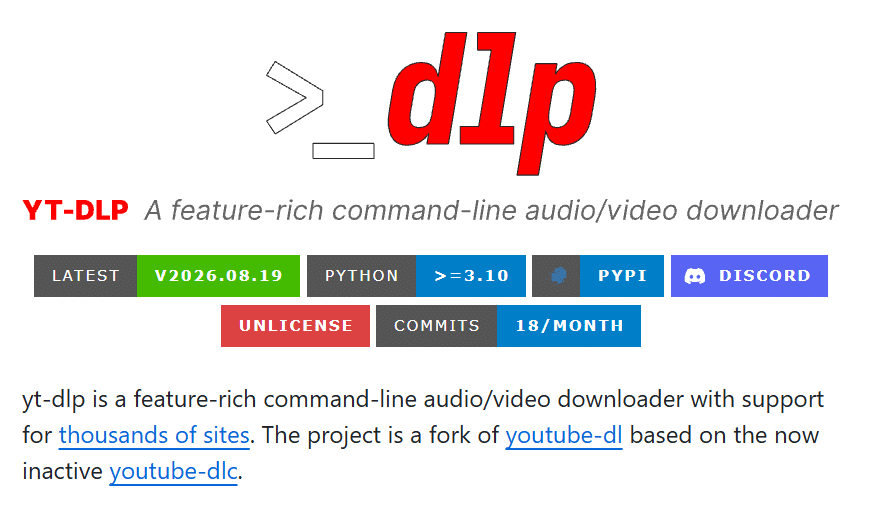
Because the software is released under the permissive Unlicense—a legal framework that dedicates the work to the public domain—and relies on a decentralized, globally distributed community of contributors, it represents a nightmare scenario for traditional copyright enforcement. Unlike a traditional website that can be seized or blocked at the DNS level, yt-dlp is replicated across millions of user machines and independent servers worldwide, rendering traditional enforcement models obsolete.
Official Statements and the IFPI’s Regulatory Filing
In its formal submission for the European Commission’s 2027 Counterfeit and Piracy Watch List consultation, the IFPI pulls no punches regarding the threat it believes yt-dlp poses to the creative economy.
Characterizing yt-dlp as a "Major Problem"
The IFPI categorizes yt-dlp directly alongside commercial stream-ripping operations such as Savefrom.net and popular multi-platform ripping domains like Y2mate.
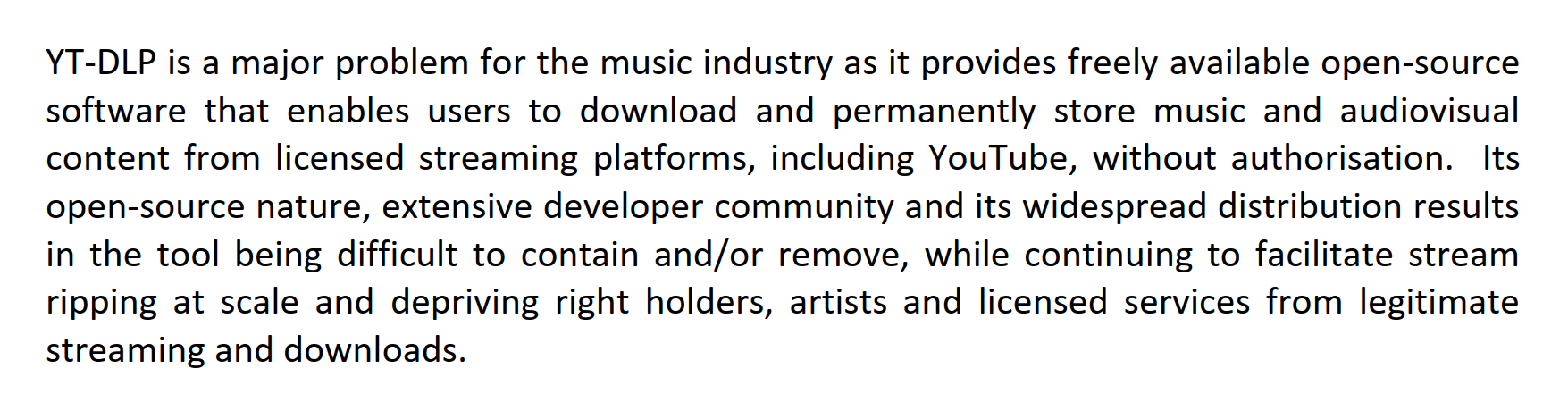
"YT-DLP is a major problem for the music industry as it provides freely available open-source software that enables users to download and permanently store music and audiovisual content from licensed streaming platforms, including YouTube, without authorisation," the IFPI writes in its submission.
The music industry group highlights the tool’s advanced capabilities, detailing its history, its underlying mechanics—which the submission describes as parsing webpage data and interacting with platform-specific playback endpoints—and its public domain distribution model. The IFPI emphasizes that the software’s open-source architecture makes it uniquely resilient to containment:
"Its open-source nature, extensive developer community and its widespread distribution results in the tool being difficult to contain and/or remove, while continuing to facilitate stream ripping at scale and depriving right holders, artists and licensed services from legitimate streaming and downloads."
Targeting Four GitHub Handles
In an unprecedented escalation against individual developers, the IFPI’s submission explicitly identifies four maintainers by their public GitHub usernames:
pukkandan– Identified as the project’s founder and lead maintainer from 2021 to 2024.coletdjnz– Listed as a core maintainer.bashonly– Listed as a core maintainer.Grub4K– Listed as a core maintainer.
By moving past anonymous project names and calling out specific human beings, the IFPI has raised the personal stakes for open-source maintainers. Notably, the filing does not formally request a specific takedown order, network-blocking measure, or legal injunction against these developers, nor does it acknowledge that yt-dlp possesses substantial non-infringing, lawful uses (such as archiving public domain media, educational research, and offline viewing of creative commons content).
The Circumvention Debate
While the IFPI’s specific descriptive text regarding yt-dlp avoids the explicit word "circumvention," the overarching framing of the submission relies heavily on anti-circumvention doctrines. The organization argues that streaming giants like YouTube deploy sophisticated technical protection measures to control access to copyrighted material.
"Stream ripping sites are circumventing these measures that enjoy legal protections under international treaties and EU law," the submission asserts, pointing directly to the precedent set by the German Uberspace ruling, which held hosting providers liable for aiding the circumvention of platform protections.
However, legal scholars and open-source advocates have frequently pushed back against this characterization. yt-dlp operates by reading publicly accessible network traffic, parsing web pages, and executing standard API requests—effectively mimicking the behavior of a standard web browser. Whether this functionality constitutes illegal "circumvention" under European copyright directives remains a fiercely contested legal gray area.
Emerging Frontiers: AI "Ripping" and the Future Outlook
Beyond traditional command-line stream rippers, the IFPI’s 2027 Watch List submission highlights an alarming new horizon for the music industry: the convergence of stream-ripping technology and generative artificial intelligence.
AI Music Apps in Official App Stores
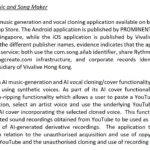
The trade group’s filing specifically flags emerging mobile applications that weaponize stream extraction to fuel AI model training and unauthorized voice cloning. Two applications highlighted in the report include:

- Rythmix (available on Apple’s App Store and Google Play, where it has reportedly surpassed five million downloads)
- MusiQ AI (available on the Apple App Store)
These applications allow users to paste a direct link to a copyrighted YouTube video, extract the audio via stream-ripping techniques, and instantly convert the recording into an AI-generated cover song featuring unauthorized voice clones of famous artists. The ability to bypass platform protections to source training data and audio stems directly from licensed streaming services represents a dual threat to copyright holders: traditional piracy combined with unauthorized generative AI transformation.
Future Outlook: What Lies Ahead
Over the coming months, the European Commission will review submissions from rights-holders, industry associations, and technology stakeholders before finalizing its official 2027 Counterfeit and Piracy Watch List.
The inclusion of yt-dlp and consumer AI applications like Rythmix marks a critical inflection point in copyright policy. If the European Commission formally adopts the IFPI’s recommendations and lists yt-dlp as a notorious market or facilitator of piracy, it could exert immense political and legal pressure on U.S.-hosted platforms like GitHub to reevaluate their hosting policies regarding media extraction utilities.
To date, representatives for yt-dlp maintainers and GitHub have declined to comment publicly on the IFPI’s submission. As the debate intensifies, the outcome of this regulatory consultation will likely determine the legal boundaries of open-source software development, media shifting, and the rights of developers to build tools that interact with modern streaming monopolies.