For millions of digital-native consumers worldwide, Chris Olsen is a familiar, high-energy presence. Best known for his viral content on TikTok and Instagram—where his subscriber counts easily stretch into the millions—Olsen has spent years cultivating an online persona defined by humor, musical talent, and candid LGBTQ+ advocacy. However, beneath the polished veneer of curated short-form videos and high-profile red-carpet appearances lies a deeply complex personal history defined by profound struggles with mental health, substance abuse, and the arduous road to recovery.
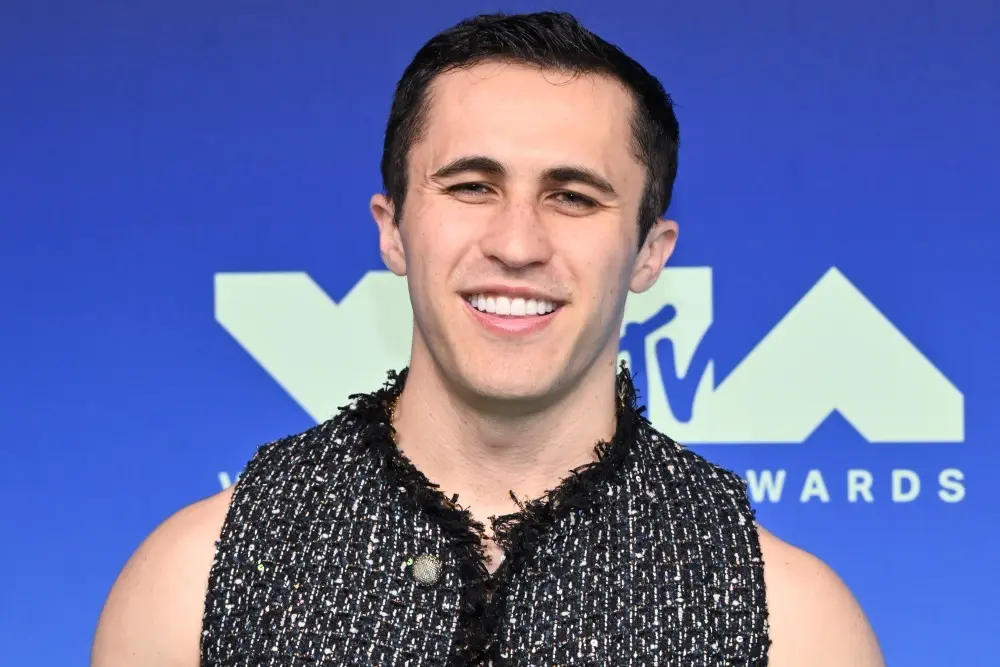
In his recently released memoir, I Think My Therapist Hates Me, Olsen strips away the algorithmic constraints of social media to present an unvarnished look at his formative years, his battle with addiction, and the relentless pursuit of self-acceptance. Speaking candidly on the red carpet at the MTV Video Music Awards, the 28-year-old creator didn’t mince words about the emotional toll required to bring his deepest vulnerabilities to the page. Rather than describing the writing process as a therapeutic release, Olsen equated it to an act of emotional self-infliction—a painful excavation of past traumas that he ultimately deemed worthwhile if it serves as a lifeline for others.
This comprehensive report explores the release of Olsen’s literary debut, examining the central themes of the memoir, the overwhelming reception from a demographic of young readers grappling with similar demons, and the broader cultural implications of digital creators transitioning into traditional authorship. Furthermore, we examine Olsen’s background, his trajectory from a Chevy Chase, Maryland upbringing to global digital stardom, and his playful, tongue-in-cheek commentary regarding a potential television adaptation starring global pop icon Harry Styles.
Detailed Chronology: From Viral Sensation to Literary Author
The path that led Chris Olsen to the publication of I Think My Therapist Hates Me is intrinsically linked to the broader evolution of the creator economy over the past decade. Long before he was joking about a potential limited series adaptation on a major streaming network, Olsen was navigating the turbulent waters of early adulthood against a backdrop of personal instability.
Growing up in Chevy Chase, Maryland, Olsen experienced the formative pressures that many Gen-Z and millennial youths face, compounded by the silent battles of internal identity and chemical dependency. As he transitioned into his twenties, these struggles escalated, culminating in a critical turning point that necessitated a rigorous commitment to sobriety. While many contemporaries in the influencer space chose to gloss over the darker corners of their personal lives to maintain a marketable aesthetic, Olsen’s eventual pivot toward radical transparency began to redefine his relationship with his audience.
When TikTok emerged as a dominant cultural force in the late 2010s and early 2020s, Olsen quickly established himself as a foundational talent. Amassing more than 14 million followers on TikTok and an additional three million on Instagram, he leveraged his platform to showcase his comedic timing, vocal abilities, and charismatic personality—most notably through viral videos delivering coffee to celebrities and collaborating with top-tier Hollywood talent. Yet, even as his follower count soared and his professional opportunities expanded—including hosting Variety’s prestigious Power of Young Hollywood party in Los Angeles in 2022—the internal weight of his past remained unresolved.
The decision to write I Think My Therapist Hates Me marked a deliberate departure from the bite-sized, highly edited medium of short-form video. Over months of intensive writing, Olsen confronted the painful realities of his substance abuse disorder and the long, non-linear journey toward sustained sobriety. The book serves as a chronological and psychological map of his life, detailing the moments of isolation, the breakdown of mental health, and the arduous rebuilding process that followed. Upon its release, the memoir immediately resonated far beyond his core digital following, prompting a wave of critical discourse and personal testimonials from readers who saw their own struggles reflected in his words.
Supporting Context & Metrics: The Anatomy of Modern Creator Memoirs
The publication of I Think My Therapist Hates Me arrives at a fascinating intersection of modern publishing and digital culture. In recent years, traditional publishing houses have increasingly turned to digital-first creators and social media influencers to capture built-in audiences. However, the success of these literary ventures varies wildly depending on the authenticity of the material. Memoirs that rely purely on surface-level anecdotes often fail to resonate, whereas works that tackle systemic issues—such as addiction, mental health, and structural isolation—frequently achieve profound cultural impact.
Olsen’s memoir falls firmly into the latter category, striking a chord with a generation of young adults navigating unprecedented levels of psychological distress. Recent public health metrics underline the urgency of these themes:
Substance Abuse Vulnerability: Statistics from public health agencies consistently highlight that rates of substance use disorders among young adults aged 18 to 29 remain a critical area of concern, exacerbated by socioeconomic pressures and digital isolation.
The "Always-On" Mental Health Crisis: For digital creators like Olsen, the boundaries between public performance and private reality often blur, leading to heightened rates of burnout, anxiety, and depressive episodes.
The Power of Peer Resonance: Studies in narrative therapy indicate that memoirs focusing on addiction and recovery significantly reduce feelings of stigma among readers, often acting as a catalyst for individuals to seek professional help.
By laying bare his most difficult moments, Olsen has tapped into a vast, underrepresented demographic of young people who grew up in households affected by addiction or who are battling their own chemical dependencies. The numerical scale of his audience—surpassing 17 million combined followers across TikTok and Instagram—ensures that these vital conversations regarding mental health reach a demographic that traditional public health campaigns often struggle to engage.
Official Statements and Red Carpet Revelations
Speaking to press representatives on Sunday at the MTV VMAs, Chris Olsen offered a raw, unvarnished assessment of the emotional cost associated with his literary debut. His remarks provided a stark contrast to the celebratory, highly curated atmosphere of the awards ceremony.
Reflecting on whether the writing process provided a sense of emotional release, Olsen was unequivocal:
"People say, was it cathartic to write it? No, it felt like I was just kind of like stabbing myself over and over again."
This visceral metaphor underscores the deep discomfort required to write an authentic memoir. Rather than viewing the book as a painless exercise in self-expression, Olsen approached the manuscript as an exhaustive reopening of old psychological wounds. Every chapter demanded an unflinching examination of his past failures, vulnerabilities, and the darkest hours of his substance abuse battle.
However, Olsen was equally quick to emphasize that the intense emotional suffering was entirely validated by the reception of his readers. Shifting his focus from personal pain to public impact, he noted:
"Now the book’s out, people seem to be having a positive impact from it. It’s helping people. That’s all that matters to me."
Elaborating on the specific demographic that has reached out to him via direct messages and letters, Olsen highlighted the core mission behind the project:
"It’s a lot about young people who have maybe struggled with their own substance abuse issues or they’ve been in families where addiction was a big issue and getting through, that they felt very alone and I think that is the point of writing a story like that, writing a memoir, feeling less alone and relating to people and that’s really all I wanted."
Injecting a touch of his signature humor into the conversation, Olsen also addressed the inevitable speculation regarding a screen adaptation of the memoir. When asked who might portray him in a potential television limited series, the creator offered a delightfully ambitious casting choice:
"It would have to be someone humble like Harry Styles. I just want someone who looks like me, like a newcomer, a newcomer who looks like me, acts like me and wants it. He’s hungry for the role."
While the remark was made in jest, it highlights Olsen’s adeptness at blending profound vulnerability with self-aware humor—a balancing act that has defined his public persona from the very beginning.
Future Outlook: The Next Chapter for Chris Olsen
As I Think My Therapist Hates Me continues to climb bestseller lists and spark vital conversations across social and traditional media, Chris Olsen stands at a fascinating crossroads in his multifaceted career. At 28 years old, he has successfully bridged the gap between transient internet celebrity and substantive public intellectualism, proving that his talents extend far beyond the constraints of a 60-second vertical video.
Looking ahead, Olsen’s trajectory suggests a continued expansion into long-form storytelling, performance, and advocacy. Whether through potential developments regarding a screen adaptation of his memoir, his ongoing work as an LGBTQ+ advocate, or his continued musical and theatrical pursuits, Olsen has cemented his status as a resilient voice for his generation.
Ultimately, the true legacy of I Think My Therapist Hates Me will not be measured solely in book sales or streaming numbers, but in the quiet, profound moments of connection forged between an author and a reader who suddenly feels a little less alone in the dark. By choosing to endure the metaphorical "stabbing" of self-examination, Chris Olsen has not only secured his own healing but has also illuminated a path forward for countless others.