









Executive Overview
In the high-stakes ecosystem of Software-as-a-Service (SaaS) businesses, the allure of securing a multi-year contract paid upfront is difficult to overstate. For founders, chief revenue officers (CROs), and finance leaders, an injection of multi-year capital provides an immediate liquidity boost, extends the company’s runway, and validates product-market fit with enterprise-grade commitments. However, beneath the surface of these seemingly lucrative upfront lump sums lies a complex strategic dilemma: What is the exact financial trade-off of offering deep discounts for 2-, 3-, and 5-year commitments?
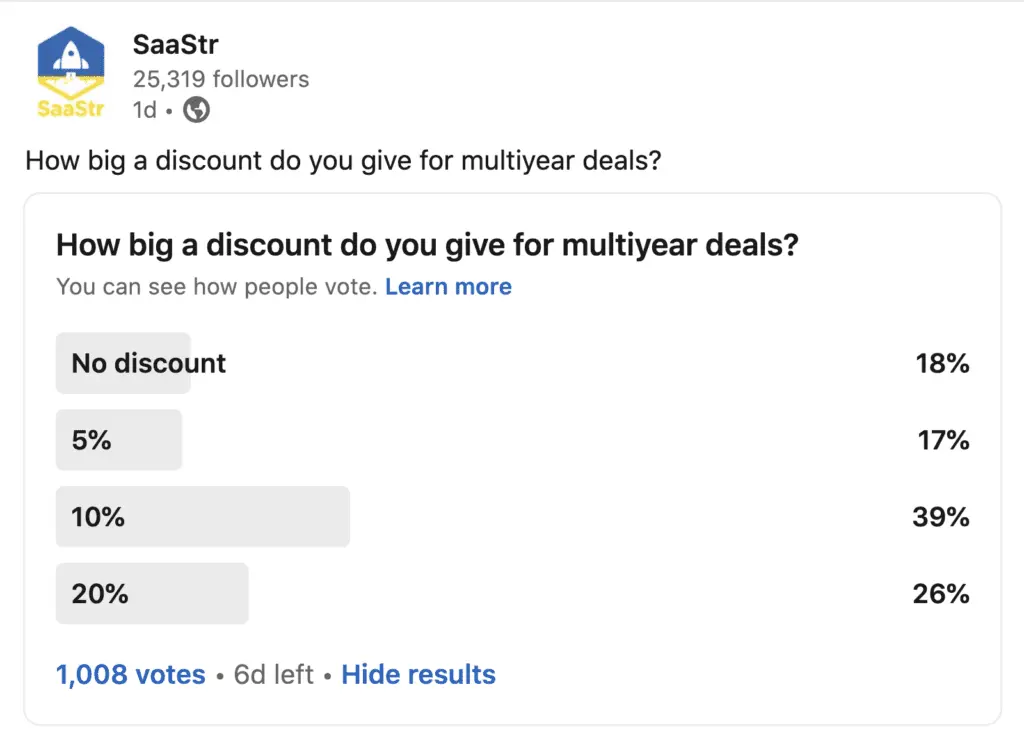
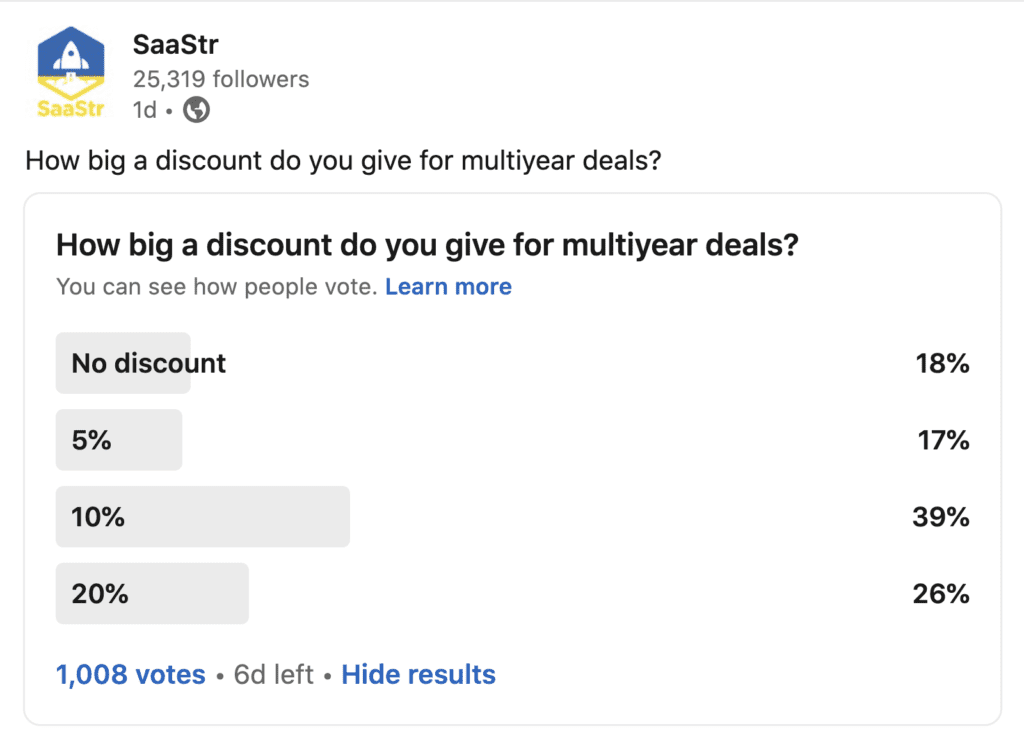
Industry benchmarks indicate that most SaaS companies settle on an additional 10% to 20% discount for multi-year contracts. Yet, crossing the threshold beyond a 20% discount introduces hidden hazards that can quietly erode a company’s valuation, cripple downstream expansion revenue, and lock organizations into sub-optimal pricing models for years.
This comprehensive analysis investigates the mechanics of multi-year SaaS pricing structures. By examining the delicate balance between cash flow necessities and long-term Annual Recurring Revenue (ARR) compounding, this report provides leadership teams with the analytical framework required to evaluate when—and when not—to incentivize long-term customer lock-ins.
Detailed Chronology: The Evolution of SaaS Commitment Structures
To understand the current state of SaaS discounting, it is vital to trace how contract lengths and payment terms have evolved alongside the maturation of the cloud software industry.
Phase 1: The Era of Perpetual Licenses and Heavy Upfronts (Pre-2010s)
Before the cloud-native subscription model dominated the enterprise software landscape, enterprise resource planning (ERP) and legacy software vendors relied on perpetual licenses. Buyers paid a massive upfront fee—often numbering in the hundreds of thousands or millions of dollars—coupled with mandatory 15% to 20% annual maintenance fees. Discounts were deep because the intellectual property was sold outright, and vendors relied heavily on professional services and maintenance renewals to sustain operations.
Phase 2: The Emergence of Monthly and Annual Cloud Subscriptions (2010–2018)
As multi-tenant cloud architectures took over, the SaaS industry pivoted toward predictable, recurring revenue models. Initially, monthly subscriptions dominated the lower end of the market, while annual contracts became the gold standard for B2B enterprises. During this era, annual prepayments were incentivized with standard discounts ranging from 10% to 15%, primarily designed to reduce credit card processing friction, lower administrative overhead, and secure baseline annual retention.
Phase 3: The Growth-At-All-Costs Multi-Year Surge (2019–2021)
During the hyper-funded macroeconomic boom, venture-backed SaaS startups faced intense pressure to demonstrate hyper-growth, often prioritizing top-line ARR metrics over net revenue retention (NRR) efficiency. Sales teams were incentivized to close 3-year and 5-year deals to lock out competitors and inflate valuation multiples. Discounts routinely stretched past 25% to 30%, justified by the argument that "cash is king" in competitive land-grab scenarios.
Phase 4: The Rationalization and Profitability Pivot (2022–Present)
Following the macroeconomic correction of 2022, capital efficiency replaced top-line growth as the primary metric of enterprise health. Industry leaders began re-evaluating the true cost of deep multi-year discounts. Insights from industry authorities like SaaStr highlighted the long-term dangers of compounding discounts, leading modern revenue leaders to adopt a more disciplined, data-driven approach to multi-year contracting. Today, companies are increasingly wary of trading future pricing power for short-term cash injections.
Supporting Context & Metrics: The Mathematics of Multi-Year Discounting
When a buyer requests a discount for signing a multi-year agreement spanning 2, 3, or 5 years, sales leaders must evaluate the offer through a rigorous financial lens. The decision involves weighing immediate liquidity against lifetime customer value (LTV).
Standard Industry Benchmarks by Contract Length
While every organization’s pricing elasticity differs based on product maturity, competitive landscape, and gross margins, typical multi-year discounts cluster around specific ranges:
- 1-Year Contract (Paid Upfront): Usually commands a 0% to 10% discount (or simply the elimination of monthly billing administrative overhead).
- 2-Year Contract (Paid Upfront): Typically secures an additional 10% discount off the standard annual list price.
- 3-Year Contract (Paid Upfront): Generally caps out at a 15% to 20% discount. Pushing beyond this range requires executive sign-off due to margin compression.
- 5-Year Contract (Paid Upfront): Rare outside of massive enterprise or government procurement deals, these agreements may see discounts hitting 20% to 25%, though structured price escalators (e.g., a 5% annual price increase built into years 3, 4, and 5) are frequently utilized to mitigate long-term inflation and expansion risks.
The Danger Zone: Crossing the 20% Threshold
According to revenue governance frameworks, once a SaaS provider grants a multi-year discount exceeding 20%, they cross into dangerous territory.
If a company boasts a healthy business model with low customer churn and net negative churn (meaning expansion from existing customers outpaces revenue lost from cancellations), deep discounting becomes counterproductive. By locking in a low baseline price for 3 to 5 years, the vendor effectively foregoes the opportunity to capture natural price increases, seat expansions, and feature-tier upgrades.
Furthermore, these discounts often apply not just to the user count closed on Day One, but also to future seat additions negotiated under the master services agreement (MSA). If a client scales their employee headcount by 300% over three years, but their baseline per-seat price is locked at a heavy multi-year discount, the SaaS provider leaves a massive amount of downstream revenue on the table.
Cash Flow vs. Long-Term Compounding
To illustrate the dilemma, consider a software contract with a list price of $100,000 ARR:
- Scenario A (Standard Annual Contracts with Net Negative Churn): The client renews annually at list price, and through upsells and cross-sells, the account expands by 10% annually. Over three years, the account yields over $331,000 in revenue, with pricing power retained.
- Scenario B (Deeply Discounted 3-Year Upfront Contract): The client demands a 25% discount for a 3-year prepaid deal. The company collects $225,000 upfront. While the immediate cash injection helps fund short-term operations, the company misses out on expansion revenue, is locked into a deflated pricing baseline, and suffers margin degradation due to inflation and rising cloud infrastructure costs.
Official Perspectives and Expert Analysis
Industry veterans and venture capital operators have increasingly spoken out against the uncritical adoption of multi-year lock-ins.
Jason Lemkin, founder of SaaStr and a veteran SaaS investor, emphasizes the importance of betting on one’s own software application rather than defaulting to aggressive long-term discounts:
"Once you go past 20% or so, you are giving up a material amount of downstream revenue in Years 2–10, if your churn rate is low. You’re locking yourself into a decade of discounts not just for the users you close today, but also the ones you add later."
Lemkin notes that while large discounts can be vital lifelines for early-stage startups desperate for cash, or for companies plagued by high customer churn, mature SaaS businesses with strong net retention should resist the pressure to discount heavily.
"If you have net negative churn, bet on your app and yourself, vs. lock-ins. You’ll make more money, with less friction, in the long run."
Other revenue operations experts echo this sentiment, pointing out that annual contracts are often romanticized. While annual upfront payments eliminate monthly cash flow anxiety, they also reduce the frequency of customer touchpoints. An annual renewal cycle gives account managers a natural forum to discuss ROI, introduce new modules, and secure price adjustments. When a customer pays for three years upfront, that critical feedback and expansion loop is artificially delayed.
Future Outlook: Strategic Recommendations for SaaS Leadership
As the SaaS landscape matures, pricing strategy is shifting from a blunt sales tactic into a sophisticated discipline. Moving forward, executive teams must adopt a nuanced playbook to handle multi-year contracts effectively.
1. Implement Price Escalators Instead of Deep Discounts
Rather than discounting a 3-year contract by a flat 20% across the board, modern revenue leaders are utilizing structured price escalators. For example, Year 1 is priced at a modest 10% discount to incentivize the upfront wire transfer, while Years 2 and 3 include a built-in 5% price adjustment that tracks with inflation and product enhancements. This protects the vendor’s margins while still giving the buyer budget predictability.
2. Cap Discounts on Future Seat Additions
If a multi-year contract must be discounted to close a competitive enterprise deal, legal and sales operations teams must enforce strict boundaries. The discount should apply exclusively to the initial committed volume. Any expansion seats or new product modules added during the contract term should be billed at standard current list price.
3. Evaluate Churn Risk Objectively
A company with a high annual churn rate (e.g., greater than 15% to 20%) should aggressively pursue multi-year upfront contracts. In high-churn environments, securing three years of cash upfront supersedes the theoretical risk of lost downstream expansion revenue, because the customer may not have renewed anyway. Conversely, companies with best-in-class retention (NRR > 110%) should treat multi-year discounts as an expensive luxury that works against their long-term compounding potential.
4. Align Sales Compensation with Margin Quality
Sales compensation plans should not reward reps simply for booking total contract value (TCV) if it comes at the expense of deep, margin-destroying discounts. Aligning commission structures with Net ARR additions and pricing integrity ensures that the sales force acts as a steward of long-term company valuation rather than a short-term volume driver.
Conclusion
Multi-year SaaS contracts paid upfront remain a powerful instrument in the corporate finance toolkit, capable of smoothing out cash flow volatility and providing stability during uncertain economic cycles. However, treating multi-year discounts as a universal default strategy is a strategic miscalculation.
By keeping multi-year discounts modest (ideally capped between 10% and 20%), protecting future expansion pricing, and trusting in the compounding power of high-retention software models, SaaS companies can secure healthy cash flow without sacrificing their long-term market valuation and revenue potential.