








Executive Overview
For decades, the Smithsonian Institution occupied a rare and enviable position in American public life: it stood largely above the chaotic fray of partisan politics. Comprising 21 world-class museums, research centers, and the National Zoo, and drawing roughly 15 million visitors annually, the institution maintained broad bipartisan backing as the premier guardian of the nation’s history, scientific ingenuity, and cultural heritage. Even as the nation grew increasingly polarized and culture wars fractured academic, media, and civic institutions, the Smithsonian’s sprawling campus on the National Mall remained a unifying, if imperfect, symbol of the American story.
That institutional exceptionalism has now shattered. In an escalation of long-simmering ideological tensions, the Smithsonian has been thrust directly into the crosshairs of the Trump administration. Labeling the institution a victim of "ideological capture" and "divisive, race-centered ideology," the White House and its congressional allies have launched a multi-front offensive targeting the Smithsonian’s leadership, exhibits, and educational frameworks.
The conflict culminated in September 2026 with the resignation of Smithsonian Secretary Lonnie Bunch—the first African American to lead the institution—amid mounting political pressure and threats of crippling federal budget cuts. As the nation grapples with the fallout of these high-stakes clashes, the core question of how America’s premier historical repository should curate and tell the national story has become a battleground for the soul of the republic.
Detailed Chronology of a Crisis
The friction between the federal government and the Smithsonian did not emerge overnight; rather, it represents the collision of a multi-year pedagogical shift within the museum system and a resurgent, aggressive conservative political agenda.
The 2020 Pivot and Institutional Awakening
The modern ideological trajectory of the Smithsonian was significantly accelerated by the watershed events of 2020. Following the COVID-19 pandemic closures and the nationwide protests sparked by the murder of George Floyd, the institution—under the leadership of Bunch, who took the helm in 2019—embarked on an aggressive internal reckoning. Board of Regents meeting minutes from mid-2020 detail Bunch’s briefings on navigating the "dual pandemics" of the coronavirus and racial injustice.
The institution subsequently rolled out digital resources like "Smithsonian Cares" and initiated comprehensive reviews of its policies through the lens of Diversity, Equity, Access, and Inclusion (DEAI). Curatorial teams across various museums rushed to update their framing. For instance, the National Portrait Gallery revised signage for historical figures like Henry Laurens, a South Carolina delegate to the Continental Congress, to explicitly highlight their reliance on chattel slavery. While framed by staff as a long-overdue pursuit of historical accuracy, these updates placed the institution on a collision course with conservative critics who viewed the changes through the lens of progressive overreach.
Executive Action and Congressional Interventions
The return of Donald Trump to the White House catalyzed these latent tensions into open warfare.
- March 2025: President Trump signed an executive order charging that the Smithsonian had succumbed to an "improper ideology," tasking Vice President J.D. Vance with steering reform. Shortly thereafter, the administration targeted National Portrait Gallery Director Kim Sajet, who ultimately stepped down to protect the institution.
- July 2025 – July 2026: The administration issued a 120-day ultimatum demanding the eradication of "divisive or ideologically driven language." This ultimatum culminated on July 4, 2026—timed purposely for the nation’s 250th-anniversary celebrations—with the release of a blistering 162-page White House report titled "Saving America’s Story."
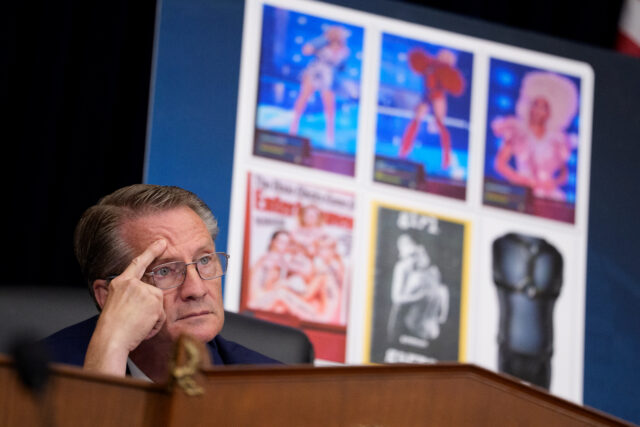
- Late July 2026: Two House committees convened back-to-back, adversarial hearings. Republican lawmakers grilled National Museum of American History Director Anthea Hartig over specific exhibits, such as a sadomasochistic crotch harness and a young girl’s diary entry addressing gender identity.
- August 2026: Interior Secretary Doug Burgum formally notified the Smithsonian’s Board of Regents that other federal agencies "cannot in good conscience continue to support the Smithsonian under current leadership," ratcheting up threats of fiscal starvation.
- September 8, 2026: Feeling the crush of an untenable political environment, Lonnie Bunch announced his resignation at age 73, declaring that the climate had simply become "too stressful."
Supporting Context & Metrics: The Structural Identity Crisis
To understand why the Smithsonian—and specifically the National Museum of American History (NMAH)—proved so vulnerable to political assault, museum historians and former directors point to decades of structural ambivalence.
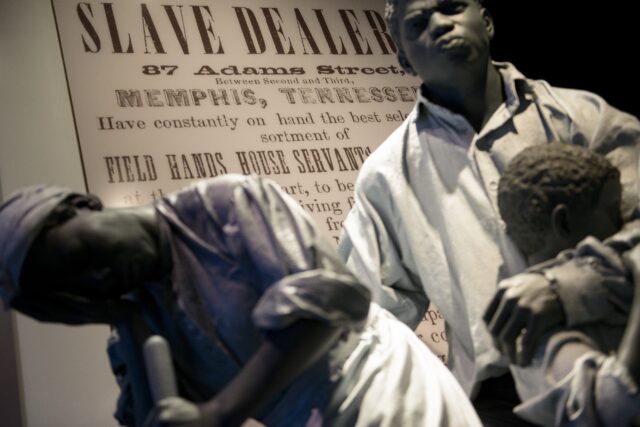
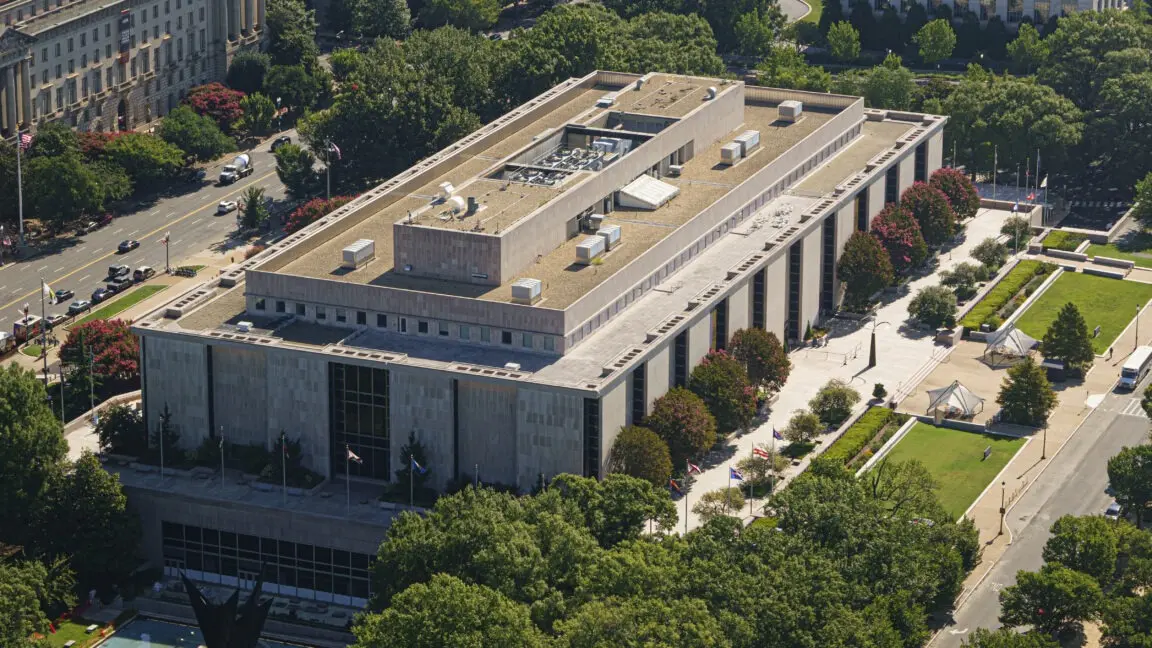
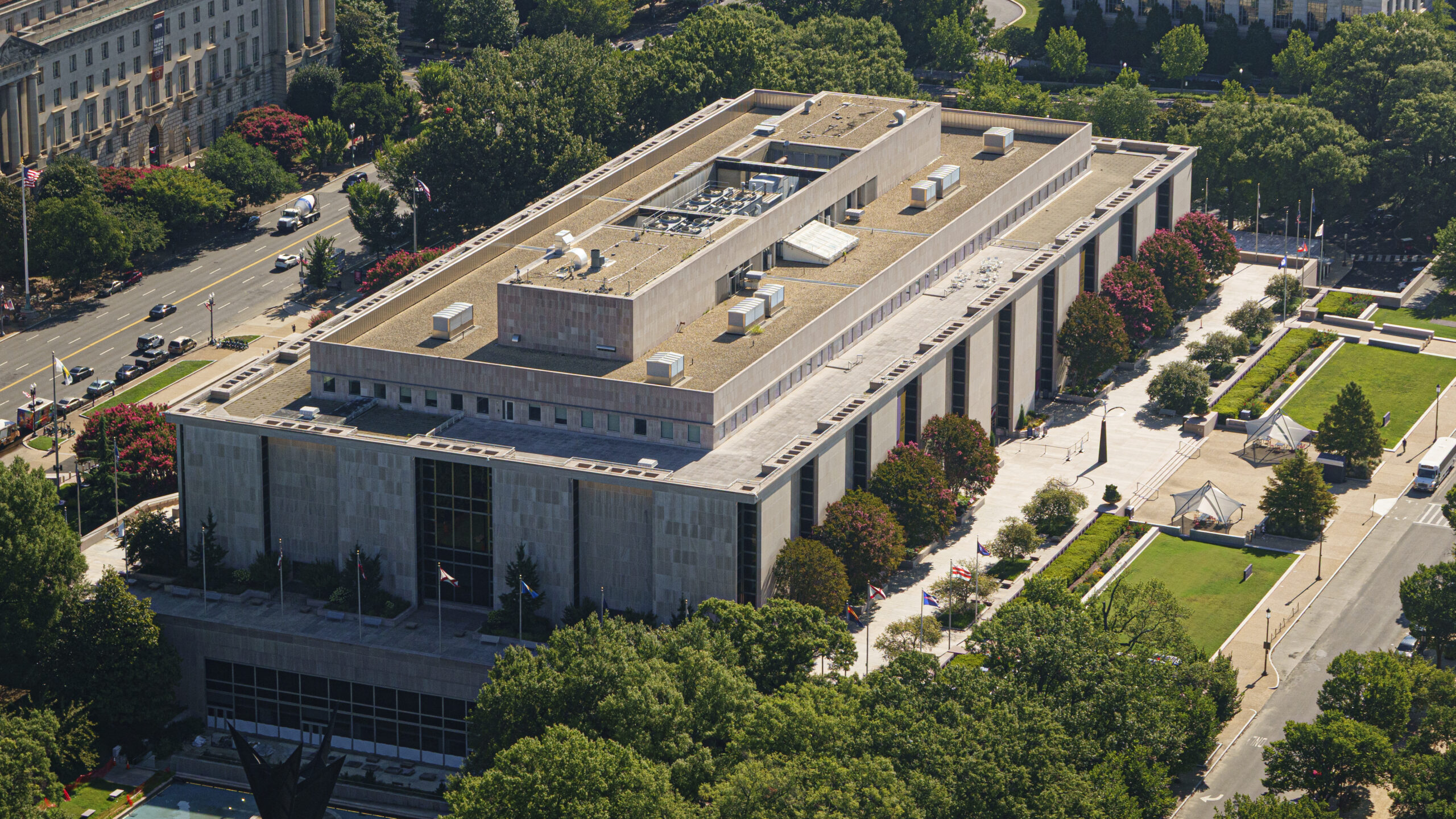
Opened in 1964 as the National Museum of History and Technology, the institution was tasked with dueling mandates: showcasing American technological ingenuity while simultaneously narrating a broad political history. When it was officially renamed the National Museum of American History in 1980, the underlying structural incoherence remained unaddressed.
The Critique of Multicultural Grievance
Throughout the late 20th and early 21st centuries, critics argued that the museum lacked a unifying chronological narrative. In a prominent 1999 critique, writer David Brooks famously lambasted the institution in the Weekly Standard as a "museum of multicultural grievance" that ignored foundational national events in favor of a fragmented focus on minority experiences and oppression.
A blue-ribbon commission led by Richard Darman echoed these concerns in a 2002 report, noting that the museum suffered from a profound lack of "aesthetic appeal, organizational coherence, and the perception of substantive balance." Subsequent directors attempted to bridge this gap by organizing permanent exhibits into thematic hubs—such as American Enterprise, American Democracy, and The Price of Freedom. However, curators trained primarily in material culture struggled to weave these disparate galleries into a singular, cohesive national narrative.
Financial Dependence and Political Vulnerability
Financially, the Smithsonian occupies a unique hybrid status. While legally independent of the executive branch and governed by a 17-member Board of Regents (led by Supreme Court Chief Justice John Roberts and including congressional appointees), the institution relies heavily on public funds. The federal government provides roughly 62% of its operating budget, totaling over $1 billion annually. This profound fiscal reliance makes the institution acutely sensitive to congressional oversight, budget appropriations, and executive branch pressure.

Official Statements and Legislative Polarization
The congressional hearings in July 2026 laid bare the total collapse of bipartisan consensus regarding the nation’s cultural institutions. The proceedings showcased a deep chasm between Republican investigators and Democratic defenders.
The Administration and Republican Defense
Republican lawmakers argued that the Smithsonian had abandoned its foundational duty to educate and inspire, replacing objective historical scholarship with partisan activism.
- Rep. Tim Burchett (R-TN), chair of the House Oversight Subcommittee, took direct aim at the museum’s leadership, questioning whether images of bondage and explicit gender identity texts were appropriate for a public institution designed for families.
- Garret Graves, a former Republican congressman from Louisiana who served on the Board of Regents from 2023 to 2024, lamented the institution’s insular culture. In an interview, Graves noted that museum staff operated within an ideological bubble, disconnected from the broader citizenry. "This country is a remarkable experiment," Graves said. "We’ve had some grave sins, but my gosh, America is a net victory for the world. It’s unbelievable what happened here in 250 years, and it’s worth celebrating."
The Defense and Democratic Pushback
Conversely, defenders of the Smithsonian portrayed the White House offensive as an authoritarian effort to sanitize history and enforce a nationalist orthodoxy.
- Yale historian David Blight, testifying before Congress, drew sharp historical comparisons, suggesting that the administration’s model mirrored Joseph Goebbels’ committee on public enlightenment.
- Democratic lawmakers delivered impassioned retorts. Rep. Kweisi Mfume (D-MD) vowed to fiercely resist any attempts to hollow out the institution, declaring, "No matter how long it takes… we will not allow that to happen unless you find a way to kill all of us and walk over our bodies to change history."
Future Outlook: A Precarious Crossroads
As the Smithsonian navigates the departure of Lonnie Bunch and prepares for upcoming leadership transitions, the immediate future of the institution hangs in the balance. Six of the nine citizen slots on the Board of Regents are vacant or facing imminent turnover, placing enormous weight on the remaining members—including Vice President J.D. Vance—and Chief Justice John Roberts, who must guide the selection of a new secretary.
The core dilemma facing the Smithsonian is profound: how to modernize and honestly confront the darker chapters of American history—such as slavery and systemic inequality—without alienating citizens who seek a unifying, aspirational narrative of national achievement.
As Kim Sajet, the former director of the National Portrait Gallery, observed, the current crisis forces a fundamental reckoning: "There will be a moment when the American people will have to stand up and decide, is this what they want?"
With the nation’s 250th anniversary serving as a symbolic backdrop, the battle over the Smithsonian is no longer just about museum labels or exhibit artifacts. It has become a proxy war over who gets to write the American story, and whether a pluralistic society can agree on a shared past to anchor its future.