










Executive Overview
For early-stage technology founders, the transition from founder-led sales to a formalized go-to-market (GTM) organization represents one of the most perilous operational hurdles in the startup lifecycle. Recently, a dilemma posted to the SaaStr community shed light on this exact friction point. A founder who successfully closed initial deals independently and subsequently hired two Sales Development Representatives (SDRs) to scale outbound momentum found themselves at a crossroads: Should they hire an Account Executive (AE) to oversee the SDRs and close incoming leads, or should they skip straight to hiring a Vice President (VP) of Sales?
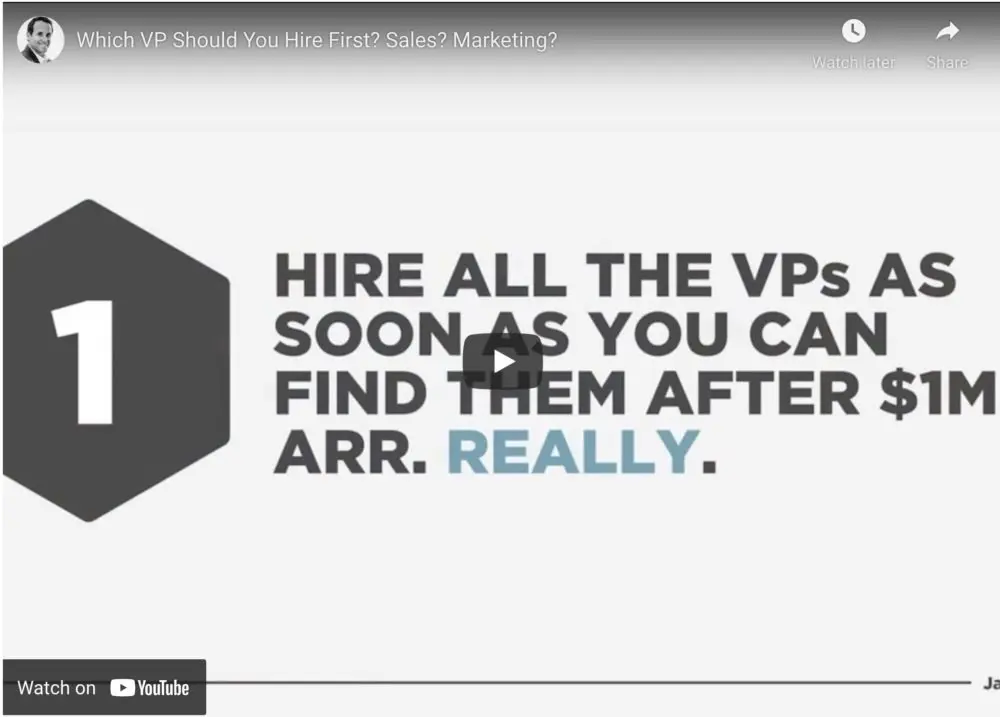
The authoritative guidance offered in response cuts straight to the core of modern B2B SaaS revenue architecture: hire both an AE and a VP of Sales search concurrently, but under no circumstances should you expect a standard AE to successfully manage an SDR team.
This article provides an exhaustive analysis of this critical scaling decision. We will examine the operational mechanics of early sales team assembly, the hidden traps of misaligned reporting structures, the specialized skill sets required to manage entry-level outbound talent, and alternative organizational designs—such as routing SDRs through marketing leadership—that can safeguard a startup’s growth trajectory.
Detailed Chronology: The Evolution of Founder-Led Sales to Team-Based GTM
To understand why the choice between an AE and a VP of Sales is so consequential, we must first map the natural chronological evolution of sales maturity within a high-growth startup.
Phase 1: Founder-Led Validation
In the earliest stages of a company, the founder is the head of sales. Armed with deep product vision, authentic passion, and high-stakes skin in the game, the founder engages prospective design partners and early adopters. During this phase, sales is not merely about closing transactions; it is an iterative market-research engine. Every objection handled, every lost deal analyzed, and every pricing pushback recorded helps refine the Product-Market Fit (PMF) hypothesis.
Phase 2: The First Outbound Experiment
Once repeatable sales patterns begin to emerge—often evidenced by a few closed-won deals that followed a predictable discovery-to-close playbook—founders naturally look to multiply their time. This typically manifests as the hiring of entry-level outbound talent: the SDRs.
SDRs are tasked with top-of-funnel generation—cold calling, email sequencing, social selling, and initial qualification. Because the playbook is still fluid, these early SDRs usually report directly to the founder. This setup yields a dual benefit:
- The founder maintains a direct feedback loop with the market’s reception to messaging.
- The founder acts as an operational coach, refining the qualification criteria in real-time.
Phase 3: The Operational Bottleneck
Inevitably, a tipping point arrives. The founder’s time becomes excessively fragmented between product development, investor relations, culture-building, and managing inbound/outbound sales pipelines. This is where the founder asks the pivotal question: Who takes the reins next?
The temptation is to insert a middle layer—an Account Executive—and task them with both closing deals and managing the junior SDRs. As we will explore, this shortcut frequently triggers systemic dysfunction within the sales organization, stalling momentum precisely when the company needs to accelerate.
Supporting Context & Metrics: The Anatomy of Sales Management Failure
Managing entry-level sales professionals is a distinct professional discipline. SDRs are often early in their corporate careers; they require high-touch coaching, constant motivational reinforcement, strict activity metric tracking, and meticulous performance management.
The Illusion of the "Player-Coach" AE
When founders hire an Account Executive, they frequently look for a "player-coach"—someone who can carry a personal quota while simultaneously mentoring junior staff. In theory, this sounds efficient. In practice, data from B2B sales advisory firms indicates that player-coach models in early-stage startups fail more than 60% of the time within the first 12 months.
An AE’s core cognitive load is external: navigating complex stakeholder maps, negotiating pricing, overcoming enterprise-grade security objections, and closing contracts. Conversely, managing SDRs requires an internal, empathetic, and operational focus: reviewing cold-call recordings, adjusting email cadence subject lines, managing pipeline coverage ratios, and running weekly 1-on-1 career development sessions.
Expect an AE to master both simultaneously, and you will typically get a compromised result: deals slip because the AE is bogged down managing internal drama or performance metrics, and SDR morale plummets because their manager views them merely as administrative lead-generation machines.
The SDR-to-AE Power Dynamic
Furthermore, treating SDRs like "sales administrative assistants" to AEs introduces toxic cultural dynamics. When an AE views an SDR as a subordinate tasked solely with teeing up meetings, mutual respect erodes. High-performing SDRs aspire to become AEs; if they are treated as low-level assistants rather than developmental apprentices, voluntary attrition spikes. Replacing and onboarding junior sales talent carries hidden costs—ranging from lost pipeline velocity to recruitment expenses—that can quickly bleed a seed-stage startup’s runway.
Strategic Guidance: Navigating the Hire
If you find yourself managing a small team of SDRs as a founder, you possess a skill that many technical founders lack: the patience and grit required to direct and motivate top-of-funnel talent. Capitalize on that superpower, but do not let it trap you in an operational bottleneck.
1. The Dual-Track Hiring Strategy
The most effective path forward is to initiate a parallel hiring track:
- Track A: Search for a solid, quota-carrying AE who can immediately take over the closing responsibilities, absorb inbound and mid-funnel leads, and begin generating predictable revenue.
- Track B: Simultaneously begin market mapping for a true VP of Sales or Head of Revenue. Recognize that finding a strategic sales leader takes time—often three to six months for an early-stage venture.
By the time you identify and onboard a seasoned VP of Sales, you will have already built a functional operational baseline with your newly hired AEs and expanded SDR team.
2. Guarding the Reporting Line
If you must hire an AE while searching for a VP of Sales, be exceptionally cautious about placing the SDRs under their direct supervision. Unless that specific AE has a documented, successful background in sales management and talent development, keep the SDRs reporting directly to you (the founder) just a little bit longer.
If bandwidth limitations make founder-management entirely untenable, and the SDRs must report to the incoming AE, monitor the relationship closely. Ensure the AE understands that their mandate includes professional mentorship, not just task delegation. If teamwork falters, intervene immediately before pipeline generation grinds to a halt.
3. The Marketing Alternative: A Hidden Organizational Hack
There is another organizational architecture frequently overlooked by early-stage founders: routing the SDR team through the head of marketing.
In modern B2B SaaS organizations, the traditional wall between sales development and demand generation has crumbled. Modern demand generation leaders are deeply analytical, data-driven, and experienced in managing inbound/outbound messaging alignment. Many contemporary demand gen executives have successfully managed small SDR or Business Development Representative (BDR) teams earlier in their careers.
Placing SDRs under a marketing leader aligns top-of-funnel prospecting directly with content strategy, digital campaigns, and inbound lead routing. This ensures that the messaging hitting the market via cold outbound is tightly synchronized with what is being tested via paid digital channels and content marketing.
Future Outlook: Building a Resilient GTM Engine for Scale
As the venture ecosystem continues to prioritize capital efficiency, net retention, and sustainable unit economics over hyper-growth-at-all-costs, the architecture of the early sales team matters more than ever.
Founders who master the transition from founder-led sales to structured organizational hierarchy avoid the costly cycle of bad hires and misaligned expectations. By acknowledging that sales management is an independent discipline—distinct from closing enterprise deals—leaders can build resilient, high-performing revenue engines.
Key Takeaways for Founders:
- Acknowledge Your Strengths: If you are successfully managing SDRs, recognize that as a competitive advantage. Do not abdicate that responsibility prematurely to an unqualified candidate.
- Separate Closing from Prospecting Management: Do not assume a great closer makes a great manager. Protect your SDRs from being treated as administrative appendages to AEs.
- Think Strategically About Leadership: Hire operational closers (AEs) to build immediate revenue velocity, but invest the necessary time to source a genuine sales leader (VP of Sales) who can design the long-term enterprise playbook.
- Explore Cross-Functional Reporting: Consider placing early SDR talent under marketing leadership if your demand generation strategy requires tight alignment between outbound prospecting and inbound messaging.
By executing these steps with deliberate care, early-stage startups can transition smoothly from founder-dependent hustle to a scalable, repeatable, and high-performing commercial machine.