









Executive Overview
As the dawn of every new Premier League football season approaches, British media consumers are routinely greeted by a familiar ritual: an organized, high-profile warning about the creeping financial dangers of digital piracy. This year, the anti-piracy apparatus—bolstered by broadcast heavyweights such as Sky, the BBC, the Premier League, the Federation Against Copyright Theft (FACT), and the UK Intellectual Property Office—has returned with a fresh salvo.
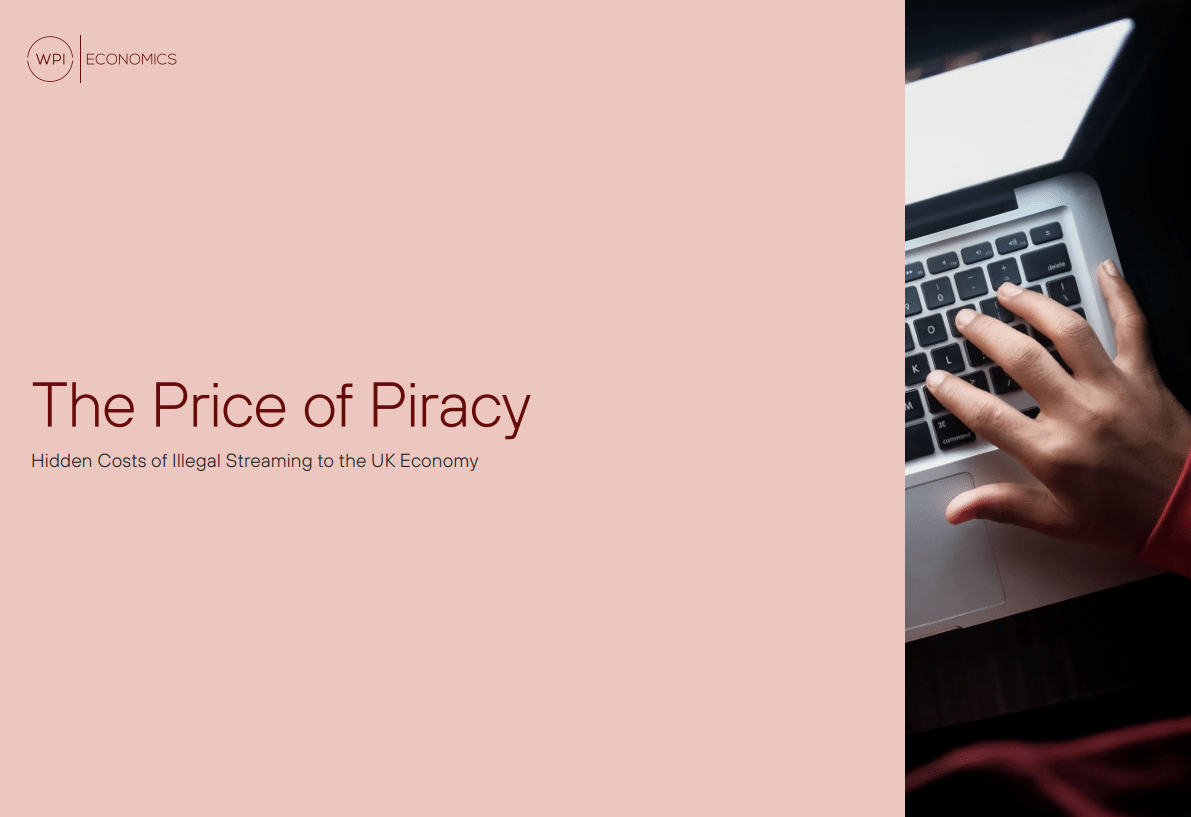
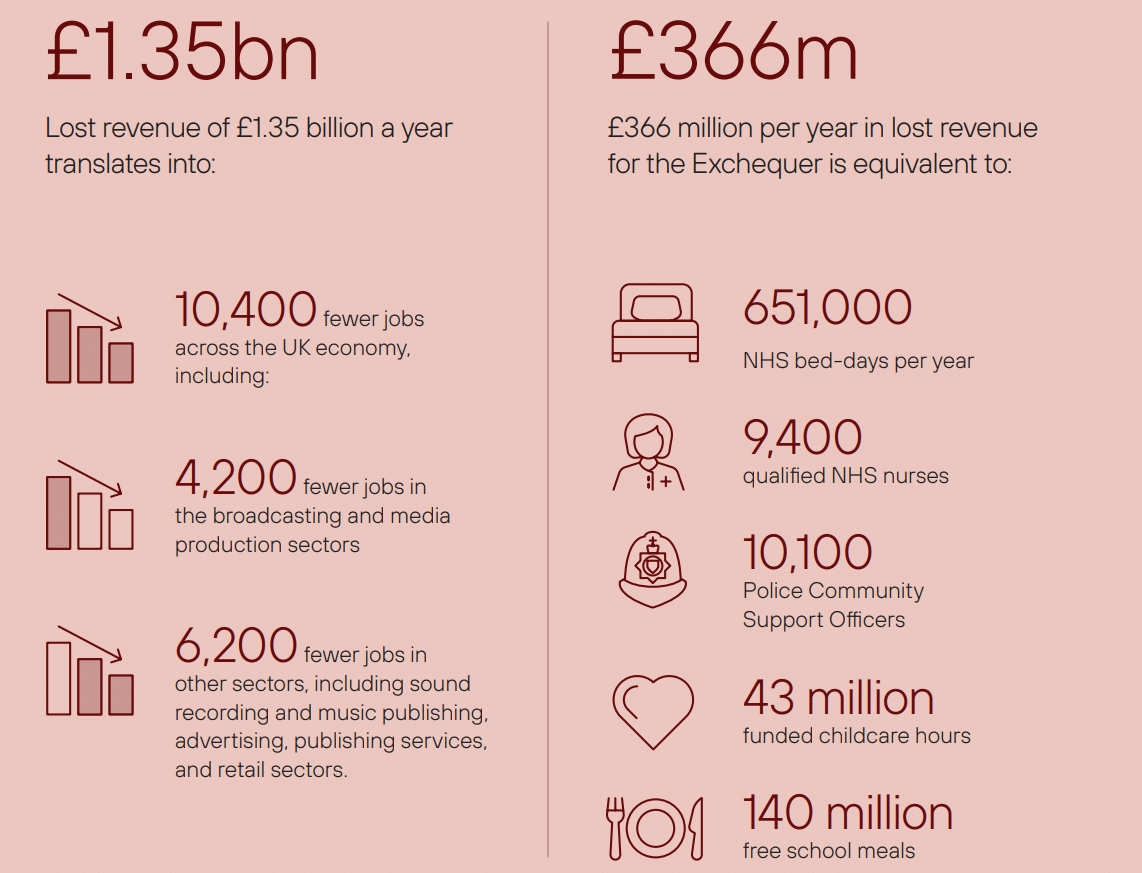
Operating under the banner of BeStreamWise, a collaborative anti-piracy coalition, these organizations commissioned the economic consultancy firm WPI Economics to quantify the ongoing economic haemorrhage caused by illicit streaming. The resulting report, titled "The Price of Piracy," drops staggering figures into the public square: it estimates that unauthorized streaming drains a massive £1.35 billion from UK broadcasters annually. According to the study, this revenue loss trickles down into 10,400 lost jobs and a staggering £366 million in missing tax income for the Exchequer.
To make these colossal macro-economic figures digestible for the general public, the report frames the lost tax revenue through tangible public infrastructure metrics. That £366 million, the authors argue, could alternatively fund the salaries of 9,400 fully qualified National Health Service (NHS) nurses or finance 140 million free school meals for children in need.
However, beneath the striking infographics and polished public relations campaigns lies a deeply complex methodology. A closer examination of how WPI Economics and BeStreamWise arrived at these figures reveals a reliance on hypothetical consumer behavior, broad definitions of what constitutes a "pirate," and an intrinsic tension between corporate profit margins and consumer-driven demand for cheaper, more accessible entertainment. This investigative overview explores the anatomy of the £1.35 billion claim, the evolving landscape of digital copyright infringement, and the contentious policy solutions proposed to combat it.
Detailed Chronology: The Evolution of the BeStreamWise Campaign
To understand the current state of anti-piracy advocacy in the United Kingdom, it is necessary to examine how campaigns like BeStreamWise have evolved from heavy-handed legal threats into sophisticated psychological operations and economic lobbying efforts.
- Late 2023: The BeStreamWise coalition officially launches its multi-pronged anti-piracy initiative with high-profile stunts, including controversial "fake site" scam warnings designed to jolt unsuspecting users into recognizing the cybersecurity vulnerabilities inherent in unauthorized streaming platforms. Backed by a coalition of broadcasters, sports leagues, and government agencies, the campaign sets out to pivot the public narrative away from simple copyright theft and toward consumer safety, malware protection, and economic patriotism.
- February 2024: WPI Economics fields a comprehensive survey comprising 2,501 UK adults. The poll is designed to capture contemporary attitudes toward digital media consumption, subscription fatigue, and the prevalence of unauthorized streaming, downloading, and content sharing.
- August / September (Current Phase): Just as the autumn television and football schedules kick into high gear, the coalition releases "The Price of Piracy" report. By timing the release with the commencement of major sports leagues—when consumer temptation to seek alternative viewing options peaks—the campaign maximizes media visibility and places immediate pressure on lawmakers to adopt its policy recommendations.
Supporting Context & Metrics: Breaking Down the £1.35 Billion Figure
At the core of the BeStreamWise report is a multi-billion-pound estimate that demands rigorous scrutiny. How does a survey of 2,501 individuals translate into a nationwide economic loss of £1.35 billion?

The Methodology of a Hypothetical Scenario
The foundation of the headline figure rests on a single survey question: nearly a third (31%) of the 2,501 respondents admitted to engaging with some form of illegal streaming or content sharing within the preceding three months. When extrapolated across the entire adult population of the United Kingdom, this percentage suggests that an eye-opening 16.8 million people could theoretically be classified as video pirates.
To bridge the gap between "watching a pirated stream" and "£1.35 billion in missed revenue," WPI Economics applied a specific hypothetical construct. Respondents who admitted to piracy were asked a follow-up question: Which legal services would you be willing to pay for if illegal streaming options were completely eliminated from existence?
The research team then took those stated intentions, multiplied them by the average market cost of those legal subscription services, and extrapolated the total across the broader population of self-reported pirates.
Crucially, the report does not measure actual sales lost from paying customers who defected to free alternatives. Instead, it measures the extrapolated subscription fees that pirates claimed they would pay, at full retail price, if piracy vanished overnight.
The "Hypothetical Bias" Blind Spot
Economists and behavioral researchers have long recognized a well-documented phenomenon known as hypothetical bias. Simply put, human beings consistently overstate their willingness to pay for goods and services in hypothetical scenarios compared to how they actually behave when spending their hard-earned money.
When questioned by investigators, a spokesperson for BeStreamWise confirmed a striking detail: the WPI Economics study did not apply any statistical correction or discount factor to account for hypothetical bias. The survey responses were taken entirely at face value.

While the absence of correction factors is not entirely unprecedented in creative industries research, it introduces a massive margin of uncertainty. The £1.35 billion figure represents an absolute ceiling—an idealized best-case scenario for rightsholders—rather than a guaranteed recovery. This skepticism is reinforced by other data points within the exact same poll:
- Cost is King: The primary driver for piracy remains economic pragmatism. 38% of respondents cited affordability ("it’s cheaper than paying") as their primary justification.
- The Convenience Factor: 31% pointed to convenience, while 24% expressed a general desire to avoid managing multiple fragmented subscriptions.
- Entrenched Habits: Over half of the surveyed pirates (52%) openly stated that they were likely to continue pirating regardless of legal warnings or availability changes.
Social Media as the New Wild West of Piracy
Perhaps the most revealing—and methodologically contentious—finding in the report is the shifting topography of how consumers access unauthorized content. Gone are the days when piracy was exclusively the domain of obscure torrent trackers, specialized Usenet groups, or complex hardware modifications.
According to the survey, social media platforms have become the absolute primary source for digital piracy, eclipsing traditional dedicated illicit websites and closed-network IPTV boxes:
- 54% of active illegal streamers access unauthorized content via mainstream social media platforms.
- 28% stream or download via unofficial, dedicated websites.
- 26% rely on purchased hardware devices and dedicated illegal subscription IPTV services.
- 15% utilize legacy methods such as peer-to-peer torrents or cloud-sharing drives.
- 7% purchase unauthorized login credentials and shared passwords for legal streaming accounts.
However, these figures must be contextualized within the report’s exceptionally broad definition of piracy. The survey categorizes "watching via social media platforms" as a distinct form of piracy, alongside utilizing Virtual Private Networks (VPNs) to bypass geographic content restrictions. Consequently, an everyday internet user who pauses to watch an unauthorized 15-second clip of a Premier League goal shared on X (formerly Twitter) or an Instagram story is statistically lumped into the same category as a commercial ringleader operating a multi-million-pound global IPTV network.
Because BeStreamWise has not publicly released the complete granular dataset or the exact phrasing of the survey questions, independent verification of these social media metrics remains difficult.
Official Statements and Policy Recommendations
Rather than calling for draconian new legislation, sweeping web-blocking injunctions, or heavier criminal penalties for end-users, The Price of Piracy report pivots toward a cooperative, preventative approach. It outlines two major "oven-ready" policy solutions directed squarely at the UK Government and digital sector stakeholders.
1. Amplifying Public Awareness Campaigns
The primary recommendation urges the UK Government to lend its official communication channels, institutional authority, and financial weight to amplify anti-piracy educational frameworks—specifically designating BeStreamWise as the primary vehicle for this messaging.
The report argues that traditional enforcement mechanisms have hit a plateau because the average consumer remains dangerously oblivious to the ancillary risks associated with pirate platforms. By shifting the narrative from copyright protection to personal safety, the campaign hopes to leverage the estimated £270 million in direct financial harms that consumers face annually from malware infections, financial fraud, identity theft, and compromised personal data while visiting illicit streaming sites.
2. A Cross-Sector Voluntary Framework
The second core proposal calls for the establishment of a voluntary, cross-sector cooperative framework. This initiative would bring together online social media platforms, internet service providers (ISPs), connectivity providers, and content rightsholders under the soft oversight of the UK government.
Rather than relying purely on top-down legal mandates, this framework aims to streamline content moderation, improve the rapid takedown of unauthorized sports clips on social feeds, and disrupt the monetization models of digital pirates at the advertising and payment-processor levels.
Future Outlook: Will the £1.35 Billion Ever Materialize?
As the ink dries on The Price of Piracy, rightsholders and broadcasters face a turbulent future. The economic arguments presented by WPI Economics and BeStreamWise successfully capture media headlines and provide political ammunition for sports leagues and media conglomerates lobbying for tighter digital guardrails.
Yet, fundamental market realities suggest that rightsholders should not hold their breath waiting to collect a significant share of that promised £1.35 billion.
The proliferation of streaming services—each locking exclusive content behind separate, increasingly expensive subscription paywalls—has created widespread consumer fatigue. For millions of households navigating a persistent cost-of-living crisis, unauthorized streaming and social media clips function less as malicious acts of corporate sabotage and more as a desperate workaround to an increasingly fractured media ecosystem.
While public awareness campaigns highlighting malware risks and voluntary platform cooperation may nudge marginal users toward legal compliance, the core economic drivers of piracy—high costs, subscription fragmentation, and ease of access on mainstream social channels—will continue to fuel the digital underground. Until the entertainment industry addresses the underlying economic friction that makes piracy so attractive in the first place, campaigns like BeStreamWise will likely find themselves treating the symptoms of a much deeper, structural market failure.