









Executive Overview
The rise of generative artificial intelligence has fundamentally altered the e-commerce discovery landscape. Traditional search engine optimization (SEO) relied heavily on keywords, meta descriptions, and backlink authority to capture consumer intent. Today, however, an online merchant can offer the exact product a consumer wants, at a competitive price, with stellar reviews, and still fail to appear in an AI shopping assistant’s recommendations.
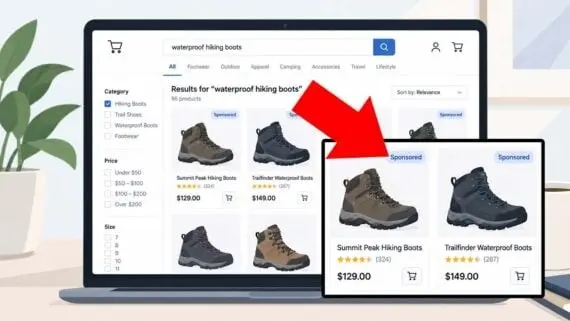
The disconnect begins with a paradigm shift in how consumers interact with search technology. Modern shoppers no longer type fragmented strings like "waterproof boots" into a search bar. Instead, they issue complex, multi-layered prompts to generative AI chat interfaces and autonomous shopping agents. A single user input might simultaneously specify price range, physical dimensions, material composition, hardware compatibility, intended use case, and delivery timeline.
For e-commerce merchants, this evolution demands an elevated approach to product data hygiene and optimization. Product listings must proactively answer granular questions that consumers previously had to uncover through heavy manual research or trial and error. To survive and thrive in this agentic commerce era, merchants must transition from optimizing for static keywords to structuring data for dynamic AI reasoning. This article outlines five critical tests e-commerce professionals can use to ensure their inventory is discoverable, verifiable, and recommended by modern AI platforms.
Detailed Chronology: The Shift from Traditional Search to Generative Discovery
To understand why traditional product listings are falling flat on AI platforms, it is necessary to examine how product discovery has evolved over the past decade.
Phase 1: Keyword-Centric Dominance (2010–2020)
For years, e-commerce optimization was synonymous with keyword placement. Retailers stuffed product titles, descriptions, and tag fields with high-volume search terms. Success depended on matching a user’s short-tail or long-tail keyword queries to exact matches within a catalog database. Search engines evaluated relevance based on textual proximity and keyword density, often rewarding pages that prioritized SEO tricks over deep, structured data.
Phase 2: The Rise of Filter-Based Faceted Navigation (2020–2023)
As digital catalogs expanded, marketplaces and e-commerce stores introduced sophisticated faceted navigation. Consumers could filter products using sidebar menus—narrowing items by size, color, brand, and price. While this helped shoppers handle complex constraints, it still required the human user to manually apply and adjust filters. The burden of cross-referencing compatibility and specifications rested squarely on the shopper’s shoulders.
Phase 3: The Generative AI Prompt Revolution (2023–Present)
The current era is defined by conversational interfaces and autonomous shopping agents powered by large language models (LLMs). Platforms such as OpenAI’s ChatGPT, Google Search with AI Mode, and Perplexity have collapsed the multi-step shopping journey into a single prompt.
In this environment, AI systems act as intermediaries between the buyer and the seller. When a shopper asks an AI agent to locate a specific item, the underlying model does not merely scan for keyword matches; it performs logical reasoning, evaluates constraints, cross-references unstructured reviews, and filters live inventory feeds. If a merchant’s product data lacks the specific attributes demanded by the prompt, the AI system simply bypasses the item, rendering the merchant entirely invisible to the buyer.
Supporting Context & Metrics: The Anatomy of an AI-Driven Search Query
To evaluate how generative platforms process product discovery, consider the mechanics of a typical modern consumer prompt.
Imagine a hiker typing or speaking the following request into an AI shopping assistant:
"Find waterproof hiking boots under $180 for wide feet, suitable for rocky trails, that weigh less than three pounds."
This seemingly straightforward query contains at least five distinct constraints:
- Category/Function: Waterproof hiking boots.
- Price Constraint: Under $180.
- Ergonomic/Fit Constraint: Designed for wide feet.
- Performance/Terrain Constraint: Suitable for rocky trails.
- Physical Specification: Weighs less than three pounds.
If a retailer stocks the absolute best boot on the market for this exact scenario, but that product’s database entry omits the precise weight or fails to explicitly state whether the shoe accommodates wide feet, the AI system cannot verify a match. Consequently, the product is discarded from the recommendation list.
Industry analysis indicates that generative search platforms prioritize zero-ambiguity data feeds. Because AI models rely on probabilistic reasoning backed by hard attributes, missing metadata is treated as a negative signal. If an attribute cannot be verified programmatically, the AI will not risk recommending a product that might fail to meet the user’s explicit parameters.
Official Statements and Platform Directives
Major technology and platform providers have openly structured their systems to reward granular product data, signaling that traditional SEO practices are no longer sufficient.

OpenAI’s Shopping Research Initiatives
When launching its advanced shopping research capabilities, OpenAI emphasized its system’s ability to discern complex, multi-variable queries. The platform’s underlying architecture is designed to aggregate data from manufacturer specifications, verified customer reviews, high-resolution product imagery, live pricing, and real-time availability. OpenAI’s systems evaluate these disparate data points not just to match keywords, but to compare products, highlight trade-offs, and explain why a specific item satisfies a user’s unique constraints.
Google Merchant Center Guidelines
Google has heavily revised its requirements for Merchant Center to align with AI-driven surfaces, such as AI Mode in Google Search. Google’s documentation places significant emphasis on the [product_highlight] attribute. This specific data field allows merchants to feed crucial characteristics and answers to common consumer questions directly into Google’s index.
According to Google, utilizing these advanced attributes directly enhances a product’s visibility across conversational and generative surfaces. Furthermore, Google strictly requires that data within the Merchant Center feed mirrors the landing page and checkout realities precisely, minimizing discrepancies in pricing, tax, shipping, and promotional terms.
Shopify’s Agentic Sales Channels
Recognizing the shift toward automated purchasing agents, platforms like Shopify have rolled out dedicated agentic sales channels and search-preview tools. These utilities allow merchants to audit how their products are indexed and ranked within modern AI catalog searches, offering a window into how automated systems perceive their digital storefronts.
The Five-Part AI Discovery Audit: Can Agents Find Your Products?
To determine whether your e-commerce catalog is optimized for generative AI shoppers, execute the following five diagnostic tests.
+-------------------------------------------------------------------------+
|                  THE 5-PART AI DISCOVERY AUDIT FRAMEWORK                |
+-------------------------------------------------------------------------+
| 1. IDENTIFY : Can the AI understand what the item is?                   |
| 2. PROVE    : Does product data satisfy all consumer requirements?      |
| 3. VERIFY   : Do price, stock, and checkout terms match the offer?     |
| 4. EVIDENCE : Are there enough facts to support a recommendation?       |
| 5. SHOP     : Do your products surface under realistic consumer prompts?|
+-------------------------------------------------------------------------+
1. Identify: Establishing Core Product Identity
Before an AI agent can recommend a product, it must definitively understand what the item is. Basic product-data hygiene is non-negotiable here.
- Required Elements: Every listing must feature a standardized product name, brand identity, category classification, and Stock Keeping Unit (SKU).
- Global Identifiers: Where applicable, listings must include Global Trade Item Numbers (GTIN), Universal Product Codes (UPC), European Article Numbers (EAN), or manufacturer part numbers.
- Variants: Size, color, model, and technical configurations must be explicitly mapped out rather than hidden behind dynamic JavaScript elements that automated crawlers might fail to render.
In short, you must establish immutable proof of what your product is before expecting an AI system to pitch it to a user.
2. Prove: Satisfying Granular Constraints
AI shopping agents excel at breaking down complex user prompts into individual constraints. To pass this test, your product catalog must anticipate and answer the granular questions shoppers once had to hunt for.
- Actionable Exercise: Compile a list of the top twenty questions your customer service team receives regarding your products. Ensure these questions—and their direct answers—are embedded cleanly into your product descriptions and structured data schemas.
- Leveraging Attributes: Utilize custom attributes and platform-specific fields (such as Google’s
[product_highlight]) to highlight material grades, dimensions, compatibility certifications, and functional limits. If a consumer asks for a pan that works on induction and can withstand a 500-degree oven, your product data must explicitly state both facts.
3. Verify: Aligning the Offer with Reality
A correct product match is entirely useless if the underlying transactional offer is flawed. When an AI agent evaluates a recommendation, it verifies whether the customer will actually receive what was promised at the stated price and timeframe.
- Data Consistency: Ensure that your product detail pages, product feeds, shopping carts, and final checkout screens are completely synchronized regarding pricing, live availability, shipping costs, delivery timing, active promotions, and return terms.
- Structured Data: Implement robust schema markup (such as Schema.org
ProductandOffertypes) across your e-commerce pages. When a shopper adds constraints such as "under $180," "in stock," or "guaranteed delivery by Friday," structured data allows AI crawlers to instantly verify your inventory parameters without parsing messy HTML layouts.
4. Supply Evidence: Moving Beyond Marketing Fluff
Product detail pages must evolve from persuasive marketing brochures into objective data repositories. An AI shopping bot requires factual evidence to justify why a product fits a consumer’s specific profile.
- Case Study Analysis: Consider the product detail page for the Salomon X Ultra 5 Mid Gore-Tex boot. Instead of offering vague promotional claims like "built for rough weather," the page provides precise, verifiable facts: the exact waterproof membrane used, outsole compound, cushioning depth, fit profile, precise weight down to the ounce, construction materials, and intended terrain classifications. It is further reinforced by high-resolution imagery and granular customer reviews.
- The AI Standard: When OpenAI’s Shopping Research tool compares products, it aggregates specifications, user reviews, and return metrics to explain trade-offs. Your product page must supply enough factual evidence so that an AI assistant can quote your data directly to defend its recommendation to the user.
5. Shop: Running Real-World Generative Queries
The ultimate test of your e-commerce visibility is empirical testing. Do not rely on vanity visibility scores or generalized SEO reports; simulate actual consumer behavior across major AI platforms.
- Execution Steps:
- Select a representative sample of high-margin or high-turnover products from your catalog.
- Write realistic, conversational prompts based entirely on consumer needs and use cases—deliberately avoiding brand names or specific product titles. (e.g., A kitchen retailer might ask for "a stainless steel sauté pan under three pounds that is dishwasher safe and compatible with induction cooktops").
- Execute these queries across major AI discovery engines, including ChatGPT, Google Search (AI Mode), and Perplexity.
- Document whether your products surface, evaluate the accuracy of the resulting descriptions, and meticulously catalog any missing information or visibility gaps.
By treating these tests not as a one-time audit, but as a continuous operational routine, merchants can uncover blind spots in their data pipelines long before their competitors do.
Future Outlook: The Imperative of Agentic Commerce Readiness
As generative search and autonomous shopping agents continue to capture market share from traditional search engines, the rules of e-commerce visibility are undergoing a permanent transformation. Brand loyalty and paid advertising budgets will no longer guarantee discovery if the underlying product data is opaque to machine-learning models.
Looking ahead over the next three to five years, several key developments will shape the e-commerce landscape:
- The Death of Keyword Stuffing: Natural language processing models will become increasingly adept at punishing low-value, keyword-stuffed content while heavily rewarding structured, fact-dense data repositories.
- Real-Time API Syncing: Autonomous shopping agents will increasingly bypass traditional web scraping in favor of direct, real-time API integrations with merchant inventories, making instant data synchronization vital for transactional success.
- Explainable Recommendations: As AI agents take on higher-value purchasing decisions on behalf of consumers, they will be required to provide transparent, auditable rationales for every product they suggest. Merchants who supply rich, factual evidentiary data will dominate these recommendations.
Ultimately, winning in the age of AI-driven discovery requires a return to fundamentals, executed at a machine-readable scale. Success does not depend on discovering a bag of new optimization tricks or gaming search algorithms. Rather, it requires complete, specific, trustworthy product information that effortlessly bridges the gap between a consumer’s complex, real-world needs and your digital catalog.