








Executive Overview
For millions of football fans across Southeast Asia, the digital coordinates for a free Premier League match with enthusiastic, localized commentary were long an open secret. Anchored by the infamous "Xoi Lac TV" and its sprawling ecosystem of sister sites, the operation grew from a clandestine web streaming experiment into a massively profitable, industrialized digital enterprise.
By constantly migrating across shifting domain names to evade blocking orders, the collective of pirate sites—including 90PhutTV, XoilacTV, VeboTV, ThapcamTV, BanhkhucTV, and CakeoTV—became the go-to destination for live sports broadcasting in Vietnam.
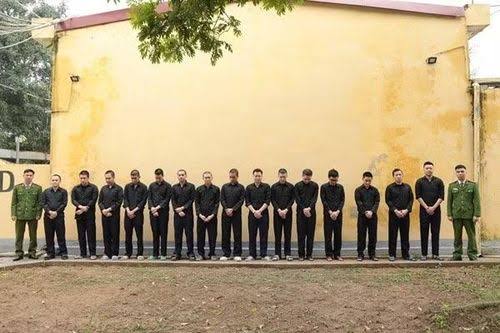
However, what began as a domestic copyright infraction has quickly metastasized into one of the most significant intellectual property and cybercrime prosecutions in modern Vietnamese history. Following an extensive police investigation, law enforcement authorities in Hung Yen province officially concluded their inquiry, petitioning prosecutors to bring formal charges against an astonishing 74 individuals tied to the network.
The sprawling operation, which allegedly generated millions of dollars through illicit online gambling advertisements, has drawn intense international scrutiny. While the British government has formally commended Hanoi for its aggressive enforcement actions to protect sports broadcasting rights, the crackdown also intersects with high-stakes geopolitical trade maneuvers.
As Washington exerts economic pressure via Section 301 investigations over intellectual property enforcement, Vietnam’s aggressive dismantling of domestic piracy networks like Xoi Lac TV has transformed from a localized law enforcement action into a vital instrument of national trade diplomacy.
Detailed Chronology: From Garage Startup to Industrial Enterprise
The genesis of Vietnam’s largest modern sports streaming piracy syndicate dates back to the closing months of 2018. According to investigative findings released by law enforcement agencies and detailed by prominent local media outlets such as Dan Tri and VnExpress, the operation was initially conceived by Hanoi-based technology entrepreneur Pham Nguyen Dung.
Recognizing an immense, unfulfilled market demand for free, accessible sports broadcasts paired with culturally resonant commentary, Dung allegedly provided the financial backing for the project. To build the technical infrastructure, he enlisted software programmer Nguyen Cong Dinh. The two men established a partnership that would form the core management of the enterprise, splitting the immense revenues generated by the venture.
The first major portal launched under the banner of "90 Phut" (90 Minutes). As traffic surged, the masterminds behind the operation expanded aggressively, spawning a synchronized portfolio of mirroring and complementary domains. By the time Vietnamese cybercrime authorities executed a coordinated series of raids in early 2025, the collective controlled a massive network of streaming hubs.

Dinh, operating under various aliases and expanding his administrative reach, also spearheaded the "Cakhia" network in collaboration with other key defendants. The syndicates routinely broadcast restricted athletic events, systematically circumventing domain-level blocks imposed by internet service providers by instantly pivoting to fresh URLs.
The Anatomy of a Pirate Workforce
The prosecution’s recommendation to charge 74 individuals highlights the deeply institutionalized and corporate nature of the syndicate. Rather than a loose collective of amateur tech hobbyists, Xoi Lac TV operated with the structured hierarchy of a legitimate media corporation.
The vast majority of the defendants comprise administrative personnel, server managers, stream operators, and financial handlers. Crucially, the operation invested heavily in talent acquisition, employing more than 30 professional Vietnamese football commentators.
These commentators were the public-facing engine of the brand. Working on a piece-rate system, they were compensated between 200,000 and 500,000 Vietnamese Dong per match—roughly translating to $8 to $20 USD. Despite the modest per-game wages, the commentators cultivated devoted fanbases using colorful pseudonyms.
Among the most recognizable voices were individuals broadcasting under monikers like "Batman" and "Scarecrow." Investigators later unmasked "Batman" as co-founder Nguyen Cong Dinh himself. Beyond his foundational technical role, Dinh’s personal earnings from the illicit enterprise skyrocketed, with investigators estimating he netted upwards of 12 billion dong (approximately $470,000 USD) directly from the operation.
Supporting Context & Metrics: The Lucrative Economics of Infringement
The downfall of Xoi Lac TV underscores a fundamental reality of modern digital piracy: free streaming models are rarely altruistic. While fans enjoyed matches without paying subscription fees, the network’s operators were quietly amassing a fortune through high-volume digital advertising—specifically, partnerships with offshore, unregulated online gambling operations.
The Betting Banner Empire
Throughout every broadcasted match, viewers were inundated with promotional overlays and banners for prominent betting brands, including 8XBET, LU88, Man88, and HBET. Because gambling is strictly regulated or outright prohibited in various forms across Vietnam, these offshore betting platforms relied heavily on pirate streaming networks to acquire a captive, massive audience of sports enthusiasts.
Financial forensics conducted by police investigators revealed the staggering scale of this revenue engine. Between April 2025 and January 2026 alone, advertising contracts tied to these gambling brands injected more than 130 billion dong—equivalent to approximately $5 million USD—into the syndicate’s coffers.

Quantifying the Financial Damage
While the syndicate’s revenue figures are eye-watering, the financial damage claimed by legitimate rightsholders is exponentially higher, though subject to formal verification during upcoming judicial proceedings.
- Domestic Pay-TV Impact: Vietnam’s premier pay-TV service, K+, which holds exclusive regional distribution deals, preliminarily estimates its corporate losses resulting from the streaming leaks at well over $83 million USD.
- Premier League Valuation: The English Premier League, which licenses its broadcast rights in the region via partners like K+, estimates its direct economic losses stemming from the unauthorized transmissions to exceed $4.6 million USD.
The Legal Trap: Copyright vs. Organized Gambling
As the 74 defendants prepare to face the judiciary, the specific legal charges leveled against them highlight a crucial nuance in Vietnamese jurisprudence. Fifty-one of the suspects—including masterminds Dung and Dinh—face dual recommendations for prosecution on charges of copyright infringement and organizing gambling.
While the empire was built on digital piracy, legal analysts note that copyright violations carry a statutory ceiling under Vietnam’s Penal Code, capping prison sentences at a maximum of three years regardless of how many millions of dollars in profit the infringement generated.
Conversely, the charges of organizing and participating in illegal gambling carry significantly harsher penalties. Under Vietnamese law, professional operation of organized gambling rings can yield prison sentences of up to ten years. Consequently, it is the illicit betting advertisements—not the unauthorized broadcast of Premier League matches—that pose the gravest threat to the liberty of the defendants.
The investigative phase has officially closed with the submission of written conclusions and prosecution proposals by Hung Yen province police. Vietnamese legal procedure now grants prosecutors a strict 30-day window to review the case file, determine whether to issue formal indictments, return the dossier for supplementary investigation, or drop specific charges.
Official Statements and International Diplomacy
The shockwaves generated by the collapse of Xoi Lac TV quickly transcended Vietnam’s borders, drawing praise from foreign governments while simultaneously serving as a strategic shield against international trade sanctions.
London’s Gratitude
In May, the Vietnamese Ministry of Public Security made public a diplomatic communication from the British Embassy in Hanoi. The UK government formally expressed its gratitude to Vietnamese law enforcement for dismantling the network, praising the aggressive enforcement actions taken to safeguard international intellectual property rights. Because English football represents a crown jewel of British cultural and economic export, the neutralization of a massive Southeast Asian piracy hub was welcomed warmly in London.
Washington’s Skepticism and the USTR Pressure
While London extended praise, Washington maintained a posture of aggressive skepticism. At the end of April, the Office of the United States Trade Representative (USTR) designated Vietnam as a "Priority Foreign Country" due to persistent failures in combating online piracy. This marked the first time in thirteen years that the U.S. had levied this specific designation against any nation.
The designation quickly escalated into tangible economic threats. Just a month later, the USTR initiated a formal Section 301 investigation into Vietnam’s intellectual property enforcement record—a rigorous legal mechanism that historically serves as a precursor to sweeping import tariffs and trade penalties. The USTR maintained that despite superficial domestic measures, widespread digital infringement continued to severely disadvantage U.S. innovators, creators, and digital service providers.
Vietnam’s Legal Counter-Offensive
Cornered by the threat of debilitating American trade sanctions, Hanoi quickly mobilized its recent anti-piracy operations as geopolitical leverage. In its official July response to the USTR inquiry, the Vietnamese government cited the dismantling of Xoi Lac TV alongside simultaneous high-profile crackdowns on other major piracy networks, including Rophim, Y2Mate, and the notorious HiAnime platform—the latter of which saw criminal proceedings announced against seven suspects on the exact same day Vietnam filed its formal rebuttal in Washington.
By highlighting these sweeping domestic arrests, Vietnamese trade representatives argued that the nation was actively and aggressively reforming its intellectual property landscape, formally requesting removal from the USTR’s dreaded priority watch list.
Future Outlook: A Whack-a-Mole Reality
Despite the unprecedented scope of the Hung Yen province investigation and the recommended prosecution of 74 individuals, the broader war against digital sports piracy remains far from won.
Legal experts and cybercrime analysts note that the legal system’s processing of the Xoi Lac syndicates highlights the persistent "whack-a-mole" nature of online copyright enforcement. While the primary infrastructure has been dismantled and its leaders face severe prison time, digital ecosystems are inherently resilient.
Presently, internet users searching for "Xoi Lac" and its historical brand variations continue to encounter a fragmented array of copycat domains and rogue streaming sites. The operators behind these emerging successor sites remain anonymous, leveraging decentralized hosting and automated deployment tools to step into the lucrative vacuum left by Dung and Dinh’s fallen empire.
Whether the impending trials of the 74 defendants will serve as a sufficient deterrent to permanently curb Vietnam’s black-market sports broadcasting culture remains to be seen. For now, the case stands as a landmark intersection of criminal law, corporate greed, and international trade diplomacy—proving that a humble free football stream can inadvertently shake the pillars of global commerce.