









Executive Overview
For decades, the foundational dogma of Silicon Valley fundraising has preached a singular, immutable gospel: Always get a warm introduction. Founders have spent countless hours networking at conferences, scouring LinkedIn for mutual connections, and begging acquaintances of acquaintances to forward their pitch decks to venture capitalists. The underlying assumption has always been that a warm intro is the ultimate golden ticket, bypassing the dreaded digital noise of the VC inbox and instantly establishing trust.
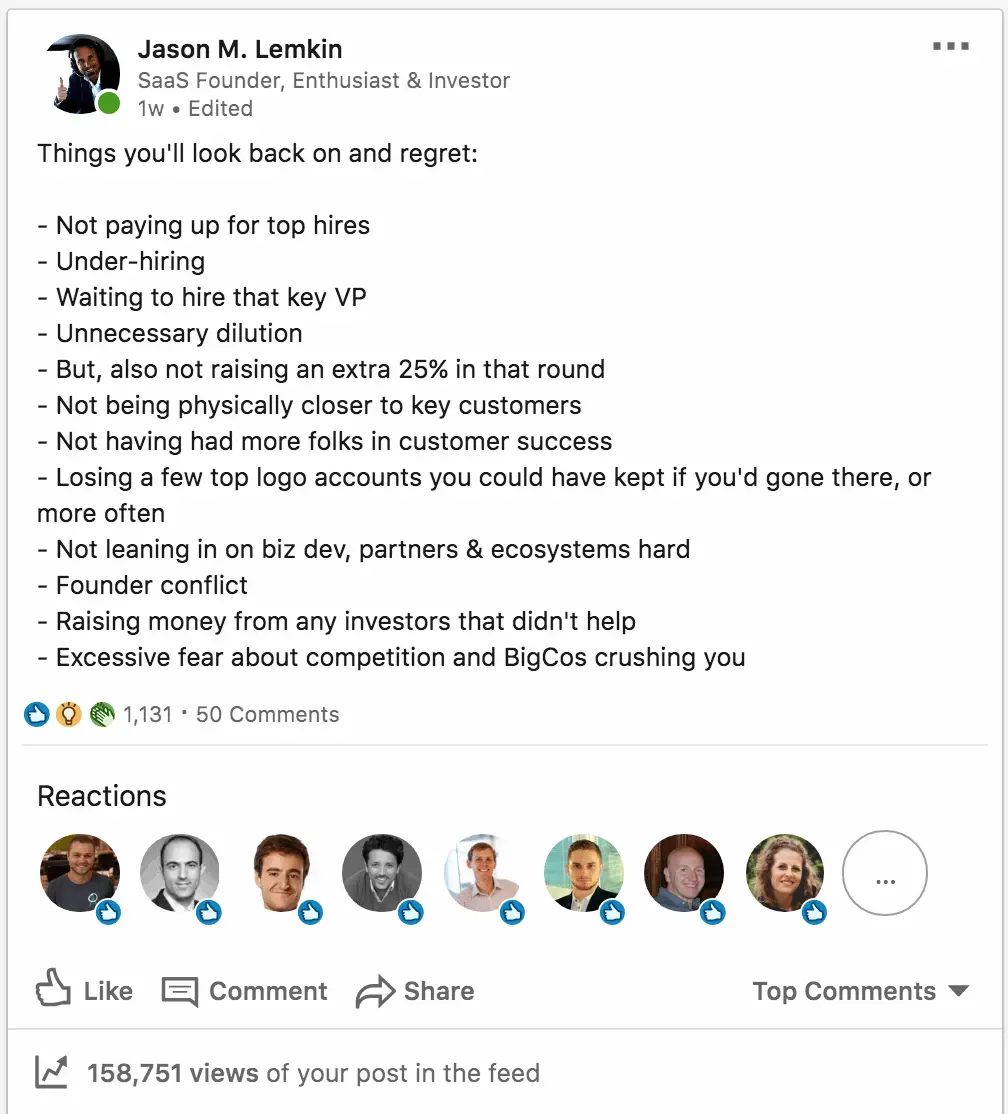
However, a radical counter-narrative is upending this conventional wisdom. Prominent venture capitalists and startup ecosystem veterans—most notably SaaStr founder Jason Lemkin—are arguing that the obsession with warm introductions is not only vastly overrated, but fundamentally broken. According to industry insiders, roughly 90% of standard warm introductions are an absolute waste of time. Worse yet, they frequently underperform cold emails due to the heavy social obligations they impose on investors.
This investigative report examines the hidden mechanics of venture capital deal flow, unpacking why standard warm intros often lead to underwhelming meetings, the psychological trap of social obligation, and the emergence of the "Double Qualification" rule. Furthermore, we explore how legendary tech unicorns—including Talkdesk, Algolia, Salesloft, and Pipedrive—were successfully funded entirely through cold outreach, proving that a compelling product and a crisp message will always triumph over bureaucratic gatekeeping.
Detailed Chronology: The Evolution of Deal Sourcing and the Warm Intro Myth
To understand how the warm introduction became the gold standard—and why it is currently losing its luster—we must trace the historical evolution of venture capital deal sourcing over the past twenty years.
The Era of Exclusive Networks (Early 2000s)
In the early days of modern venture capital, the industry was tightly concentrated around Sand Hill Road in Menlo Park and select pockets of Boston and New York. Deal flow was almost entirely relationship-driven. VCs relied on a closed ecosystem of seasoned entrepreneurs, corporate executives, and elite law firms to surface promising investment opportunities. During this period, cold emails were virtually non-existent, and founders without industry connections had virtually zero pathways to institutional capital.
The Democratization of the Internet and the Rise of the Cold Pitch (2010s)
As cloud computing lowered the barriers to entry for software startups, the sheer volume of new companies exploded. Founders no longer needed millions in initial hardware capital to build a product; they needed a laptop, an internet connection, and a scalable SaaS model. Consequently, the volume of pitches skyrocketed. VCs, overwhelmed by the influx of inbound interest, retreated behind the protective barrier of the "warm intro" to filter out low-intent founders.
During this decade, accelerators like Y Combinator institutionalized the warm intro, creating internal demo days and networks designed to bridge the gap between founders and institutional investors. Yet, a counter-movement quietly began. Savvy founders realized that the gatekeeping mechanism was creating a market inefficiency.
The Modern Reckoning (2020–Present)
Today, the venture capital landscape is undergoing a profound reckoning. Elite investors and multi-stage funds are inundated with thousands of pitches annually. In this hyper-competitive environment, the traditional warm intro has devolved into a lazy heuristic. Rather than serving as an indicator of startup quality, it frequently serves as a social favor traded among peers—burdening VCs with mediocre meetings they feel socially obligated to take.
As industry leaders like Jason Lemkin have publicly pointed out, some of the most lucrative software investments of the past two decades bypassed the network entirely, arriving in partner inboxes as unsolicited, beautifully articulated cold emails.
Supporting Context & Metrics: The Anatomy of a Flawed System
To unpack why 90% of warm intros fail to deliver, we must examine the economics of venture capital attention and the psychology of the "social obligation" trap.
The Social Obligation Tax
When a trusted peer—whether a fellow VC, a portfolio founder, or a high-profile angel investor—sends a warm introduction, they are spending relational capital. The receiving VC feels an implicit social obligation to take the meeting, if only to maintain a good working relationship with the referrer.
Herein lies the trap:
- The Meeting Happens: The VC takes a 30-minute introductory call with a founder who may not be a strategic fit for their thesis, simply because of who sent the email.
- The Polite Rejection: The startup is ultimately a "No."
- The Follow-Up Burden: Because the intro was warm, the social contract often requires the VC to provide detailed feedback, respond to follow-up emails, or explain why it wasn’t a fit.
Multiply this dynamic by dozens of unqualified intros a week, and it becomes clear why VCs experience severe notification fatigue. Ironically, a cold email carries zero social baggage. If a cold email is irrelevant, the VC can archive it with a click, or send a polite, frictionless rejection without straining any interpersonal relationships.
The Myth of Source Quality
Many investors claim they rely on warm intros because they guarantee a baseline level of quality. Lemkin and other experienced operators challenge this, noting that standard warm intros typically yield companies that are "never great." They might be moderately competent, but they rarely possess the explosive, outlier characteristics of a venture-backed unicorn.
This brings us to the operational definition of the "Double Qualification" rule.
The "Double Qualification" Standard
According to seasoned ecosystem participants, a warm intro is only valuable if it is double qualified. An introduction is not enough, even if the source quality is exceptionally high. For an intro to transcend the noise, the source must go further by establishing:
- Deep Thesis Alignment: The referring party explicitly demonstrates why the startup matches the specific target investments and current portfolio strategy of the VC.
- Contextual Logic: The referrer provides a clear, logical case for why this specific company is destined to become a market leader ("Unicorn").
- Founder Vetting: The source explicitly vouches for the execution capability and psychological resilience of the founding team based on direct, proven experience.
- Data-Backed Momentum: The startup already exhibits undeniable early traction (such as strong net revenue retention, rapid user growth, or high-intent design partner usage) that speaks for itself.
When an introduction meets these rigorous criteria—which occurs roughly less than a third of the time—the success rate skyrockets. Without double qualification, however, a warm intro is statistically inferior to a targeted, well-crafted cold email.
Official Statements & Industry Evidence: Unicorns Built on Cold Outbox
The debate surrounding warm intros versus cold outreach is not merely theoretical; it is backed by concrete venture capital history. Some of the most valuable software companies in existence were forged from cold emails sent directly to investors who were willing to look past the lack of a personal connection.
Consider the portfolio successes highlighted by Jason Lemkin:
- Talkdesk: A cloud-based contact center software giant, Talkdesk was brought to market and scaled into a company valued at over $10 billion. Its initial engagement with early backers began through unsolicited, direct outreach.
- Algolia: The high-performance search and discovery API platform, currently valued at $2.25 billion, secured early institutional backing not through a Stanford network introduction, but via a cold email that cut straight to the technical merits of the product.
- Salesloft: A premier sales engagement platform that was acquired by Vista Equity Partners at a valuation of $2.3 billion, Salesloft proved that enterprise software utility trumps pedigree.
- Pipedrive: The dominant CRM platform designed for small sales teams, which was eventually acquired for $1.5 billion, found its footing after initial investor conversations sparked from cold digital communication.
These multi-billion-dollar success stories share a common denominator: the founders understood that venture capitalists are ultimately hunting for outlier returns. If a product solves an acute pain point, exhibits hyper-growth, and is presented with absolute clarity, the identity of the person who hit "send" becomes entirely irrelevant.
Elite VCs Who Open the Cold Inbox
Contrary to popular belief, some of the most successful, tier-one venture capitalists actively encourage and review cold emails, particularly at the pre-seed and seed stages. Industry luminaries who maintain an open-door policy for cold outreach include:
- Aileen Lee (Founder of Cowboy Ventures, who famously coined the term "Unicorn")
- Keith Rabois (General Partner at Founders Fund and seasoned tech operator)
- David Sacks (Co-founder of Yammer and General Partner at Craft Ventures)
- Christoph Janz (Partner at Point Nine Capital, known for pioneering transparency in SaaS investing)
These investors recognize that gatekeeping via warm intros creates an echo chamber, potentially causing funds to miss out on brilliant, non-traditional founders who operate outside coastal or ivy-league bubbles.
Future Outlook: The Death of the Warm Intro and the Rise of Direct Pitching
As the venture capital industry continues to evolve, the friction surrounding deal sourcing is shifting. What does the future hold for founders and investors navigating the landscape of fundraising?
1. The Rise of AI-Driven Filtering and Direct Sourcing
Artificial intelligence is rapidly transforming how venture capitalists process inbound deal flow. Rather than relying on human networks to curate introductions, forward-thinking funds are deploying proprietary AI tools to scan GitHub repositories, product Hunt launches, app store metrics, and public data registries. These tools can identify high-traction startups long before a warm introduction could ever be manufactured. Consequently, the reliance on human gatekeepers will steadily decline.
2. The Resurgence of the Masterclass Cold Email
As AI filters out poorly constructed mass emails, the art of the bespoke, highly targeted cold email is experiencing a renaissance. Founders are learning that brevity, crisp metric articulation, and deep personalization are far more effective than leaning on a lukewarm connection. The future belongs to founders who can distill their value proposition into a three-paragraph email that hooks an investor’s intellect within ten seconds.
3. Institutionalizing Transparency
More venture funds are expected to follow the model of open-inbox advocates, publishing explicit guidelines on what they look for in inbound pitches. By removing the ambiguity of how to approach a fund, VCs can optimize their deal flow and discover authentic, high-conviction founders who do not need a middleman to validate their potential.
Conclusion
The era of blind deference to the warm introduction is drawing to a close. While a double-qualified introduction backed by deep contextual logic remains powerful, standard warm intros have proven to be an inefficient, socially burdensome tax on venture capitalists.
For founders, the message from market leaders is clear: stop obsessing over who you know, and focus entirely on what you are building. Worry less, polish your metrics, and just send the email.