









Executive Overview
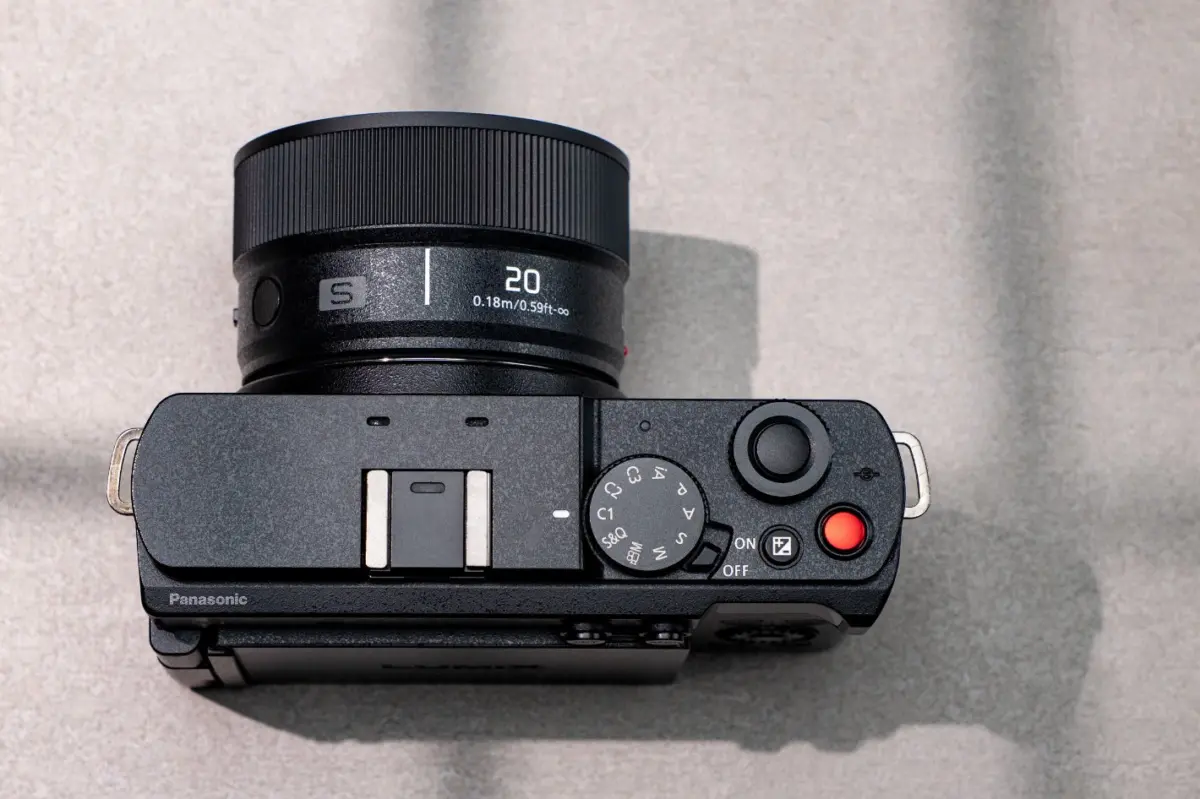
In an era where the boundary between professional cinema production and run-and-gun content creation continues to blur, imaging manufacturers are facing an unprecedented challenge: how to deliver uncompromising full-frame optical performance within physical form factors that do not burden the mobile creator. Panasonic has responded to this industry demand with the official announcement of the LUMIX S 20mm F2.5 (Model S-S20), an ultra-lightweight, compact wide-angle prime lens tailored specifically for the L-Mount system.
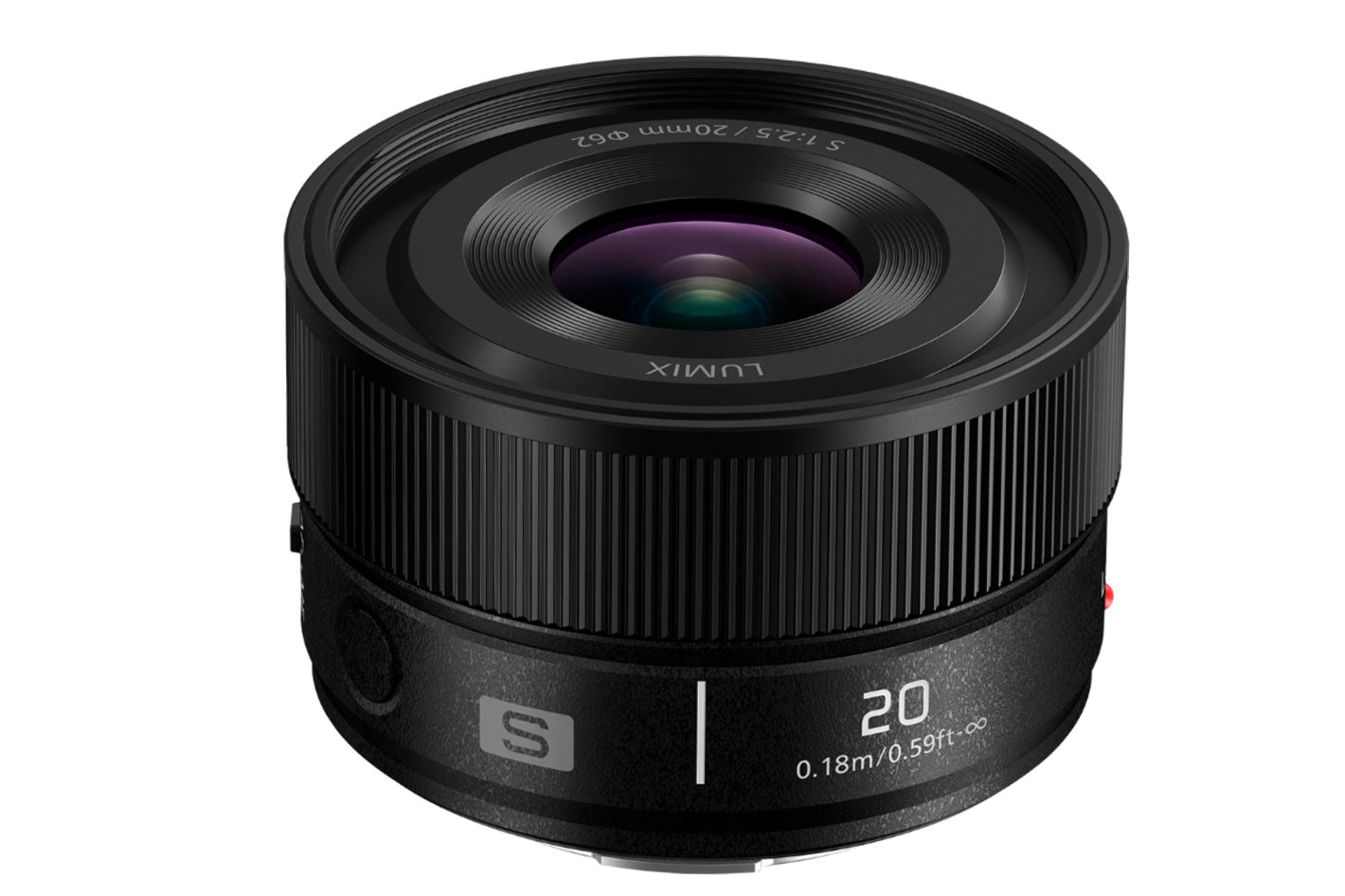
Weighing a mere 142 grams and measuring just 40.9 mm in length, the LUMIX S 20mm F2.5 represents a calculated strategic move by Panasonic to solidify its footprint in the travel, street, and vlog-centric photography markets. The lens is positioned as an ideal optical companion to the compact LUMIX S9 full-frame mirrorless camera, addressing a common criticism of full-frame mirrorless systems—namely, that while camera bodies have shrunk, high-quality lenses have often remained prohibitively bulky.
Alongside this hardware announcement, Panasonic has unveiled a comprehensive software and firmware roadmap scheduled for release on October 13, 2026. This ecosystem-wide initiative introduces crucial performance updates for the LUMIX S9, professional-tier bodies including the S1RII and S1II series, and major usability upgrades for the LUMIX Lab and LUMIX Flow mobile applications. By simultaneously launching targeted hardware and deep software optimizations, Panasonic is signaling a long-term commitment to unified workflow efficiency across its entire consumer and professional imaging lineups.
+-------------------------------------------------------------------------+
|                       LUMIX S 20mm F2.5 Quick Specs                     |
+-------------------------------------------------------------------------+
| Focal Length         | 20mm                                             |
| Max Aperture         | F2.5                                             |
| Weight               | ~142g (5.0 oz)                                   |
| Length               | ~40.9mm (1.61 in)                                |
| Optical Design       | 11 elements in 9 groups (3 Aspherical, 3 ED)     |
| Min. Focus Distance  | 18 cm (7.1 in)                                   |
| Filter Thread        | 62mm                                             |
| Weather Sealing      | Dust, Splash, and Freeze-Resistant               |
| Retail Price         | $499.99 / €499 / £429                            |
| Shipping Date        | Expected October 2026                            |
+-------------------------------------------------------------------------+
Detailed Optical and Mechanical Analysis of the LUMIX S 20mm F2.5
To understand the engineering behind the LUMIX S 20mm F2.5, one must look closely at its optical configuration. Designing an ultra-wide-angle lens for full-frame sensors that avoids severe barrel distortion and peripheral chromatic aberration is notoriously difficult, particularly within a "pancake-adjacent" physical footprint.
Optical Formula and Aberration Control
The lens features an optical construction of 11 elements arranged in 9 groups. To combat the typical optical pitfalls of wide-angle designs, Panasonic has integrated:
- Three Aspherical Elements: These elements minimize spherical aberration and distortion, ensuring that straight architectural lines remain straight even at the extreme edges of the frame. They also play a pivotal role in reducing the physical length of the lens barrel by bending light more acutely than standard spherical lenses.
- Three Extra-low Dispersion (ED) Elements: By correcting chromatic aberrations (color fringing), these elements ensure high-contrast rendering and color fidelity, which is particularly vital when shooting high-contrast outdoor landscapes or backlit street scenes.
The F2.5 maximum aperture strikes a deliberate balance between size, weight, and light-gathering capability. While not as fast as an F1.8 or F1.4 prime, the F2.5 aperture is significantly faster than standard kit zoom lenses (which typically hover around F3.5 to F5.6 at the wide end). This provides creators with superior low-light flexibility and a more pronounced, natural background separation (bokeh) when focusing on near subjects.
Videography-First Engineering
Panasonic has long prioritized video workflows, and the LUMIX S 20mm F2.5 is no exception. A primary challenge in modern video production is focus breathing—the distracting shift in focal length (or angle of view) that occurs when adjusting focus between foreground and background subjects. The S-S20 lens features built-in focus breathing suppression, ensuring a stable, cinematic frame transition during focus pulls.
Furthermore, the autofocus motor is designed for near-silent operation, preventing drive noise from contaminating audio tracks recorded via on-camera microphones. The physical lens body is equipped with:
- A Customizable Focus Ring: Can be configured for linear or non-linear response to suit the manual focusing preferences of the operator.
- A Lens Fn (Function) Button: Allows creators to map custom operations directly to the lens barrel, such as "Crop Zoom" or focus hold.
- An AF/MF Switch: Provides instant tactile control over focusing modes without requiring navigation through the camera’s internal menu system.
Durability and Close-Focusing Capabilities
Despite its miniature footprint, the lens does not compromise on build quality. It features robust dust-, splash-, and freeze-resistant construction, allowing it to operate reliably in challenging outdoor environments. The front element is treated with a protective fluorine coating, which repels water, oil, and fingerprints, making the lens easier to clean in the field.
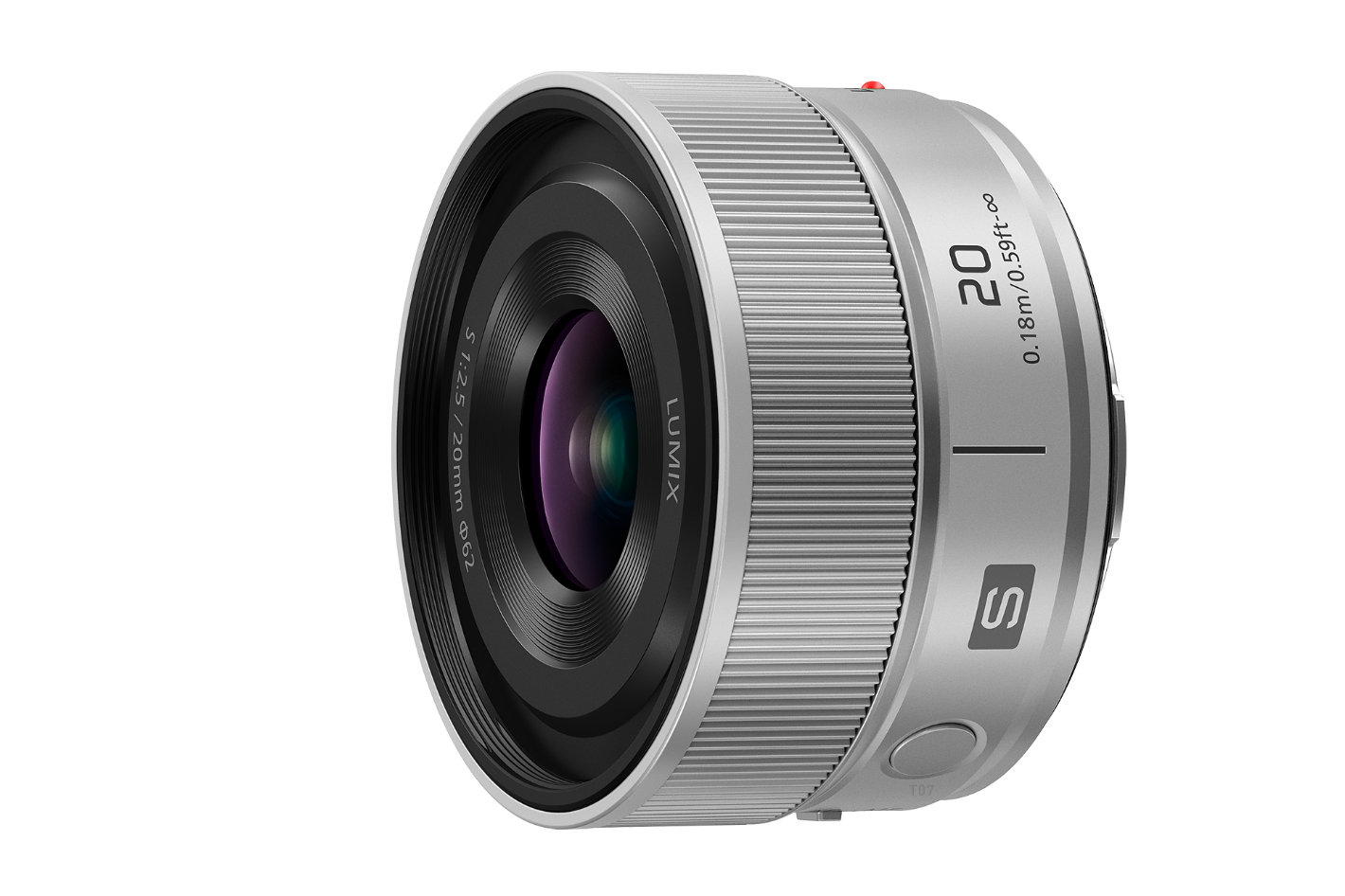
For close-up compositions, the lens boasts a minimum focusing distance of just 18 cm (7.1 inches). This enables photographers to capture dramatic, wide-angle close-ups where the primary subject is highly detailed in the foreground while the expansive background remains clearly visible in the frame, adding depth and environmental context to the image.
Ecosystem Integration: Firmware and Application Updates
Panasonic’s hardware announcements do not exist in a vacuum; they are supported by a broader software ecosystem designed to streamline the modern creator’s workflow. Alongside the lens reveal, Panasonic has announced a suite of major firmware and application updates scheduled for release on October 13, 2026, at 1:00 am UTC.
                           PANASONIC ECOSYSTEM UPDATES
                               (October 13, 2026)
                                       |
        +------------------------------+------------------------------+
        |                                                             |
CAMERA FIRMWARE                                              MOBILE APPLICATIONS
  |                                                             |
  +--> LUMIX S9 (v2.1)                                          +--> LUMIX Lab (v3.1.1)
  |      Enhanced workflow and custom controls                  |      Simplified LUT discovery
  |                                                             |      Accelerated mobile transfers
  +--> S1 Series (S1RII, S1II, S1IIN, S1IIE)                    |
         Improved flash sync & burst stability                  +--> LUMIX Flow (v1.7.0)
                                                                       Expanded S9 support
                                                                       Professional mobile editing
LUMIX S9 Firmware Version 2.1
The LUMIX S9, praised for its ultra-compact design but occasionally critiqued for its streamlined physical control set, receives a significant update in Firmware Version 2.1. This update focuses heavily on workflow customization, allowing users to better utilize the camera’s unique Real-Time LUT capabilities and assign advanced functions to customizable buttons. This ensures that when paired with the new 20mm F2.5 lens, the S9 operates as an incredibly efficient, highly personalized capturing tool.
Professional S1 Series Support
Recognizing that professional photographers require absolute reliability under pressure, Panasonic is releasing targeted firmware updates for its high-end full-frame cameras: the LUMIX S1RII, S1II, S1IIN, and S1IIE.
- External Flash Synchronization: The updates specifically improve shutter release responsiveness and burst shooting consistency when utilizing external flash units.
- Operational Stability: General system performance and power management stability have been optimized to prevent operational lag during intensive shooting scenarios.
LUMIX Lab Version 3.1.1 & LUMIX Flow Version 1.7.0
To support the "shoot-to-share" philosophy, Panasonic’s mobile software suite is receiving major functional overhauls:
- LUMIX Lab (v3.1.1): This update drastically simplifies the process of discovering, downloading, and applying custom Look-Up Tables (LUTs) directly to the camera via a mobile device. It also introduces speed enhancements for wireless image and video transfers.
- LUMIX Flow (v1.7.0): Expanding direct compatibility to include the LUMIX S9, this update optimizes mobile editing and backup workflows, allowing content creators to edit high-resolution video files on-the-go with minimal rendering latency.
Supporting Context & Market Metrics
To truly evaluate the market potential of the LUMIX S 20mm F2.5, it is necessary to compare its physical and economic footprint against existing options within the L-Mount Alliance—a partnership that includes Panasonic, Leica, Sigma, DJI, and Samyang.
Historically, full-frame wide-angle prime lenses have fallen into two categories: ultra-fast, heavy, and expensive professional glass (such as F1.4 or F1.8 options), or slow, low-cost pancake lenses with limited optical correction. The LUMIX S 20mm F2.5 occupies a highly strategic middle ground.
Comparative Market Analysis
| Lens Model | Mount | Weight | Filter Size | Retail Price (USD) | Primary Target Audience |
|---|---|---|---|---|---|
| LUMIX S 20mm F2.5 | L-Mount | 142g | 62mm | $499.99 | Travel, Vloggers, Street |
| Panasonic 18mm F1.8 | L-Mount | 340g | 67mm | $999.99 | Professional Videographers |
| Sigma 20mm F2 DG DN | L-Mount | 370g | 62mm | $699.00 | Astro, Landscape Enthusiasts |
| Panasonic 26mm F8 (Manual) | L-Mount | 58g | None | $199.99 | Ultra-casual Snapshot/Street |
As shown in the matrix above, the LUMIX S 20mm F2.5 offers a compelling compromise. While the Sigma 20mm F2 offers a slightly faster maximum aperture, it weighs more than double the Panasonic 20mm and carries a higher price tag. Conversely, Panasonic’s own 26mm F8 manual lens is lighter but suffers from a fixed, slow aperture and lacks autofocus, limiting its utility in professional or low-light scenarios.
At $499.99, the LUMIX S 20mm F2.5 is priced competitively, lowering the barrier of entry for creators looking to transition from APS-C or Micro Four Thirds systems into high-quality full-frame imaging without sacrificing the portability they have come to expect.
Official Strategic Positioning and Industry Impact
The release of the LUMIX S 20mm F2.5 represents a clear shift in Panasonic’s hardware strategy. For years, the company was synonymous with the Micro Four Thirds (MFT) format, which was widely celebrated for its compact bodies and tiny lenses. When Panasonic entered the full-frame market with the L-Mount Alliance, its initial bodies (such as the S1 series) and lenses were criticized for being exceptionally large and heavy.
By introducing the LUMIX S9 and now supporting it with dedicated compact primes like the 20mm F2.5, Panasonic is systematically dismantling the notion that full-frame systems must be bulky.
In official statements surrounding the design philosophy of the new lens, Panasonic emphasizes that the 20mm focal length was chosen deliberately over traditional 24mm or 28mm alternatives. The 20mm perspective offers a wider field of view that is highly advantageous for:
- Self-Vlogging: Allowing creators to hold the camera at arm’s length while still keeping their upper body and a substantial portion of the surrounding environment in the frame.
- Interior and Architectural Work: Providing a sense of spaciousness in tight indoor locations without introducing the extreme, distorted perspective of a 14mm or 16mm ultra-wide lens.
- Immersive Street Photography: Encouraging photographers to get closer to the action while maintaining a natural, documentary-style frame that includes the subject’s environment.
This strategic alignment of physical portability, robust build quality, and optical precision positions Panasonic as a formidable competitor to Sony’s compact full-frame offerings (such as the FE 24mm F2.8 G) and Nikon’s compact Z-mount primes.
Future Outlook
Looking ahead, the launch of the LUMIX S 20mm F2.5—with shipping scheduled to begin in October 2026—marks the next phase in the maturation of the L-Mount Alliance.
As mobile platforms like TikTok, Instagram Reels, and YouTube Shorts continue to dominate global media consumption, the demand for high-fidelity, vertically-oriented, and mobile-friendly content capture tools will only intensify. Panasonic’s dual approach—developing ultra-portable, high-performance hardware while simultaneously refining the software pipeline (via LUMIX Lab and LUMIX Flow) to allow instantaneous mobile editing—addresses the exact pain points of the modern digital economy.
The prolonged timeline leading up to the October 2026 release suggests that Panasonic is taking the necessary time to optimize manufacturing yields and ensure that global distribution channels are fully stocked to meet anticipated demand. It also allows the company to continue building anticipation through its global creator networks.
If the LUMIX S 20mm F2.5 performs as promised in real-world scenarios, it may well set a new benchmark for what creators can expect from compact full-frame optics, proving once and for all that premium image quality does not require a heavy toll on a creator’s gear bag.