





Executive Overview
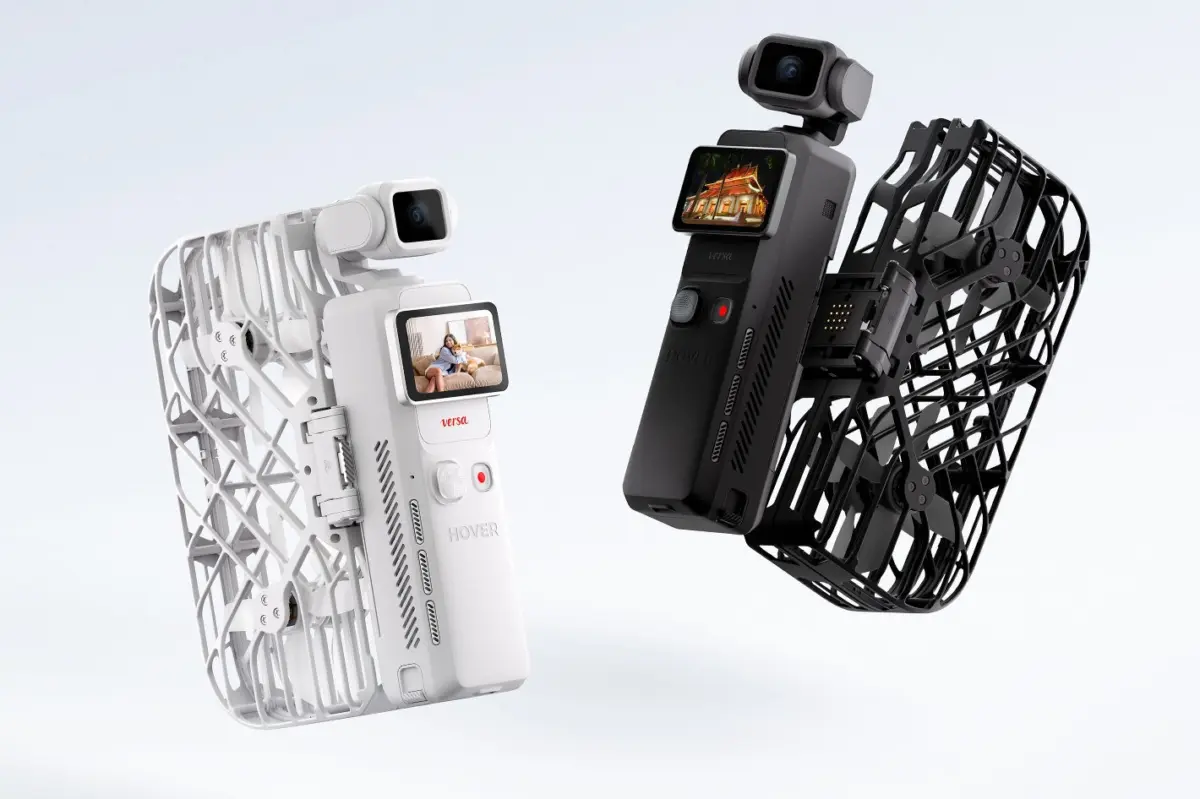
The landscape of personal content creation is undergoing a structural paradigm shift, moving away from cumbersome, single-purpose hardware toward highly integrated, multi-modal imaging systems. At the vanguard of this evolution is HOVERAir’s latest release, the VERSA—a pocket-sized 4K gimbal camera designed to seamlessly transform into an autonomous, self-flying camera. By bridging the gap between stabilized ground-level vlogging and aerial cinematography, the VERSA represents a significant leap forward in consumer robotics and optical engineering.
This technological sophistication was recently validated on the global stage. At the IFA Berlin trade show, the HOVERAir VERSA was awarded two prestigious honors: the Best of IFA Award for Content Creation Technology and the IFA NEXT & Emerging Tech Award. These accolades highlight the industry’s recognition of the VERSA’s modular design, which addresses a long-standing compromise for creators: the need to carry both a handheld gimbal camera and a separate drone to capture diverse perspectives.
However, the VERSA’s commercial trajectory is marked by a stark geopolitical divide. Despite its critical acclaim and enthusiastic reception in European and Asian markets, the device has hit a regulatory wall in the United States. Due to recent Federal Communications Commission (FCC) rulings and broader legislative crackdowns on Chinese-manufactured unmanned aerial systems (UAS) and communication technologies, the HOVERAir VERSA is currently prohibited from being imported, marketed, or sold within the U.S. This regulatory barrier sets up a compelling case study of a cutting-edge consumer technology caught in the crosshairs of national security policy and international trade friction.
Detailed Chronology: From Concept to Berlin Acclaim and Regulatory Exclusion
The development and deployment of the HOVERAir VERSA highlight both the rapid pace of consumer electronics innovation and the shifting landscape of global market access.
[August] ------------------------> [September] ---------------------> [Current Status]
Global Launch of VERSA             Double Win at IFA Berlin            U.S. Market Lockout
Modular 4K Gimbal & Drone          Content Creation & Emerging Tech    FCC Import & Sales Ban
The August Launch: Redefining the Form Factor
In August, HOVERAir (a brand under Zero Zero Robotics) officially unveiled the VERSA. The launch was positioned as a direct response to the "creator’s dilemma"—the logistical headache of carrying, charging, and operating multiple cameras, stabilizers, and flight systems.
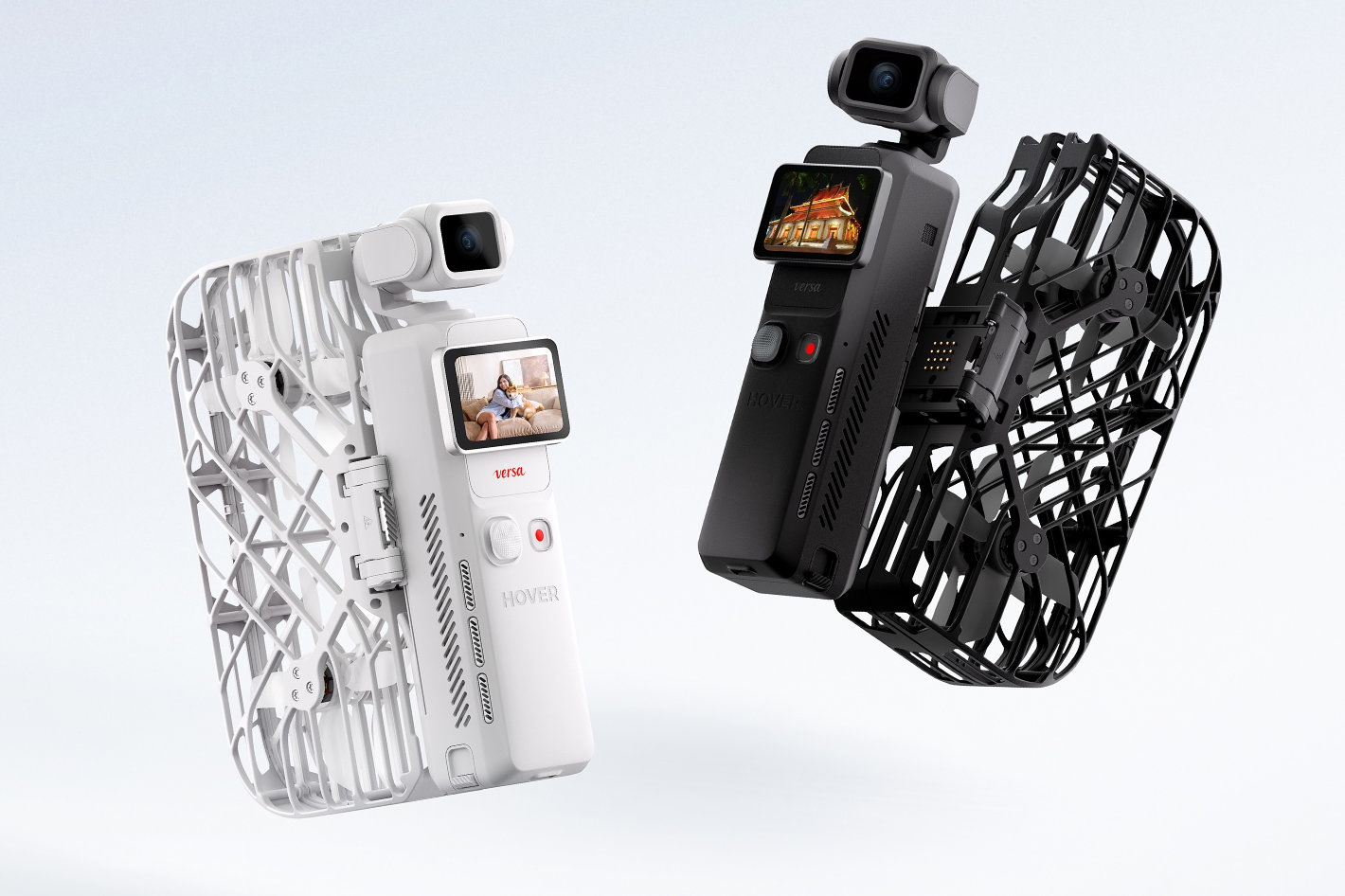
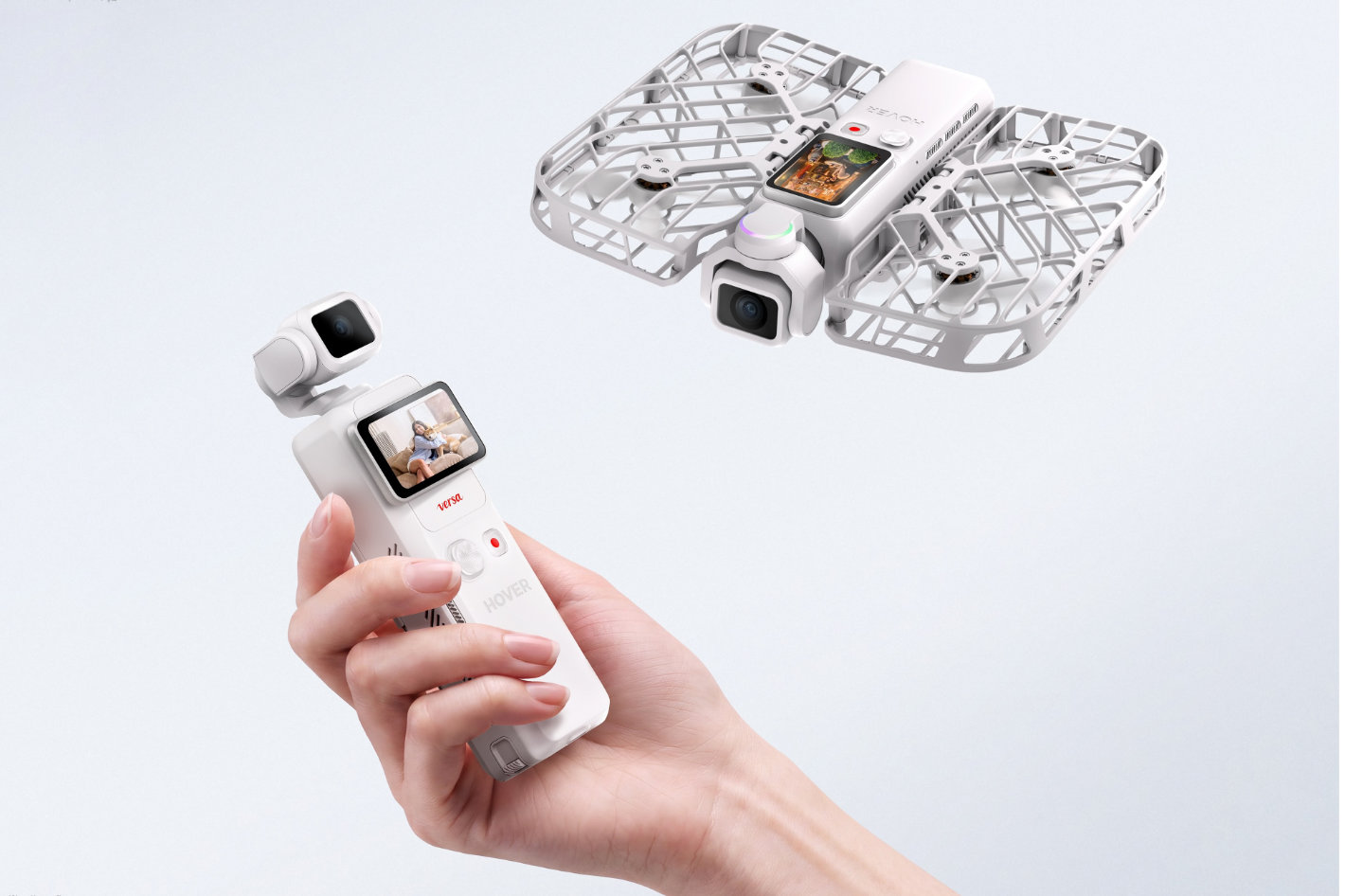
Unlike previous iterations in the HOVERAir lineup, such as the flight-only HOVERAir X1, the VERSA was engineered from the ground up as a hybrid system. In its baseline configuration, it functions as a highly ergonomic, handheld 3-axis stabilized 4K camera. By clipping on the specialized "Flight Kit," the device transitions into an autonomous flying camera. This modular approach aimed to democratize high-production-value cinematography for solo vloggers, travelers, and family documentarians.
September: Double Victory at IFA Berlin
Shortly after its global debut, the VERSA was showcased at IFA Berlin, one of the world’s oldest and most influential consumer electronics expositions. The device quickly became a centerpiece of the IFA NEXT startup and innovation hub.
Industry analysts and tech journalists praised the VERSA for its execution of the hybrid concept. Rather than offering a compromised experience in both modes, the device demonstrated high-caliber performance both on the ground and in the air. This dual-threat capability secured it two major awards:
- Best of IFA: Content Creation Technology – Recognizing its immediate utility, stabilization, and workflow integration for modern digital storytellers.
- Best of IFA: IFA NEXT & Emerging Tech – Commending the engineering achievement of packing a 3-axis physical gimbal, autonomous flight controllers, and AI tracking into a pocket-sized form factor weighing under 230 grams.
The Regulatory Counter-Current: The U.S. Ban
While European markets celebrated the VERSA’s debut, a very different reality unfolded across the Atlantic. The United States Federal Communications Commission (FCC), aligning with broader federal initiatives to restrict telecommunications and surveillance equipment from specific foreign entities, enacted a strict ban
on the device.
As a result, the HOVERAir VERSA joined a growing list of innovative electronic devices barred from entering the U.S. market. This ban prevents official retail distribution, direct-to-consumer shipping, and localized marketing campaigns within the country, effectively severing HOVERAir from one of the world’s most lucrative markets for content creation tools.
Supporting Context & Metrics: Technical Breakdown of the VERSA
To understand why the VERSA has captured the industry’s attention, it is necessary to examine its technical specifications and mechanical architecture. The device is engineered to balance weight, battery efficiency, optical performance, and computational intelligence.
The Modular "Dual-Identity" Design
The core innovation of the VERSA is its split-use architecture. It functions across two distinct operational modes:
- Handheld Gimbal Mode: Operating without the flight rotors, the VERSA functions as a traditional pocket gimbal camera, similar to the DJI Pocket series. In this mode, it leverages its internal battery to deliver up to 180 minutes of continuous 4K recording at 30 frames per second (fps). The physical 3-axis gimbal active stabilization ensures smooth panning and tilt controls, eliminating micro-jitters common in handheld smartphone shooting.
- Self-Flying Mode: When the modular Flight Kit is attached, the VERSA transforms into an autonomous aerial camera. Despite the added propulsion mechanics, the total takeoff weight remains under 230 grams. This weight profile is highly strategic; in regions where the device is legal, it falls below the 250-gram threshold that triggers mandatory civil aviation registration (such as the FAA’s Part 107 registration in the U.S., had it been permitted). In flight mode, the device offers up to 14 minutes of autonomous flight time.
Technical Specifications Matrix
| Feature / Specification | HOVERAir VERSA Performance Metric |
|---|---|
| Weight | Under 230g (including Flight Kit) |
| Video Resolution | 4K at 30fps (Ultra HD) |
| Physical Stabilization | 3-Axis Mechanical Gimbal |
| Handheld Battery Life | Up to 180 Minutes (4K/30fps) |
| Flight Time | Up to 14 Minutes |
| Autonomous Flight Modes | 10+ Intelligent Modes (Zoom Out, Auto Follow, Orbit, etc.) |
| Control Interfaces | Voice Commands, Gesture Recognition, Mobile App |
| AI Capabilities | Auto Framing, Real-time Human Tracking, 3D Reconstruction |
| Spatial Feature | "3D Worlds" (360-degree capture & spatial mapping) |
AI Integration and Spatial Computing
Beyond physical stabilization, the VERSA relies heavily on software-driven intelligence to lower the barrier to entry for complex cinematography:
- AI Auto Framing & Tracking: Utilizing proprietary computer vision algorithms, the camera identifies, locks onto, and tracks subjects in real-time. This allows solo creators to perform complex movement patterns while the camera maintains proper composition, whether handheld on a selfie stick or hovering 15 feet in the air.
- 3D Worlds & Spatial Mapping: The VERSA introduces a "3D Worlds" feature, which uses the camera’s optical sensors during flight to capture 360-degree environments and reconstruct them into 3D models. This capability bridges consumer videography with spatial computing and virtual reality asset creation.
- Intelligent Flight Paths: The onboard flight controller features more than ten pre-programmed flight paths, such as Orbit (circling the subject), Zoom Out (revealing the environment), and Auto Follow (maintaining a fixed distance behind a moving subject). These modes operate autonomously without requiring a dedicated remote controller.
Official Statements & Geopolitical Friction
The duality of the HOVERAir VERSA’s critical success and its regulatory exclusion highlights the growing friction between technological globalization and national security policy.
The Product Philosophy: "A Camera That Can Fly"
MQ Wang, the founder and CEO of HOVERAir, has long championed a design philosophy that prioritizes user intuition over technical complexity. Commenting on the launch of the VERSA and the broader direction of the company, Wang stated:
"People don’t really need a drone. They just want a camera that can fly."
This quote captures the market positioning of the VERSA. By framing the device as an extension of the camera rather than a piece of aviation hardware, HOVERAir aimed to capture a broader consumer demographic that might find traditional drones intimidating or overly complex. The inclusion of voice and gesture controls further emphasizes this goal of making the technology feel almost invisible to the end-user.
Traditional Drone Approach:
[User] ---> [Complex Remote Controller] ---> [Aviation-First Drone] ---> [Captured Footage]

HOVERAir VERSA Philosophy:
[User] ---> [Voice / Gesture Command] ---> [Self-Flying Camera] ---> [Captured Footage]
The Regulatory Realities of the U.S. Market
Despite this user-centric philosophy, the VERSA’s classification as an internet-connected, camera-equipped autonomous aerial system manufactured by a Chinese-headquartered firm has made it a target for U.S. regulatory scrutiny.
The FCC’s refusal to grant equipment authorization for the VERSA stems from ongoing national security concerns regarding data privacy, software vulnerabilities, and airspace surveillance. Over the past several years, U.S. lawmakers have systematically tightened restrictions on foreign-produced drone technologies. Initiatives like the Countering CCP Drones Act and corresponding FCC licensing bans aim to prevent foreign manufacturers from collecting spatial data, network credentials, or user imagery within U.S. borders.
While HOVERAir maintains that its data collection practices conform to strict consumer privacy standards and that its devices are designed solely for personal recreational use, U.S. regulatory bodies have adopted a zero-tolerance approach to new hardware approvals from targeted manufacturers. This has created a fragmented market where American creators are locked out of hardware options that are readily available to their European and Asian counterparts.
Future Outlook: The Bifurcated Global Market for Autonomous Imaging
The launch, critical acclaim, and U.S. ban of the HOVERAir VERSA point to several key trends that will likely shape the future of the consumer technology and imaging industries.
                      ┌─── Global Markets (Europe, Asia) ───► Full Commercial Access
                      │                                       Rapid Creator Adoption
[HOVERAir VERSA] ─────┤
                      │
                      └─── United States Market ────────────► Strict FCC Regulatory Ban
                                                              Market Vacuum for Rivals
1. The Rise of the "Dual-Identity" Form Factor
The success of the VERSA at IFA Berlin suggests that the modular, hybrid camera-drone form factor is here to stay. Traditional action camera manufacturers (such as GoPro) and dedicated drone manufacturers (such as DJI) will likely face pressure to develop their own convertible or highly integrated modular systems. The convenience of having a single device handle stabilized ground-level vlogging and instant aerial capture is a compelling value proposition that will continue to drive consumer demand.
2. Market Fragmentation and Regional Tech Ecosystems
The exclusion of the VERSA from the United States points to an increasingly bifurcated global tech market. We are entering an era where consumers in different geographic regions will have access to fundamentally different toolkits for content creation.
- In Europe and Asia, creators will benefit from rapid iterations of highly integrated, AI-driven, lightweight Chinese hardware.
- In the United States, a regulatory vacuum will persist, potentially paving the way for domestic manufacturers or non-targeted international brands (from countries like Japan, South Korea, or Taiwan) to develop alternative solutions, though likely at a higher price point due to domestic manufacturing and compliance costs.
3. The Evolution of Spatial Computing and Consumer Robotics
The inclusion of features like "3D Worlds" on a consumer-grade, sub-230g device indicates where the industry is heading. As virtual reality (VR) and augmented reality (AR) headsets become more mainstream, the demand for tools that can easily capture and reconstruct physical environments in 3D will grow exponentially. Self-flying cameras, equipped with advanced computer vision and spatial mapping capabilities, are uniquely positioned to become the primary content-generation engines for the spatial web.
Conclusion
The HOVERAir VERSA is a remarkable engineering achievement that successfully merges two distinct product categories into a highly portable, intuitive device. Its double victory at IFA Berlin 2026 underscores its potential to redefine personal storytelling. Yet, its ban in the United States serves as a reminder that in the modern tech landscape, engineering excellence is no longer the sole determinant of market success. Geopolitical realities, regulatory compliance, and national security policies will continue to play a decisive role in shaping which innovations reach consumers’ hands—and which ones remain grounded at the border.