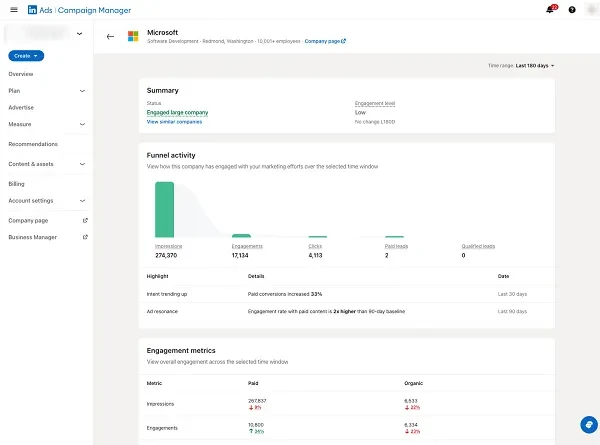
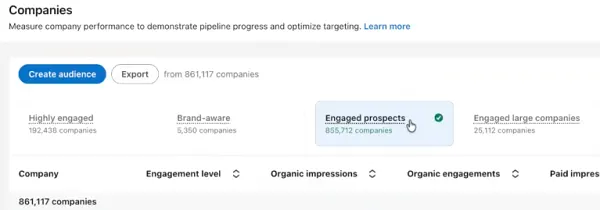
In the modern B2B marketing landscape, the margin for wasted ad spend has shrunk to near zero. As economic headwinds force marketing executives to justify every dollar allocated to customer acquisition, platforms are racing to provide more granular, intent-driven analytics. LinkedIn—long recognized as the premier digital ecosystem for professional networking and account-based marketing (ABM)—has rolled out a strategic overview detailing how brands can leverage the Companies hub within its Campaign Manager.
This development is not merely a minor UI update; it represents a fundamental shift in how marketers can bridge the gap between top-of-funnel engagement and bottom-line revenue. By centralizing in-app engagement data, LinkedIn is empowering organizations to monitor which specific corporate entities are interacting with their organic content and paid advertisements. This capability allows growth teams to move away from blunt-instrument demographic targeting and pivot toward high-intent, account-centric strategies.
At its core, the Companies hub provides a consolidated view of organizational interest. It tracks when representatives from target accounts engage with a brand’s LinkedIn presence. By cross-referencing this data with existing CRM databases or custom account lists, marketing and sales teams can identify precisely which prospects are warming up. Consequently, brands can orchestrate targeted retargeting campaigns designed to nurture these accounts through complex sales funnels.
This analytical deep-dive explores the mechanics of LinkedIn’s updated framework, examines the broader implications for account-based marketing strategies, and outlines a step-by-step blueprint for marketing leaders seeking to maximize ROI from their LinkedIn advertising investments.
Detailed Chronology: The Evolution of LinkedIn’s Targeting Infrastructure
To fully appreciate the significance of the Companies hub, it is necessary to examine how LinkedIn has methodically built its B2B advertising infrastructure over the past decade. The platform’s journey from a basic professional directory to an advanced advertising engine highlights a continuous commitment to solving the classic B2B challenge: reaching the right decision-makers at scale.
Phase 1: The Demographic Era (2010–2015)
In the early days of LinkedIn Ads, targeting was largely confined to basic professional attributes. Marketers could segment audiences by job title, industry, company size, and geographic location. While revolutionary for its time, this approach operated on the assumption that a job title equated to buying intent. Advertisers often found themselves paying for impressions delivered to individuals who held the right title but had no authority, budget, or current need for the solution being promoted.
Phase 2: The Rise of Account-Based Marketing (2016–2020)
As B2B sales cycles lengthened and buying committees expanded—often involving an average of six to ten decision-makers—marketers demanded account-level capabilities. LinkedIn responded by introducing Matched Audiences, allowing brands to upload first-party data such as email lists and account domains. This bridge between offline CRM data and online professional profiles laid the groundwork for sophisticated ABM campaigns. During this period, LinkedIn also introduced Lead Gen Forms, dramatically lowering friction for conversion capture.
Phase 3: The Integration of Engagement Analytics (2021–Present)
As privacy regulations tightened and third-party cookies began their deprecation cycle, first-party data and platform-native intelligence became paramount. LinkedIn’s focus shifted toward delivering deeper visibility into how target accounts behave within the platform ecosystem. The refinement of the Companies hub represents the culmination of this phase. Rather than simply allowing advertisers to upload a list and hope for the best, LinkedIn now provides a closed-loop feedback mechanism: upload a list, observe organic and paid engagement in real time, and dynamically adjust campaign targeting based on behavioral signals.
The recent guidance shared by LinkedIn formalizes this evolutionary leap into a structured, repeatable methodology that modern B2B marketing organizations can immediately integrate into their go-to-market motions.
Supporting Context & Metrics: The Imperative for Account-Based Intelligence
The urgency behind LinkedIn’s feature enhancements is rooted in broader macroeconomic and behavioral shifts within the B2B buying journey. Understanding these dynamics provides essential context for why the Companies hub is becoming a cornerstone of modern digital strategy.
The Changing B2B Buying Committee
According to extensive B2B research from firms like Gartner and Forrester, the modern enterprise buying committee is larger and more risk-averse than ever. Purchases often stall not because of a lack of interest, but due to internal consensus-building challenges among stakeholders spanning finance, legal, operations, and executive leadership.
When a B2B brand launches a traditional ad campaign, ads are typically distributed across individual feeds. Without account-level visibility, it is nearly impossible for a marketing team to know if an enterprise target account has one lone employee passively viewing an ad, or if five key decision-makers across different departments are actively engaging with the brand’s content simultaneously. The Companies hub solves this visibility gap by aggregating engagement at the organizational level, revealing collective account momentum.
The Cost of Inefficient Funnels
In an environment where marketing budgets face heightened scrutiny, operational efficiency is critical. Industry benchmarks indicate that generic digital ad campaigns suffer from high waste rates, with a significant percentage of impressions served to non-decision-makers or accounts with zero propensity to buy.
By contrast, account-based strategies that leverage high-intent behavioral data consistently outperform spray-and-pray methods. According to data from the ABM Leadership Alliance, companies with a well-defined ABM strategy enjoy significantly higher win rates and larger deal sizes. LinkedIn’s latest framework capitalizes on this reality by enabling brands to filter out the noise and concentrate their capital exclusively on accounts showing verified digital body language.
The Strategic Framework: Turning Engagement into Customers
To help marketers operationalize these insights, LinkedIn has outlined a strategic framework centered around three core pillars: identification, observation, and nurturing. This process transforms abstract engagement metrics into concrete pipeline opportunities.
Step 1: Curate and Connect the Ideal Account List
The foundation of any successful account-based strategy on LinkedIn begins with data hygiene and ICP (Ideal Customer Profile) definition.
Data Integration: Marketers must start by defining a cohort of accounts that mirror their most profitable current customers. This involves exporting key accounts from their CRM or marketing automation platform (MAP).
Audience Synchronization: Once the list is finalized, it is uploaded into LinkedIn Campaign Manager via Matched Audiences. This establishes the baseline parameter against which all subsequent in-app engagement will be measured and reported.
Step 2: Monitor Organic and Paid In-App Signals
Once the target account list is active within Campaign Manager, the Companies hub acts as an intelligence dashboard.
Cross-Channel Visibility: The hub tracks interactions stemming from both organic company page posts and paid ad campaigns. Marketers can see which specific companies are having their representatives exposed to and engaging with their content.
Intent Recognition: Rather than waiting for a prospect to fill out a form—which typically happens late in the evaluation cycle—marketers can monitor early-stage intent. Are engineering leaders from Enterprise Company X clicking on thought-leadership articles? Are finance executives from Target Account Y engaging with product-focused video ads? These behavioral indicators signal warming interest long before a conversion event occurs.
Step 3: Deploy Targeted Nurturing Campaigns
Observation without action yields no commercial value. The critical pivot in LinkedIn’s framework occurs when high-intent accounts are identified.
Dynamic Retargeting: When the analytics reveal that a cluster of target accounts has crossed a threshold of engagement, marketers can instantly isolate those specific companies into a dedicated retargeting campaign.
Full-Funnel Alignment: Having established that these accounts are paying attention, the messaging can shift from broad awareness to mid- and bottom-funnel enablement—such as case studies, ROI calculators, product demonstrations, or invitations to exclusive webinars.
Official Statements and Industry Perspective
The release of this comprehensive framework underscores LinkedIn’s ongoing commitment to providing enterprise-grade tools accessible to marketers of all scales. Company spokespersons and product marketing leaders have emphasized that the future of B2B advertising lies in relevance and behavioral responsiveness.
"The best advice for a new company-based strategy is to pick a group of accounts that look like your best customers, connect your CRM or company list, and watch which of those companies start engaging," LinkedIn outlined in its official marketing guidance. "Then point your next campaign at them to nurture them through the funnel."
Industry analysts have responded favorably to these updates, noting that they directly address the perennial friction between marketing and sales teams. By utilizing the Companies hub, marketing departments can pass verified, engagement-qualified accounts (EQAs) to sales development representatives (SDRs) with empirical proof of interest. This alignment ensures that sales outreach is timely, relevant, and contextually grounded in the prospect’s recent digital interactions.
Furthermore, digital marketing practitioners have highlighted the practical utility of these features in streamlining reporting. Historically, proving the value of brand awareness campaigns to executive leadership required relying on soft metrics like impressions and click-through rates. With the Companies hub, marketers can report directly on account penetration—demonstrating, for example, that 45% of Tier-1 target accounts actively engaged with brand assets during a given fiscal quarter.
Future Outlook: The Next Frontier of Account-Based Advertising
As we look toward the future of B2B marketing, several key trends will shape how platforms like LinkedIn and tools like the Companies hub evolve.
1. Greater Automation and AI Integration
As artificial intelligence becomes embedded in marketing technology stacks, we can anticipate predictive analytics playing a larger role within LinkedIn Campaign Manager. Future iterations may automatically flag accounts showing anomalous surges in engagement and dynamically adjust bid strategies or budget allocations without manual intervention.
2. Deeper CRM Bidirectional Sync
While uploading static lists via Matched Audiences remains a standard practice, the push toward real-time, bidirectional data flows will continue. Deeper integrations between enterprise CRMs (such as Salesforce and HubSpot) and LinkedIn will allow engagement data captured in the Companies hub to flow directly back into CRM contact and account records, giving sales teams instant visibility within their native workspaces.
3. Privacy-First Attribution Models
With privacy regulations continuing to evolve globally, platforms that rely on deterministic, first-party authenticated networks—such as LinkedIn, where users log in with verified professional identities—will hold a distinct advantage over open-web display advertising. The ability to measure account-level engagement without relying on invasive third-party tracking positions LinkedIn as an indispensable channel for enterprise marketing strategies.
Conclusion
LinkedIn’s continued refinement of the Companies hub within Campaign Manager marks a significant step forward for account-based marketing practitioners. By bridging the gap between first-party CRM data and real-time in-app engagement, the platform provides a clear, actionable framework for identifying high-intent prospects and orchestrating precision campaigns.
For B2B organizations striving to optimize ad spend, eliminate waste, and shorten long sales cycles, adopting this structured approach is no longer optional—it is a competitive necessity. By listening to the digital behavioral signals emitted by target accounts and responding with agile, tailored nurturing campaigns, modern marketers can turn passive visibility into active, profitable customer relationships.