






Executive Overview
The landscape of modern post-production is undergoing a profound structural shift. As distribution channels multiply, delivery specifications diversify, and timelines compress, mastering facilities are facing unprecedented operational bottlenecks. At the IBC 2026 convention, Colorfront—the Academy and Emmy Award-winning developer of high-performance cinema mastering, transcoding, and streaming technologies—unveiled a suite of workflow tools designed to address these pressures.
The core philosophy guiding Colorfront’s latest release is clear: versatility is no longer a luxury; it is the new operational baseline. Built on an API-first architecture, the company’s updated ecosystem is engineered to operate seamlessly across all tiers of modern post-production. Whether deployed by a manual mastering artist, integrated into a high-volume automated pipeline, or orchestrated by autonomous, AI-driven agents, the underlying processing engine remains unified.
Among the headline advancements demonstrated at IBC 2026 are:
- An automated, machine-learning-driven timeline comparison tool.
- Industry-first mastering support for the next-generation Dolby Vision 2 HDR format.
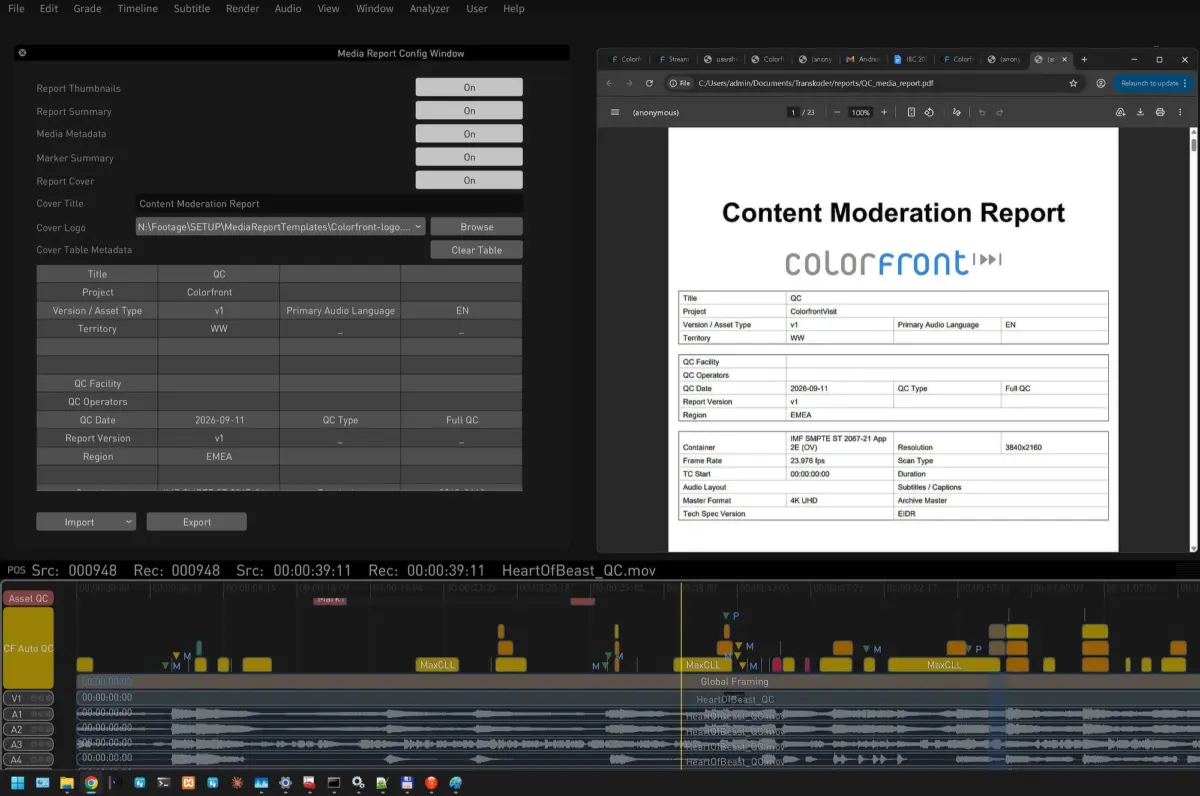
- AI-assisted Quality Control (QC) and textless validation tools.
- Secure, cloud-native Digital Cinema Package (DCP) cryptographic key management.
- A centralized enterprise management platform, codenamed Bushido, designed to orchestrate complex, distributed media pipelines.
This investigative analysis explores the technical architecture of these new offerings, contextualizes their business impact, and evaluates how Colorfront is positioning itself at the intersection of artificial intelligence, cloud infrastructure, and ultra-high-fidelity imaging.
Detailed Chronology: Technical Deep-Dive into the 2026 Toolkit
To understand the scope of Colorfront’s updates, it is necessary to examine the individual components of their 2026 software suite. These tools are designed not as isolated utilities, but as interoperable nodes within a highly scalable media processing engine.
+---------------------------------------------------------------------------------+
|                           COLORFRONT API-FIRST ENGINE                           |
+---------------------------------------------------------------------------------+
        |                                 |                                 |
        v                                 v                                 v
+---------------+                 +---------------+                 +---------------+
|  Manual UI    |                 |  Automated    |                 |  AI Agent     |
|  (Transkoder) |                 |  Pipelines    |                 |  Orchestration|
+---------------+                 +---------------+                 +---------------+
Automated Timeline Comparison and Smart Version Management
One of the most persistent and costly pain points in mastering and localization is version reconciliation. When a new cut, a localized variant, or a censored edit of a program arrives at a facility, operators have historically been forced to manually compare timelines frame-by-frame to identify changes.
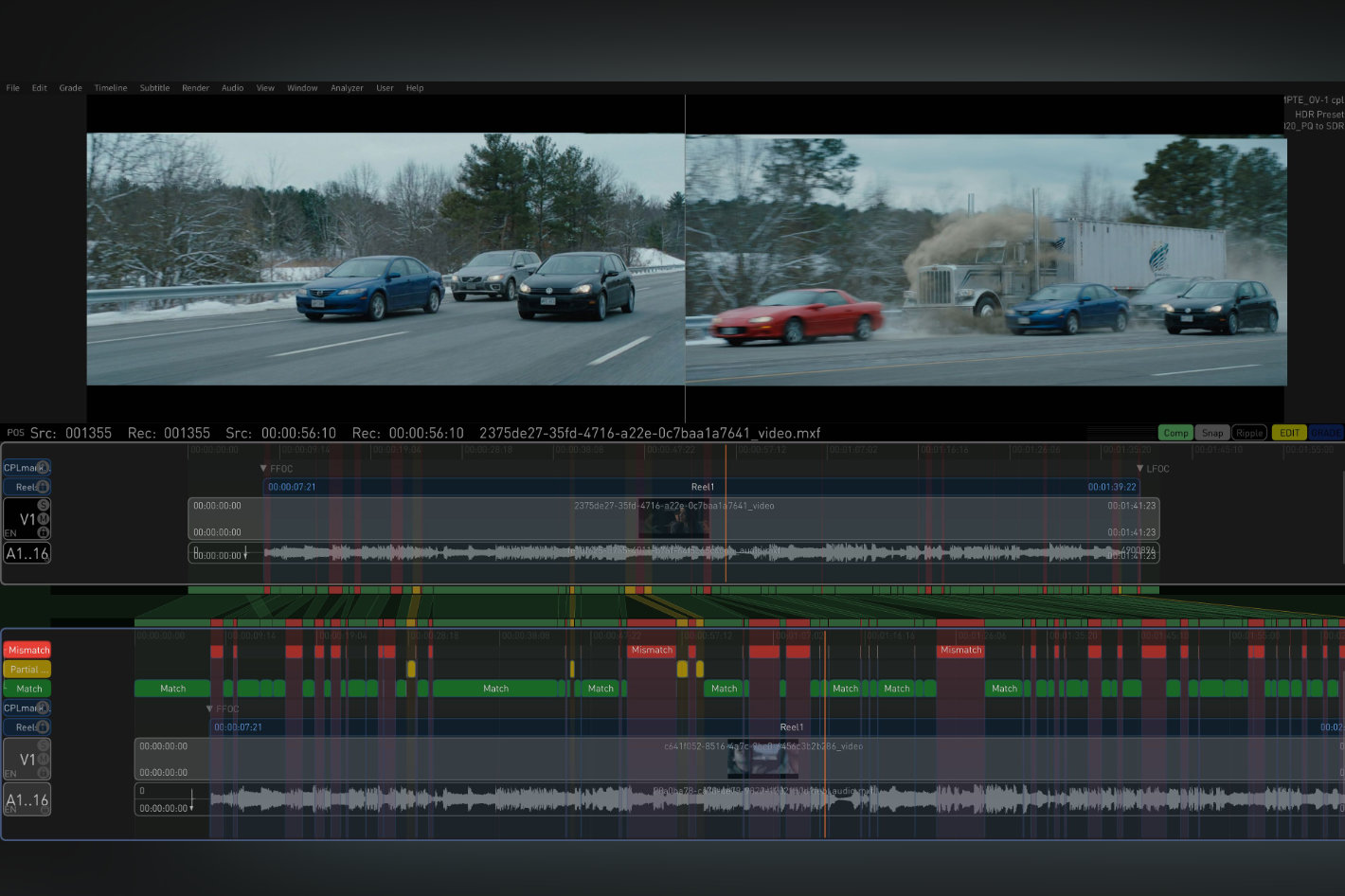
Colorfront’s new automated timeline comparison tool resolves this bottleneck by employing a multi-layered analysis pipeline. When two timelines are loaded side-by-side, the system utilizes:
- Visual Content Analysis: Evaluating spatial structures and frame characteristics.
- Vector Embeddings: Generating low-dimensional mathematical representations of visual frames to detect semantic similarity.
- Temporal Fingerprinting: Mapping the unique visual signature of the footage over time.
This allows the engine to instantly flag matching, newly inserted, modified, or omitted elements.
[Timeline A] ---> (Vector Embeddings & Fingerprinting)
                                                        ===> [Difference Engine] ---> Auto-Generated Markers & A/B Diff Views
[Timeline B] ---> (Vector Embeddings & Fingerprinting) /
The user interface displays these changes as interactive markers across both timelines. Operators can utilize dual-view or three-way difference layouts, perform one-touch A/B comparisons, and collapse marker groups to keep complex, feature-length projects legible.
Crucially, because this feature is built on Colorfront’s API-first architecture, it can run completely headless within an automated delivery pipeline. The generated change-metadata can be inspected inside Transkoder, exported as a comprehensive QA report, or ingested by downstream automated systems to drive targeted rendering and delivery.
AI-Assisted Agent Workflows and Natural Language Integrations
While automation has traditionally relied on rigid, pre-defined scripting, Colorfront is pioneering the use of intelligent, agent-assisted workflow configurations. During IBC 2026, the company previewed a system where operators can interact with the software using natural language and technical specifications.
For example, a user can input a streaming platform’s written technical delivery specification—such as specific audio loudness parameters, channel mapping, and subtitle alignment rules. An AI agent reads and parses the document, configures the necessary analysis nodes within the Colorfront engine, executes the processing, and delivers a concise summary of the results.
Because all of Colorfront’s probing, validation, and processing capabilities are exposed via developer-friendly APIs, facilities can integrate these tools with modern AI coding assistants. This drastically lowers the barrier to entry for developing custom, highly conditional processing pipelines, reducing the need for specialized software engineering resources.
Next-Generation HDR: Dolby Vision 2 and IMF Standards
As consumer displays and streaming platforms evolve, High Dynamic Range (HDR) standards must advance to deliver higher fidelity and more precise metadata. Colorfront has secured a market-first advantage by becoming the first mastering platform to support Dolby Vision 2, Dolby’s next-generation HDR format slated for wide deployment across devices and streaming services in 2026.
+-----------------------------------------------------------------------------+
|                         DOLBY MASTERING NODE                                |
|  [Load Dolby Vision 2 Metadata] -> [Validate XML] -> [Adjust Parameters]    |
+-----------------------------------------------------------------------------+
                                      |
                                      v
                      +-------------------------------+
                      |  Dolby Vision IMF Deliverable |
                      +-------------------------------+
A dedicated Dolby mastering node inside Colorfront’s environment allows operators to:
- Load, validate, and dynamically adjust Dolby Vision metadata, including specific Dolby Vision 2 parameters.
- Generate compliant masters utilizing the latest Dolby XML schemas.
- Output deliverables matching Amazon’s new Dolby Vision Interoperable Master Format (IMF) delivery specifications.
- Manage label-based audio mixdowns within the same mastering pass.
Intelligent QC, Textless Validation, and Legacy Restoration
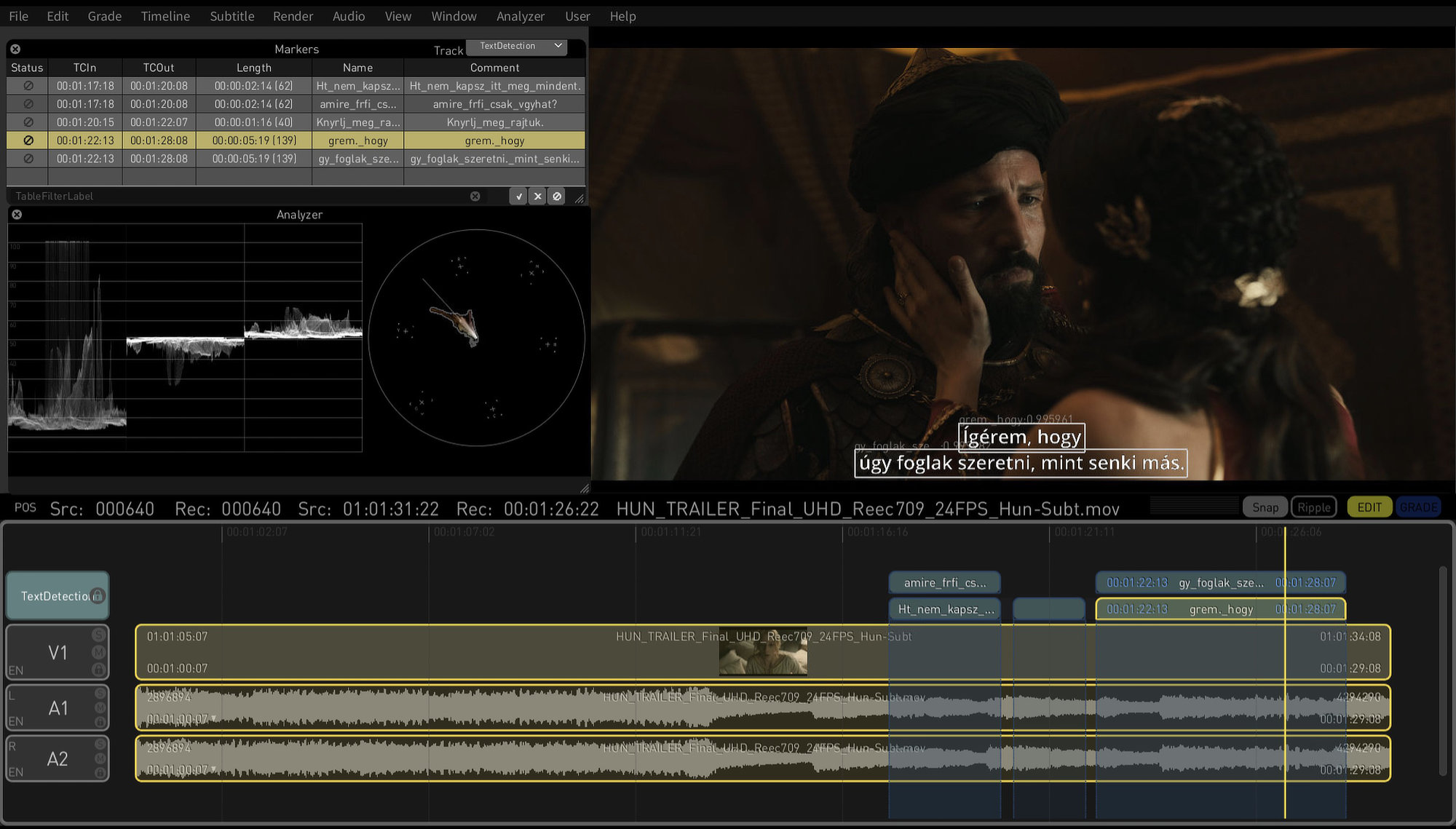
Quality Control (QC) is the final, critical gatekeeper before content distribution. Colorfront has introduced several intelligent features to automate tedious validation tasks:
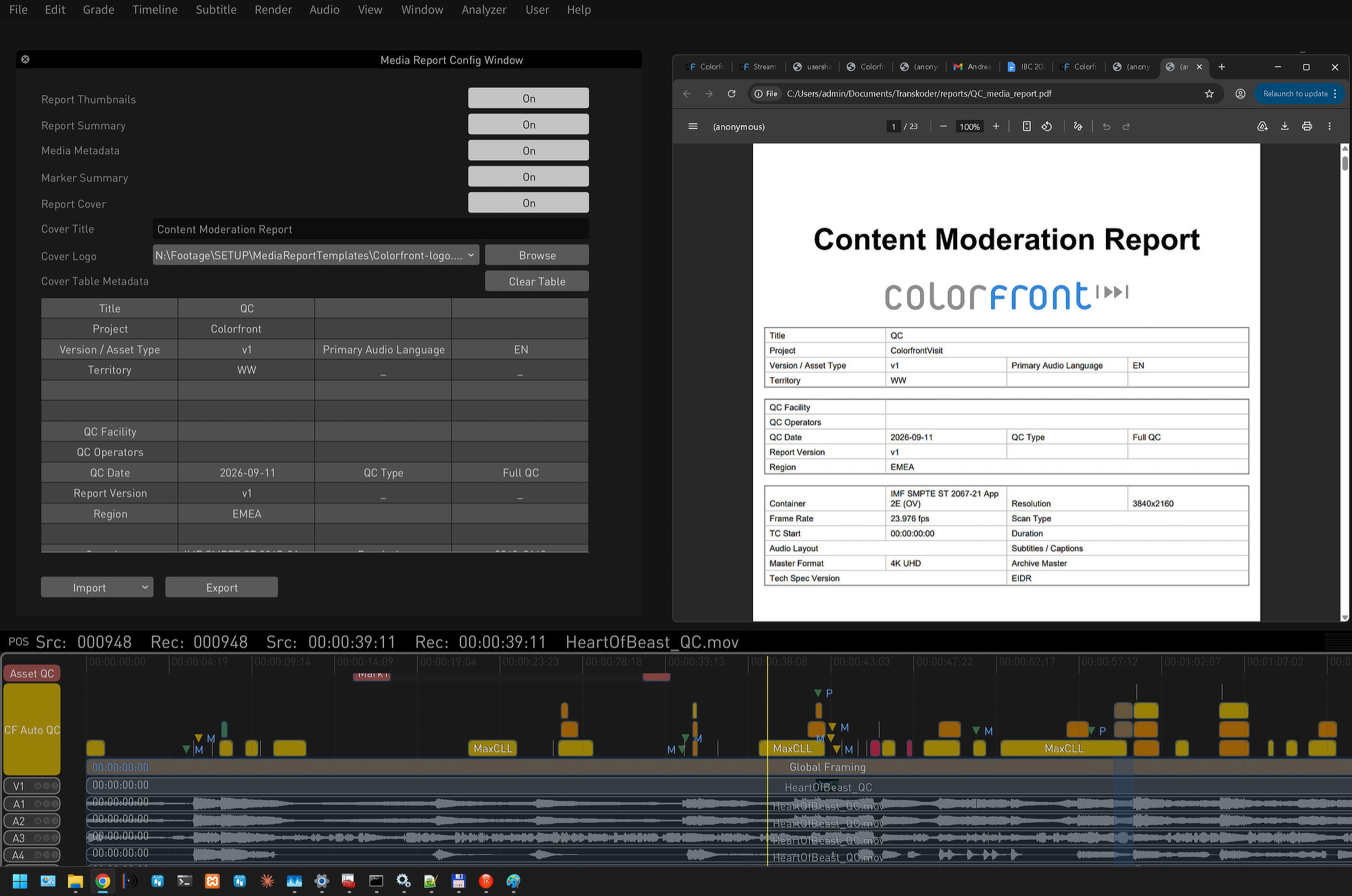
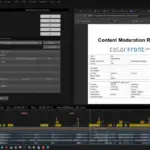
- Textless Element Alignment: The software automatically detects burnt-in captions and text within a master, matches these segments with their corresponding textless elements, and validates their temporal alignment. Discrepancies as small as a single frame are flagged instantly, preventing costly distribution errors.
- Parallelized Loudness Analysis: Rather than measuring audio compliance sequentially for different delivery targets, Colorfront’s engine runs multiple measurement passes in parallel. This allows an operator to verify compliance with multiple international broadcast and streaming standards in a single processing pass.
- Custom Marker Schemas: Facilities can define bespoke metadata vocabularies and taxonomies (e.g., severity levels, required remediation actions, and assignee fields) to ensure QC reports align perfectly with internal or client-specific databases.
- Legacy Archival Up-Mapping: To bridge the gap between historical assets and modern HDR pipelines, Colorfront introduced Cadence Detect. This tool automatically scans timelines to locate interlaced footage, pull-down cadences, or duplicated/retimed frames. Once mapped, the material can be treated with Colorfront’s high-quality de-interlacing, new NVIDIA-accelerated noise reduction, and Super Resolution up-mapping to seamlessly integrate legacy SDR content into premium HDR deliverables.
Distributed Cloud Workflows: Cloud DCI Key Management
Securing high-value intellectual property in the cloud has historically been a complex cryptographic challenge. In traditional on-premises environments, Digital Cinema Package (DCP) encryption relies on machine-bound Digital Cinema Initiative (DCI) certificates. Translating this model to transient, virtualized cloud instances often creates severe operational bottlenecks.
+-------------------------------------------------------------------------------+
|                             AWS CLOUD BOUNDARY                                |
|                                                                               |
|   +-----------------------+              +---------------------------------+  |
|   |  Amazon S3 Storage    |              |  AWS Key Management Service     |  |
|   |  (Encrypted Assets)   |              |  (DCI Certificate Group Keys)   |  |
|   +-----------------------+              +---------------------------------+  |
|               |                                           |                   |
|               | (Secure Read)                             | (Crypto Handshake)|
|               v                                           v                   |
|   +------------------------------------------------------------------------+  |
|   |                  Colorfront DataConnect Cloud Workgroup                |  |
|   |  [Transkoder Instance 1]  [Transkoder Instance 2]  [Transkoder N...]   |  |
|   +------------------------------------------------------------------------+  |
|                                       |                                       |
+---------------------------------------|---------------------------------------+
                                        v
                        [Encrypted DCPs & KDMs at Scale]
To address this, Transkoder 2026 introduces Cloud DCI Key Management on Amazon Web Services (AWS). Powered by Colorfront DataConnect, this architecture manages security through centralized DCI certificate groups. The critical private keys never leave the secure envelope of the AWS Key Management Service (KMS).
As a result, an auto-scaling group of virtual Transkoder instances can securely access and decrypt DCPs directly from Amazon S3, perform necessary processing, and write out newly encrypted DCPs and Key Delivery Messages (KDMs) at cloud scale without compromising cryptographic security.
Bushido: The Central Nervous System for Enterprise Orchestration
For enterprise facilities managing highly complex, multi-site, and hybrid-cloud media pipelines, Colorfront presented Bushido, its web-based management platform currently in closed beta.
Bushido serves as a centralized control plane. Through a modern web interface, operations managers can:
- Monitor and orchestrate automated media pipelines.
- Review, edit, and validate metadata generated by automated AI processes.
- Interrogate visual overviews of Look-Up Tables (LUTs), Input Device Transforms (IDTs), framing decisions, and color-space conversions.
- Take remote control of On-Set Dailies and Transkoder engines, complete with low-latency, high-fidelity streaming output for real-time remote review and approval.
Supporting Context & Industry Metrics
The innovations introduced by Colorfront address critical economic and operational pressures across the media and entertainment sector.
The Cost of Versioning and QC Failures
In global content distribution, a single feature film may require hundreds of unique deliverables to accommodate localized audio, varying censorship standards, subtitle positioning, and unique dynamic range profiles (HDR10, Dolby Vision, SDR).
Manual version comparison is not only slow but highly prone to human fatigue. Industry estimates suggest that manual visual QC of a localized master can take between 1.5 to 3 times the runtime of the content per pass. By automating the identification of timeline discrepancies down to the frame level, Colorfront’s timeline comparison tool reduces the initial version-reconciliation pass from hours to mere seconds.
| Metric / Operational Task | Traditional Manual Process | Colorfront 2026 Automated Engine | Efficiency Gain |
|---|---|---|---|
| Feature-Length Version Reconciliation | 2 – 4 Hours | < 10 Seconds | ~99% Time Reduction |
| Multi-Standard Loudness Compliance | Sequential passes (1x per target) | Single parallelized pass | Up to 75% Time Saved |
| Text-to-Textless Alignment Verification | Manual frame-by-frame scrubbing | Automated single-frame discrepancy check | Near-Instantaneous |
| Cloud DCP Key Provisioning | Manual node-by-node cert mapping | Dynamic AWS KMS Certificate Grouping | Infinite scalability without manual intervention |
The Cloud Transition and Security Compliance
According to recent industry surveys, over 70% of post-production facilities have migrated at least a portion of their rendering and mastering pipelines to public cloud infrastructure. However, the strict security requirements of the Content Delivery & Security Association (CDSA) and major Hollywood studios have historically limited the virtualization of DCP creation.
By leveraging AWS Key Management Service (KMS) to keep private keys securely containerized, Colorfront’s Cloud DCI Key Management provides a compliant path forward. This allows facilities to scale their render farms dynamically up or down based on project demand, eliminating idle on-premises hardware costs while maintaining studio-grade security.
Official Statements
The driving force behind these technical advancements is a commitment to flexibility, integration, and developer enablement. During the IBC 2026 showcase, Mark Jaszberenyi, CEO of Colorfront, emphasized how the definition of a media pipeline has evolved:
"Versatility is the new standard in media workflows. The same Colorfront engine now powers an operator doing high-touch mastering, an automated QC pipeline running at scale, and an AI agent that configures analysis from a written spec. With modern AI coding assistants, building a custom pipeline no longer requires specialized engineering."
Jaszberenyi’s statement highlights a critical industry trend: the democratization of system integration. By designing an API-first engine, Colorfront is shifting the role of the post-production engineer from a builder of proprietary, brittle scripts to an orchestrator of highly flexible, intelligent systems.
Future Outlook: The Autonomous Post-Production Pipeline
The technologies demonstrated by Colorfront at IBC 2026 point toward a future of increasingly autonomous, self-healing, and self-configuring media pipelines.
As AI agents mature, we can envision a post-production environment where manual intervention is reserved exclusively for creative decision-making. Technical tasks—such as standardizing incoming source files, correcting cadence errors, aligning audio tracks, verifying subtitle timing, and mastering for next-generation formats like Dolby Vision 2—will be handled by silent, background processes.
[Incoming Legacy Master]
           |
           v
[Cadence Detect & AI Super Resolution]
           |
           v
[Auto-Comparison with Localized Scripts]
           |
           v
[Parallel QC & Loudness Analysis]
           |
           v
[Cloud DCI Encrypted Packaging] ---> [Global Distribution]
By providing the underlying engine, the API framework, and the centralized control interfaces (such as Bushido) required to manage this level of automation, Colorfront is not merely updating its software; it is laying the infrastructure for the next decade of digital cinema and streaming media workflows. As these tools move from exhibition stages to active deployments throughout 2026, the industry will watch closely to see how these efficiencies redefine the economics of global content delivery.