







Executive Overview
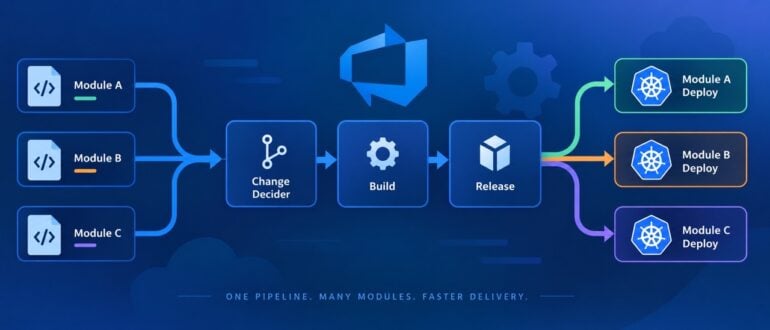
In the fast-paced ecosystem of enterprise software engineering, technical debt rarely announces itself loudly. Instead, it accumulates quietly in the darkest corners of the infrastructure—often buried deep within the configuration files of CI/CD pipelines. For many engineering organizations leveraging Azure DevOps, pipeline proliferation has become a silent productivity killer. As repositories scale and microservice architectures expand, teams routinely duplicate build and release definitions for nearly identical modules. This copy-paste engineering approach creates brittle delivery chains that demand high maintenance, introduce synchronization errors, and slow down time-to-market.
This technical deep-dive examines a recent architectural refactoring effort within a complex Azure DevOps environment. Faced with a delivery chain bogged down by redundant build and release pipelines for modular components housed within a single repository, an engineering lead successfully consolidated the architecture. By transitioning from a fragmented, multi-pipeline model to a centralized, parameter-driven framework, the team slashed maintenance overhead, standardized deployment mechanics, and established a scalable blueprint for onboarding future modules.
The core achievement of this refactoring lies in its elegance: replacing an exponential growth curve of pipeline definitions with a single generic build engine, a dynamic change decider, and modular release stages. This report provides an exhaustive, step-by-step breakdown of the architectural flaws in the legacy setup, the strategic mechanics of the consolidation, the technical hurdles encountered during implementation, and the broader implications for enterprise DevOps strategy.
Detailed Chronology
The Architectural Baseline: Identifying the Redundancy
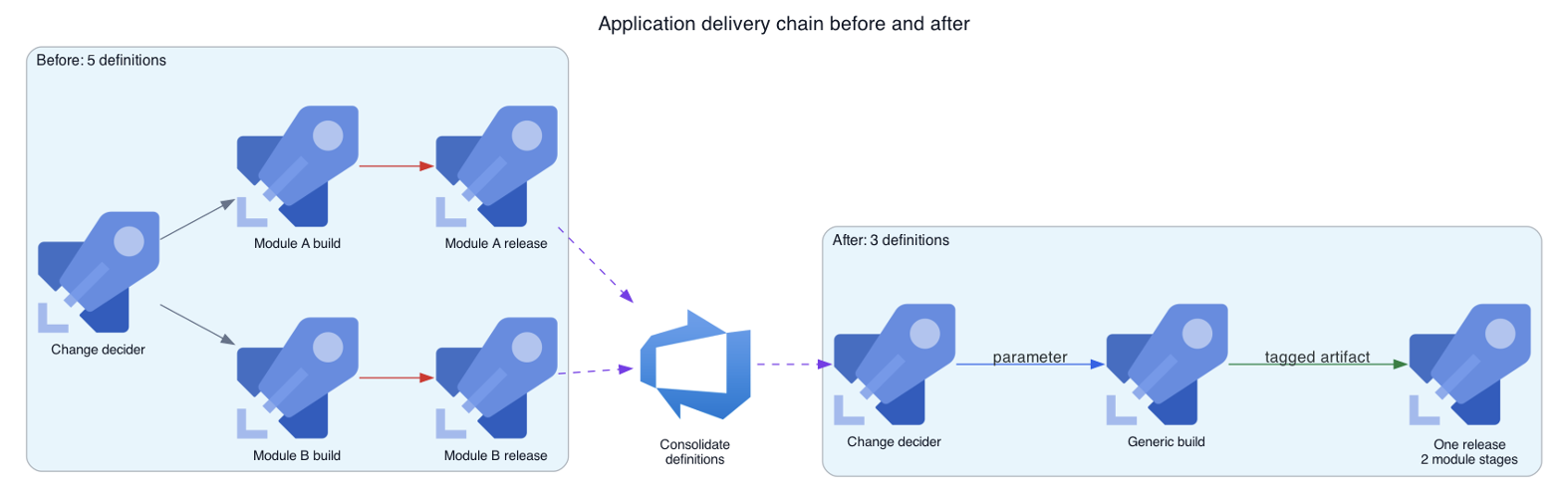
The investigation began within a primary code repository containing multiple functional modules. Initially, two core modules relied on near-identical Azure DevOps build and release definitions. As business requirements evolved and discussions turned toward introducing a third module, the structural deficiencies of the legacy setup became glaringly apparent: adding a third module would have required establishing yet another pair of distinct build and release definitions.
In its unoptimized state, the delivery chain consisted of five distinct definitions:
- One change decider (dispatcher)
- Two separate build definitions (one for each module)
- Two separate release definitions (one for each module)
(Note: This count purposefully excludes package creation and pull request validation workflows, which operated independently.)
The operational friction caused by this setup was immense. The legacy builds duplicated the exact same container image and Helm chart tasks, differing only in the specific module values passed to them. Similarly, the legacy releases repeated identical deployment tasks, differing only in the assigned variable groups. Consequently, any global update to a shared build task—such as patching a security vulnerability in the compilation script—forced engineers to manually replicate those exact edits across every single build definition. A parallel maintenance burden existed for deployment workflows.
To break this cycle of duplication, the engineering lead set out to consolidate the entire workflow into a streamlined architecture comprising:
- One intelligent change decider.
- One generic, reusable build definition.
- One comprehensive release definition featuring an isolated deployment stage for each onboarded module.
To bring order to the naming conventions and prevent future confusion, the shared definitions were systematically renamed using a standardized nomenclature across products, services, scopes, and kinds:
$$text.text.text.text$$
Phase 1: The Intelligent Decider and Parameter Passing
The first step in decoupling module-specific logic from the pipeline definitions involved redefining the role of the change decider. In the new architecture, the decider serves as the sole entry point possessing a continuous integration (CI) trigger.
When code changes are pushed, the decider executes a path-checking algorithm to identify which specific parts of the repository have been modified. Rather than executing the build directly, it dynamically queues the single generic build pipeline, passing the affected module and service names as runtime parameters. Furthermore, the decider handles the responsibility of fanning out shared build-input changes to every registered module pair simultaneously. To assist developers during troubleshooting, an optional module parameter was introduced to limit manual diagnostic runs to single components.
A critical engineering nuance discovered during this phase involved branch tracking and commit pinning. To maintain strict provenance, the decider explicitly pins each downstream child run to the precise branch and commit it originally inspected. This prevents race conditions where a subsequent push could alter the context of an in-flight build.
Because protected branches typically receive updates via merge requests, the decider script was engineered to compare the current commit with its first parent. (For repositories configured to accept multi-commit direct pushes, the architecture alternatively compares the before and after commit IDs extracted directly from the build payload event payload).
Executing this via the Azure DevOps Build REST API required careful handling of JSON payload formatting. The API expects the parameters payload field as a JSON-encoded string. Below is the refined implementation demonstrating the routing fields and the necessary quote-escaping to preserve internal string integrity:
BODY=""definition":"id":$BUILD_ID,
"sourceBranch":"$(Build.SourceBranch)",
"sourceVersion":"$(Build.SourceVersion)",
"parameters":"\"service\":\"$SERVICE\",\"module\":\"$MODULE\"""
A subtle pitfall encountered during this integration involved Azure DevOps queue-time variables. The destination variables receiving these dynamic runtime values must explicitly retain the "Settable at queue time" configuration flag, which is stored internally within the pipeline schema as allowOverride: true. If a pipeline definition is cloned during setup, this flag is frequently stripped out by default. Without it, the decider successfully identifies the change and attempts to pass the variables, only for the downstream build to fail abruptly due to unexpected argument rejection.
Phase 2: The Generic Build and Artifact Tagging
With the routing logic established, the focus shifted to the build phase. The generic build definition was stripped of any continuous integration triggers, transforming it into an on-demand worker. It accepts the service and module parameters passed by the decider, dynamically derives the appropriate container image and Helm chart names, packages the application, and publishes the resulting artifact.
Crucially, the generic build stamps every run with a dynamic routing tag corresponding to the module being processed (e.g., module-b).
During initial testing, the engineering lead attempted to utilize a structured key-value tag format:
$$textmodule:module-b$$
However, Azure DevOps rejected the colon character within the request path, forcing a pivot to a clean, hyphenated format (module-b), which integrated seamlessly with the platform’s filtering engine.
Another architectural decision made during this phase was maintaining a strict boundary between the change decider and the build execution engine. Early experimental designs that attempted to combine dispatcher and builder logic within a single workflow resulted in unintended side effects: dispatcher runs that contained no actual code changes or artifacts were still erroneously triggering downstream releases. By cleanly separating the decider from the generic build, the team ensured a strict contract: every successful generic build run was guaranteed to produce a valid artifact ready for release.
Phase 3: Stage Conditions and Release Routing
The final leg of the delivery pipeline involved routing the artifacts through the release phase. Azure DevOps provides native support for tag filters at two distinct levels: the continuous deployment (CD) trigger and individual release stages. Understanding the functional difference between these two filters is vital for managing deployment flow.
- The Definition Trigger Filter: This determines whether Azure DevOps should instantiate a release record at all upon completion of a build. For example, placing a
module-afilter at the definition level ensures that a successful build formodule-bwill not spawn any release workflow. The build simply finishes with a green status, and the delivery chain gracefully halts without generating unnecessary release audit logs. - The Stage Artifact Condition: This dictates which specific deployment stage executes after a release has been successfully created.
The logical routing structure was mapped as follows:
Release trigger
    tag filter: none

Module A stage
    artifact condition: module-a

Module B stage
    artifact condition: module-b
Under this model, every qualifying completion of the generic build on the designated branch creates a single release instance. The build’s execution tag acts as a switch, activating the matching module stage while bypassing the non-matching stages. Crucially, for any non-matching stage, Azure DevOps evaluates the condition and reports Artifact conditions not met. In this architecture, this status is treated as an expected, benign skip rather than a deployment failure.
However, this reporting mechanism introduced a diagnostic challenge: Azure DevOps displays the exact same status message (Artifact conditions not met) for an intentionally skipped stage as it does for a malformed, broken stage condition. Consequently, reviewing the run summary alone is insufficient to prove correct routing behavior.
Compounding this ambiguity is a UI quirk regarding branch specifications: the Azure DevOps web interface displays a truncated branch name to users, whereas the underlying stored condition evaluates against the full reference path (refs/heads/...). To verify absolute correctness during validation, the engineering lead had to inspect the raw stored conditions directly via the platform’s configuration payloads.
Supporting Context & Metrics
To empirically validate the resilience and safety of the newly consolidated architecture, the engineering team executed a series of controlled experiments in a non-production environment.
Controlled Testing and Verification
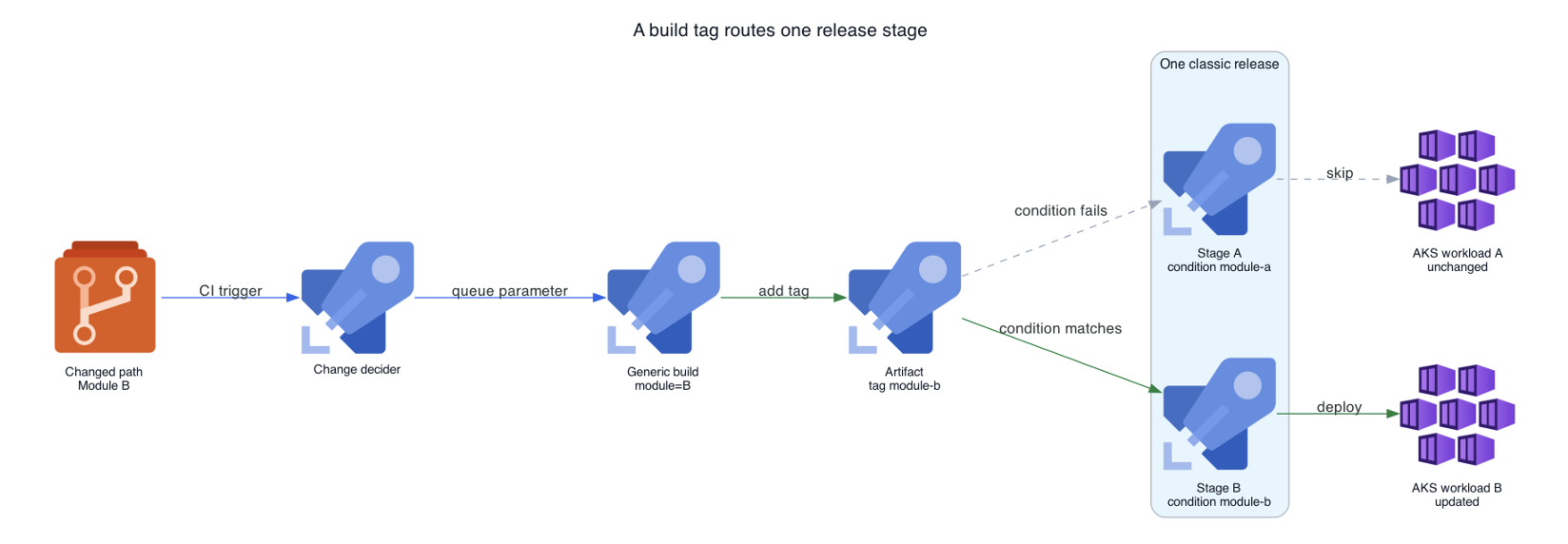
Using Module B as the test subject, engineers injected a simulated code modification. The sequence of events unfolded as anticipated:
- The change decider detected the file path modification associated with Module B.
- The decider successfully invoked the generic build pipeline via the REST API, injecting the
Module Bruntime parameters. - The generic build executed successfully, generated the container artifacts, and applied the
module-bexecution tag. - Azure DevOps instantiated a single release pipeline.
- The
Module Bdeployment stage evaluated its artifact conditions, verified the match, and executed successfully, rolling out the update to the target environment. - Concurrently, the
Module Adeployment stage correctly evaluated its conditions, determined an mismatch, and gracefully skipped execution with the statusArtifact conditions not met.
To ensure that the isolation was absolute, engineers inspected the state of Module A within the target Azure Kubernetes Service (AKS) cluster, confirming that its container images and configurations remained entirely untouched.
Refactoring Artifacts and Technical Debt Cleanup
While the consolidation successfully eliminated duplicate pipeline definitions, the process of refactoring legacy enterprise systems always leaves operational footprints that require careful management.
- Renaming and Stale Metadata: When definitions were renamed to adhere to the standardized service naming convention (
<Product>.<Service>.<Scope>.<Kind>), Azure DevOps preserved their internal unique IDs, ensuring that existing execution references remained functional. However, downstream dependencies—such as seven build validation policies mapped to the repositories—continued displaying the old pipeline names in their UI labels, requiring manual updates. Furthermore, historical snapshots of release definitions taken a week post-migration still referenced the former build names within their internal artifact metadata. While releases continued to bind correctly via immutable IDs, the administrative interface presented stale text labels. - Orphaned Dependencies and Deletion Locks: Attempting to delete legacy, redundant build definitions immediately triggered HTTP 409 Conflict errors from the Azure DevOps API. This occurred because historical release definitions still retained execution logs and run histories tied to those legacy builds. To resolve this cleanly without losing compliance audit trails, the team disabled the triggers on the legacy definitions, purged all remaining active references, and formally archived them rather than attempting hard deletions.
Official Statements
Reflecting on the cultural and architectural impact of this refactoring initiative, internal engineering leadership emphasized the shift from reactive maintenance to proactive platform engineering.
"When your CI/CD configuration files begin to outgrow your application source code in terms of volume and complexity, you have ceased doing software engineering and started doing configuration archaeology," noted the lead DevOps architect behind the consolidation effort.
"By embracing parameterization and treating our pipelines as first-class software artifacts rather than disposable scripts, we have not only eliminated redundant toil but fundamentally shortened our feedback loops. Onboarding a new module no longer requires architectural redesigns or copy-pasting brittle YAML files—it requires simply mapping an entry point and provisioning a stage."
Industry analysts observing the trend toward pipeline consolidation point out that enterprise CI/CD sprawl is one of the most under-reported sources of developer burnout. As organizations rush to adopt microservices, they frequently replicate infrastructure-as-code patterns without establishing robust abstraction layers. Initiatives like the one detailed here demonstrate that treating pipelines with the same software design principles applied to application code—DRY (Don’t Repeat Yourself) principles, modularization, and clear separation of concerns—yields immediate dividends in operational velocity and system reliability.
Future Outlook
The success of this refactoring effort has established a definitive organizational standard for modular delivery chains within the enterprise. Looking forward, the engineering team has outlined a roadmap to build upon this foundational success and further bulletproof the deployment ecosystem.
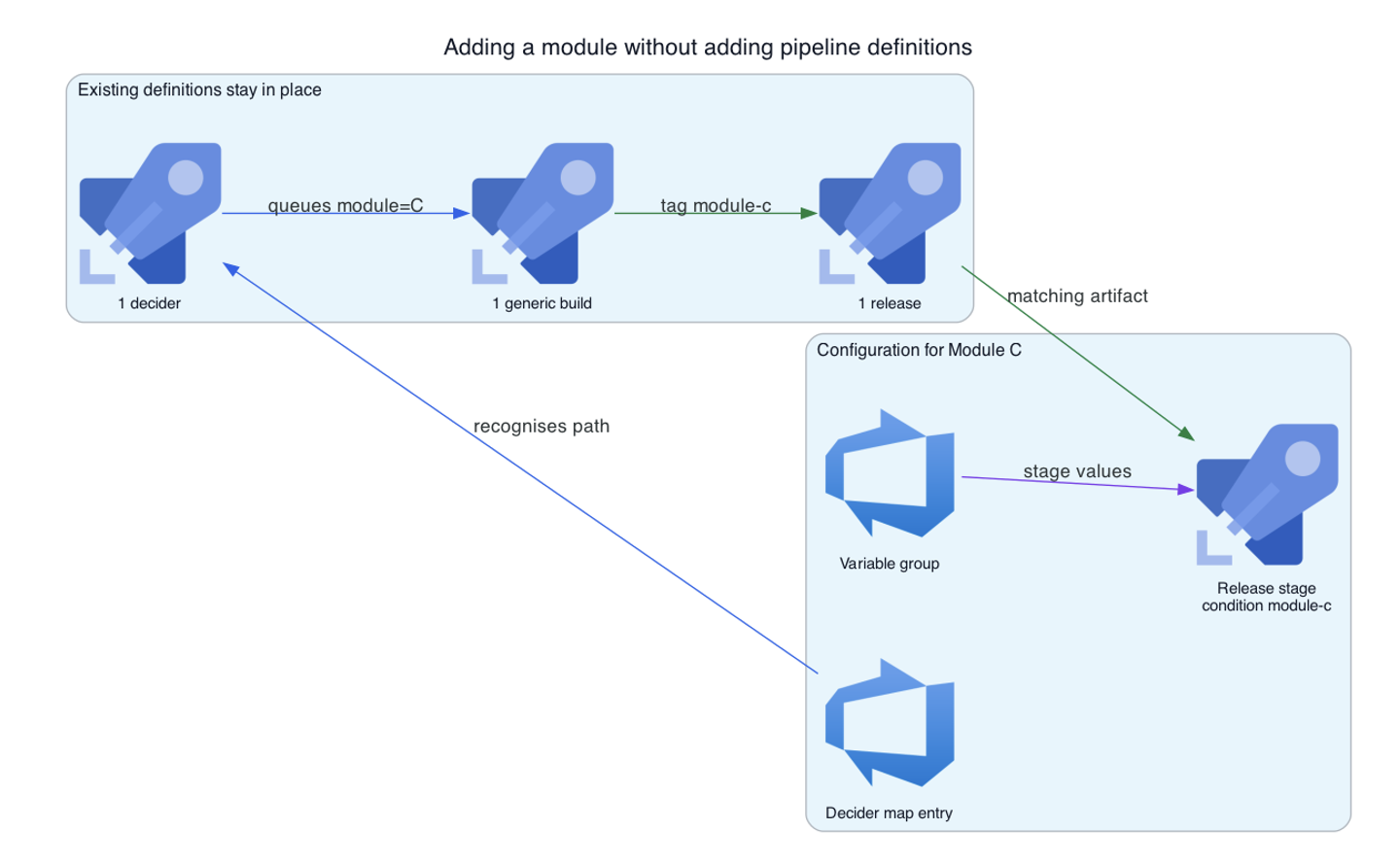
Scaling the Pattern to Additional Modules
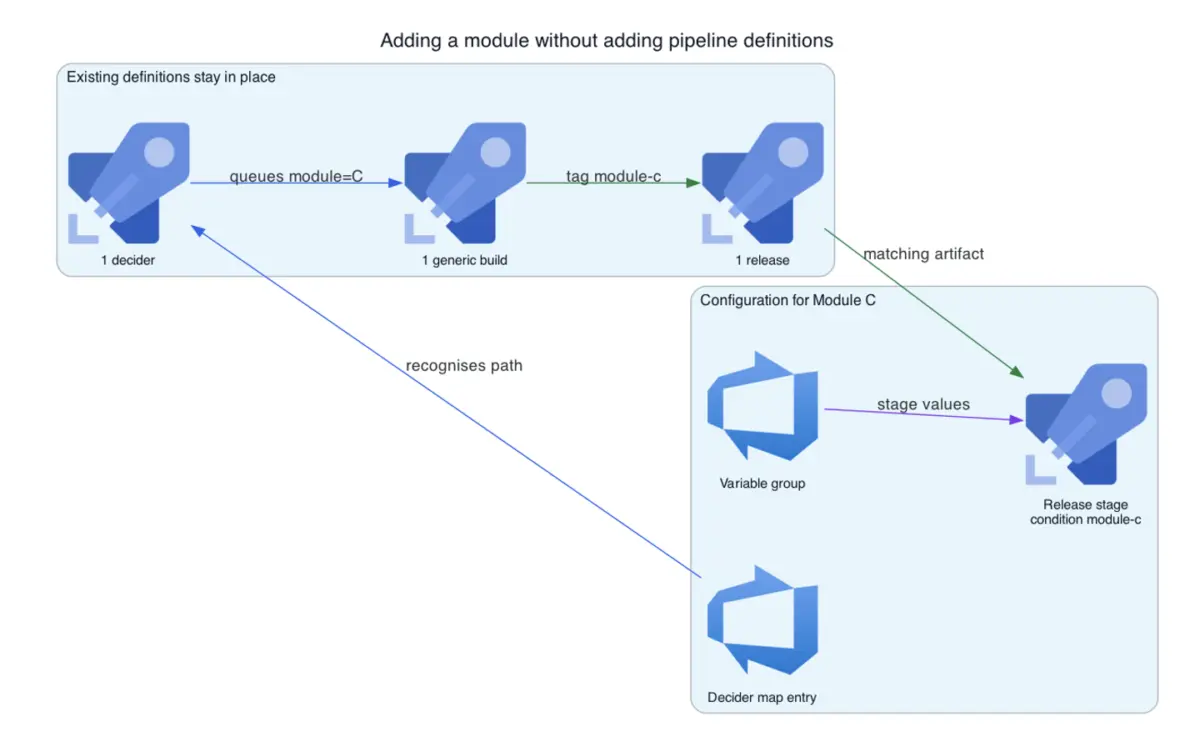
The immediate benefit of the new architecture is best illustrated by the friction coefficient of future growth. Under the legacy model, introducing an additional module would have demanded the creation of two entirely new pipeline definitions (one build, one release), accompanied by duplicated task blocks, separate variable groups, and continuous maintenance overhead.
Under the newly established parameter-driven framework, onboarding a brand-new module requires exactly three lightweight configuration items:
- One entry map update within the intelligent change decider.
- One dedicated variable group for environment-specific secrets and configurations.
- One isolated deployment stage appended to the unified release definition.
Because the generic build automatically derives its execution tags from runtime queue parameters, the engineering team is completely insulated from needing to write, test, or maintain module-specific build or release pipelines ever again.
(Note: While the CI/CD plumbing is now entirely abstracted and centralized, application-level prerequisites such as code structuring, Dockerfile authoring, database migrations, message broker vhosts, and Kubernetes namespace provisioning naturally remain part of individual module initialization.)
Limitations and Boundaries
Platform engineers must remain pragmatic regarding architectural patterns; no single framework is a universal panacea. The parameter-tagged consolidation pattern detailed in this report is ideally suited for modules that share a common repository, artifact type, core compilation process, and baseline deployment mechanics.
Conversely, modules that require fundamentally divergent compilation toolchains, specialized security sign-offs, or entirely different compliance approval workflows will continue to warrant their own dedicated delivery chains.
Conclusion
The evolution from pipeline proliferation to unified parameterization represents a maturity milestone in modern DevOps engineering. By diagnosing the hidden costs of code duplication in CI/CD configurations and leveraging Azure DevOps’ native parameter passing and stage conditioning capabilities, the engineering team transformed a chaotic, maintenance-heavy delivery chain into a streamlined, elegant engine of software delivery. As organizations continue to scale their cloud-native estates, adopting these disciplined, DRY architectural patterns will be essential to ensuring that infrastructure supports developer velocity rather than encumbering it.