










Executive Overview
Wizards of the Coast is preparing to crack the foundations of its premier trading card game wide open. On October 2, the publisher will launch "Reality Fracture," a mainline expansion for Magic: The Gathering that promises to upend decades of established lore, mechanical conventions, and character alignments. For years, the community has flooded design forums and social media with a singular, persistent request: a dedicated "what if" expansion that explores alternative timelines, twisted destinies, and divergent paths for iconic characters. With "Reality Fracture," that wish is finally being granted.
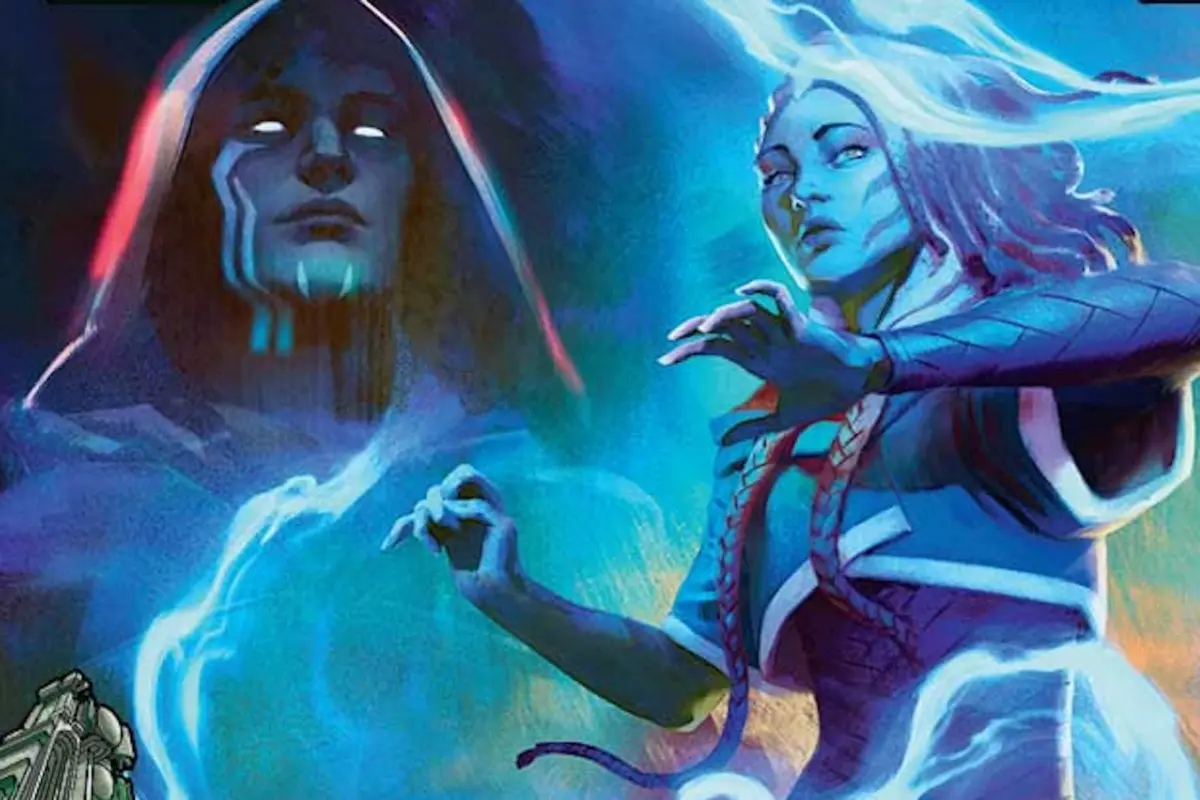
At the center of this mind-bending narrative is the Echoverse—an artificial Multiverse meticulously engineered by the enigmatic and controversial telepath, Jace Beleren. Serving as Jace’s magnum opus, the Echoverse acts as a lens of infinite alterations, rewriting familiar faces into radically different roles, shifting beloved legends into entirely new mana colors, and permanently altering the stakes of the ongoing Magic saga.
Beyond its seismic narrative implications, the set introduces unprecedented card designs—including the groundbreaking "empower Jace" mechanic that produces common planeswalker tokens—and focuses its primary action on Hexhaven, a reimagined, ally-colored take on the academy-focused plane of Strixhaven. In an exclusive interview with Variety, head designer Mark Rosewater and worldbuilding design manager Meris Mullaley detailed the grueling creative process, the lessons learned from past experimental sets like Planar Chaos, and the tragic, definitive conclusion awaiting Jace Beleren in the set’s accompanying fiction.
Detailed Chronology: The Road to the Echoverse
The genesis of "Reality Fracture" was not a sudden brainstorm, but the culmination of years of fan demand colliding with a narrative breakthrough. According to Mark Rosewater, the concept of a dedicated alternate-reality set has been on his radar for a long time. However, finding the right narrative vehicle to justify such a sweeping mechanical and creative shift proved elusive.

"Doing another ‘what if’ set is a frequent player request, so it was something I’ve been on the lookout to do for years," Rosewater explains. "What finally made it happen was the story. Once I heard about the Echoverse, I was like, ‘Okay, we have our "what if" set.’"
Narrowing the Scope: From Mirrodin Pure to Hexhaven
During the early phases of conceptualization, Wizards of the Coast intended to scatter the set’s narrative across numerous planes within the Echoverse. However, recent lessons learned from expansive multi-plane releases forced a strategic pivot.
"After getting feedback on March of the Machine that the story spread around too much, we decided to center it on just one plane," Rosewater notes. This laser-focused approach allowed the design team to craft a much more intimate, character-driven experience.
Initially, the development team gravitated toward Mirrodin Pure—an alternate take on the iconic metal world of Mirrodin that had been teased years prior but never fully realized. Ultimately, the team shifted gears to Hexhaven, an alternative version of Strixhaven. This choice provided a clean narrative avenue to deliver a long-requested feature: shifting Strixhaven’s traditional enemy-colored colleges into a new set of ally-colored academic factions.

Meris Mullaley emphasizes the strategic value of choosing Hexhaven as the main stage. "Hexhaven offered newer Magic players a recent setting they would be familiar with, with Secrets of Strixhaven being the preceding Magic multiverse set," she says. "Mirrodin has a deep history and is loved by fans and that inspired our creative choices for legend pairs like Karn."
Supporting Context & Metrics: Mechanics, Design Guardrails, and Lore
Building a "what if" expansion without alienating the player base requires a delicate balance of nostalgic nods and strict design guardrails. Magic: The Gathering has attempted alternate-reality territory only once before with 2007’s Planar Chaos, a set infamous for producing notable "color pie breaks"—instances where cards performed actions contrary to their designated color philosophy, creating long-term communication headaches for the rules team.
Respecting the Color Pie
To prevent history from repeating itself, Rosewater instituted an absolute rule during the conceptualization of "Reality Fracture."
"The big lesson of Planar Chaos was that we shouldn’t mess around with the color pie," Rosewater states firmly. "It’s hard to communicate that a color doesn’t do something when someone can just point to a printed card and go, ‘yes you do.’ So when I was first asked about Reality Fracture, I said I’m excited to do a what if set, but messing with the color pie is off the table. If a character shows up in a new color, we have to represent them with the mechanical tools of that color."

Achieving this required rigorous cross-departmental research. Mullaley points out that the creative and design teams held extensive debates regarding character psychology.
"Research was a huge part of ‘Reality Fracture,’" Mullaley says. "The Echoed Pairs represent a kaleidoscope of divergent paths, some inspired by top-down character or plane ideas, other driven by mechanical hooks. We talked at length at how legendary characters would think, behave, or appear if they embodied a different mana color."
Innovating With "Empower Jace"
Mechanically, "Reality Fracture" introduces a landmark addition to the game’s vocabulary: empower Jace. Inspired by the classic War of the Spark mechanic "amass," empower Jace puts a brand-new spin on token generation. Instead of spawning creature tokens, the mechanic generates planeswalker tokens.
"We’ve never made common planeswalkers, so having common cards create a planeswalker token was dipping into space we’d never previously explored," Rosewater notes. The mechanic proved to be an immediate hit internally, sailing through playtests without ever facing the chopping block.
The Demise of Jace Beleren
For lore enthusiasts, the release of "Reality Fracture" marks one of the most tragic and consequential turning points in modern Magic history. The flavor text of the card Entrust the Spark heavily hints at the fate of the multiverse’s most prominent telepath, a revelation Mullaley formally confirms.

"In the conclusion of the Reality Fracture web fiction, Jace dies by Vraska’s hand," Mullaley reveals. "His mind and body served as a physical tether for the Echoverse reality and the only way to stop the Echoverse from overwriting the original Multiverse was to break that connection. His spark leaves his body after he dies and seeks Tam out, which was something Jace had planned."
Official Statements: Insights from the Creators
The collaborative synergy between creative worldbuilding and mechanical design was crucial in bringing the Echoverse to life. Both Mark Rosewater and Meris Mullaley emphasize that "Reality Fracture" represents a high-water mark for fan-service executed through disciplined narrative design.
- On Fan Expectations: "Doing another ‘what if’ set is a frequent player request, so it was something I’ve been on the lookout to do for years. What finally made it happen was the story." — Mark Rosewater, Head Designer
- On Character Divergence: "We talked at length at how legendary characters would think, behave, or appear if they embodied a different mana color." — Meris Mullaley, Worldbuilding Design Manager
- On Jace’s Ultimate Sacrifice: "His mind and body served as a physical tether for the Echoverse reality and the only way to stop the Echoverse from overwriting the original Multiverse was to break that connection." — Meris Mullaley
Future Outlook: Will the Echoverse Return?
As the October 2 release date approaches, anticipation among competitive players and casual Commander fans alike continues to skyrocket. With warped legends, color-shifted icons, and common planeswalker tokens entering the ecosystem, the metagame is poised for a significant shake-up.
Naturally, the community is already looking past October to ask whether the Echoverse, Hexhaven, and its ally-colored colleges will become permanent fixtures of the Magic universe, much like the clans of Tarkir that eventually returned years after their initial disappearance.

When questioned about the future longevity of these alternate settings, Rosewater maintains a pragmatic stance rooted in R&D tradition: "We can’t speak to the future. R&D does have a saying though, ‘Success breeds repetition.’"
Mullaley offers a more poetic perspective on how contemporary worldbuilding plants seeds for future storytelling generations. "Emrakul was trapped in the moon of Innistrad during the events of Eldritch Moon," she muses. "Sometimes creative work is throwing a pass that your future self or your future peers may catch and run with years down the road."
Whether "Reality Fracture" remains a one-time anomaly or sparks a new era of alternate-timeline explorations, one thing is certain: the Multiverse will never look the same again.