








Executive Overview
As the video game industry continues to blur the lines between cinematic storytelling and interactive entertainment, publishers are constantly searching for innovative ways to onboard players into complex, long-running lore. Few franchises possess the rich, decades-spanning geopolitical mythology of Bandai Namco Entertainment’s premier aerial combat series, Ace Combat. With the impending release of Ace Combat 8: Wings of Theve, the studio has chosen an unprecedented promotional and narrative strategy: a high-end, four-part live-action prequel project titled Hour Zero.
Launching its inaugural episode, Hour Zero represents a significant financial and creative departure for Bandai Namco. Rather than relying solely on in-engine trailers or traditional animated cinematics, the publisher has assembled a Hollywood-caliber cast—featuring Josh Holloway, Brandon Routh, and Tamlyn Tomita—to anchor a grounded, reverse-chronology dramatic narrative. This mini-series serves as a narrative bridge, illustrating the devastating opening days of the Republic of Sotoa’s invasion of the Federation of Central Usea.
For veteran actor Josh Holloway, best known for his iconic roles in Lost and Yellowstone, crossing over into the video game space required overcoming initial skepticism regarding the medium’s production values. However, upon reviewing the rigorous scripts, physical set designs, and technical advisor frameworks put in place by Bandai Namco, Holloway quickly realized that Hour Zero was operating on a cinematic scale. Set to release on October 2 across PlayStation 5, Xbox Series X/S, and PC, Ace Combat 8: Wings of Theve promises a campaign mode deeply enriched by the emotional stakes established in these live-action vignettes. This report explores the development, creative challenges, and industry implications of Bandai Namco’s bold cross-media gamble.
Detailed Chronology of the ‘Hour Zero’ Prequel Project
The development of Hour Zero represents a meticulously planned logistical operation that ran parallel to the later stages of Ace Combat 8: Wings of Theve’s game development cycle. Recognizing that the overarching narrative of the eighth installment dives headfirst into complex conspiracies, political deception, and the fog of war, the creative team at Bandai Namco sought a method to humanize the global conflict before players ever touched a controller.
The Anatomy of a Four-Part Release Schedule
Rather than dumping the entire live-action narrative online at once, Bandai Namco devised a serialized rollout designed to build sustained momentum leading up to the game’s October 2 launch:
- Episode 1 Debut: Launched on Tuesday, introducing audiences to the reverse-chronology storytelling structure and establishing the immediate psychological fallout of the Sotoa invasion.
- Episode 2: Scheduled for release on September 17, diving deeper into the divergent paths of the three central protagonists.
- Episode 3: Slated for September 23, narrowing the temporal gap closer to the inciting incident of the war.
- Episode 4: Set to drop on September 29, serving as the direct narrative springboard into the opening missions of Ace Combat 8: Wings of Theve.
A Reverse-Chronology Narrative Framework
What sets Hour Zero apart from typical video game marketing tie-ins is its structural boldness. The project is told entirely in reverse, counting down the days, hours, and minutes to the exact moment when the fragile peace between the Federation of Central Usea and the Republic of Sotoa shattered. By anchoring the narrative in the domestic and professional lives of its three leads—a stranded pilot, a compassionate doctor, and a silenced news anchor—the project trades high-altitude dogfights for intimate, high-stakes human drama.
This structural choice allows viewers to first witness the characters grappling with the irreversible consequences of war, only to strip away the layers chronologically until they reach the catalyst. It is an unorthodox writing choice for a franchise traditionally celebrated for fast-paced arcade flight mechanics, signaling that Bandai Namco is aiming for unprecedented emotional depth in Wings of Theve.
Supporting Context & Metrics: Bridging Hollywood and the Virtual Cockpit
The convergence of AAA video game development and Hollywood talent is no longer a novelty, but the execution varies wildly. When Bandai Namco approached Josh Holloway, the actor’s past experience with interactive entertainment was limited to voicing a character in EA’s 2007 real-time strategy title, Command & Conquer 3: Tiberium Wars. That project, while iconic for its time, relied on greenscreen cutscenes and internet-era distribution models that left Holloway wary of the medium’s artistic legitimacy.
Overcoming Industry Skepticism
In an exclusive interview, Holloway reflected on his initial reservations when approached about Hour Zero:
"At first I had a little reservation. I was like, a video game? I’m not sure. Because I’d done one a long time ago, but it was kind of on the cheesy side a little bit because it was just an internet game. It wasn’t a big thing. So I was a little nervous about it…"
However, childhood nostalgia and changing cinematic trends helped shift his perspective. Holloway noted that playing early Ace Combat iterations in arcades equipped with massive hydraulic simulator cabinets left a lasting impression during his youth. Furthermore, recent cultural touchstones like Top Gun: Maverick had successfully revitalized public interest in high-end aviation drama, priming both audiences and talent for a return to the genre.
Production Value and Practical Sets
Crucially, Holloway’s acceptance of the role hinged entirely on the physical production standards. Having spent decades on demanding television sets, he refused to participate in a hastily assembled promotional stunt reliant on placeholder props.
"I was like, ‘What’s the production value? I need to see a script. Do they have me sitting on an apple box with a toothpick in my hand, or is it an actual fuselage?’" Holloway recalled.
Upon reviewing the production plans—which featured fully realized cockpits, detailed practical sets, and comprehensive military consultation—any lingering doubts evaporated. Bandai Namco’s commitment to cinematic authenticity transformed Hour Zero from a standard video game commercial into a legitimate prestige streaming project.
Official Statements and Creative Insights
The realization of Hour Zero required a delicate blend of acting craft and strict military technical advising. To ensure the live-action sequences accurately reflected the brutal physical realities of modern high-performance flight, Bandai Namco embedded an actual fighter pilot onto the production set.
Capturing the Brutality of G-Forces
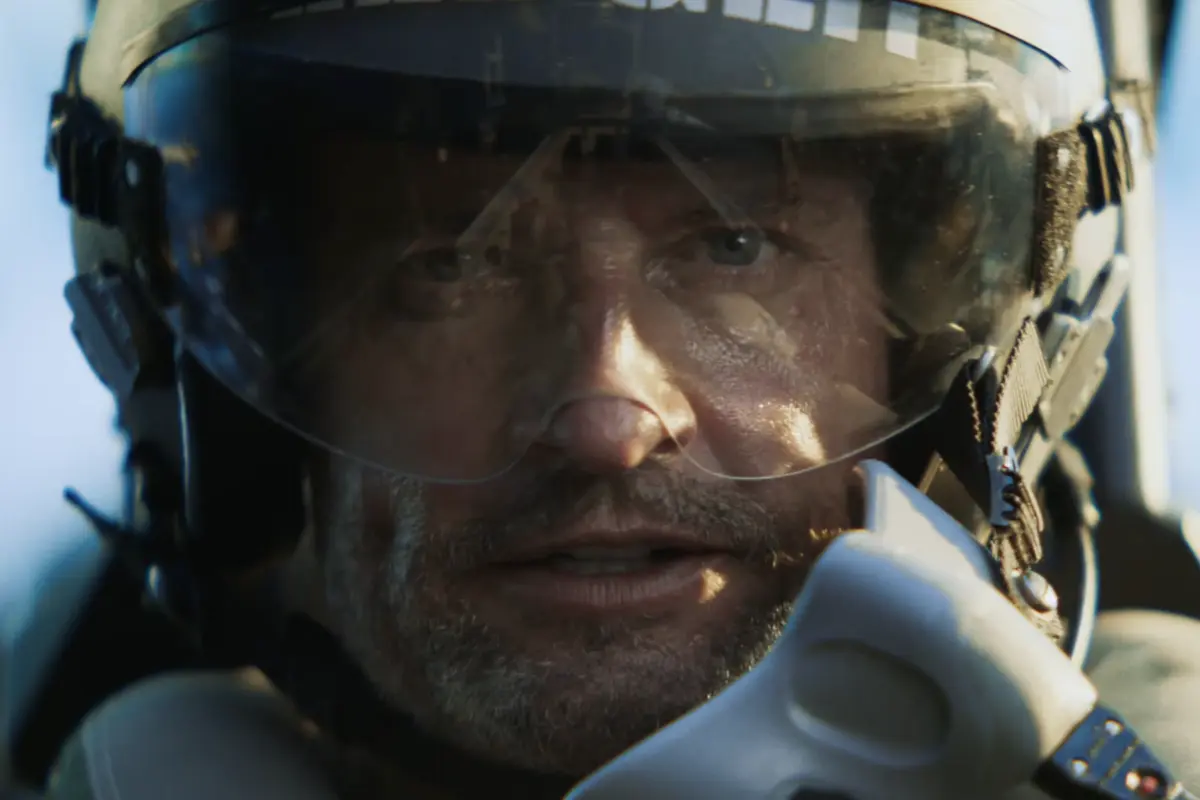
For Holloway, playing an aging, battle-hardened veteran pilot carrying the weight of leadership required translating internal emotional grief—compounded by the recent passing of his own father—into the tight physical confines of a fighter jet cockpit. Working alongside the technical advisor proved vital in bridging the gap between dramatic performance and physical realism:
"Sometimes in a small frame, a lot of emotion and too much movement doesn’t translate," Holloway explained. "So how do I bring that intensity without going bananas and making it not work? Because this is a new thing for me, being inside a cockpit. How is he going to look when he’s making those turns? How much? How difficult is it? How many Gs are you pulling? What does it really feel like?"
The presence of the professional aviator fundamentally altered how Holloway approached physical acting within the constrained space of the set pieces:
"It was amazing in our production that they had a real pilot there with me, and he’s telling me, ‘If you’re pulling that G, your body is actually gonna be grunting. You can’t even help it.’ I’m like, oh shit, really? So that was really amazing information to have on the layering of the look and the stakes that you’re bringing."
Ensemble Dynamics: Routh and Tomita
While Holloway anchors the military aviation pillar of Hour Zero, the project’s broader thematic scope is maintained by his co-stars. Brandon Routh (Superman Returns, Legends of Tomorrow) steps into the role of a combat doctor forced into the moral agony of saving an enemy combatant. This storyline explores the fracturing of medical ethics under the crushing weight of nationalist aggression. Meanwhile, seasoned screen veteran Tamlyn Tomita (The Karate Kid, The Man in the High Castle) portrays a fearless news anchor whose platform is systematically dismantled by state censors as the Republic of Sotoa tightens its grip on information.
Together, these three narrative threads—pilot, physician, and journalist—paint a panoramic portrait of a society descending into total war. Bandai Namco Entertainment America’s official descriptions emphasize that these individual struggles directly mirror the grand political conspiracies and gossip-fueled propaganda networks that players will untangle during the campaign of Ace Combat 8: Wings of Theve.
Future Outlook: The Stakes for ‘Ace Combat 8: Wings of Theve’
As the final episodes of Hour Zero roll out through September, all eyes turn toward the commercial and critical reception of Ace Combat 8: Wings of Theve when it launches on October 2 across PlayStation 5, Xbox Series X and S, and PC.
The aviation combat genre has historically relied on adrenaline-pumping gameplay, intricate aircraft customization, and soaring orchestral scores to captivate its audience. However, by investing in live-action narrative world-building on a scale rarely seen outside of major streaming television platforms, Bandai Namco is signaling a maturation of the Ace Combat intellectual property.
The success of Hour Zero could very well establish a new industry benchmark for transmedia storytelling within the gaming sector. If players embrace the grounded, reverse-chronology personal histories of characters like Holloway’s stranded pilot, Routh’s conflicted doctor, and Tomita’s silenced journalist, future installments of major video game franchises may increasingly turn to prestige live-action shorts to establish their universes. For now, the countdown to October 2 has begun, and the skies over the Federation of Central Usea are poised to become a whole lot more crowded—and a great deal more personal.