





Executive Overview
In a milestone achievement for deep-space astronomy and aerospace engineering, NASA’s $4.3 billion Nancy Grace Roman Space Telescope is currently gliding toward its observation post on a pinpoint trajectory. Thanks to a combination of meticulous orbital design, flawless execution by operations teams, and a remarkably precise launch profile courtesy of SpaceX, the observatory’s onboard fuel reserves will outlast original projections by more than a decade.
Originally engineered with a strict baseline expectation of a five-year primary mission—supplemented by a potential five-year extension—the spacecraft’s actual propellant load and minimal course-correction expenditures have transformed the observatory into a long-duration asset. NASA officials confirmed that Roman now carries enough hydrazine to support at least 22 years of science operations.
This unexpected windfall mirrors the historic lifetime extension achieved by the James Webb Space Telescope following its 2021 launch on an Ariane 5 rocket. For the Roman mission, the financial and scientific implications are staggering. By sidestepping early obsolescence tied to propellant depletion, the mission is poised to spend more than two decades probing the cosmos, mapping vast structural webs of matter and dark matter, and fundamentally reshaping our understanding of dark energy.
Detailed Chronology of Launch and Trajectory
The journey of the Nancy Grace Roman Space Telescope began at the tail end of August, setting off a cascading series of events that have continuously outperformed engineering benchmarks.
Liftoff from the Kennedy Space Center
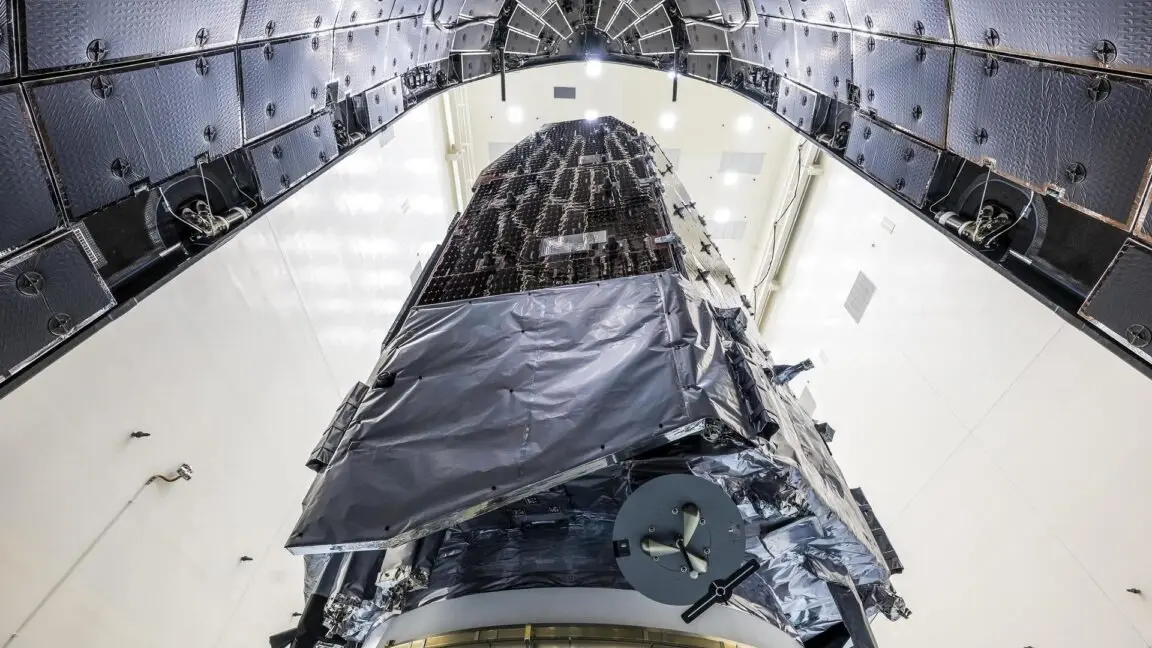
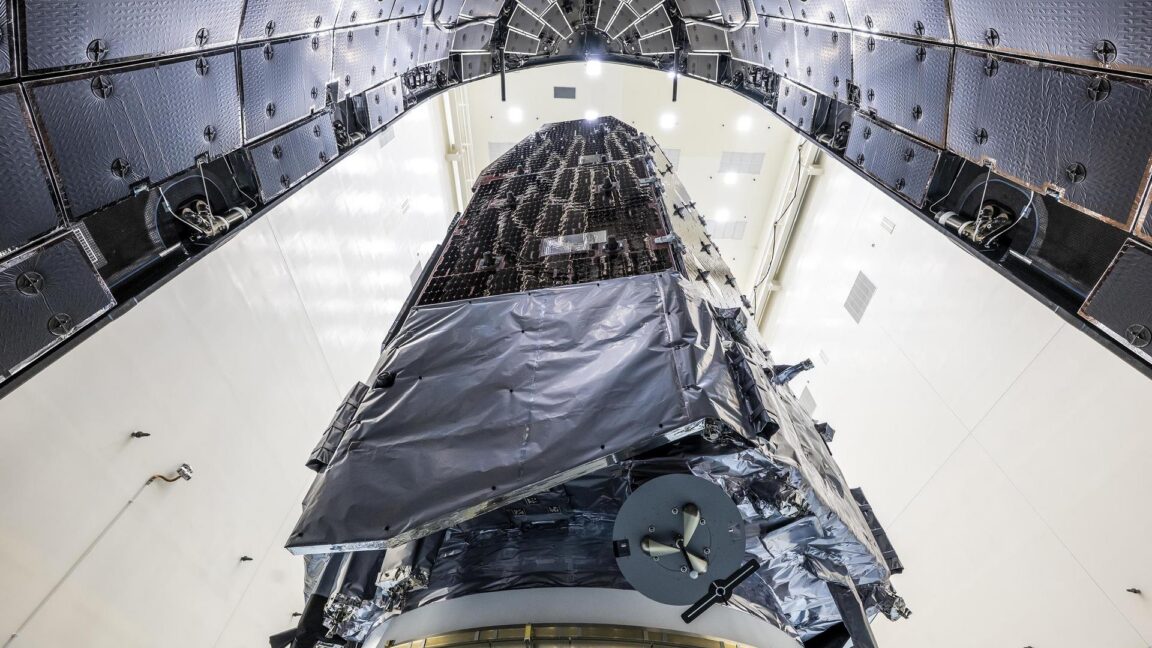
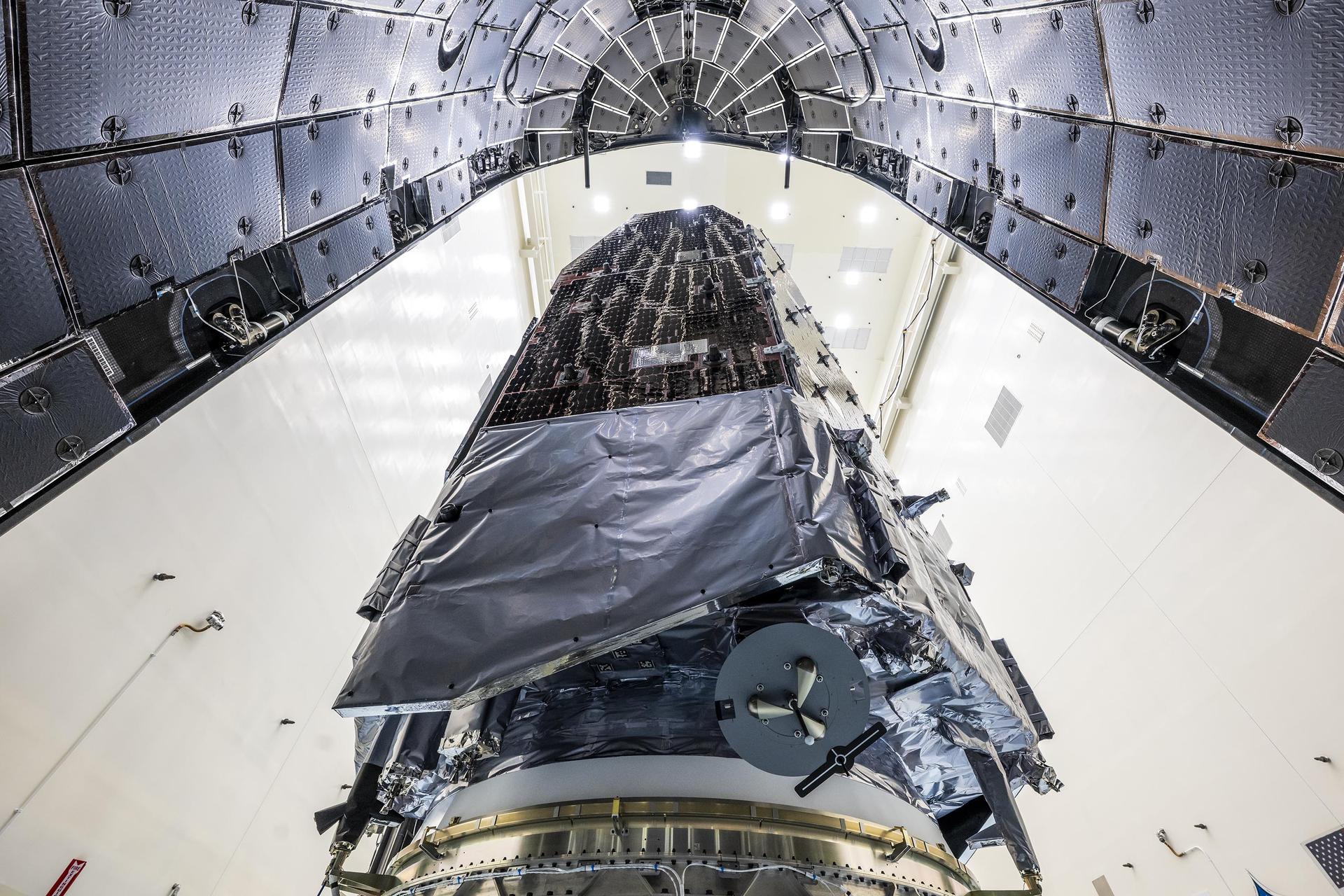
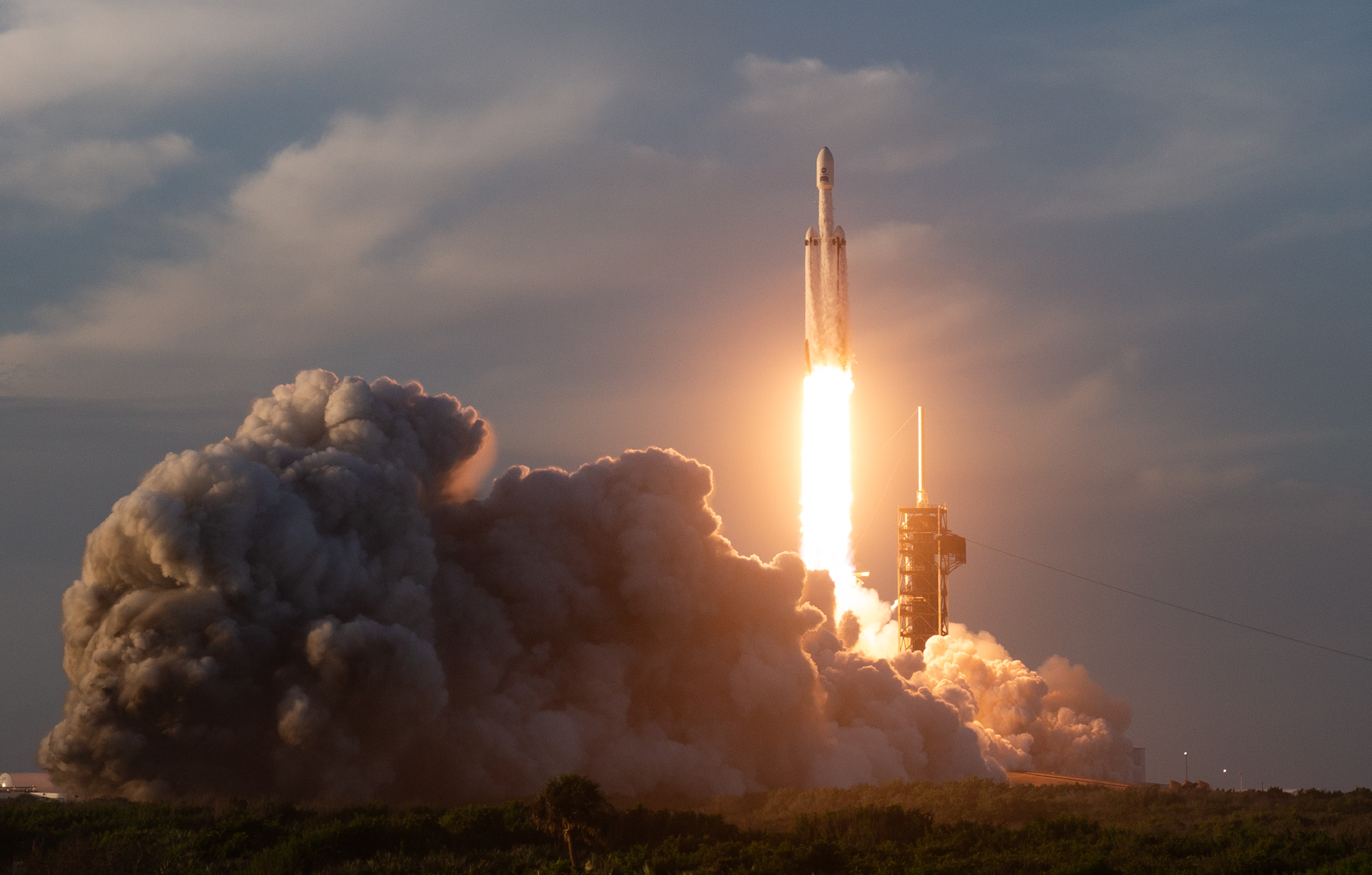
On August 30, a SpaceX Falcon Heavy rocket thundered off the pad at NASA’s Kennedy Space Center in Florida, carrying the massive observatory aloft. Encapsulated securely inside the rocket’s payload fairing, the spacecraft featured a specialized grapple fixture near its base—a clear structural indicator of its pioneering design as NASA’s first observatory built with in-space refueling capabilities in mind.
The ascent was clean, stable, and remarkably accurate. SpaceX’s launch vehicle insertion placed the $4.3 billion payload precisely on the targeted vector, mitigating the need for aggressive post-separation maneuvers that typically sap a spacecraft’s initial fuel stores.
Initial Course Corrections and Fuel Efficiency
The true magnitude of the Falcon Heavy’s precision became apparent during Roman’s first major thruster burn, executed just one day into the mission. Preflight mission profiles allocated approximately 441 pounds (200 kilograms) of hydrazine for this initial trajectory adjustment. However, due to the pinpoint accuracy of the launch, the spacecraft consumed a mere 40 pounds (18 kilograms) of fuel.
This staggering savings set the tone for the mission’s early cruise phase. The spacecraft is currently navigating toward the Sun-Earth L2 Lagrange point—a gravitational sweet spot located roughly one million miles away from Earth. To reach this unique "quasi-halo" orbit, the observatory requires a series of carefully timed orbital insertions. A second course correction scheduled for later in the month is projected to require similarly minimal energy, setting up a final orbital insertion maneuver in early December.
Once stationed at L2, Roman’s 24 decentralized thrusters will execute routine station-keeping burns approximately every 28 days. Furthermore, the propulsion system will periodically manage and unload momentum from the spacecraft’s six reaction wheels, which handle fine-pointing and orientation controls.
Supporting Context & Metrics: Mass, Design, and Capabilities
The dramatic extension of Roman’s operational lifetime is not merely a stroke of good luck; it is the culmination of rigorous mass management and conservative engineering thresholds that paid off during the spacecraft’s multi-year development cycle.
Slimming Down on the Ground
During the complex integration and testing phases of a NASA science mission, spacecraft mass frequently creeps upward, prompting anxiety among propulsion engineers who must guarantee that remaining fuel budgets can meet mission lifetime requirements. For the Roman mission, the exact opposite occurred.
Upon final assembly and completion, Roman tipped the scales at 17,760 pounds (8,056 kilograms)—roughly two tons lighter than its maximum allowable structural weight. This massive underweight margin granted ground teams at the Kennedy Space Center a rare operational luxury: the ability to load the spacecraft’s four aluminum-lined propellant tanks to absolute capacity.
- Dry Mass at Completion: 17,760 lbs (8,056 kg)
- Hydrazine Propellant Loaded: 290 gallons (approx. 2,464 lbs / 1,117 kg)
- Total Wet Mass at Liftoff: 20,224 lbs (9,173.5 kg) — still a half-ton below the vehicle’s structural limit.
Because the dry mass was significantly lower than anticipated, the spacecraft’s initial inertia was easier to redirect, reducing the duration and intensity of the post-launch thruster burns.
Scientific Instrument Suite and Observing Power
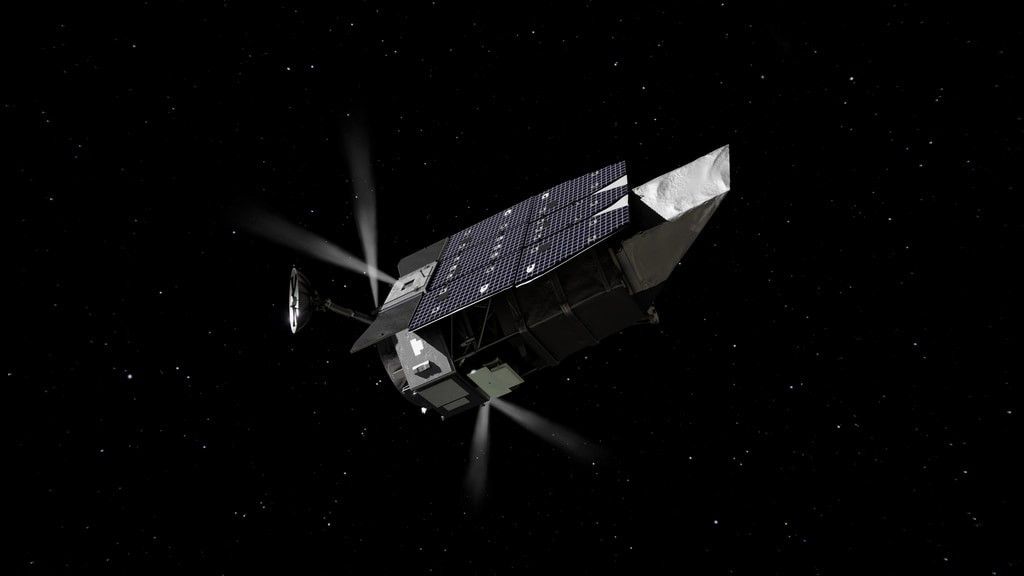
The Nancy Grace Roman Space Telescope is designed to tackle some of the most profound mysteries in modern astrophysics. Its primary optical system matches the resolving power of the legendary Hubble Space Telescope, but with a revolutionary twist: Roman possesses a field of view that is 100 times larger.
- Wide Field Instrument (WFI): Equipped with 18 near-infrared detectors generating images comparable to a 300-megapixel camera, the WFI will allow astronomers to map cosmic structures at unprecedented speeds. Tasks that would take Hubble an entire century can be completed by Roman in a single month.
- Coronagraph Instrument: Built for the direct imaging and spectroscopic characterization of exoplanets, this advanced instrument has already completed initial preliminary checks with flying colors.
By surveying vast swathes of the cosmos, Roman aims to map galactic clusters, cosmic filaments, and the invisible scaffolding of dark matter. This expansive dataset will empower scientists to measure the expansion history of the universe with extreme precision, offering critical clues regarding the nature of dark energy—the mysterious driving force behind the accelerated expansion of the cosmos.
Official Statements and Mission Milestones
NASA leadership has expressed immense satisfaction with the mission’s flawless execution to date, highlighting the collaborative synergy between agency teams and commercial launch providers.
"As a result of exquisite planning by our orbital dynamics team, brilliant execution by the operations team, and a precise launch from SpaceX, Roman has fuel for at least 22 years of potential science operations," stated Jamie Dunn, Center Director at NASA’s Goddard Space Flight Center.
Amit Kshatriya, NASA’s Associate Administrator, echoed these sentiments during a keynote presentation at the American Astronautical Society’s Glenn Space Technology Symposium. "I do thank SpaceX for putting us down the middle. It’s going to help us in terms of long-duration performance, how long we can stay at L2, as well as our positioning capability."
Kshatriya also provided an optimistic update on the spacecraft’s overarching systems health more than two weeks into its flight. On September 1, Roman successfully opened its aperture cover, exposing its primary mirror to starlight for the very first time.
"All the preliminary checks are good," Kshatriya noted. "In fact, we got some data on the Wide Field Instrument just a couple days ago. All the mirrors, all the CCDs are chilling down in the right way. We do false current tests to make sure that we’re getting the right connectivity, etc. All that’s green across the board on all 18 detectors, which is awesome."
Future Outlook: Refueling Capabilities and Long-Term Operations
While the dramatic conservation of propellant makes an immediate, emergency servicing mission unlikely, the Nancy Grace Roman Space Telescope remains a historic waypoint in orbital architecture as NASA’s first observatory explicitly designed with in-space refueling in mind.
Prepped for Robotic Intervention
Historically, servicing complex space observatories required crewed interventions. NASA famously executed five Space Shuttle missions to service the Hubble Space Telescope—correcting its initial optical flaws, performing routine maintenance, and upgrading scientific payloads. However, Hubble lacked a propulsion system, meaning visiting shuttles were also required to boost its decaying low-Earth orbit.
Unlike Hubble, Roman operates a million miles away from Earth at L2, far beyond the reach of human-crewed spacecraft currently in operation. Recognizing this limitation early in the design phase, engineers integrated structural accommodations for an uncrewed, robotic servicing mission if one should ever become necessary.
- Grapple Fixture: Installed at the base of the spacecraft, matching standard robotic interfaces used on the International Space Station.
- Navigation Aids: Equipped with a retroreflector and external reference points to guide autonomous docking systems.
- Accessible Fueling Port: Encased in specially designed thermal blanketing featuring magnetic closures, engineered to allow a robotic arm to easily peel back insulation, access the fuel inlet, and complete a docking and transfer sequence.
"While Roman is nowhere near as serviceable as the Hubble Space Telescope was, we do have everything that’s necessary to enable the rendezvous and capture and docking with a hypothetical servicer; that’s the point of the grapple fixture," explained Jackie Townsend, Roman’s Project Manager at NASA Goddard. "Then, in 2020, when we were baselined, we were told that we would focus on refueling. So the blanketing around the fueling port has been designed especially so that it’s easier for a robot to get in there if we needed to refuel."
The Horizon of Commercial In-Space Servicing
Although a dedicated robotic tanker does not yet exist to service spacecraft a million miles from Earth, the commercial aerospace sector is rapidly advancing servicing technologies. Several American aerospace firms are developing autonomous refueling and maintenance satellites tailored for low-Earth and geosynchronous orbits, driven largely by national security and commercial satellite longevity demands. Internationally, milestones are also being cleared; last year, two Chinese spacecraft successfully docked to execute the first-ever satellite-to-satellite refueling operation in geosynchronous orbit.

With Roman’s tanks currently brimming and a projected operational lifespan stretching well past two decades, the immediate necessity for an L2 refueling mission has evaporated. Nevertheless, the infrastructure built into the telescope establishes a vital precedent for future flagship astrophysics missions.
As the observatory continues its quiet cruise toward the L2 Lagrangian point, engineers and scientists are turning their attention toward the upcoming arrival and calibration phases. With the hardware functioning seamlessly and an unprecedented surplus of fuel secured, the scientific community stands on the precipice of a golden era in space exploration.
As Amit Kshatriya aptly summarized regarding the impending activation of the observatory’s cutting-edge optics: "When we get first light, it’s going to be a big party."