










Executive Overview
HARRISBURG, Pa. — The public health crisis unfolding across the Commonwealth of Pennsylvania reached a grim new milestone this week, as state health officials officially confirmed the fourth measles-associated death of the current outbreak. The victim, an unvaccinated 18-year-old resident of Mifflin County, succumbed to acute disseminated encephalomyelitis (ADEM), a rare and catastrophic neurological complication triggered by the measles virus.
This latest tragedy underscores the relentless severity of what public health authorities have classified as Pennsylvania’s worst measles outbreak in more than three decades. The announcement arrives on the heels of the state health department’s formal confirmation of a third fatality—an unvaccinated 40-year-old woman in Jefferson County. These recent deaths compound an already heartbreaking toll that includes two infant fatalities recorded earlier in Lancaster County: a newborn boy and a six-week-old baby girl, both tragically too young to receive the standard measles, mumps, and rubella (MMR) vaccination.
As of this week, the Pennsylvania Department of Health has logged a staggering 693 confirmed cases of measles spanning 38 counties, with 99 of those diagnoses recorded in the past seven days alone. The surge has placed an immense burden on regional healthcare infrastructure, resulting in 133 hospitalizations.
The re-emergence of a disease once declared eliminated from the United States in 2000 has ignited urgent discussions among medical professionals, epidemiologists, and policymakers. It highlights the dangerous real-world consequences of declining vaccination rates, vaccine hesitancy, and the spread of misinformation regarding immunization safety. This investigative report examines the chronology of the outbreak, the clinical pathology behind these tragic fatalities, the systemic challenges facing public health officials, and the broader implications for community immunity nationwide.
Detailed Chronology: The Escalating Toll of the Outbreak
The trajectory of Pennsylvania’s current measles crisis has alarmed infectious disease experts who watched decades of hard-fought herd immunity erode. To understand the magnitude of the state’s current health emergency, it is vital to trace the timeline of fatalities and epidemiological milestones that have marked the outbreak thus far.
The Vulnerable Infants of Lancaster County
The devastating human cost of the outbreak first became glaringly apparent in Lancaster County, where the virus claimed its initial two victims. Both were infants who, due to their tender age, fell outside the window of eligibility for the MMR vaccine, which is typically administered starting at 12 months of age.
The first infant, a newborn boy, died earlier in the summer amid a flurry of public debate and disputed reporting that drew national attention. Shortly thereafter, a six-week-old baby girl succumbed to the virus. Medical examiners and state health officials later confirmed that measles was the direct underlying cause of death in both cases. These infant deaths served as a stark reminder of the principle of community immunity: when vaccination rates drop within a population, the most vulnerable among us—newborns, the immunocompromised, and those with medical contraindications—are left defenseless against preventable pathogens.
The Adult Toll: Jefferson and Mifflin Counties
As the outbreak continued to pierce through county lines, older, unvaccinated demographics began to bear the brunt of severe complications. Over the weekend prior to the state’s formal update, a county coroner’s report confirmed the death of an unvaccinated 40-year-old woman in Jefferson County. State health officials verified this fatality in tandem with the Mifflin County case.
The most recent tragedy involves the 18-year-old Mifflin County resident. According to a release issued by Mifflin County Coroner Andrea L. Alcalde, the young adult’s cause of death was officially determined to be acute disseminated encephalomyelitis (ADEM). The determination followed a comprehensive review of medical records and available diagnostic data.
In her public statement, Coroner Alcalde noted that no further personal details regarding the deceased would be released out of respect for the grieving family. However, the medical specifics of ADEM have shed crucial light on just how violently the measles virus can attack the human body, far beyond the typical rash and fever associated with the infection.
Clinical Pathology: Understanding Acute Disseminated Encephalomyelitis (ADEM)
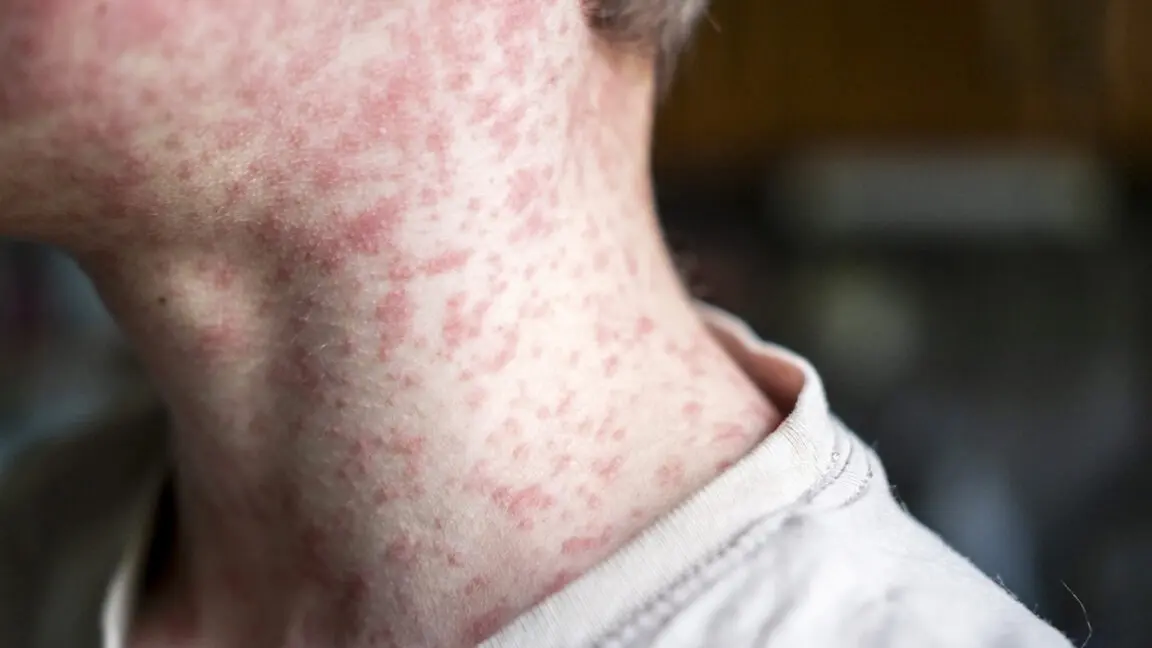
To the layperson, measles is frequently dismissed as a childhood rite of passage—a temporary inconvenience marked by fever, cough, runny nose, and a characteristic maculopapular rash. However, infectious disease specialists emphasize that measles is a systemic, highly immunosuppressive disease capable of precipitating devastating neurological and respiratory complications.
In the case of the 18-year-old Mifflin County victim, the immediate cause of death was acute disseminated encephalomyelitis (ADEM). Medical literature defines ADEM as a rare but exceptionally severe autoimmune-mediated inflammatory disorder. When an individual contracts measles, the virus can trigger an aberrant immune response. Instead of merely attacking the pathogen, the body’s immune system mistakenly targets its own central nervous system.
Specifically, this errant inflammation strips away myelin—the protective, insulating sheath that surrounds nerve fibers in the brain and spinal cord. The destruction of myelin severely disrupts nerve signal transmission, leading to rapid neurological deterioration. Symptoms of ADEM can escalate swiftly, manifesting as fever, fatigue, headache, confusion, seizures, vision loss, and, in severe cases, profound coma or death.
Before the widespread introduction of the measles vaccine in the 1960s, ADEM was a documented and feared complication associated with natural measles infection. While ADEM can occasionally be triggered by other viral infections or immunizations, its direct link to the current measles outbreak highlights the profound biological risks of remaining unvaccinated against a pathogen that has evolved sophisticated mechanisms to evade and overwhelm human immune defenses.
Supporting Context & Metrics: Analyzing the Spread
The Pennsylvania Department of Health’s data dashboard paints a sobering picture of an epidemic spiraling across geographic boundaries. With 693 confirmed cases distributed across 38 counties, the outbreak is no longer confined to isolated pockets or localized clusters; it represents widespread community transmission.
| Metric Category | Current Data Summary |
|---|---|
| Total Confirmed Cases | 693 cases |
| Geographic Spread | 38 Pennsylvania counties |
| Recent Velocity | 99 new cases reported in the past 7 days |
| Total Hospitalizations | 133 patients requiring inpatient care |
| Total Confirmed Fatalities | 4 deaths (2 infants, 1 adult woman, 1 young adult) |
The velocity of the outbreak is particularly troubling to epidemiologists. Registering nearly 100 new cases in a single week demonstrates that the basic reproduction number ($R_0$) of the virus—its ability to spread from person to person in a susceptible population—is operating near its theoretical maximum. Measles is widely recognized as one of the most contagious infectious agents known to science. A single infected individual can transmit the virus to up to 90% of close contacts who are not immune. The virus can remain airborne for up to two hours in a room after an infected person has departed, making enclosed public spaces, schools, and healthcare facilities prime vectors for dissemination.
Furthermore, the hospitalization rate—with 133 individuals requiring acute medical intervention—places an extraordinary strain on regional healthcare facilities. Treating severe measles complications often requires intensive care unit (ICU) resources, specialized pediatric care, mechanical ventilation for respiratory failure, and rigorous neurological monitoring.
Official Statements and Public Health Response
As the death toll climbs, state and local health leaders are redoubling their efforts to combat the outbreak through targeted messaging, community outreach, and vaccine advocacy.
Pennsylvania Secretary of Health Dr. Debra Bogen addressed the gravity of the situation in an official state release, expressing condolences to the families affected while issuing a firm call to action.
"My thoughts are with the two families who lost loved ones to this highly contagious virus, as Pennsylvania faces the worst measles outbreak in more than three decades," Secretary Bogen stated, specifically referencing the most recent adult fatalities. "We remain committed to working with our partners across Pennsylvania to stem this outbreak and prevent more deaths. That means ensuring people have the facts about measles and access to the MMR [measles, mumps, and rubella] vaccine—which kept measles outbreaks at bay for decades."
The Pennsylvania Department of Health has announced that the deaths of the 18-year-old Mifflin County resident and the 40-year-old Jefferson County resident will be formally incorporated into the state’s online outbreak data dashboard during its scheduled weekly update.
In addition to data transparency, public health agencies are deploying mobile vaccination clinics, issuing clinical advisories to primary care physicians and emergency departments, and partnering with community leaders in affected counties to dispel circulating myths. Healthcare providers are being urged to maintain a high index of suspicion for measles when evaluating patients presenting with febrile rash illnesses, particularly those with a history of international travel or known exposure to active cases.
Future Outlook: Challenges and Recommendations
The resurgence of measles in Pennsylvania and various other pockets across the United States serves as an urgent diagnostic warning for modern public health infrastructure. The return of a disease that the World Health Organization and federal health agencies once considered eradicated domestically signals a dangerous erosion of herd immunity thresholds.
Public health experts outline several critical pillars necessary to bring the current outbreak under control and prevent future resurgences:
1. Rebuilding Trust and Countering Misinformation
The proliferation of anti-vaccine rhetoric—frequently amplified across digital and social media platforms—has created significant barriers to vaccine uptake. Public health officials, community leaders, and medical professionals must engage in transparent, empathetic, and science-based communication to address parental and community concerns regarding the safety and efficacy of the MMR vaccine.
2. Strengthening School and Daycare Vaccination Requirements
Strict enforcement of state vaccination mandates for school attendance has historically been the most effective tool in maintaining high community immunity. Policymakers must evaluate current exemption policies to ensure that philosophical or non-medical exemptions do not compromise the collective safety of student bodies and surrounding communities.
3. Enhancing Clinical Vigilance and Contact Tracing
Rapid identification and isolation of index cases are paramount in halting transmission chains. Local health departments require robust funding and staffing to execute thorough contact tracing, quarantine exposed individuals, and administer post-exposure prophylaxis (such as the MMR vaccine or immune globulin) to vulnerable contacts within the critical 72-hour window.
4. Supporting Vulnerable Populations
Specialized outreach must be directed toward communities with historically low vaccination coverage, ensuring that language barriers, lack of transportation, or insurance gaps do not prevent individuals from accessing free or low-cost immunizations.
As Pennsylvania navigates its most severe measles crisis in over 30 years, the tragic deaths of four individuals—ranging from a newborn infant to an 18-year-old young adult—stand as a solemn testament to the consequences of vaccine-preventable disease transmission. Whether the Commonwealth can successfully bend the epidemiological curve downward will depend heavily on a unified, evidence-based response from lawmakers, healthcare workers, and the public alike.