







Executive Overview
In a venture capital ecosystem currently obsessed with generative artificial intelligence, foundational software, and large language models, a rare breed of company has broken through the noise to achieve unicorn status. Thatch, a pioneering health-benefits platform designed to simplify medical coverage for startups and their employees, has officially secured a staggering $108 million funding round, vaulting its corporate valuation to the coveted $1 billion threshold.
This remarkable financial milestone arrives just 17 months after the company closed a $40 million Series B round at a $410 million valuation. Driving this explosive momentum—highlighted by an approximate sevenfold increase in annual recurring revenue (ARR)—is a fundamental paradigm shift in how American companies approach employee compensation and healthcare benefits.
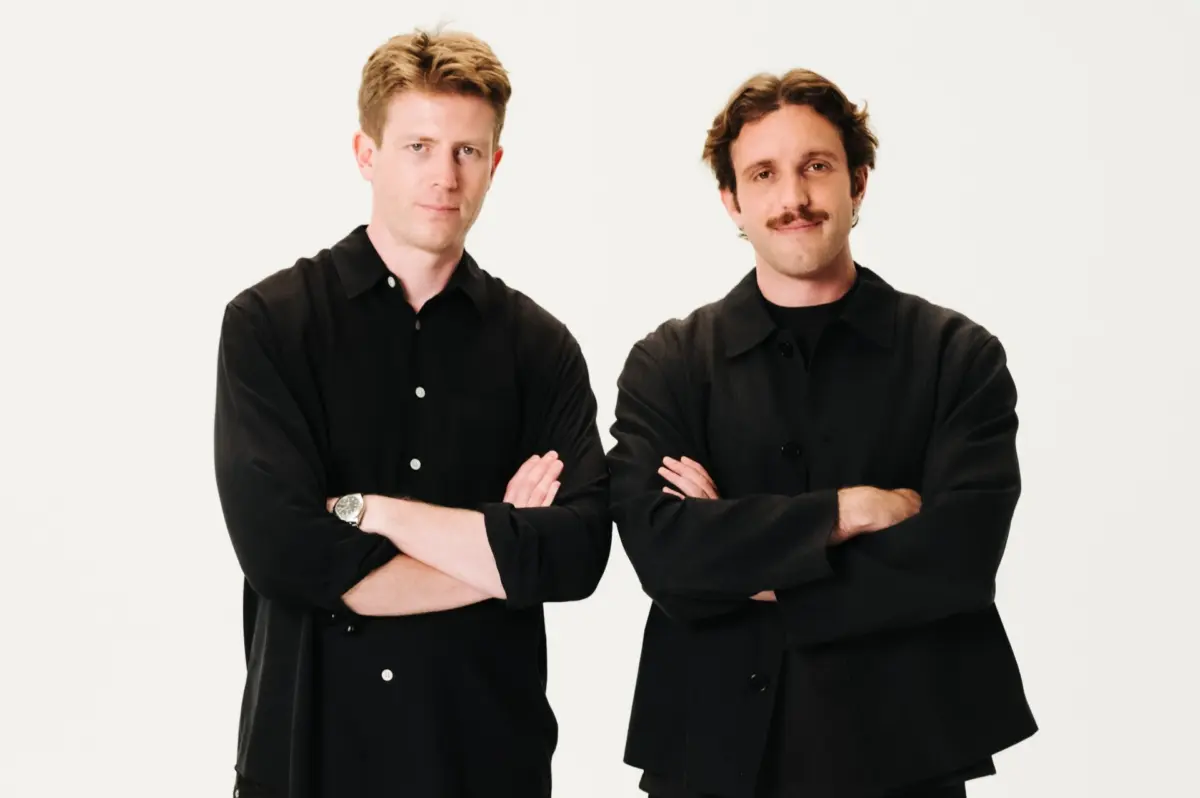
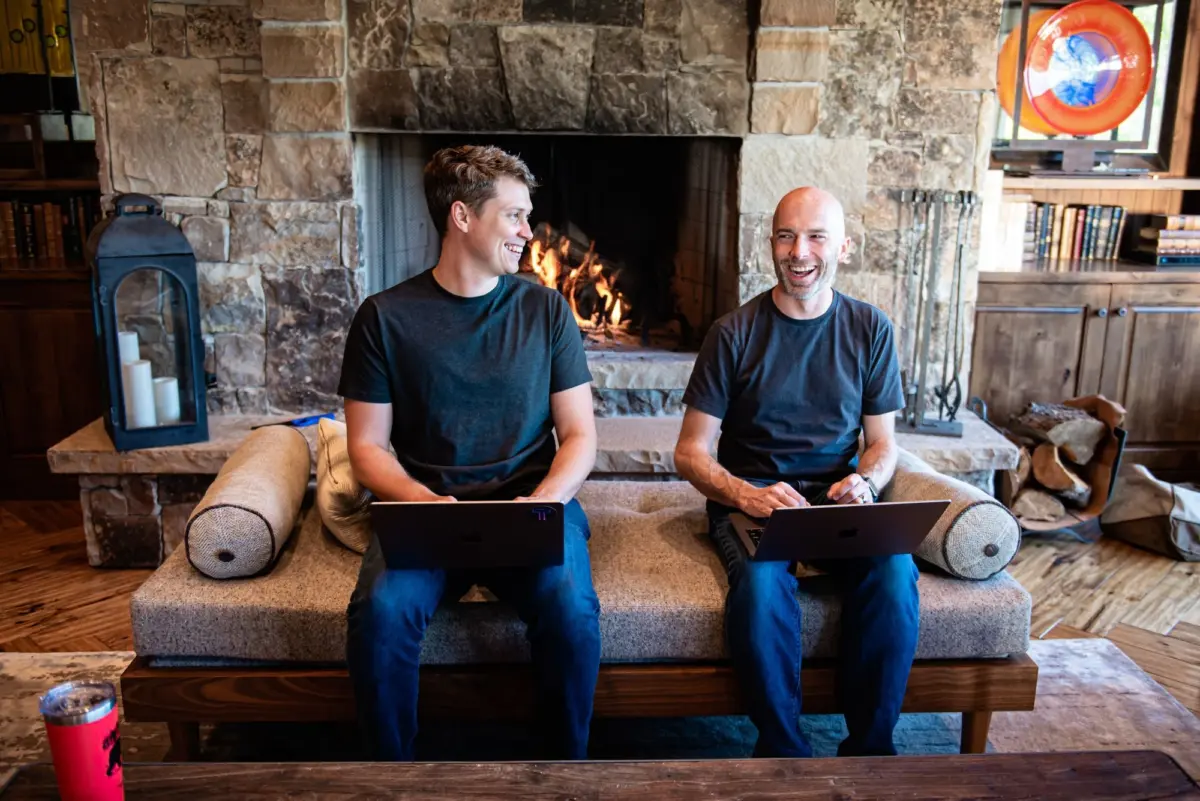
Co-founded in 2021 by CEO Chris Ellis and former Stripe engineering executive Adam Stevenson, Thatch addresses two converging crises in the modern workplace: skyrocketing corporate healthcare costs and a rigid, monolithic insurance market that fails to meet the evolving lifestyle and medical demands of today’s workforce. By leveraging Individual Coverage Health Reimbursement Arrangements (ICHRAs)—a federal regulatory framework introduced in 2020—Thatch allows companies to bypass the broken traditional group-plan market. Instead of forcing every worker into a single, expensive corporate policy, employers provide a fixed pre-tax health stipend. Employees can then use this budget to choose personalized medical, dental, and vision coverage from an expansive individual marketplace, blending technological automation with consumer choice.
Detailed Chronology of Growth: From Inception to Unicorn Status
The Genesis (2021)
When Chris Ellis and Adam Stevenson established Thatch in 2021, the corporate health insurance landscape was entrenched in decades-old operational habits. Companies of all sizes were tethered to traditional group health insurance carriers, enduring grueling annual contract renewals, unpredictable rate hikes, and administrative nightmares. Stevenson, bringing his deep engineering background from Stripe, paired with Ellis’s operational acumen to ask a fundamental question: Why couldn’t health insurance operate more like modern, consumer-centric software?
The founding team recognized that the regulatory groundwork for a decentralized model had been laid in 2020 when federal authorities introduced ICHRAs. However, the operational complexity of managing individual policies for dozens—or hundreds—of employees kept most businesses from adopting the model. Thatch was built to remove this friction, creating software that automates compliance, plan selection, and payroll synchronization.
The Series B Breakthrough (April 2025)
Thatch’s trajectory accelerated sharply in early 2025. According to data from PitchBook, the startup secured a $40 million Series B funding round, pushing its valuation to $410 million. This capital injection was not merely a defensive buffer; it was fuel for aggressive market expansion. At this stage, the company proved that its software could successfully scale across a diverse portfolio of early-stage and mid-market companies tired of the traditional group-health cartel.
The Unicorn Coronation ($108M Raise at a $1B Valuation)
The most recent capital raise marks a watershed moment for the company. Securing $108 million in a single financing round from a powerhouse syndicate of existing investors—including The General Partnership, Index Ventures, General Catalyst, and Andreessen Horowitz—cements Thatch’s transformation from an ambitious insurance-tech experiment into an indispensable enterprise infrastructure player.
What makes this valuation leap particularly striking in the current tech landscape is that Thatch is not, at its heart, an artificial intelligence company. While machine learning and AI algorithms play critical backend roles in recommending plans and optimizing budgets, Thatch’s core innovation is structural, legal, and economic. It solves a real-world workflow and financial crisis rather than riding an algorithmic hype cycle.
Supporting Context & Metrics: The Perfect Storm in American Healthcare
Thatch’s phenomenal growth is not occurring in a vacuum. It is being propelled by powerful macroeconomic tailwinds and systemic shifts in employee expectations.
Surging Corporate Healthcare Costs
American employers are facing an unprecedented financial squeeze. According to forward-looking projections from industry analysts at Mercer, employer-sponsored healthcare benefit costs are projected to jump over 8% in 2027. This represents the single largest anticipated cost increase since 2003.
Under the traditional group-insurance model, employers absorb these shocks, passing minimal adjustments onto employees or cutting benefits elsewhere. This status quo is mathematically unsustainable. Human resources departments are actively searching for predictable, capped cost structures that do not compromise their ability to attract top-tier talent.
The Demand for Modern Therapeutics (GLP-1s and Beyond)
Simultaneously, the modern workforce has evolved. Today’s employees demand comprehensive healthcare packages that encompass preventive wellness, mental health support, and modern therapeutic treatments.
A prominent flashpoint in this evolution is the demand for GLP-1 receptor agonists—groundbreaking weight-loss and diabetes medications such as Ozempic and Wegovy. Traditional group health plans historically exclude or severely restrict coverage for these high-cost, high-demand drugs, leaving employees frustrated and underinsured. Thatch’s flexible reimbursement architecture allows workers to allocate funds toward the exact treatments and wellness products they value most, bridging the gap between legacy insurance products and modern medical advancements.
Mechanics of the Platform: How Thatch and ICHRAs Work
To understand Thatch’s disruption, one must understand the mechanics of the Individual Coverage Health Reimbursement Arrangement (ICHRA)—a framework that has recently been rebranded and popularized under the umbrella term "CHOICE."
Moving Away from Group Plans
In a traditional enterprise setting, an employer negotiates a group health plan with major carriers like Anthem or UnitedHealthcare. The employer acts as the primary purchaser, selecting one or two rigid tiers of coverage for the entire staff. This model ignores individual medical differences: a healthy 22-year-old software engineer is enrolled in the same tier as a 55-year-old manager with chronic health needs, leading to gross inefficiencies and inflated premiums.
The Thatch Ecosystem and the CHOICE Model
Thatch eliminates the need for employers to negotiate annual enterprise agreements with legacy insurance carriers. Instead, the workflow operates through a streamlined, automated pipeline:
- Fixed Budgeting: The employer establishes a predictable, fixed monthly health allowance for each employee class. This completely insulates the business from unpredictable medical inflation and enterprise-wide rate hikes.
- The Marketplace: Employees log onto Thatch’s digital marketplace, where they can browse and select from dozens of individual health, dental, and vision insurance policies tailored to their personal zip codes and family situations.
- AI-Powered Recommendation Engine: Thatch deploys advanced algorithms to analyze an employee’s specific medical history, predicted usage, and budget, recommending the optimal health plan to maximize their purchasing power.
- Flexible Spending via Debit Card: This is where Thatch truly diverges from legacy providers.
- For workers needing extensive care: If an employee selects a comprehensive plan that exceeds their employer allowance, they can easily supplement the difference out of pocket.
- For healthier workers: If an employee selects a high-deductible or lower-cost individual plan, the leftover funds do not vanish back into corporate coffers. Instead, employees can access their remaining allowance via a dedicated Thatch debit card. These pre-tax funds can be deployed toward other eligible health and wellness expenses, ranging from GLP-1 medications to preventive health tech like an Oura Ring or gym memberships.
Official Statements and Industry Perspective
The philosophy driving Thatch’s leadership team centers on introducing true market competition into an industry that has long enjoyed monopolistic inertia.
Reflecting on the platform’s dual benefit to workers and corporations, Co-Founder and CEO Chris Ellis emphasized the structural pressure Thatch places on legacy insurers:
"If [employees] don’t like their insurance, they can switch to another one," Ellis explained in an interview with TechCrunch. "It creates pressure on insurers to compete for better service, denying fewer claims because they want to keep you as a customer."
This consumer-driven dynamic flips the traditional dynamic on its head. In the legacy group-insurance market, insurance carriers view the enterprise HR department as their primary customer, leaving individual employees with little recourse when claims are denied or customer service stalls. By putting the purchasing power directly in the hands of the worker, insurance carriers must now compete on consumer satisfaction, network quality, and claim approval rates.
For employers, the value proposition is equally compelling. Ellis noted that companies break free from the exhausting cycle of annual carrier renegotiations while maintaining—and often improving—their total compensation packages at a stabilized, predictable cost.
Industry adoption is rapidly validating this thesis. While Thatch faces competition from emerging startups like Take Command, Remodel Health, and Zorro, the sheer velocity of the market shift suggests that the ICHRA model is transitioning from an alternative niche to a mainstream standard.
As Ellis observed:
"People are waking up to this because of costs, but then they’re realizing this is a better, more efficient way to do it."
Future Outlook: The Road Ahead for Decentralized Healthcare
Securing a $1 billion valuation positions Thatch as a heavyweight contender in the future of workplace benefits. However, scaling past this milestone will require navigating complex regulatory landscapes, expanding strategic partnerships with individual insurance carriers across all 50 states, and continually refining its AI recommendation engine to handle increasingly complex medical profiles.
As corporate budgets tighten and employees increasingly demand individualized, consumer-grade experiences in every aspect of their professional lives, the legacy group health insurance model looks increasingly vulnerable. By transforming health benefits from a corporate administrative burden into a flexible, personalized asset, Thatch has not only built a unicorn business—it has mapped out the blueprint for the future of American healthcare.