







Executive Overview
The conversation surrounding the artificial intelligence boom has, for the past several years, been overwhelmingly dominated by a single, urgent narrative: procurement. Enterprise architects, hyperscalers, and sovereign cloud operators alike have scrambled to secure scarce AI accelerators—most notably Nvidia’s coveted silicon—while racing to stand up the massive data center facilities required to house, power, and cool them. Billions of dollars in capital expenditure continue to flow into compute infrastructure at an unprecedented pace, driven by the race to train increasingly complex large language models (LLMs) and deploy real-time inference at scale.
However, as the hyper-growth phase of enterprise AI matures into operational reality, an equally complex and consequential question is rapidly moving to the forefront of executive planning: How long will the GPUs deployed today actually last, and what happens when they reach the end of their useful life?
This inquiry is far from a trivial accounting detail. It sits at the very heart of long-term data center capacity planning, capital expenditure forecasting, and the mitigation of a looming e-waste crisis. The answer, however, is rarely straightforward. Defining the "lifespan" of a data center graphics processing unit requires navigating a stark dichotomy: the hardware’s physical lifespan—how long the silicon can reliably conduct electrical operations—versus its economic lifespan—how long it remains financially viable to run in the face of rapid technological obsolescence, surging power densities, and falling inference costs.
While a well-maintained GPU can easily hum along for half a decade or more, market forces frequently dictate that it becomes obsolete in less than half that time. For IT leaders and data center operators, understanding the interplay between physical durability, economic return on investment (ROI), thriving secondary markets, and alternative consumption models like GPU-as-a-Service (GPUaaS) is no longer optional. It is a critical competency for surviving the next era of infrastructure management.
Detailed Chronology: The Accelerated Evolution of AI Silicon
To understand why data center GPUs face such compressed operational lifecycles, one must examine the blistering pace of hardware evolution over the past several years. The semiconductor industry, historically governed by predictable cadence frameworks, has supercharged its product development cycles to chase the insatiable demands of generative AI workloads.
The Hopper Era (2022)
The release of Nvidia’s Hopper architecture in 2022 marked a watershed moment for high-performance computing (HPC) and AI training. Introducing powerful Transformer Engine technology, Hopper architectures set the standard for accelerated computing clusters globally. Organizations that invested heavily in Hopper-based systems during this period secured a vital competitive edge, deploying clusters that handled massive parallel processing tasks with unprecedented efficiency. At the time, these chips represented the absolute pinnacle of technological capability, commanding massive investments from hyperscale cloud providers and enterprise data centers alike.
The Blackwell Leap (2024)
Yet, the technological landscape shifted dramatically just two years later with the introduction of the Blackwell generation in 2024. Industry benchmarks revealed a staggering generational performance delta: Blackwell architectures proved to be roughly 2.5 times more powerful than Hopper in standard operational parameters, while simultaneously driving down AI inference costs by up to a factor of ten. Remarkably, despite this exponential leap in processing power and cost efficiency, initial price points for Blackwell chips remained within a comparable range to their Hopper predecessors upon launch.
The Compounded Replacement Cycle
This compressed two-to-four-year cadence fundamentally alters strategic planning. When a newly released architecture delivers an order-of-magnitude reduction in operational cost while maintaining similar capital acquisition pricing, the financial justification for retaining older generations evaporates rapidly. Consequently, organizations that invested heavily in Hopper infrastructure face an aggressive economic calculus: continue running legacy hardware with higher per-query costs, or absorb capital depreciation charges to upgrade to state-of-the-art platforms.
Supporting Context & Metrics: Physical vs. Economic Lifespan
When analyzing hardware longevity, infrastructure teams must clearly delineate between the physical reality of silicon degradation and the unforgiving economics of market competition.
+-------------------------------------------------------------------------+
                    GPU LIFESPAN COMPARISON MATRIX
+----------------------------+--------------------------------------------+
| Metric                     | Physical Lifespan                          |
+----------------------------+--------------------------------------------+
| Typical Duration           | 5+ Years                                   |
+----------------------------+--------------------------------------------+
| Primary Driver             | Thermal management, clean power, lack of   |
|                            | mechanical wear.                           |
+----------------------------+--------------------------------------------+
| Primary Failure Points     | Board-level capacitors, power delivery     |
|                            | components, solder joint micro-fractures.  |
+----------------------------+--------------------------------------------+

+----------------------------+--------------------------------------------+
| Metric                     | Economic Lifespan                          |
+----------------------------+--------------------------------------------+
| Typical Duration           | 2 to 4 Years                               |
+----------------------------+--------------------------------------------+
| Primary Driver             | Price-to-performance ratios, performance   |
|                            | per watt, software support timelines.      |
+----------------------------+--------------------------------------------+
| Primary Failure Points     | Generational obsolescence, high power      |
|                            | consumption relative to output.            |
+----------------------------+--------------------------------------------+
Physical Lifespan: How Data Center GPUs Fail
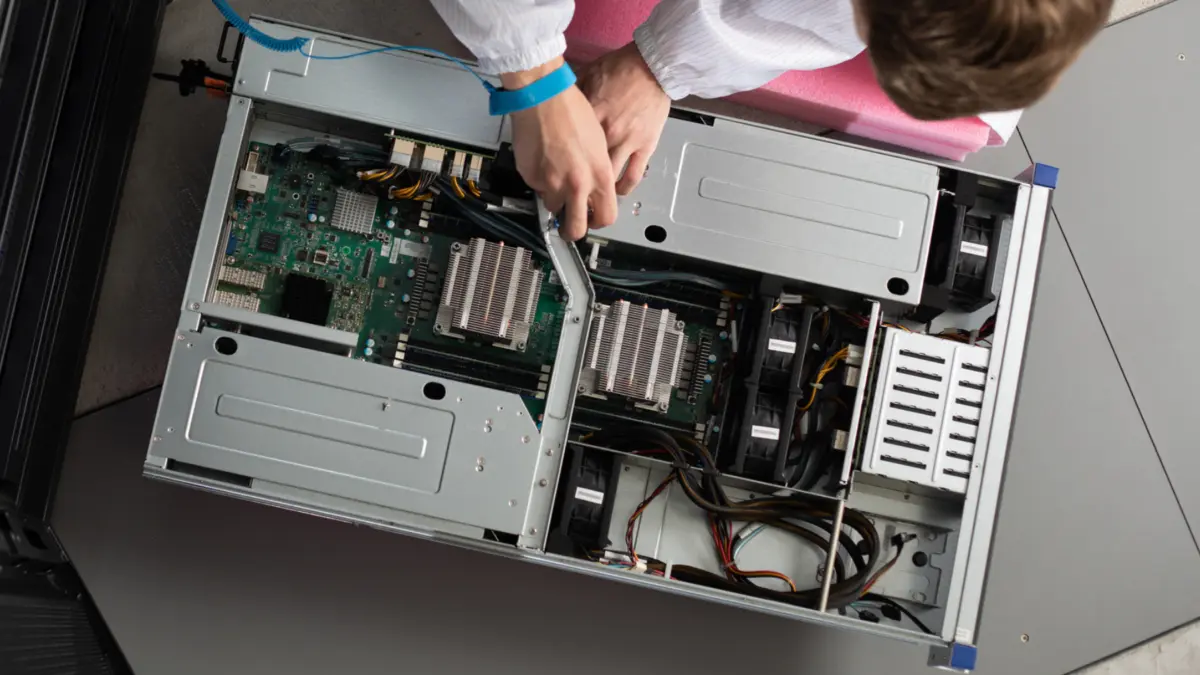
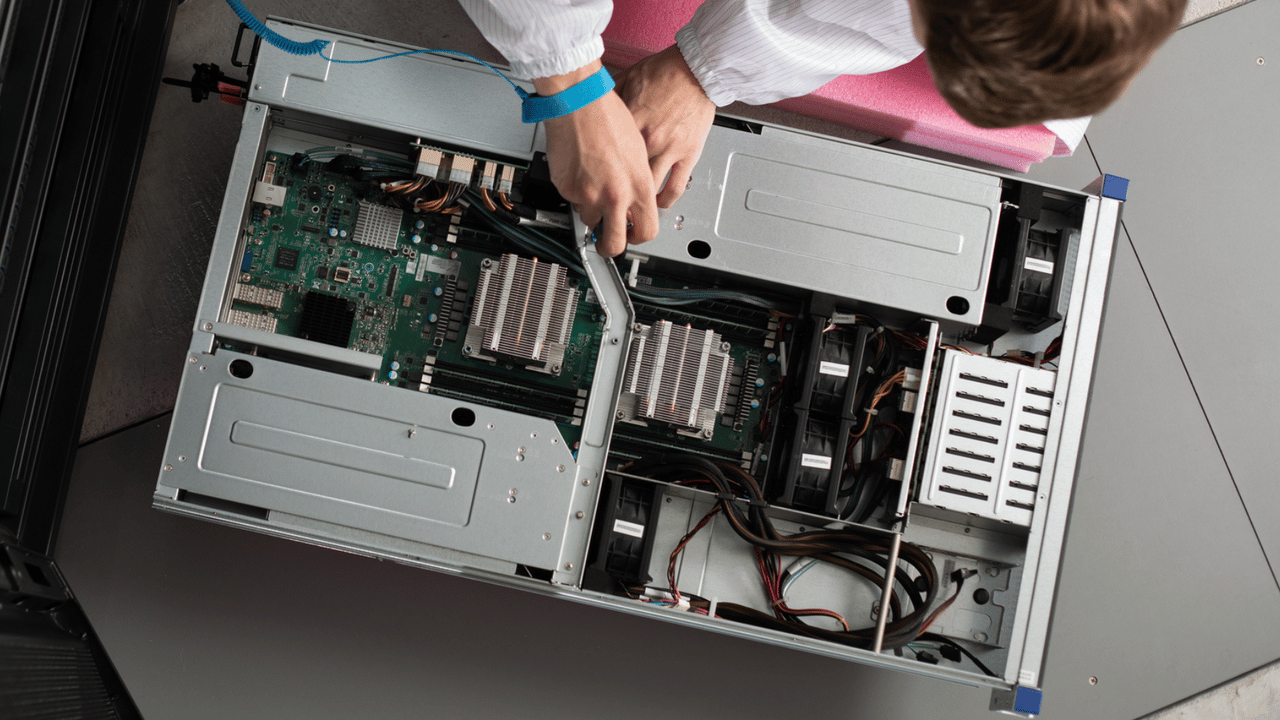
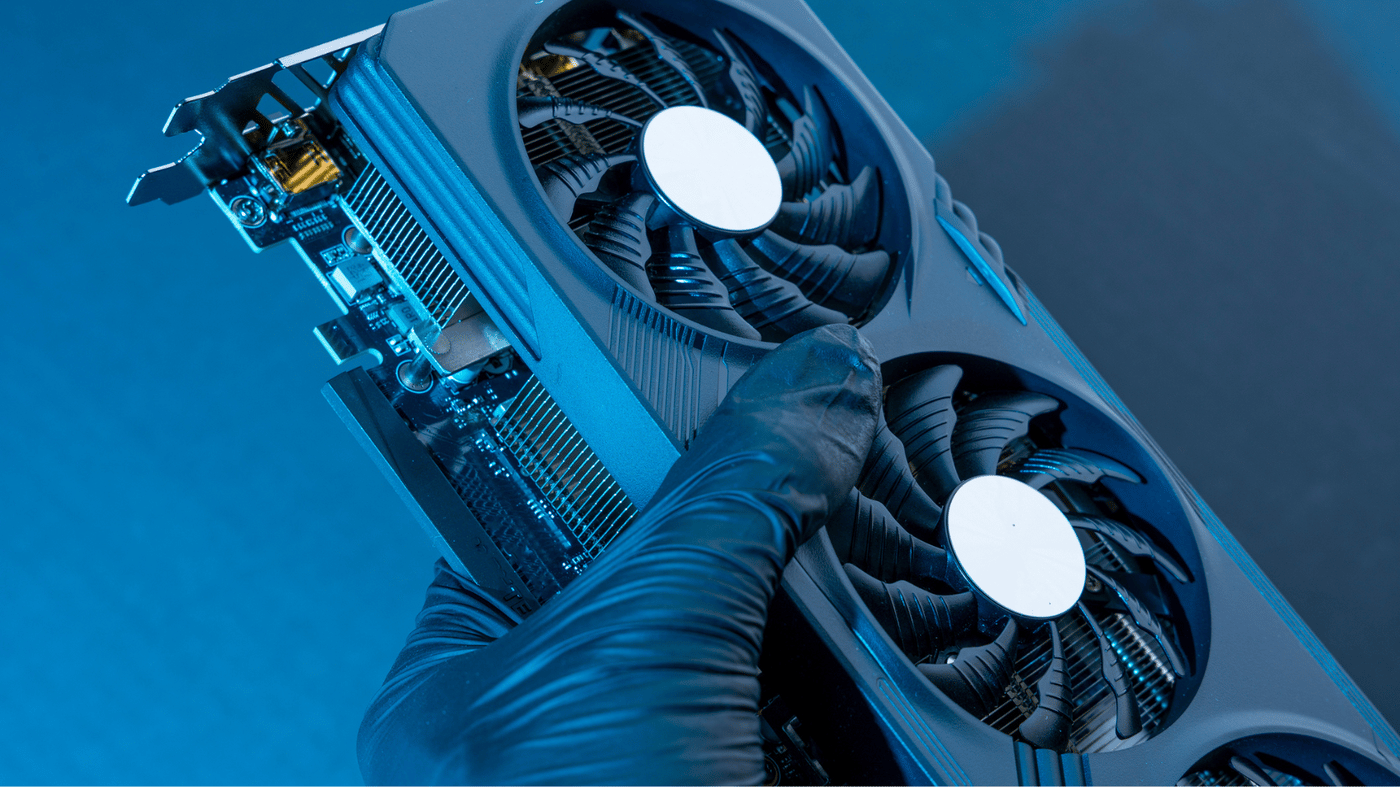
If "lifespan" is defined purely in terms of physical functionality, most data center GPUs will operate reliably for at least five years, and potentially much longer. Unlike mechanical systems—such as traditional hard disk drives with spinning platters or cooling fans integrated directly onto consumer-grade cards—data center GPUs are typically passively cooled. The heavy lifting of thermal management is handled by the server chassis or advanced facility-level liquid cooling loops. Because enterprise accelerators lack moving parts at the card level, there is no natural mechanical degradation during normal operational use.
That being said, hardware failures do occur. When they do, they are rarely caused by silicon wear-out; rather, they stem from external or board-level vulnerabilities:
- Power Delivery Component Degradation: Voltage regulator modules (VRMs) and onboard capacitors endure immense electrical stress, particularly under heavy, sustained AI training workloads. Over years of thermal cycling, these components can experience drift or catastrophic failure.
- Thermal Stress and Solder Fatigue: Constant shifts between idle states and maximum thermal design power (TDP) create microscopic expansion and contraction cycles. Over prolonged periods, this can lead to micro-fractures in the solder joints connecting the GPU die and memory modules to the substrate.
- Environmental Factors: Sub-optimal data center conditions—such as humidity fluctuations, microscopic particulate contamination, or micro-power surges—accelerate the degradation of peripheral board components.
In practice, data center operators employing robust liquid or advanced air cooling, pristine power conditioning, and proactive telemetry monitoring can achieve multi-year service lives. However, warranty and support windows (frequently structured around three-year terms, with optional OEM/ODM extensions) often serve as the practical ceiling for operational deployment, even when the underlying hardware remains physically operational.
Economic Lifespan: When Replacement Pays
While a GPU may continue to compute indefinitely, its economic utility is governed by a strict set of financial and operational variables:
- Price-to-Performance Ratios: As newer silicon generations deliver exponentially more compute cycles per dollar, the relative value of legacy hardware plummets.
- Performance per Watt: With modern AI accelerators demanding upwards of 1,000 watts per socket, power consumption constitutes a massive operational expenditure. Newer chips extract significantly more computational output per watt consumed, protecting data centers against rising energy costs and local grid capacity limits.
- Software and Ecosystem Support: Software stacks, framework optimizations (such as specialized CUDA libraries), and security patch lifecycles are heavily skewed toward contemporary hardware. Running legacy devices often means missing out on vital software-level performance optimizations.
When utilization rates are high, workload demands are continuously scaling, and the performance boost of new hardware outweighs incremental capital costs, economic replacement becomes an urgent priority. Based on current product cadences, the average economic lifespan of a high-performance AI GPU hovers between two and four years.
Official Industry Perspectives & Expert Commentary
The tension between rapid infrastructure turnover and sustainable data center operations has drawn sharp commentary from industry veterans and technology analysts alike.
Commenting on the structural limitations of modern data center hardware, industry analysts note that refresh decisions are increasingly detached from traditional hardware wear-out models. Christopher Tozzi, a prominent technology analyst and academic, emphasizes that procurement strategies must evolve past simple replacement cycles:
"Refresh decisions hinge on price/performance, performance per watt, and support timelines—more than on physical wear-out. Organizations must evaluate whether holding onto legacy silicon incurs a hidden opportunity cost that far outweighs the capital expense of upgrading."
Simultaneously, the broader semiconductor ecosystem is grappling with the sheer resource intensity of AI hardware production. Speaking on the strategic investments required to sustain future compute demands, memory manufacturing leaders have committed tens of billions of dollars to advanced packaging and high-bandwidth memory (HBM) research, recognizing that memory bandwidth—not just raw compute—acts as the primary bottleneck in determining hardware longevity.
Furthermore, former industry executives have pointedly criticized traditional data center architectures for failing to adapt gracefully to specialized AI workloads, arguing that the industry must transition toward more flexible, modular infrastructure paradigms to prevent premature hardware obsolescence.
Sustainable End-of-Life Management: Beyond the Scrapyard
When a fleet of data center GPUs reaches the end of its economic lifespan, enterprises face a critical fork in the road. Simply discarding functional silicon is a lose-lose proposition: it forfeits substantial residual asset value and exacerbates the global data center e-waste crisis.
Because the vast majority of retired data center GPUs remain physically sound, forward-thinking organizations are increasingly turning to robust secondary markets. Refurbished enterprise GPUs find eager buyers among academic institutions, regional research labs, and enterprises with less intense computational requirements. While secondary market resale prices may recover only 10% to 20% of the original hardware cost, this capital recovery is vastly superior to paying for hazardous e-waste disposal, directly funding subsequent infrastructure upgrades.
Owning vs. Renting: The Rise of GPU-as-a-Service (GPUaaS)
For organizations deeply uncomfortable with the compressed two-to-four-year economic lifecycle of owned AI hardware, a compelling strategic alternative has emerged: GPU-as-a-Service (GPUaaS).
The rapid proliferation of hyperscale neocloud providers and specialized infrastructure-as-a-service platforms allows businesses to rent compute capacity dynamically rather than locking capital into rapidly obsolescing physical assets. For enterprises operating outside the hyperscale tier, GPUaaS offers a pragmatic path forward. It shifts the burden of hardware obsolescence, maintenance, power provisioning, and end-of-life recycling onto specialized cloud providers, enabling internal engineering teams to focus entirely on software innovation and model deployment without the looming shadow of hardware depreciation.
Future Outlook: Managing the Next Infrastructure Wave
As the artificial intelligence landscape continues its relentless march forward, the lifecycle management of data center GPUs will define the financial health and environmental footprint of the tech sector.
In the coming years, data center operators must adopt sophisticated asset-lifecycle frameworks that integrate real-time telemetry, automated workload shifting, and proactive secondary-market logistics. By treating AI hardware not as a permanent fixture, but as a dynamic, highly liquid operational asset, enterprises can successfully navigate the tension between relentless technological progress and responsible capital stewardship.
Ultimately, the organizations that thrive in the age of accelerated computing will be those that master the delicate balance between maximum performance extraction, strategic hardware turnover, and sustainable end-of-life stewardship.