Executive Overview
The global artificial intelligence revolution is running on an unprecedented torrent of capital. A small, elite cadre of technology conglomerates—the so-called "hyperscalers," including Alphabet, Microsoft, Amazon, Meta, and strategic partner Oracle—are currently orchestrating one of the most aggressive industrial infrastructure buildouts in human history. Driven by a fundamental belief in the scaling hypothesis—the tenet that throwing ever-larger computational resources at artificial intelligence will unfailingly yield superior intelligence—these corporations are projected to pour upwards of $5 trillion into AI capital expenditures over the next four years.
This staggering financial mobilization has reshaped corporate boardrooms, revitalized regional energy grids, and injected massive sums into the global economy. Yet beneath the dazzling promise of cognitive automation lies an escalating economic hazard. Total revenues generated by downstream artificial intelligence applications remain a fraction of the capital being poured into upstream infrastructure. According to economic estimates, the hyperscalers are staring down a requirement to boost their aggregate earnings by a factor of 2.7 by 2030 simply to break even on their multi-trillion-dollar investments, factoring in capital costs, asset depreciation, and a standard 15% return.
If this productivity miracle fails to materialize on schedule, economists and former regulators warn that the current buildout risks becoming the largest misallocation of capital in financial history. More critically, the nature of this spending has evolved. No longer funded solely by the historically deep cash reserves of tech giants, the AI boom is increasingly fueled by external borrowing, private credit, and complex financial engineering. As these obligations weave their way through pension funds, private equity vehicles, and municipal energy boards, the fiscal health of the entire economy has become tethered to a high-stakes gamble on the future of machine learning.
Detailed Chronology: The Escalation of the Buildout
To understand the precarious financial architecture of the modern AI economy, it is necessary to trace how corporate ambition rapidly outpaced traditional capital allocation models.
Phase One: The Cash-Rich Genesis (2022–2024)
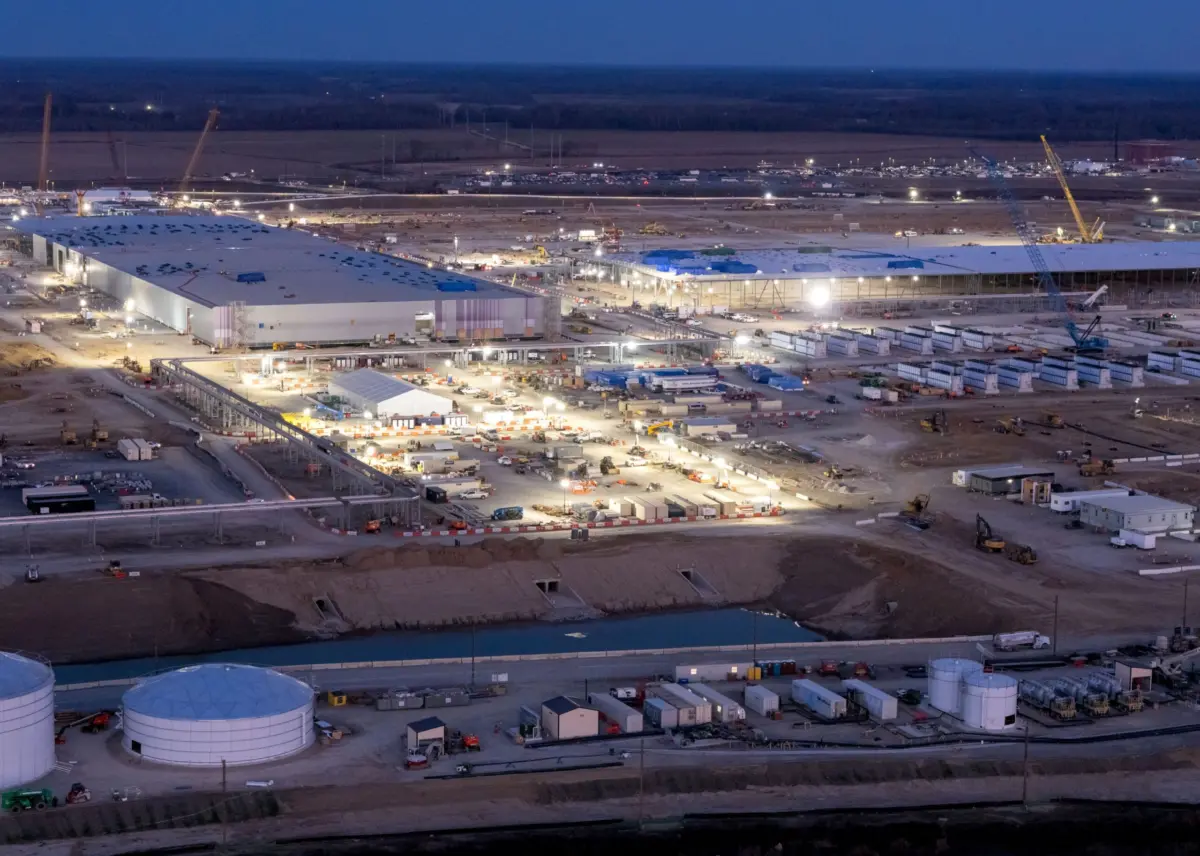
Following the public debut of generative AI models like OpenAI’s ChatGPT in late 2022, tech conglomerates initially funded their nascent computational ambitions using internally generated cash reserves. For decades, companies like Alphabet, Meta, and Microsoft had functioned as veritable cash-generation machines, hoarding tens of billions of dollars in retained earnings. During this foundational era, executives could absorb rising capital expenditures without destabilizing their primary balance sheets. Projects were announced with localized fanfare, such as Meta’s late 2024 unveiling of the Hyperion data center in Richland Parish, Louisiana—a projected two-gigawatt, $10 billion facility designed to run frontier models.
Phase Two: The Pivot to External Leverage (2025–2026)
As the pursuit of computational capacity shifted from a competitive advantage to an existential survival mandate, organic cash flow proved insufficient. By 2025 and 2026, capital expenditures began devouring operating revenues at historic rates. Alphabet reported its first free-cash-flow deficit since going public in 2004 as infrastructure spending devoured billions.
Faced with mounting deficits, hyperscalers pivoted aggressively to external financing. Financial engineering mechanisms—most notably special purpose vehicles (SPVs) and complex joint ventures—entered the mainstream. In late 2025, Meta restructured the financing for the Hyperion project, transferring an 80% stake to private-credit behemoth Blue Owl Capital to form a joint venture named Beignet. Through an intricate web of subsidiaries—including Laidley LLC as the landlord and Pelican Leap LLC as the tenant—Meta substituted long-term capital commitments with a series of four-year leases backed by residual value guarantees.
Simultaneously, utility providers across the United States scrambled to construct massive natural gas power plants to feed these data centers. Entergy Louisiana, for instance, expanded its energy proposals to supply upward of 7.5 gigawatts of power to Richland Parish alone—a footprint six times the electrical consumption of New Orleans.
Phase Three: The Ticking Depreciation Clock (Present Day)
As of late 2026, the industry has entered a precarious intersection of soaring debt and rapid hardware obsolescence. The specialized Graphics Processing Units (GPUs) that form the beating heart of AI data centers account for roughly 60% of total infrastructure costs. Because the computational performance of these chips roughly doubles every two years, data centers built today face a ticking time bomb: they must reinvest billions in next-generation hardware before the decade is out, or risk turning their multibillion-dollar assets into stranded, obsolete industrial "hulks."
Supporting Context & Metrics: The Mathematics of the Bet
Evaluating the sustainability of the AI infrastructure boom requires stripping away technological utopianism and applying rigorous corporate accounting. Finance professors and macroeconomic experts have analyzed the expenditure trajectory through the lens of pure balance-sheet reality.
The Break-Even Equation
Jessica Wachter, a finance professor at the Wharton School of the University of Pennsylvania and former chief economist of the SEC, notes that hyperscaler expenditures are projected to touch nearly $1.1 trillion annually by 2027. To justify this outlay by 2030, the companies driving the buildout must increase their net productivity by a factor of 2.7.
While such a feat would mirror the historic US IT productivity boom of the mid-1990s, compressing a decade’s worth of economic expansion into a few short years represents an extraordinary administrative and market challenge. Stijn Van Nieuwerburgh, a finance professor at Columbia Business School, estimates that building out the planned 183 gigawatts of AI compute capacity between 2025 and 2032—at roughly $41 billion per gigawatt—will require the industry to generate an eye-watering $3.7 trillion in annual revenues by 2032 to satisfy a baseline 10% investor return.
The Revenue Gap
These targets stand in stark contrast to present-day realities. Gary Gensler, former SEC chair and professor at MIT’s Sloan School of Management, points out that total AI revenues sit between $150 billion and $200 billion annually—a stark deficit when compared against the hundreds of billions poured into data centers year after year.
Furthermore, Morgan Stanley data indicates that more than half of the $2.9 trillion earmarked by hyperscalers for data center construction between 2025 and 2028 will be financed via external capital. This borrowing has seeped into the wider financial bloodstream:

- Private Credit Exposure: Institutional lenders, private equity funds, and private credit giants are heavily financing these infrastructure plays.
- Hidden Systemic Risk: As Van Nieuwerburgh warns, retail investors and average citizens are now indirectly exposed to this debt through pension funds and life insurance policies, where these high-risk loans are bundled into invisible asset classes.
Official Statements and Expert Perspectives
The divergence of opinion between optimistic industry insiders and cautious macroeconomic regulators highlights the polarized nature of the current market cycle.
-
On the Threat of Capital Misallocation:
“If a productivity boom fails to materialize, the current buildout will be the largest misallocation of capital in history.”
— Jessica Wachter, Wharton School (Co-author, recent economic paper on AI infrastructure) -
On the Multi-Layered Nature of the Risk:
“It’s a parlay bet by the capital markets and the economy. Success requires winning three related but independent wagers: Hyperscalers must generate massive revenues, AI must boost widespread economic growth, and both must happen while expensive frontier models fend off cheaper alternatives.”
— Gary Gensler, MIT Sloan School of Management / Former SEC Chair -
On the Need for Realized Efficiency:
💍“If you don’t get the productivity gains, at some point people are going to sour on AI, and that will bring down investments and limit revenue growth. We definitely need to see productivity gains to sustain this over five to 10 years.”
— Daron Acemoglu, MIT Economist and 2024 Nobel Laureate -
On the Danger of Stranded Infrastructure Assets:
“In four years, is Mark Zuckerberg still going to be interested in this? Or is he going to throw in the towel? They’re making huge bets that these data centers will be worth it. Bet with your own money, not with ratepayer money.”
— Paul Arbaje, Senior Analyst, Union of Concerned Scientists -
On the Logic of a Market Correction:
“History tells us that at some point you get a retrenchment, and it’s just a question of when and how severe. You can be pretty assured there’ll be a retrenchment.”
— Gary Gensler
Future Outlook: Navigating the Coming Retrenchment
As the AI infrastructure boom barrels forward, market watchers are no longer debating if a correction will occur, but when and how painful it will be.
The Triple-Wager Dilemma
The viability of the entire ecosystem rests on a delicate domino effect. First, hyperscalers must extract trillions in corporate revenue. Second, corporate clients must successfully leverage AI to drive widespread economic productivity. Third, these productivity milestones must be achieved without triggering severe social friction or regulatory backlash.
Current corporate surveys reveal a complicated picture. While approximately 90% of senior executives across the US, UK, Germany, and Australia report no net productivity increases from AI over the past three years, they anticipate a cumulative 1.45% to 2.25% bump by the late 2020s. However, this anticipated efficiency is largely projected to stem from aggressive workforce reduction rather than organic revenue expansion. If AI adoption becomes synonymous with job destruction, public opposition—already fierce around the massive power and water footprints of data centers—could harden into legislative roadblocks that choke off future investments.
Lessons from Past Bubbles
History offers both cautionary tales and comforting precedents. The dot-com crash of 2000 decimated Silicon Valley portfolios, triggered a mild macroeconomic recession, and wiped out speculative ventures. Yet, the underlying fiber-optic infrastructure built during that era’s frenzy ultimately laid the foundation for the modern web economy. Google, Amazon, and Meta rose from the ashes of that very wreckage.
Many Silicon Valley venture capitalists are privately—and publicly—rooting for a similar correction today. A healthy market crash could purge speculative excess, rationalizing land and energy use while forcing developers to focus on sustainable, application-driven value rather than endless computational scaling.
The Uncharted Risk
Yet, this cycle carries a unique systemic danger: the interweaving of trillion-dollar corporate infrastructure debt with ordinary citizens’ livelihoods through complex private credit vehicles and utility rate structures. If corporate giants pull back their spending because capacity outstrips demand, the resulting shockwaves will not be confined to venture capitalists. They will ripple outward to municipal utility boards, regional power grids, and everyday ratepayers left holding the bill for vacant data centers and unneeded gas plants.
Ultimately, artificial intelligence as a transformative technology will survive the coming financial reckoning. Its underlying algorithms will mature, and its utility will find a permanent home in the modern economy. Whether the colossal monuments of glass, silicon, and steel currently rising across rural America will survive with it remains the defining financial question of our generation.