








Executive Overview
For the modern artificial intelligence founder, the most perilous competitive threat no longer stems from a scrappy rival startup working out of a neighboring garage or co-working space. Instead, the ultimate existential hazard sits directly beneath their feet: the foundational platform upon which their entire software architecture is built.
Every routine update, API expansion, and major model release from heavyweights like OpenAI, Anthropic, and Google triggers a collective shudder across the venture-backed ecosystem. The underlying anxiety can be boiled down to a single, disruptive question: What happens to your business model if the exact feature you have spent the last twelve months building, refining, and marketing suddenly becomes native functionality rolled out in a routine platform patch?
This looming reality is fundamentally reshaping product strategy, altering fundraising dynamics, and depressing company valuations across the entire technological landscape. Not long ago, early-stage entrepreneurs worried primarily about market capture and out-executing peer startups. Today, they find themselves locked in an asymmetrical contest against foundation model providers that introduce entirely new capability suites every few months.
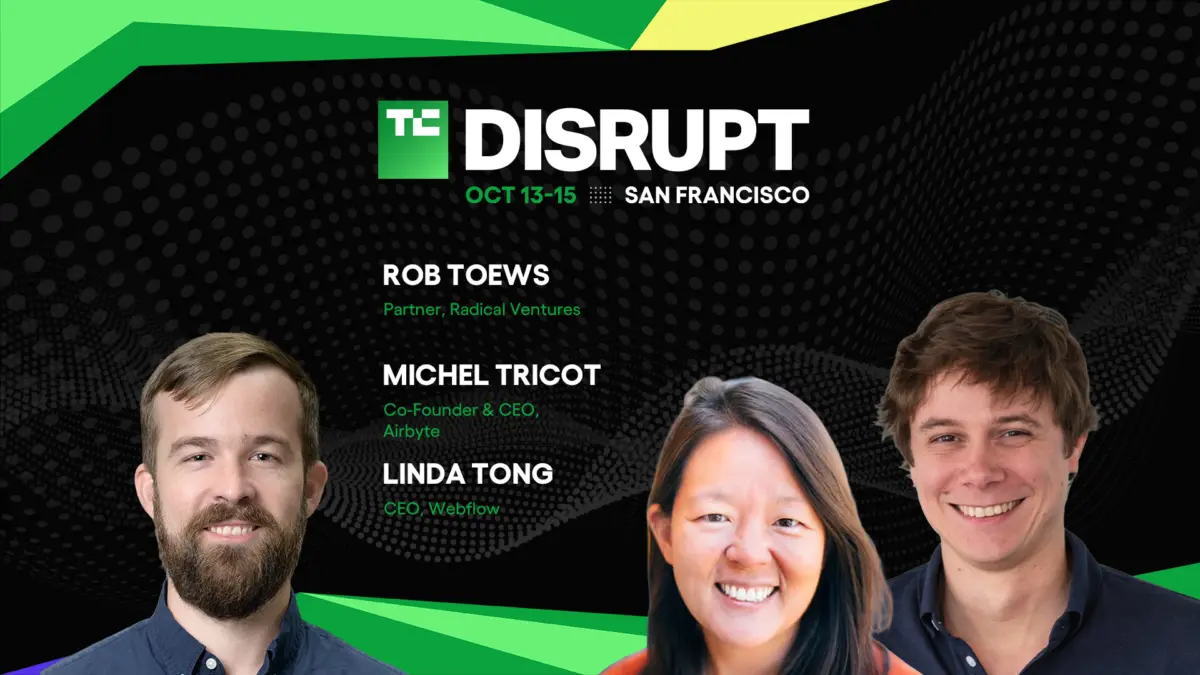
This structural power dynamic fundamentally alters every strategic decision a founder must make—shifting the core institutional dialogue from "Can we build it?" to "Can we sustainably own it?" To navigate this treacherous ecosystem, industry leaders will converge at TechCrunch Disrupt 2026, taking place October 13–15 at Moscone West in San Francisco. A flagship session on the Builders Stage, titled "What Happens When OpenAI Ships Your Roadmap," will tackle this urgent issue head-on, featuring insights from Airbyte CEO Michel Tricot, Radical Ventures Partner Rob Toews, and Webflow CEO Linda Tong.
Detailed Chronology: The Evolution of the AI Wrapper Trap
To understand how the AI ecosystem arrived at this precarious crossroads, it is necessary to examine the rapid historical acceleration of generative artificial intelligence over recent years.
Phase 1: The Gold Rush and the "Wrapper" Era (2022–2023)
Following the public launch of OpenAI’s ChatGPT in late 2022, the tech industry witnessed the fastest capital migration in venture history. Thousands of founders rushed to build application-layer wrappers around foundational large language models (LLMs). During this initial phase, the barrier to entry was exceptionally low. Developers could spin up a basic web interface, connect it to an API endpoint, and market a specialized tool for copywriting, legal document review, or code generation.
At the time, investors eagerly flooded these startups with capital, prioritizing top-line user acquisition metrics over structural defensibility. The prevailing wisdom assumed that owning the user interface and tailoring the prompt engineering was enough to secure long-term market share.
Phase 2: Platform Expansion and Disintermediation (2024–2025)
The vulnerability of the wrapper model was exposed sooner than many anticipated. As foundation model labs amassed astronomical capital reserves and top-tier engineering talent, they systematically began expanding horizontally. Capabilities that once required specialized third-party software—such as advanced document parsing, web searching, persistent memory, and multimodal vision processing—were rapidly internalized by the base models and offered natively.

Startups that had built their core value propositions around these specific capabilities watched their addressable markets evaporate overnight. A venture that spent a year developing proprietary orchestration logic for data extraction suddenly found its software reduced to a legacy feature rendered obsolete by a platform update. This phenomenon forced a brutal market correction, pushing venture capitalists to re-evaluate what constitutes an enduring enterprise value in the age of generative AI.
Phase 3: The Search for True Defensibility (2026 and Beyond)
Today, the industry has entered a much more sober, disciplined phase. Founders can no longer rely on raw model intelligence as a competitive differentiator, because foundational models are rapidly commoditizing toward parity. The race is no longer about who has access to the smartest model; it is about what can be built that the foundational model providers cannot easily replicate, absorb, or render free.
Supporting Context & Metrics: Where Defensibility Still Lives
As the boundaries between infrastructure providers and application developers continue to blur, survival requires a strategic pivot toward elements that foundation models cannot natively replace. Industry analysts and venture investors point to four primary pillars of defensibility:
- Proprietary Data Moats: While public web data is universally accessible to all foundation models, proprietary, domain-specific, and real-time operational data remains locked within enterprise silos. Startups that ingest, cleanse, and leverage closed-loop data assets create defensible feedback loops that improve their products without relying solely on raw model updates.
- Deeply Embedded Workflows: Software that sits at the absolute center of mission-critical business processes is exceedingly difficult to rip out. If an AI tool is seamlessly woven into the daily operational fabric of an enterprise—governed by strict compliance standards, custom APIs, and multi-system integrations—a basic model update cannot easily displace it.
- Domain Expertise and Trust: In regulated sectors like healthcare, finance, and legal services, accuracy, accountability, and liability management are paramount. Foundation models are prone to hallucinations; startups that provide specialized verification, domain-specific guardrails, and liability absorption offer a layer of trust that raw APIs cannot match.
- Proprietary Customer Relationships: Owning the end-customer relationship provides a continuous stream of feedback, localized customization, and brand loyalty that insulates a business from platform-level shifts.
Industry Metrics at a Glance
- Event Scale: TechCrunch Disrupt 2026 brings together over 10,000 founders, investors, and operators.
- Content Depth: The conference features more than 250 sessions exploring market forces, technological shifts, and venture financing.
- Open-Source Scale: Industry benchmarks from foundational infrastructure providers like Airbyte highlight that managing data integration across fragmented enterprise environments remains a massive hurdle, with platforms scaling to over 7,000 active enterprise customers, including nearly 18% of the Fortune 500.
Official Perspectives: Voices from the Builders Stage
To unpack how modern software companies are navigating this existential threat, the upcoming Builders Stage session at TechCrunch Disrupt brings together three distinct vantage points: the operator building the infrastructure, the CEO scaling an enterprise SaaS platform, and the investor evaluating long-term market viability.
Michel Tricot: Building Beyond the Model
Michel Tricot, CEO and co-founder of Airbyte, has spent his career immersed in data integration infrastructure—the invisible plumbing that makes analytics, operations, and modern AI deployments possible. Having scaled an open-source platform serving thousands of global enterprises, Tricot argues that durable businesses are forged not by chasing the latest model release, but by mastering the arduous mechanics of data movement and governance.
"The foundational layer will always evolve at a breakneck pace," industry observers note of Tricot’s operational philosophy. "The companies that survive and thrive are those that anchor themselves in the messy, complex reality of enterprise data pipelines where raw model intelligence alone is insufficient."
Linda Tong: Navigating the SaaS Shift
As CEO of Webflow, Linda Tong is steering one of the digital economy’s premier visual development platforms through the most turbulent technological transition in SaaS history. Drawing from an extensive leadership background that includes executive roles at Google, Cisco, and the NFL, Tong emphasizes that software companies must continuously reinvent their product surfaces while safeguarding their core competitive differentiators.
Under Tong’s leadership, Webflow has had to continuously evaluate how generative AI enhances visual design and web development without cannibalizing the core structural value that designers and developers rely upon daily.

Rob Toews: The Venture Capitalist’s Lens
At Radical Ventures, partner Rob Toews evaluates early-stage artificial intelligence startups on a daily basis, separating ephemeral wrappers from generational enterprise software companies. Toews has been a leading voice in articulating the economic implications of foundation model consolidation.
According to Toews, the primary evaluation metric for modern venture investors has shifted dramatically. Investors no longer ask simply how advanced an AI startup’s underlying prompt chain is, but rather: If OpenAI or Anthropic releases a competing capability six months from now, does this company retain a defensible right to exist?
Future Outlook: Building Companies, Not Features
The trajectory of the artificial intelligence ecosystem over the coming years is clear: foundation models will continue to get faster, cheaper, and vastly more intelligent. That trajectory is an engineering inevitability.
Consequently, the strategic mandate for startup founders is to stop treating model capabilities as proprietary intellectual property. Tomorrow’s enduring market leaders will not be defined by how cleverly they prompt a third-party LLM. Instead, they will be defined by everything the models cannot easily replicate: deeply entrenched enterprise workflows, proprietary data assets, rigorous domain-specific compliance, and hard-earned customer trust.
For founders, operators, and investors charting the next wave of technological innovation, understanding this shift is no longer optional—it is a matter of corporate survival. The greatest danger in the current venture landscape is not building a weak product; it is building a brilliant product that inevitably becomes someone else’s feature roadmap.
To dive deeper into these strategies, secure actionable insights from industry pioneers, and join over 10,000 technology leaders, attendees can register for TechCrunch Disrupt 2026 at Moscone West in San Francisco. Early registration discounts offering savings of up to $200 are available prior to the rate increase on September 25.