








Executive Overview
As the global artificial intelligence boom drives an unprecedented expansion of digital infrastructure, a silent crisis is brewing at the intersection of computing power, electrical grids, and local water supplies. While much of the public discourse surrounding data centers focuses on their voracious appetite for electricity, a far more localized and contentious constraint is rapidly taking center stage: water resilience.
Historically, the data center industry has relied on high-level, aggregated metrics—most notably Water Use Effectiveness (WUE)—to measure and report its environmental stewardship. A facility might boast an exceptional WUE score or market a novel "waterless" cooling strategy to appease regulators and local communities. However, as extreme weather events multiply and high-density AI clusters push servers to their thermal limits, experts are realizing that average metrics tell us very little about whether a facility can actually maintain its cooling setpoints during peak stress.
True water resilience is not a global corporate pledge or a clean spreadsheet metric; it is a hyper-local, physical reality. When a severe heatwave strikes, local water tables drop, municipal supplies dwindle, and electricity grids groan under the weight of simultaneous cooling loads. In these moments of peak crisis, the viability of a data center depends entirely on site-specific factors: local allocation laws, the quality and accessibility of reclaimed water, wastewater discharge limits, and complex water-energy trade-offs.
The unfolding legal and regulatory battles across the United States—exemplified by high-profile disputes in California and environmental stress tests across the Mid-Atlantic—demonstrate that the data center industry can no longer afford to treat water as an afterthought. To secure their social license to operate, developers and operators must transition from superficial efficiency claims to rigorous, context-based resilience planning.
Detailed Chronology: The Escalating Clash Over Water Resources
The collision between massive AI data center developments and strained local water infrastructure is no longer a theoretical risk; it is playing out in courtrooms, municipal hearings, and regional grid operations rooms.
The Imperial Valley Precedent (2024–2026)
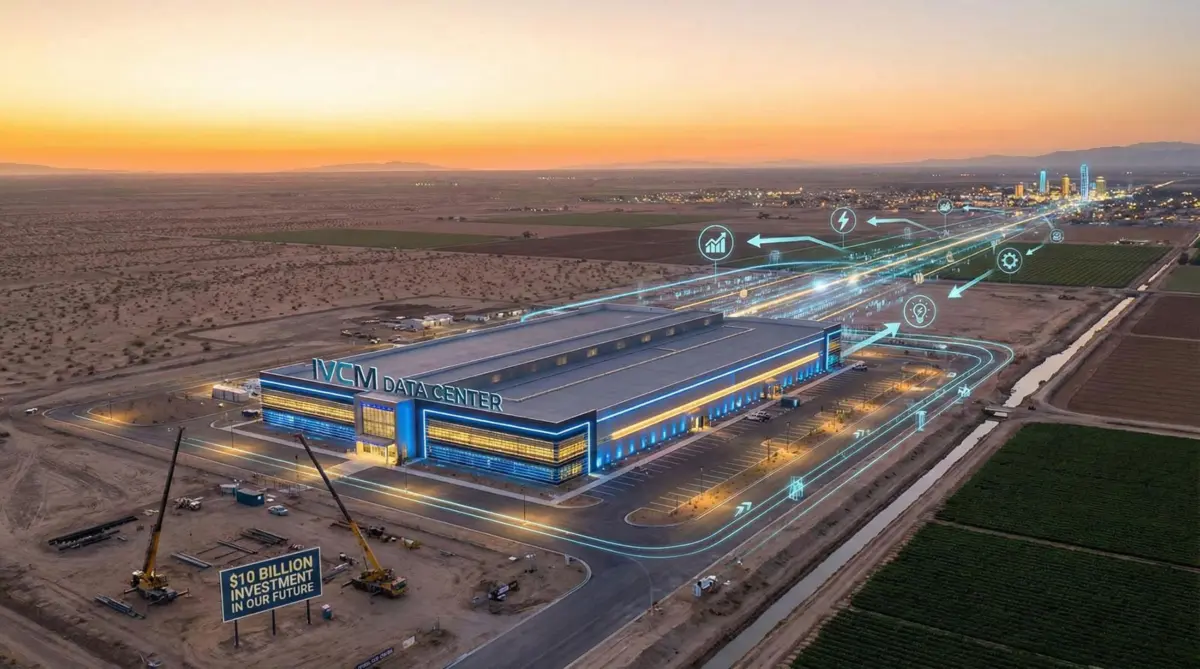
The limitations of standard water assessments were thrust into the spotlight by the high-profile dispute surrounding Imperial Valley Computer Manufacturing’s proposed 330-megawatt (MW) artificial intelligence data center in California. Initially, developers pitched the massive facility as a sustainable win for the region: the data center would bypass vulnerable Colorado River supplies entirely by relying instead on reclaimed wastewater.
However, as the project moved through planning phases, logistical realities set in. Alternative reclaimed water sources proved either unavailable in the necessary volumes or economically unfeasible to deliver to the specific site. Consequently, the project shifted gears and sought direct access to Colorado River water allocations.
The move triggered fierce pushback. In May 2026, the Imperial Irrigation District officially denied the request, citing severe pressures on the river basin and competing agricultural priorities. The denial led to an ongoing lawsuit in the Imperial County court—a legal battle that serves as a cautionary tale for the entire industry. It highlights how quickly initial assumptions about water availability can fracture when a project confronts legal entitlements and local scarcity during dry years.
Grid Stress and the Summer of 2026
While Western states grapple with river basin allocations, the challenges of the water-energy nexus manifested sharply in the Eastern and Midwestern United States during the severe heatwaves of July 2026.
PJM Interconnection, the regional transmission organization coordinating wholesale electricity across a 13-state Mid-Atlantic and Midwest region, issued critical warnings during the peak of the heatwave. As air temperatures soared, air-conditioning loads and data center cooling demands spiked simultaneously. PJM warned large electricity consumers—including hyperscale data centers—that they might need to switch to on-site backup generation to help maintain overall grid reliability.
This operational friction exposed a vital lesson: water and energy cannot be managed in silos. When an intense heatwave threatens electrical grids, data centers are forced to juggle dwindling power reserves with the massive volumes of water required to keep high-density chips from thermal throttling.

Supporting Context & Metrics: The Five Pillars of Site-Specific Resilience
To move beyond the misleading reassurance of average WUE figures, industry stakeholders—including developers, municipal planners, and environmental regulators—must adopt a comprehensive, site-specific assessment framework. This framework rests on five critical pillars.
[Peak Stress Conditions] <---> [Local Scarcity & Water Rights]
           ^                                 ^
           |         WATER RESILIENCE        |
           |        ASSESSMENT FRAMEWORK     |
           v                                 v
[Reclaimed Water Quality] <---> [Discharge & Regulatory Limits]
                                    /
                                   /
                     [The Water-Energy Nexus]
1. Performance Under Peak Conditions
Evaluating a data center’s cooling infrastructure based on average annual temperatures is a recipe for operational failure. Extreme heat events do not test a system’s average capability; they test its breaking point. During a heatwave, ambient air temperatures rise, water temperatures in cooling towers climb, and heat rejection becomes fundamentally less efficient.
Furthermore, because high temperatures drive up both IT workloads (due to heavy computational demands) and cooling loads, a facility’s water consumption can spike exponentially. Resilience requires modeling facility performance under 99th-percentile weather extremes, ensuring that cooling loops can hold their setpoints when the grid and the environment are under maximum duress.
2. Local Water Scarcity and Allocation Among Competing Users
National or regional water stress indicators are far too broad to inform data center site selection. Water availability is strictly a function of local watershed dynamics, legal frameworks, and historical allocation rights.
In arid regions like the Imperial Valley or parts of the American Southwest, agricultural stakeholders often hold senior water rights that supersede municipal and industrial claims. During a drought, the central question is not merely whether physical water exists in a basin, but who holds the legal entitlement to access it when supplies are curtailed. Data centers built in these zones risk sudden operational curtailments if local authorities prioritize residential or agricultural needs over commercial cooling.
3. Reclaimed Water Availability and Quality
The corporate pivot toward "recycled" or "reclaimed" water has been widely celebrated, but the logistical reality is fraught with hurdles. The mere existence of a wastewater treatment plant nearby does not guarantee a viable cooling supply.
Key considerations include:
- Delivery Infrastructure: Are there dedicated pipelines capable of transporting the required volume directly to the data center site, or will it require carbon-intensive trucking?
- Water Chemistry: Reclaimed water often contains high levels of total dissolved solids (TDS), hardness, silica, and biological matter. Without extensive and energy-intensive on-site pretreatment, this water can cause severe scaling, biofouling, and corrosion in cooling tower systems.
- Seasonal Reliability: Municipal wastewater volumes can fluctuate based on local population behaviors and industrial output, potentially leaving data centers short during seasonal troughs.
4. Discharge Constraints
Water resilience is a two-way street that encompasses both intake and discharge. Cooling towers continually concentrate impurities as water evaporates, requiring regular "blowdown" cycles to purge mineral-laden water from the system.
Facilities must carefully evaluate their discharge capacity. Local sewer connections, municipal wastewater treatment plant capacity, National Pollutant Discharge Elimination System (NPDES) permit limits, and strict regional caps on thermal and chemical releases can severely restrict operations. A data center might secure an ample water supply, only to find itself legally or physically unable to dispose of its blowdown wastewater.
5. The Water-Energy Nexus
Every decision made in data center cooling involves a direct trade-off between water consumption and energy consumption.
- Evaporative systems (such as traditional cooling towers) use large volumes of water but consume relatively little electricity to achieve heat rejection.
- Closed-loop air systems or dry coolers conserve water entirely, but they demand significantly more electricity to run fans and chillers, ultimately increasing carbon emissions and placing a heavier burden on the local power grid.
The most resilient solution is rarely the one that minimizes water at all costs, nor is it the one that optimizes energy efficiency in a vacuum. Instead, it is the configuration that strikes an optimal, context-aware balance tailored to the specific environmental and infrastructural constraints of the host community.

Official Statements and Industry Perspectives
The growing disconnect between corporate sustainability pledges and on-the-ground resource realities has prompted sharp commentary from engineers, legal experts, and resource specialists.
Dr. Marcello Serrao, a water treatment and data specialist with over two decades of experience in water-system engineering, emphasizes the limitations of current metrics:
"During heatwaves, average WUE tells little about whether a facility can hold cooling setpoints under peak stress. Water resilience is not a global metric or a corporate pledge; it is a site-specific property shaped by local conditions, competing demands, and infrastructure realities."
Legal and regulatory analysts point to the California litigation as a watershed moment for how municipalities view tech infrastructure. Rather than welcoming incoming mega-developments with open arms, local water districts are adopting a defensive posture.
An industry policy analyst noted during the recent PJM grid warnings:
"When grid operators are telling heavy power users to fire up backup generators because the airwaves are cooking the transmission lines, you realize that water and power are locked in a fatal embrace. You cannot solve an energy crisis in a data center without exacerbating a water crisis—unless you plan for the local extremes from day one."
Future Outlook: Navigating the Road Ahead
As the AI revolution charges forward, the pressure on digital infrastructure will only intensify. Generative AI models require immense computational density per rack, driving thermal loads that legacy cooling architectures were never designed to handle.
To maintain credibility in water stewardship, the data center industry must fundamentally overhaul how it approaches site selection and operational planning. Relying on aggregate WUE numbers or marketing vague "waterless" concepts will no longer suffice to satisfy wary regulators, litigious communities, and strained utility providers.
[Traditional Approach]                      [The Resilient Future]
----------------------                      ----------------------
• Relies on average annual WUE metrics  --> • Models performance under 99th-percentile heatwaves
• Treats water and energy in isolation  --> • Evaluates the integrated Water-Energy Nexus
• Assumes regional water is accessible  --> • Audits local watershed rights and senior claims
• Ignores municipal discharge limits    --> • Comprehensive blowdown and permit constraint analysis
Moving forward, successful data center deployment will rely on proactive, transparent engagement between operators, municipal water authorities, and regional grid managers. By applying a rigorous, site-scale assessment framework early in the development lifecycle, stakeholders can identify fatal flaws—such as contested water rights, inadequate wastewater discharge capacity, or fragile reclaimed supply lines—long before billions of dollars are committed to concrete and steel.
Ultimately, the future of AI infrastructure is inextricably linked to the health of local watersheds. If the data center industry wishes to avoid a wave of legal roadblocks similar to the one playing out in Imperial Valley, it must pivot from reactive litigation to proactive, context-based resource planning. Demonstrating true water resilience locally is no longer just an environmental ideal—it is the fundamental price of admission for the next generation of computing.