








Executive Overview
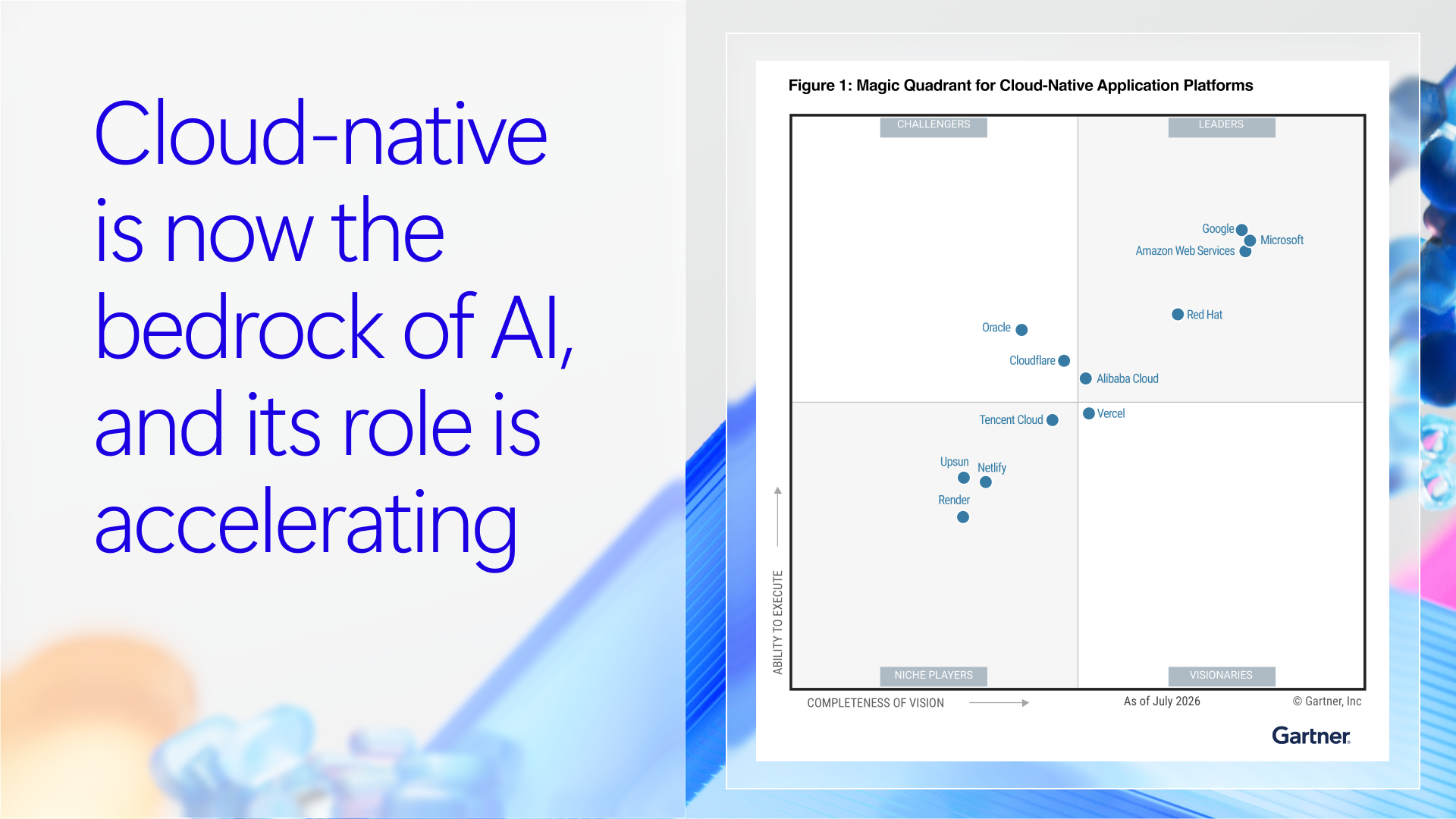
For the third consecutive year, research firm Gartner® has designated Microsoft as a Leader in its 2026 Magic Quadrant™ for Cloud-Native Application Platforms (authored by analysts Mukul Saha, Alex Coqueiro, Prasanna Lakshmi Narasimha, and Richard Watson, published August 3, 2026). While such industry rankings often emphasize incremental platform updates or marginal market-share gains, this year’s evaluation underscores a fundamental paradigm shift within global enterprise IT strategy: cloud-native application platforms are no longer merely staging grounds for hosting web microservices—they have become the operational foundation for enterprise Artificial Intelligence (AI) transformation.
+-------------------------------------------------------------------------------+
|                       ENTERPRISE AI & CLOUD CONVERGENCE                       |
+-------------------------------------------------------------------------------+
|                                                                               |
|   +--------------------------+                 +--------------------------+   |
|   |  Traditional Modernization|                 |   Next-Gen AI & Agents   |   |
|   |   - Web App Hosting      |                 |   - Model Inferencing    |   |
|   |   - Event-Driven Microservices             |   - Autonomous Agent Tooling |   |
|   |   - Legacy Migration     |                 |   - MicroVM Code Execution   |   |
|   +------------+-------------+                 +------------+-------------+   |
|                |                                            |                 |
|                +---------------------+----------------------+                 |
|                                      |                                        |
|                                      v                                        |
|               +--------------------------------------------+                  |
|               | UNIFIED AZURE CLOUD-NATIVE PLATFORM       |                  |
|               |  (Identity, Networking, Security, Gateway) |                  |
|               +--------------------------------------------+                  |
|                                                                               |
+-------------------------------------------------------------------------------+
The primary bottleneck facing modern enterprises is rarely a scarcity of AI ideas; rather, it is the formidable engineering challenge of translating experimental prototypes into reliable, enterprise-grade production environments. Autonomous AI agents and advanced large language models (LLMs) must connect cleanly with legacy corporate databases, operate securely at planetary scale, and comply strictly with existing governance, zero-trust security, and observability standards.
Microsoft’s platform strategy directly addresses this integration gap. By synthesizing legacy application modernization, containerized microservices, serverless execution, and AI orchestration into a unified framework on Microsoft Azure, the tech giant aims to eliminate the friction between running existing enterprise workloads and launching autonomous agentic systems.
Detailed Chronology: The Three-Year Convergence of Cloud-Native and AI
To understand Microsoft’s sustained positioning atop the Gartner Magic Quadrant, one must examine the operational evolution of the platform over recent years. The journey reflects a deliberate transition from core PaaS infrastructure toward an integrated platform optimized for non-deterministic AI execution.
       2024: PaaS & Serverless Foundation
              │
              ▼
       2025: API & Agent Infrastructure Integration
              │
              ▼
  [AUGUST 2026]: Gartner 3rd Consecutive Year Leader Designation
              │
              └─► MicroVM Sandboxes, Model Context Protocol (MCP),
                  Unified AI Gateways, & Agentic SRE Operations
Phase 1: Core Platform Modernization and Serverless Stability (2024)
Earlier iterations of Azure’s cloud-native stack focused heavily on expanding foundational Platform-as-a-Service (PaaS) capabilities. Enterprise applications running on traditional web frameworks were systematically transitioned to managed environments like Azure App Service. Concurrently, Azure Functions established event-driven compute patterns as standard protocol, allowing development teams to decouple workloads, streamline asynchronous data processing, and reduce infrastructure management overhead.
Phase 2: Microservice Abstraction and Enterprise Connectivity (2025)
As enterprise demands shifted toward containerization without the operational operational complexity of managing bare Kubernetes clusters, Microsoft accelerated the adoption of Azure Container Apps. This layer abstracted control plane operations while supporting microservices architectures, background processing, and early-stage AI inferencing workloads.
During this timeframe, security and governance frameworks were tightened across Azure API Management. This gave IT organizations a unified policy enforcement layer to govern public and internal endpoints, establishing strict rate-limiting, authentication protocols, and enterprise access boundaries.
Phase 3: Hardware-Isolated Agent Compute and Integrated Operations (2026)
By mid-2026, the rise of agentic AI introduced unprecedented operational risks—such as autonomous agents executing dynamically generated code or calling external enterprise APIs at high volumes. Microsoft responded by shipping Azure Container Apps Sandboxes, providing hardware-isolated microVM boundaries engineered to execute untrusted agentic code without compromising enterprise perimeters.
Simultaneously, the platform integrated the Model Context Protocol (MCP) into Azure Functions, coupled with over 1,400 pre-built enterprise connectors, and introduced autonomous IT remediation via the Azure SRE Agent. This structural progression positioned Microsoft’s cloud-native platform not just as a host for web applications, but as an environment built specifically for full-scale AI automation.
Supporting Context & Metrics: Technical Architecture of Azure’s AI Engine
Microsoft’s cloud-native application platform is organized as a cohesive, multi-layered environment designed to standardize operational controls, security boundaries, and runtime execution across diverse development stacks.
+-----------------------------------------------------------------------------------+
|                           AZURE CLOUD-NATIVE STACK                                |
+-----------------------------------------------------------------------------------+
|  DEVELOPER ENGINE     | GitHub Copilot  | Microsoft Foundry (Agent & Models)        |
+-----------------------+-----------------------------------------------------------+
|  GOVERNANCE & APIs    | Azure API Management (AI Gateway, MCP, Semantic Caching)  |
+-----------------------+-----------------------------------------------------------+
|  COMPUTE RUNTIMES     | App Service     | Container Apps  | Azure Functions       |
|                       | Managed Instance| (Sandboxes/microVMs)| (1,400+ Connectors) |
+-----------------------+-----------------------------------------------------------+
|  FOUNDATIONAL LAYER   | Azure Identity (Entra) | Defender Security | Azure Monitor |
+-----------------------------------------------------------------------------------+
Compute Runtimes and Isolation Mechanisms
- Azure Container Apps & MicroVM Sandboxes: Serves as the dedicated compute engine for dynamic AI agent execution. Built on hardware-isolated microVM technologies, Container Apps Sandboxes allow AI platforms—including the native Microsoft Foundry Agent Service—to execute generated code, host isolated MCP tools, and manage stateful agent workflows. Crucially, state is preserved even when an agent pauses, maintaining execution integrity without exposing the underlying host network.
- Azure App Service Managed Instance: Designed to accelerate modernization paths for established enterprise systems, particularly legacy Windows and .NET applications. It provides a direct path to lift and shift complex business logic into fully managed PaaS environments without costly app rewrites.
- Azure Container Apps Express: Optimized for rapid inner-loop developer workflows, allowing technical teams to push code directly from raw containers to public production endpoints in minutes.
API Integration, Governance, and Protocol Standardisation
- Azure Functions & Model Context Protocol (MCP): Acts as the event-driven connective tissue of the platform. Through native support for the Model Context Protocol, developers can surface core business logic directly to AI agents.
- 1,400+ Managed Connectors: Out-of-the-box integration blocks eliminate the need for developers to manually build authentication, retry logic, or data-transformation pipelines when connecting AI agents across fragmented enterprise systems (e.g., ERP, CRM, legacy databases).
- Azure API Management (AI Gateway Capabilities): Provides a centralized governance mesh for API traffic, model endpoints, and agent tools. Key operational capabilities include:
- Semantic Caching: Dramatically reduces model inferencing latency and costs by intercepting redundant prompt calls.
- Token Rate Limiting and Quota Management: Protects downstream LLMs and APIs from resource exhaustion or runaway loop conditions.
- Model Load Balancing: Distributes traffic dynamically across multiple regional deployments to guarantee continuous availability.
Operations, Observability, and Agentic SRE
Modern AI applications operate non-deterministically, requiring operational tools that move beyond traditional metric thresholds.
- Azure SRE Agent: Introduces agentic capability into IT operations. Integrated directly alongside Azure Monitor and Application Insights, the SRE Agent autonomously analyzes telemetry spikes, correlates system anomalies, identifies root causes, and presents auditable remediation paths to operations engineers.
- Security & Compliance Layer: Integrates hardware-enforced Confidential Computing constructs alongside Microsoft Defender, protecting sensitive data even while actively being processed by AI models.
Official Statements and Real-World Industry Case Studies
Enterprise adoption data indicates that organizations are increasingly utilizing Azure’s cloud-native stack to modernize core IT infrastructure while simultaneously deploying customer-facing AI applications.
Executive Commentary
Reflecting on the technical prerequisites for effective enterprise AI deployment, Mike Gibson, Chief Technology Officer at Planet DDS, emphasized that structural platform modernization must precede advanced technological deployment:
"A clean cloud architecture is a prerequisite for AI. You can’t build on top of a weak foundation."
Quantitative Industry Impact
+-----------------------------------------------------------------------------------+
|                        REAL-WORLD ENTERPRISE PERFORMANCE                          |
+-----------------------------------------------------------------------------------+
|  ENTERPRISE CLIENT   | ADOPTED AZURE ARCHITECTURE | MEASURABLE IMPACT             |
+----------------------+----------------------------+-------------------------------+
|  Planet DDS          | Azure App Service          | Provisioning time slashed     |
|                      |                            | from 6 weeks to 1 day         |
+----------------------+----------------------------+-------------------------------+
|  Commerzbank         | Azure Container Apps &     | Ava bot handles 30,000+       |
|                      | Foundry Agent Service      | monthly calls (75% autonomous)|
+----------------------+----------------------------+-------------------------------+
|  Ghassan Aboud Group | Azure Container Apps       | Deployed enterprise "Ragin AI"|
|                      |                            | across multi-sector business  |
+----------------------+----------------------------+-------------------------------+
|  Levi Strauss & Co.  | Microsoft Foundry          | Accelerated internal workflow |
|                      |                            | and corporate decision-making |
+----------------------+----------------------------+-------------------------------+- Planet DDS (Healthcare/SaaS): By modernizing its software platform using Azure App Service, the dental practice software developer reduced infrastructure provisioning lead times from six weeks down to a single day, freeing operational engineering capacity to focus on product feature development rather than manual setup.
- Commerzbank (Financial Services): The major European banking institution deployed its autonomous customer agent, Ava, on top of Azure Container Apps and Microsoft Foundry Agent Service. Processing over 30,000 complex customer interactions per month, the AI agent autonomously resolves 75% of inquiries end-to-end without requiring human agent intervention.
- Ghassan Aboud Group (Conglomerate): Designed and deployed its proprietary enterprise intelligence platform, Ragin AI, on Azure Container Apps, orchestrating customer experiences across diverse commercial sectors including automotive, logistics, and retail.
- Levi Strauss & Co. (Retail & Consumer Goods): Implemented Microsoft Foundry across its corporate operations to streamline decision-making pipelines and simplify day-to-day administrative workflows across regional divisions.
- Hexaware & Replit: Integrated Replit environments backed by Azure enterprise infrastructure to democratize internal application development, enabling non-traditional developer roles across Hexaware to build corporate software tooling securely.
Future Outlook: Cloud-Native Architecture as the Backbone of Autonomous Enterprise AI
As enterprises transition from initial AI experimentation to wide-scale deployment, the underlying platform requirements will continue to evolve. Microsoft’s positioning in the 2026 Gartner Magic Quadrant reflects an industry-wide realization: standalone AI services cannot thrive without robust, mature cloud-native infrastructure behind them.
Looking ahead, several structural shifts will define the next generation of cloud-native development:
- Shift from Static Microservices to Dynamic Agentic Ecosystems: Traditional microservice architectures designed for deterministic API requests will increasingly integrate dynamic agent runtimes. Cloud platforms will be evaluated on their ability to spin up short-lived microVMs, manage agent context states, and securely run dynamic code on demand.
- Native Convergence of Developer and Operational AI Agents: Developer tools like GitHub Copilot and operational systems like the Azure SRE Agent will operate within closed feedback loops—automatically identifying runtime exceptions, drafting code patches, testing inside isolated sandboxes, and recommending production deployments under unified governance policies.
- Standardization around Open Integration Protocols: Protocols like the Model Context Protocol (MCP) will become central to platform evaluation criteria, allowing enterprise IT departments to expose thousands of legacy back-end databases to AI models without writing bespoke middleware for every use case.
Ultimately, Microsoft’s three-year tenure as a Gartner Leader highlights a clear market trajectory: the future of application modernization and the future of enterprise AI are no longer parallel tracks. They are now part of a single, continuous architecture strategy.
Reference Information
- Report Gartner® Magic Quadrant™ for Cloud-Native Application Platforms
- Publication Date: August 3, 2026
- Authors: Mukul Saha, Alex Coqueiro, Prasanna Lakshmi Narasimha, Richard Watson
- Disclaimer: Gartner does not endorse any vendor, product or service depicted in its research publications, and does not advise technology users to select only those vendors with the highest ratings or other designation. Gartner publications consist of the opinions of Gartner’s research organization and should not be construed as statements of fact.