







SAN FRANCISCO & LONG BEACH, CALIF. — In a milestone signaling shifting paradigms within the clean energy sector, Bluecore Energy announced on Tuesday the successful closure of an oversubscribed $50 million seed funding round. The rapid capital infusion comes barely months after the company emerged from stealth mode following a $10 million pre-seed round.
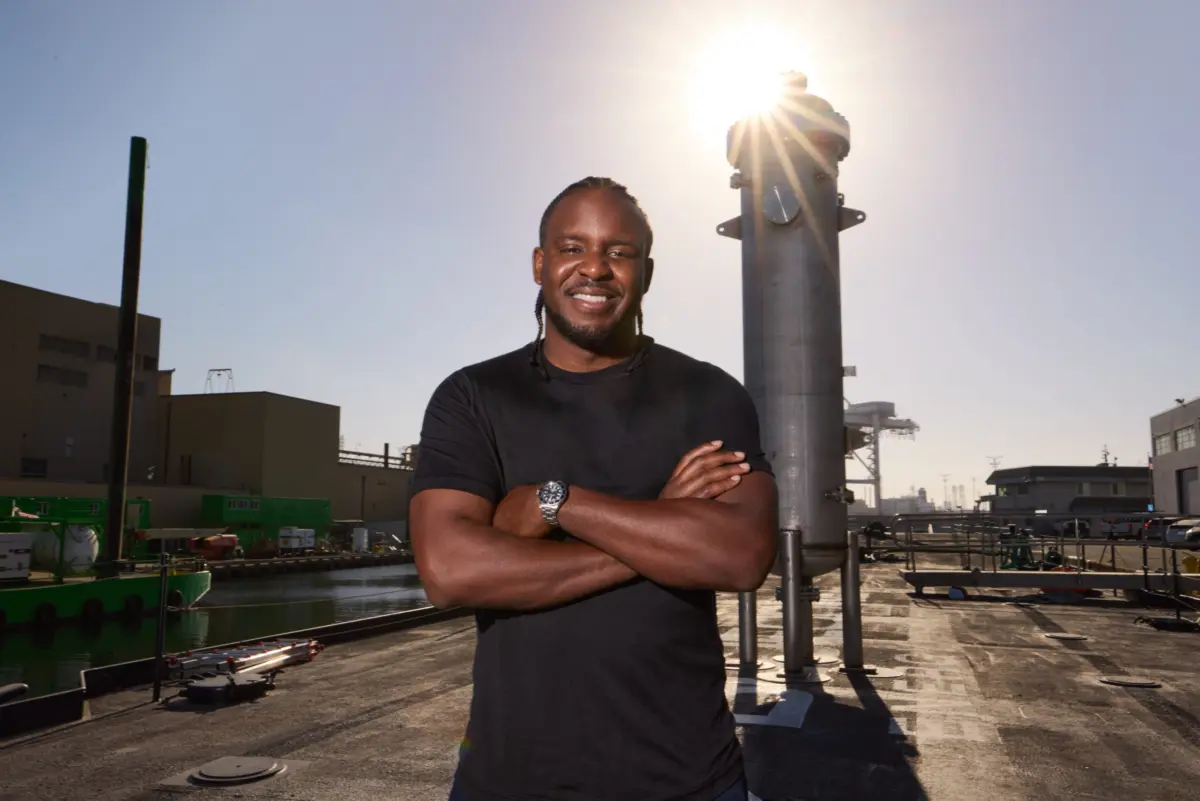
Founded earlier this year by Kofi Asante—an alumnus of Uber and an emerging voice in next-generation infrastructure—Bluecore Energy is pioneering the development of small modular nuclear reactors (SMRs) mounted on floating marine barges. By bypassing the immense timelines, geographic constraints, and civil engineering hurdles associated with fixed-location nuclear facilities, Bluecore aims to deliver portable, scalable clean electricity directly to major ports, industrial hubs, AI data centers, and underserved coastal communities.
The $50 million seed round was led by Silverton Partners and closed in just eight weeks. It reflects an extraordinary surge of institutional and high-profile backing, driven by an inbound demand pipeline that caught even the company’s leadership by surprise.
Executive Overview: A Paradigm Shift in Clean Energy Logistics
The global transition toward a decarbonized economy has routinely collided with a stubborn bottleneck: the sheer scale and timeline required to build modern power infrastructure. Traditional nuclear power plants take decades to plan and billions of dollars to construct, while large-scale renewable grids demand vast expanses of land and heavy transmission line upgrades.
Bluecore Energy’s thesis posits that the solution to this gridlock is mobility. Rather than anchoring reactors to concrete foundations deep inland, Bluecore builds compact SMRs integrated onto maritime barges. These floating power stations can be towed across waterways to areas facing sudden energy deficits, natural disasters, or surging industrial demand.
"The Navy is doing this as we speak, for the last 70 years, and has never had an accident," Kofi Asante said in an interview. "We just made it smaller, so you can actually move things around in a way that doesn’t take years—or a new set of infrastructure—but days."
The approach has captured the imagination of venture capitalists and heavy-hitting angel investors alike. With its dual objectives of generating both carbon-free electricity and power for desalination and water purification, Bluecore is positioning itself not merely as a power company, but as a fundamental logistical backbone for the 21st-century economy.
Detailed Chronology: From Stealth Mode to Multi-Million Dollar Momentum
The trajectory of Bluecore Energy over the past several months reads like a masterclass in market timing and execution.
July 2026: Coming Out of Stealth
Bluecore officially broke cover in July, announcing a $10 million pre-seed round that established its technical and strategic foundation. Crucially, the company made history upon emerging from stealth by establishing its headquarters at the Port of Long Beach, becoming the first-ever nuclear technology enterprise embedded directly within a major operational seaport.
At the time, the capital was earmarked for baseline engineering, early design validation, and establishing foundational relationships with maritime and regulatory authorities. However, the macro environment—marked by skyrocketing energy demands from generative AI workloads and data centers—triggered an immediate and overwhelming market response.
August 2026: Regulatory Engagement
Following its public launch, Bluecore immediately transitioned from conceptual planning to formal bureaucratic integration. In August, the company officially commenced formal engagement with the U.S. Nuclear Regulatory Commission (NRC), the Department of Transportation’s Maritime Administration (MARAD), and the U.S. Coast Guard.
While informal dialogues with these federal bodies had taken place since the company’s inception, the August milestone marked the official entry of Bluecore’s proprietary floating SMR architecture into the federal review pipeline. Securing design certification from the NRC and the Coast Guard represents the regulatory holy grail for maritime nuclear deployment.
Fall 2026: The Oversubscribed Seed Round
Although Asante had not planned on returning to the fundraising market so soon after securing the pre-seed capital, inbound investor interest proved impossible to ignore. A diverse consortium of venture firms and strategic angels flooded the company with term sheets and capital commitments.
Silverton Partners stepped in to lead the $50 million seed round, which was finalized in an aggressive eight-week window. A testament to early investor conviction, several participants from the initial $10 million pre-seed round—including Slauson & Co., Harlem Capital, and Ripple co-founder Chris Larsen—doubled down, expanding their stakes in the enterprise.
They were joined by a prominent roster of new institutional investors, including Collab Capital and HartBeat Ventures (founded by entertainment mogul Kevin Hart). Furthermore, the cap table swelled with a powerful contingent of tech-industry angel investors hailing from giants such as Tesla, Uber, Amazon, and Google.
"I just kept having to figure out a way to make more room on the cap table," Asante admitted regarding the intense demand from venture capitalists. "I wasn’t anticipating us raising that level of capital in that period of time, but really fortunate that we have so many investors and partners who are excited."
Supporting Context & Metrics: Navigating Supply Chains and Regulatory Waters
Building a nuclear reactor is an elite engineering challenge; building one designed to float on water and travel through shipping lanes introduces a completely unprecedented layer of complexity.
The Regulatory Pathway
To achieve commercial viability, Bluecore must clear rigorous safety, environmental, and structural hurdles established by federal regulators. The U.S. Navy’s seven-decade unblemished safety record operating nuclear reactors aboard submarines and aircraft carriers provides a conceptual blueprint, but translating that military application into a commercially certifiable civilian product requires strict adherence to civilian nuclear codes.
Reviewing a floating nuclear plant requires dual-jurisdictional oversight: the NRC evaluates the nuclear core, safety systems, and radiological containment, while the U.S. Coast Guard and MARAD evaluate the structural integrity, marine stability, and navigational safety of the barge itself.
Supply Chain Strategy and Engineering DNA
When asked about the most formidable obstacles ahead, Asante did not point to physics or financing, but rather to supply chain velocity. Securing specialized hardware and nuclear-grade components at a pace capable of matching soaring consumer demand is the company’s primary operational test.
To conquer this hurdle, Bluecore has consciously recruited top-tier engineering talent from firms renowned for aggressive hardware scaling and vertical integration.
"Our team comes from SpaceX, Rivian, and Toyota, so we are applying similar strategies to be able to secure critical parts," Asante noted. "We already have barges and a reactor and are now about to order nuclear fuel to go to our partner at a national nuclear lab."
This pragmatic approach—combining proven nuclear physics with modern automotive and aerospace manufacturing supply chain principles—gives Bluecore a distinct competitive edge over legacy energy firms bound by slow, bureaucratic procurement cycles.
Official Statements and Industry Perspective
The commercial validation of Bluecore’s model is underscored by the diversity of its backer base and the strategic nature of its early partnerships. By positioning its headquarters at the Port of Long Beach, Bluecore has placed itself at the literal nexus of global trade and heavy logistics.
Maritime ports represent a uniquely heavy carbon footprint: massive container cranes, localized drayage trucking fleets, and idling mega-ships generate immense local pollution. Furthermore, as global supply chains electrify, local electrical grids surrounding ports are increasingly starved for capacity. Bluecore’s floating barges can dock directly against port infrastructure, plugging clean, reliable multi-megawatt power blocks straight into local grids without requiring years of transmission line construction.
Beyond maritime logistics, the company has fielded aggressive inbound interest from artificial intelligence data center operators. The explosive growth of large language models has created an unprecedented global energy crunch, with data center campuses routinely facing multi-year wait times to connect to traditional electrical grids. Clean, rapidly deployable nuclear energy stationed off-coast or near industrial canals offers an immediate workaround to transmission bottlenecks.
Future Outlook: Democratizing Access to Clean Power
With $50 million in fresh capital now secured, Bluecore Energy’s roadmap is clear, albeit aggressive. The funding will be directly allocated toward four core pillars:
- Product Development & Engineering: Finalizing advanced iterations of the company’s proprietary SMR barge architecture.
- Regulatory Compliance: Funding ongoing, intensive reviews with the NRC and the U.S. Coast Guard to move closer to federal design certification.
- Nuclear Fuel Procurement: Executing upcoming fuel orders in partnership with designated national nuclear laboratories.
- Talent Acquisition: Expanding the engineering and operations teams by drawing elite talent from the aerospace, automotive, and nuclear sectors.
Despite the technical complexity and high-stakes regulatory landscape, Kofi Asante remains anchored to a deeply philosophical foundational mission. For Asante, portable nuclear power is not just a clever engineering hack or a lucrative venture capital play—it is a matter of global equity.
"It all goes back to the core mission," Asante reflected, "to democratize access to clean energy."
"My philosophy is that access to clean energy and also clean water should be a human right."
As Bluecore Energy pushes forward toward its goal of commercial deployment, the startup is successfully proving that the future of nuclear power may not be rooted in the ground, but rather floating gracefully on the water—ready to deliver clean, reliable power to wherever humanity needs it most.