








Executive Overview
In the rapidly evolving landscape of professional motion picture and television lighting, the demand for high-output, color-accurate, and logistically manageable fixtures has never been more acute. Historically, achieving illumination levels capable of competing with direct sunlight or filling massive diffusion frames required either costly, power-hungry Hydrargyrum Medium-arc Iodide (HMI) fixtures or premium, high-end cinema LED systems that remained financially out of reach for independent creators, boutique production houses, and mid-tier commercial studios.
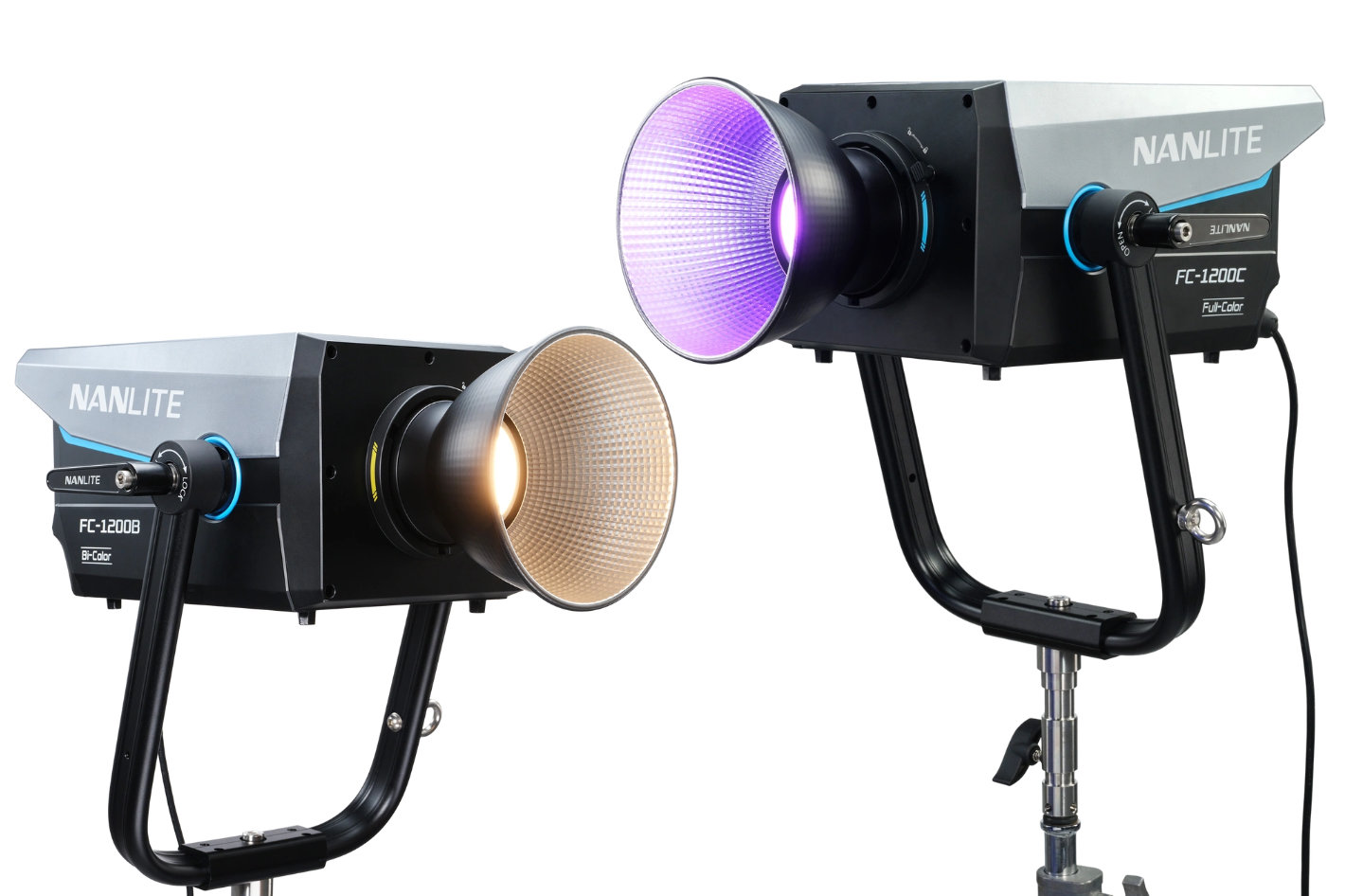
Nanlite, a brand under the parent company Nanguang, has officially challenged this market dynamic with the introduction of its latest flagship fixtures: the FC-1200B Bi-Color and the FC-1200C RGBW LED spotlights. Boasting a formidable rated power draw of 1350 watts and a sustained output of 1200 watts, these new fixtures represent the pinnacle of Nanlite’s budget-friendly FC series.
By combining exceptional photometric performance, an innovative "all-in-one" ballast-free design, advanced control protocols (including NFC and DMX/RDM), and a highly competitive pricing structure—$1,290.00 for the FC-1200B and $1,490.00 for the FC-1200C—Nanlite is poised to democratize megawatt-class LED lighting. This release signifies a paradigm shift, bringing high-intensity lighting tools out of the exclusive domain of elite rental houses and directly into the hands of owner-operators, commercial videographers, and virtual production studios.
Detailed Chronology: The Evolution of Nanlite’s High-Output Strategy
To understand the engineering and market significance of the FC-1200 series, it is essential to trace the developmental trajectory of Nanlite’s product ecosystem. For years, the professional LED lighting market was strictly bifurcated. On one end stood premium, heavy-duty cinema fixtures designed for rigorous rental environments; on the other end were affordable, plastic-bodied lights targeted at content creators.
Nanlite Product Evolution Path:
[FS Series] (Entry-level, integrated design)
       │
       ▼
[FC Series (Early)] (Mid-tier, balance of power & price: FC-300 / FC-500)
       │
       ▼
[FC-720B / FC-720C] (High-power bridge fixtures)
       │
       ▼
[FC-1200B / FC-1200C] (Apex of FC series: 1200W output, ballast-free, professional control)
Nanguang strategically addressed this division by splitting its offerings into two distinct brands:
- Nanlux: Focused on ultra-premium, ruggedized, weather-resistant cinema fixtures (such as the Evoke series) utilizing proprietary mount ecosystems to compete with industry giants like Arri and Creamsource.
- Nanlite: Dedicated to providing highly functional, versatile, and cost-effective lighting solutions utilizing the universally adopted Bowens mount.
The Nanlite FC series was conceived to bridge the gap between entry-level FS fixtures and the high-end Nanlux line. Early iterations, such as the FC-300 and FC-500, established the series’ signature aesthetic: sleek, lightweight housings with integrated control interfaces and external power bricks. As set demands grew, Nanlite expanded the family with the FC-720 series, pushing the boundaries of what could be powered safely from standard domestic AC outlets.
The launch of the FC-1200B and FC-1200C represents the logical culmination of this developmental cycle. Engineering a 1200-watt LED fixture presents immense thermal and electrical challenges. Traditionally, fixtures of this caliber required a separate, heavy ballast unit connected via thick, proprietary header cables to handle the massive voltage regulation and heat dissipation.
By successfully integrating the power supply directly into the lamp head—eliminating the external ballast entirely—Nanlite’s engineering team has achieved a significant design milestone, streamlining on-set workflows and reducing physical footprint.
Supporting Context & Technical Metrics
The true value of any professional lighting fixture lies in its photometrics, color science, thermal management, and integration capabilities. A closer inspection of the technical specifications of both the FC-1200B and FC-1200C reveals how Nanlite managed to balance high-intensity output with precision color rendering.
Photometric Performance and Color Science
While both fixtures share the same chassis and physical footprint, their optical engines are optimized for different production requirements.
| Metric | Nanlite FC-1200B (Bi-Color) | Nanlite FC-1200C (Full-Color RGBW) |
|---|---|---|
| Rated Power Draw | 1350W | 1350W |
| LED Output Power | 1200W | 1200W |
| CCT Range | 2700K – 6500K | 2400K – 12,000K |
| Photometrics (at 3m w/ 45° Reflector) | 15,620 lux | 14,220 lux |
| Color Engine | Standard Bi-Color COB | Nebula C4 Color Light Engine |
| Green/Magenta Adjustment | N/A | ±150 |
| Average CRI | 96 | 96 |
| Average TLCI | 98 | 98 |
| Weight | 22.1 lbs (10.0 kg) | 22.3 lbs (10.13 kg) |
| Price (USD) | $1,290.00 | $1,490.00 |
The FC-1200B: Pure Bi-Color Efficiency
Optimized for maximum white-light output, the FC-1200B utilizes a specialized bi-color Chip-on-Board (COB) array. By restricting the color spectrum to a variable range between 2700K and 6500K, the fixture maximizes luminous efficacy.
Delivering 15,620 lux at 3 meters when paired with the included 45-degree reflector, it provides the raw punch necessary to cut through heavy diffusion, bounce off large surfaces, or simulate natural sunlight through windows. With a CRI of 96 and a TLCI of 98, it ensures that skin tones, fabrics, and set design elements are rendered with absolute fidelity.
The FC-1200C: The Nebula C4 Color Engine
For productions requiring absolute creative control over color space, the FC-1200C integrates Nanlite’s proprietary Nebula C4 color light engine. This system allows for an ultra-wide correlated color temperature (CCT) range spanning from a warm 2400K to an icy 12,000K.
More importantly, it features a highly precise green-to-magenta adjustment range of ±150. This is an indispensable feature for gaffers needing to match the output of older cinema lenses, coordinate with existing practical fluorescent tubes, or seamlessly integrate the fixture into volume-based virtual production stages.
The FC-1200C does not sacrifice intensity for color variety; it still manages to output an impressive 14,220 lux at 3 meters using the 45-degree reflector. It also offers multiple operating modes, including:
- CCT Mode: Traditional white light control with green/magenta tinting.
- HSI Mode: Direct control over Hue, Saturation, and Intensity.
- RGBW Mode: Independent control of Red, Green, Blue, and White channels for precise color mixing.
- Gel Mode: Digital emulations of industry-standard lighting gels.
- Effect Mode: Customizable lighting effects (e.g., police car, lightning, candle, TV flicker) to simulate environmental lighting.
       [Nebula C4 Color Engine]
                  │
  ┌───────────────┼───────────────┐
  ▼               ▼               ▼
[CCT Mode]    [HSI Mode]     [RGBW Mode]
(2400K-12000K) (Hue/Sat/Int) (Direct Ch. Control)
  │               │
  ▼               ▼
[Gel Mode]    [Effects Mode]
(Digital Gels) (Dynamic FX)
The All-in-One Mechanical and Thermal Design
One of the most notable design achievements of the FC-1200 series is the elimination of the external power supply brick. In traditional setups, a 1200W fixture requires a separate ballast box that can weigh upwards of 15 to 20 pounds, connected to the lamp head via a thick header cable. This adds bulk to transport cases, increases setup and teardown times, and creates physical clutter on set that can pose tripping hazards.
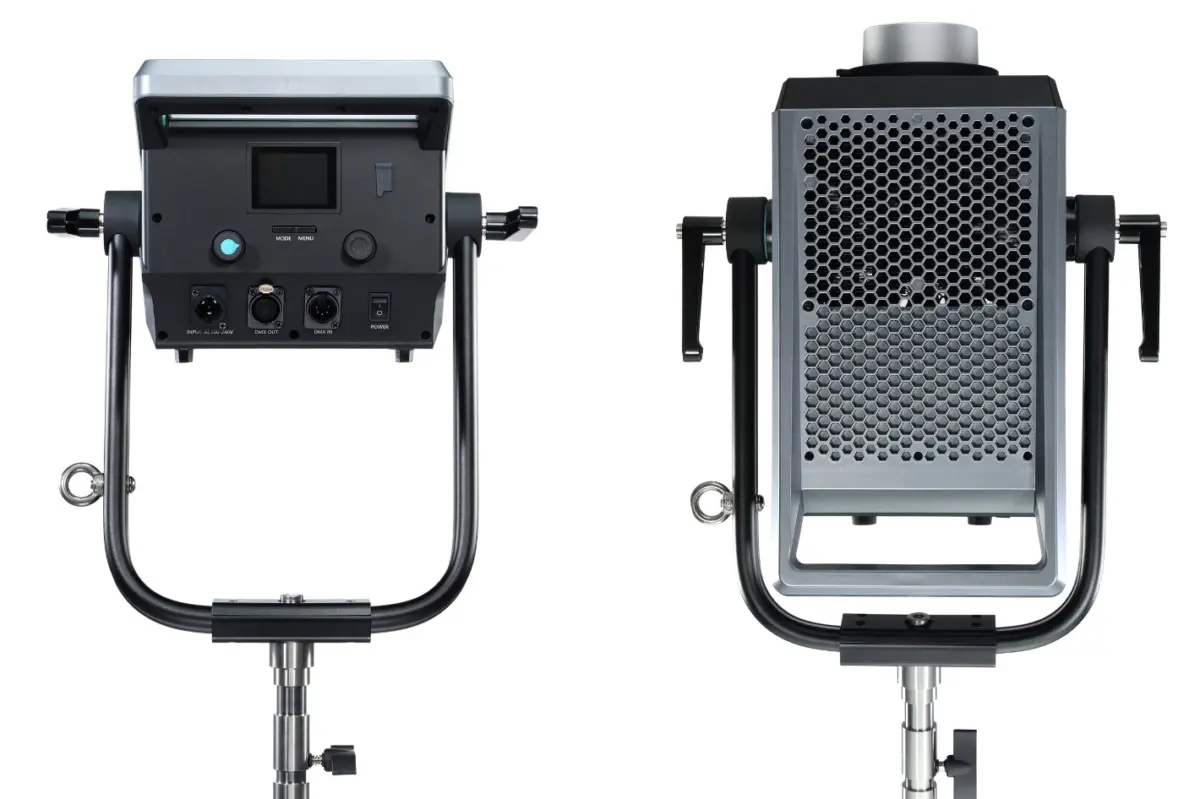
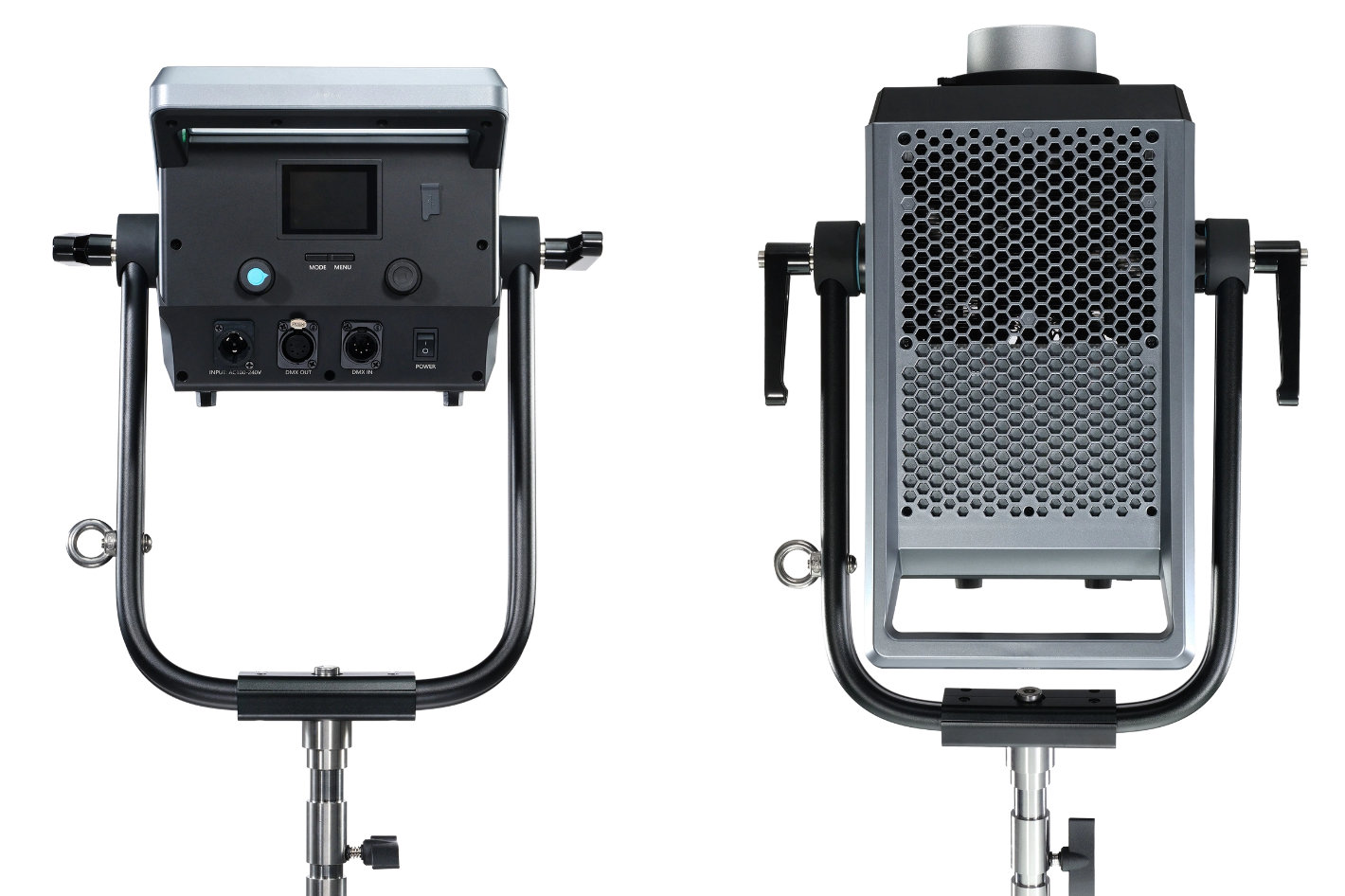
By engineering an all-in-one chassis, Nanlite has integrated the power conversion circuitry directly into the lamp head. Users simply run a heavy-duty AC power cable from a standard wall outlet directly into the back of the light.
However, housing a 1350W power supply alongside a high-draw LED COB array inside a single enclosure generates a massive thermal load. To prevent thermal throttling and ensure the longevity of the internal components, Nanlite implemented a highly sophisticated active cooling system.
The fixtures feature four distinct fan modes designed to balance cooling efficiency with acoustic performance:
- Smart Mode: Dynamically adjusts fan speed based on the internal temperature of the fixture. In typical operating conditions, noise levels are kept as low as approximately 26 dB(A), making it virtually imperceptible on quiet sound stages.
- Full Speed Mode: Runs the fans at maximum capacity for extreme thermal environments, ensuring the light can operate continuously in high ambient temperatures.
- Low Speed Mode: Restricts fan noise for sensitive audio recording environments while slightly capping maximum light output if thermal thresholds are reached.
- Off Mode: Completely deactivates the fans for absolute silence on set, running the fixture entirely on passive convection cooling with a significantly reduced power output to protect the LED array.
Connectivity, Control, and Ecosystem Integration
Modern gaffers and lighting directors demand flexible, reliable control options that can adapt to various set scales. The FC-1200B and FC-1200C are equipped with a robust suite of connectivity features:
- On-Board Controls: Two physical dials and a clear, high-contrast display screen on the rear of the fixture allow for intuitive manual adjustments.
- NANLINK App 2.0: Utilizing built-in Bluetooth, users can control single fixtures or complex multi-light arrays directly from a smartphone or tablet. The updated app interface allows for rapid grouping, preset saving, and real-time parameter adjustments.
- DMX/RDM: For large-scale studio installations and theatrical environments, physical DMX connection ports allow the lights to be integrated into centralized lighting consoles, enabling seamless synchronization with automated shows and media servers.
- NFC (Near Field Communication): A highly forward-thinking addition, NFC chips inside the fixtures allow crew members to scan the light with a mobile device to configure settings, address DMX profiles, or identify fixtures even when the unit is completely powered down or packed away in its road case.
Furthermore, both fixtures utilize the industry-standard Bowens mount. This provides immediate compatibility with an incredibly vast ecosystem of third-party modifiers—including softboxes, lanterns, beauty dishes, and Fresnel lenses—allowing DP’s to shape, soften, or focus the massive output of these lights without being locked into expensive proprietary accessory lines.
Official Statements and Industry Impact
Industry response to the announcement of the FC-1200 series highlights a growing shift in how production equipment is valued. Historically, high-output lighting was viewed as a capital-intensive rental item. Independent filmmakers and small-to-medium-sized commercial production companies often had to make creative compromises, utilizing lower-powered fixtures due to the prohibitive costs of renting or purchasing 1.2kW daylight sources.
With the FC-1200B priced at $1,290.00 and the FC-1200C at $1,490.00, Nanlite has fundamentally altered this economic equation. The cost-to-performance ratio of these fixtures means that a production company can purchase a high-output, full-color 1.2kW spotlight for roughly the same price as renting a traditional cinema-grade fixture for a week.
This pricing strategy puts immense pressure on competitors who have traditionally charged premium rates for similar wattages. Gaffers and industry analysts note that while premium lines (like Nanlux or Arri) still hold a distinct advantage in terms of weatherproofing, rugged all-metal build quality, and specialized optics, the Nanlite FC-1200 series offers 90% of the utility at a fraction of the cost.
For indoor studio environments, corporate headshots, narrative indie films, and livestreaming setups, the FC-1200 series represents an incredibly practical, high-value alternative.
Future Outlook: The Sunset of Legacy Lighting
The introduction of the Nanlite FC-1200 series serves as another major milestone in the decline of legacy lighting technologies on professional sets. For decades, the 1.2kW HMI par was the workhorse of independent cinema and commercial shoots. It provided a powerful daylight source that could run off a standard 15-amp household circuit. However, HMIs came with severe operational drawbacks: long warm-up and cool-down times, fragile bulbs that cost hundreds of dollars to replace, noisy ballasts, and a lack of dimming capability without shifting color temperature.
[Legacy 1.2kW HMI]                   [Modern 1.2kW LED (FC-1200 Series)]
──────────────────                   ──────────────────────────────────
• Fragile, expensive bulbs           • Solid-state LED (Long lifespan)
• Long warm-up/cool-down             • Instant on/off
• Noisy external ballast             • Ballast-free, silent smart fans
• Limited dimming (color shifts)     • 0-100% dimming (consistent color)
• Single color temp (Daylight)       • Variable Bi-Color / Full RGBW spectrum
The FC-1200B and FC-1200C effectively address every single one of these limitations while matching or exceeding the raw output of a 1.2kW HMI. They offer instant on/off capabilities, precise dimming from 0% to 100% without color shifting, robust color customization, and silent operation—all while drawing power directly from a standard domestic wall outlet.
As LED technology continues to mature, we can expect the boundary between "consumer" and "professional" lighting to blur even further. The integration of advanced features like NFC configuration, app-based mesh networks, and highly efficient thermal designs into budget-friendly lines like the Nanlite FC series indicates a future where high-end lighting techniques are accessible to any creator with a vision.
With the FC-1200B and FC-1200C, Nanlite has not just released two powerful new spotlights; they have set a new standard for what filmmakers can expect from affordable, high-output lighting technology.