







Executive Overview
For decades, Google has served as the undisputed gateway to the internet, indexing billions of web pages and mediating trillions of searches. However, the foundational mechanics of how search engine results pages (SERPs) are consumed have fundamentally evolved. Today, human users account for only a fraction of incoming search traffic. Automated bots—driven by aggressive rank-tracking software, competitive intelligence platforms, data aggregators, and generative artificial intelligence (GenAI) systems—generate an immense volume of queries. These non-human agents scrape Google’s infrastructure to harvest data, monitor keyword positions, and source real-time information to feed large language models (LLMs).
To combat this relentless automated scraping and reclaim control over its server resources, Google has implemented a series of aggressive defensive maneuvers. The latest and most disruptive update involves the widespread deployment of google.com/goto redirects. Instead of outputting clean, direct destination URLs within the standard SERP markup for logged-out users, Google is increasingly obfuscating target links behind intermediary redirect URLs.
This architectural shift is more than a minor technical tweak; it represents a major escalation in Google’s ongoing cat-and-mouse game with bot operators, SEO software developers, and AI companies. By forcing automated systems—and in some cases, human users—to resolve or click through these intermediary URLs to extract actual target destinations, Google is deliberately raising the computational and economic cost of scraping.
While major SEO software providers like Ahrefs, Moz, and Semrush have largely adapted their infrastructure to weather the storm, smaller tracking tools and third-party analytics platforms face severe disruptions. Concurrently, the rise of GenAI platforms citing these intermediary /goto URLs in their retrieval loops introduces fresh anomalies into citation tracking and attribution modeling. As Google simultaneously pursues legal avenues against high-profile data scrapers, the broader search marketing ecosystem must brace for an era characterized by reduced data transparency, fluctuating analytics, and tightening walls around search engine intelligence.
Detailed Chronology: Escalating the Anti-Scraping Campaign
Google’s friction-heavy strategy against automated crawlers has been rolling out in deliberate phases over the last several years. Understanding the current trajectory requires tracing how the search giant has systematically dismantled the ease with which bots access and parse organic search results.
The Elimination of the &num=100 Parameter
For years, digital marketers, SEO agencies, and enterprise rank trackers relied on a simple URL parameter—&num=100—to maximize efficiency. Appending this parameter to a standard Google search query forced the engine to render 100 organic search listings on a single page, rather than the default 10.
For bot operators, this was a massive resource saver. Instead of executing ten separate page requests to scrape the top 100 results for a given keyword, a tracker could pull the entire dataset in a single HTTP request.
However, in a major defensive shift last year, Google deprecated and canceled the &num=100 parameter. The immediate consequence was a tenfold increase in the pagination burden for automated scrapers. Bots were suddenly forced to crawl ten separate pages to gather the exact same volume of ranking data. This move drastically inflated the server bandwidth and computational overhead required by rank-tracking tools, serving as an effective economic filter that sidelined smaller, poorly funded competitors who could no longer afford the increased operational costs.
The Introduction and Testing of google.com/goto
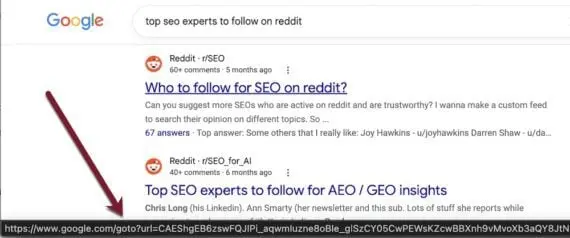
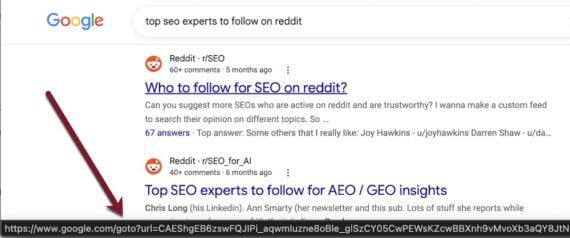
Building on the momentum of the &num=100 deprecation, Google began experimenting with structural URL masking in mid-summer. Throughout July, eagle-eyed SEO professionals and technical auditors noticed a strange anomaly in SERP source code and rendered results: instead of revealing the raw, direct destination URL of ranking web pages, Google started embedding intermediary links formatted as google.com/goto.
By masking the destination URLs behind an internal redirect mechanism, Google achieved two critical objectives:
- Disrupting Passive Scraping: Bots that ingest raw HTML to instantly map keywords to destination URLs suddenly found themselves parsing intermediary redirect strings, rendering traditional parsing algorithms useless unless updated to follow and resolve redirects.
- Obfuscating Direct Traffic Pathways: The change introduces a layer of control that allows Google to track, meter, and potentially gate user and bot pathways exiting the SERP ecosystem.
The Broad Rollout to Logged-Out Users
Following months of closed-beta testing, telemetry analysis, and iterative adjustments, Google announced plans to deploy the google.com/goto redirects to the vast majority of logged-out search users globally within a compressed one-month window.
Because logged-out users represent the primary traffic pool targeted by public scraping bots, web scrapers, and unauthenticated AI retrieval agents, this deployment hits automated data collection where it hurts most. While signed-in users—who operate within authenticated Google sessions governed by strict behavioral heuristics and rate-limiting—may experience a more standard SERP interface, the unauthenticated web is rapidly becoming a walled garden of obfuscated links.

Supporting Context & Metrics: Impacts on the SEO Ecosystem
The implementation of google.com/goto has sent ripples across the digital marketing ecosystem, directly impacting rank tracking accuracy, Google Search Console reporting integrity, and the operational workflows of generative AI systems.
[Google SERP]
      │
      ▼
[User / Bot Clicks Result]
      │
      ▼
[google.com/goto Redirect] ──(Requires Resolution)──► [Actual Target Destination]
      │                                                           │
      ├────────────────── Affects Trackers ───────────────────────┤
      └────────────────── Affects AI Citations ───────────────────┘
1. The Shockwaves in Rank Tracking
Rank tracking forms the foundational bedrock of modern search engine optimization. Enterprises, agencies, and independent webmasters rely on daily ranking reports to measure campaign efficacy, diagnose algorithmic volatility, and demonstrate ROI to stakeholders.
When Google first introduced the /goto redirects, standard rank-tracking scrapers that relied on naive HTML parsing were instantly blinded. Instead of recording that example.com ranked position #3 for a targeted keyword, unsophisticated scrapers began logging google.com/goto?id=... as the ranking entity, completely breaking historical databases and reporting dashboards.
Industry leaders, however, quickly mobilized to counter the change:
- Ahrefs and Moz: Both enterprise-grade platforms quickly detected Google’s mid-summer testing phases. By engineering robust redirect-following algorithms into their crawling architectures, they successfully solved the parsing hurdle before the mass rollout, ensuring continuity for their subscriber bases.
- Semrush: Semrush similarly adjusted its crawling infrastructure. Initial data from early August showed brief anomalies where
google.com/gotolinks were temporarily surfaced as ranking properties within logs, but these anomalies rapidly vanished as Semrush deployed automated resolution routines. - The Tail-End of the Industry: While the industry giants successfully adapted, smaller, boutique, or white-label rank-tracking tools that lack advanced engineering resources may experience severe operational lag. Users of these lagging platforms can expect to see dramatic, phantom ranking drops or corrupted data reports until developers successfully patch their scrapers to resolve the intermediary redirects.
2. Search Console Performance Reports: Separating Noise from Signal
For millions of site owners, Google Search Console (GSC) remains the ultimate source of truth, offering first-party data regarding impressions, clicks, average position, and click-through rates (CTR).
To date, GSC’s "Performance" reports appear largely unaffected by the front-end display of /goto redirects, as GSC measures user engagement at the server and impression level rather than relying solely on front-end SERP scraping. However, the broader behavioral ecosystem is experiencing turbulence due to how automated agents interact with the new URLs.
Webmasters should monitor two specific underlying anomalies over the coming weeks:
- Impression Spikes from AI Bots: As generative AI platforms and large language models adjust their retrieval pipelines to parse
google.com/gotostrings, anomalous impression counts may register for queries where AI agents are actively testing and validating link structures. - Temporary CTR Fluctuation: Shifts in how unauthenticated users interact with masked search results can temporarily skew organic click-through distributions, leading to short-term volatility in core GSC metrics.
Experts advise digital marketers to maintain a calm perspective: temporary numerical anomalies in Search Console do not necessarily indicate an organic visibility penalty or algorithmic demotion.
3. Implications for Generative AI and LLM Citations
Generative AI platforms—ranging from commercial enterprise assistants to open-source retrieval-augmented generation (RAG) pipelines—rely heavily on live search data to ground their outputs in real-time facts. When these AI agents execute search queries on Google to fetch answers for user prompts, they ingest the structural output of the SERP.
Early telemetry shared within technical SEO communities indicates that GenAI agents are increasingly retrieving and citing the google.com/goto URLs directly within their intermediate sourcing layers. While engineering teams behind these AI tools are actively updating their scrapers to strip away the wrapper and extract the canonical destination URL, third-party AI citation tracking platforms and brand visibility audits may register artificial declines in brand citations during the transition window.
Official Statements and Legal Fronts: The Battle Over Data Access
The introduction of google.com/goto is merely one front in a much larger, multi-layered war that Google is waging against automated data harvesters. Beyond engineering countermeasures like URL obfuscation and parameter deprecation, Google is increasingly turning to the judicial system to protect its intellectual property and server infrastructure.
The Legal Showdown: Google v. SerpAPI
The tension between open data access and proprietary infrastructure reached a boiling point in December 2025. Google filed a high-profile lawsuit in a U.S. District Court against SerpAPI, a prominent, commercial scraping service widely utilized by third-party applications—including OpenAI’s ChatGPT—to programmatically retrieve Google search results without building bespoke scraping infrastructure.
In its legal filings, Google alleged that SerpAPI’s automated scraping operations constituted a direct violation of the Digital Millennium Copyright Act (DMCA) of 1998, specifically targeting mechanisms designed to bypass access controls, alongside claims of breach of terms of service and computer fraud.
Although the presiding court initially tossed the primary copyright claims in a preliminary ruling, Google quickly pivoted by filing an amended, robustly structured legal complaint. The case remains a landmark bellwether for the web ecosystem. A decisive legal victory for Google could establish dangerous precedents for API access, data scraping, and the legal boundaries of AI training and retrieval. Conversely, a victory for SerpAPI could enshrine public search data as a quasi-public utility immune to aggressive technical lockdowns.
A Broader Crusade Against Scraping
Google’s aggressive stance reflects a company under pressure. Between soaring infrastructure costs driven by the energy-intensive demands of Gemini and AI Overviews, and the systemic strain of billions of automated bot requests per day, Google has a powerful economic incentive to lock down its ecosystem.
By combining technical barriers—such as the abolition of the &num=100 parameter and the deployment of google.com/goto redirects—with aggressive legal action against commercial scrapers, Google is systematically raising the toll for accessing its SERP data.
Future Outlook: Navigating the Post-Transparency Search Landscape
As the digital marketing, SEO, and AI engineering communities look toward the future, the writing is clearly on the wall: the era of frictionless, open-access search engine data is drawing to a close.
What can webmasters, SEO professionals, and enterprise brands expect in the months and years ahead?
1. Expect Less Data and Fuzzier Reports
The days of hyper-granular, real-time, 100% accurate rank tracking are facing severe headwinds. As Google introduces further obfuscation layers, rate-limiting protocols, and verification checkpoints (such as advanced bot-detection scripts and CAPTCHAs), third-party tracking tools will inevitably experience gaps in data fidelity. SEO professionals must shift their mindsets away from treating daily keyword rank tracking as an absolute science, viewing it instead as a directional indicator of organic performance.
2. The Rising Cost of Enterprise SEO Intelligence
For software developers building rank trackers and competitive intelligence tools, the engineering overhead required to maintain reliable data feeds will skyrocket. Expect smaller, bootstrapped SEO tools to struggle with compliance and adaptation costs, potentially leading to further industry consolidation where only well-capitalized tech giants can afford to maintain robust, anti-fragile scraping infrastructure.
3. The Evolution of AI Retrieval Architectures
Generative AI platforms will be forced to evolve past simple HTML scraping. As Google continues to lock down its front-end interfaces, AI companies will increasingly need to rely on official, authorized API partnerships (such as Google’s Vertex AI Search solutions) or invest heavily in advanced browser automation and headless rendering clusters capable of mimicking complex human interaction patterns to bypass redirects.
Final Takeaways for Digital Marketers
For the everyday digital marketer, the immediate operational advice is simple: do not panic.
When Search Console metrics fluctuate or rank-tracking dashboards show temporary volatility following the widespread rollout of google.com/goto redirects, verify your data against multiple platforms before sounding the alarm. Focus your energy where it matters most: producing exceptional, user-centric content, optimizing technical on-site performance, and building authentic brand authority that transcends the algorithmic games played at the gateway of the web.