







Executive Overview
The landscape of modern television and digital media production is undergoing a profound structural shift. Driven by the dual pressures of tightening operational budgets and the escalating demand for high-volume, multi-platform content, broadcasters are increasingly moving away from traditional, manually operated studio cameras. In their place, Pan-Tilt-Zoom (PTZ) camera systems have emerged as the default choice for regional news, corporate studios, educational broadcasting, and virtual production spaces.
However, as PTZ cameras have evolved to feature broadcast-grade sensors and optics, the mechanical support structures surrounding them have historically lagged behind. Traditional PTZ installations have suffered from a lack of dynamic height adjustment, forcing operators to rely on static tripods, wall mounts, or rigid, non-adjustable columns. This limitation has prevented PTZ setups from achieving the fluid, eye-level tracking and dynamic vertical movement characteristic of high-end robotic camera systems.
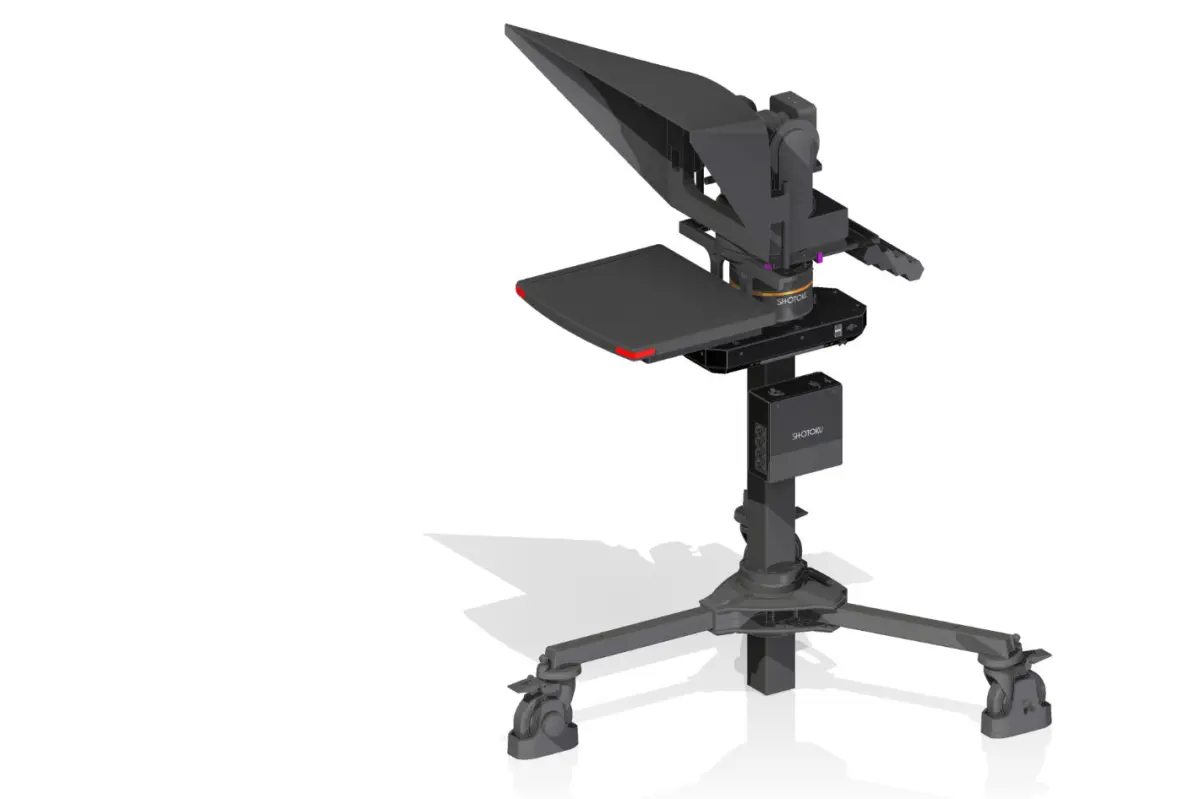
At the International Broadcasting Convention (IBC2026) in Amsterdam, Shotoku Broadcast Systems—a global leader in manual and robotic camera support technology—addressed this critical workflow bottleneck with the launch of the Aura E2 PTZ Elevator.
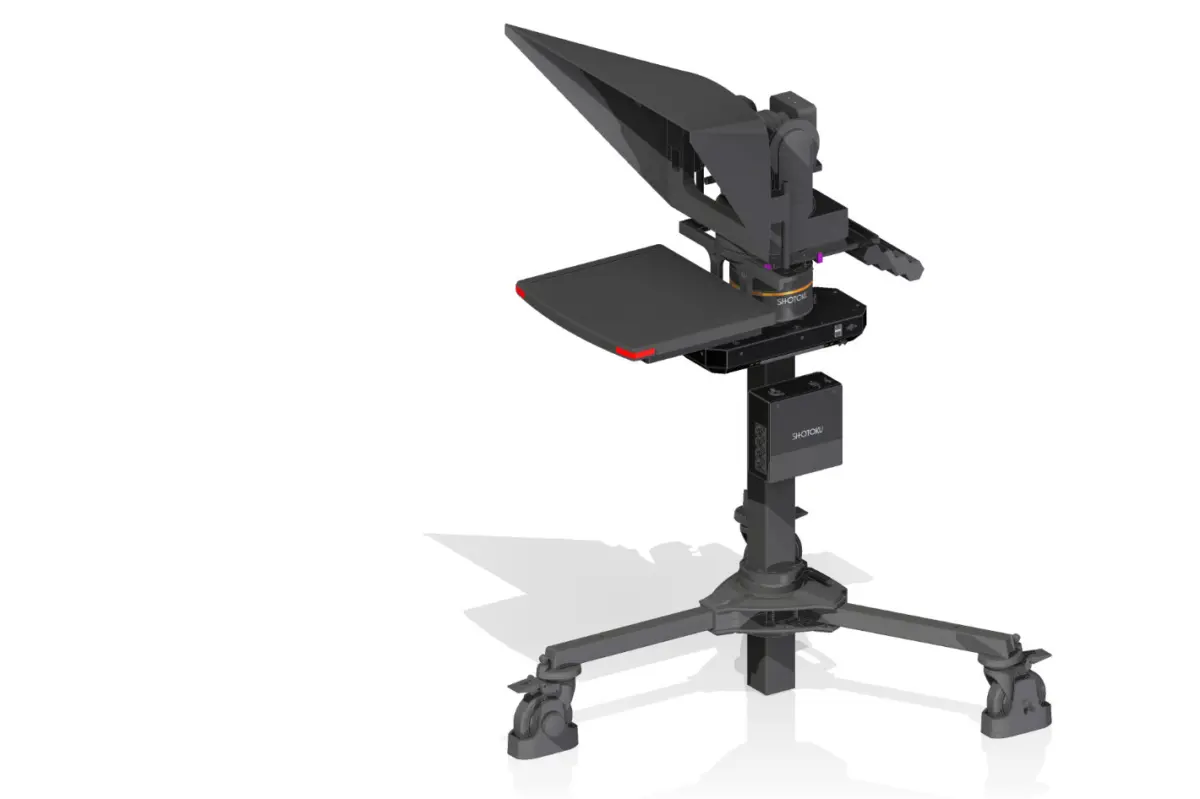
Designed specifically to bring the precision, sophisticated control, and intelligent engineering of high-end robotics to the PTZ domain, the Aura E2 represents a major milestone in the evolution of automated camera support. Integrated into a lightweight manual studio dolly and offering over 1.2 meters of smooth, variable-speed vertical elevation, the E2 works in tandem with Shotoku’s broader Aura ecosystem. This system includes the TR-XPTZ Control System and the P2 PTZ Prompter Panner, collectively establishing a new benchmark for professional PTZ camera operations.
+-----------------------------------------------------------------+
|                    THE SHOTOKU AURA ECOSYSTEM                   |
+-----------------------------------------------------------------+
|                                                                 |
|   +-------------------+       +-----------------------------+   |
|   |   TR-XPTZ Control | ----> |  Aura E2 PTZ Elevator       |   |
|   |   System          |       |  (1.2m Variable Elevation)  |   |
|   +-------------------+       +-----------------------------+   |
|             |                                |                  |
|             v                                v                  |
|   +-------------------+       +-----------------------------+   |
|   |   Aura P2 PTZ     |       |  Lightweight Three-Wheeled  |   |
|   |   Prompter Panner |       |  Manual Studio Dolly        |   |
|   +-------------------+       +-----------------------------+   |
|                                                                 |
+-----------------------------------------------------------------+
The Evolution of PTZ in High-End Broadcast: A Chronological Shift
To understand the engineering significance of the Aura E2 PTZ Elevator, one must examine the chronological development of PTZ technology within professional studio environments.
The First Wave: Utility and Convenience
For over a decade, PTZ cameras were relegated to "utility" roles. They were deployed in legislative chambers, houses of worship, and remote reality television sets where human operators could not physically fit or where a low profile was mandatory. These early-generation PTZ units featured small sensors (often 1/3-inch or 1/2-inch), limited dynamic range, and mechanical motors that lacked the smoothness required for on-air panning and tilting. Consequently, they were treated as static, set-and-forget acquisition tools.
The Second Wave: Optical and Sensor Parity
With the introduction of large-format sensors (1-inch and Full-Frame) and high-quality zoom lenses by major manufacturers, the optical performance of PTZ cameras began to rival that of traditional system cameras. Suddenly, PTZ cameras were capable of producing stunning imagery suitable for prime-time news, sports analysis, and virtual studio environments.
Despite this optical parity, a glaring physical limitation remained: the lack of a dynamic Z-axis (elevation).
In a traditional studio, a camera operator on a pneumatic pedestal can effortlessly adjust the camera height to match a standing presenter, a sitting guest, or to perform a dramatic vertical crane shot. Traditional PTZ cameras, however, remained bolted to fixed-height poles or wall brackets. If a presenter stood up, the PTZ camera could only tilt upward, altering the perspective and introducing unflattering keystoning effects.
The Third Wave: The Integrated Robotic Ecosystem
Recognizing this mechanical deficit, Shotoku embarked on a multi-year development roadmap to create the Aura series—a dedicated family of PTZ-focused products designed to elevate PTZ production to the standards of high-end broadcast robotics.
- The Launch of the TR-XPTZ Control System: Shotoku first introduced the TR-XPTZ, a cost-effective control solution derived from their flagship TR-XT robotic control platform. The TR-XPTZ retained the powerful multi-camera, multi-user capabilities of its predecessor but stripped away the complex, high-payload robotic parameters unnecessary for lightweight PTZ setups.
- The Introduction of the Aura P2 PTZ Prompter Panner: Addressing the physical challenges of mounting teleprompters to PTZ cameras, Shotoku developed the P2. Standard PTZ motors often burn out or slip when subjected to the unbalanced payload of a teleprompter. The P2 resolved this by allowing unrestricted pan-and-tilt movement while keeping the prompter hood steady and out of the shot, distributing the payload weight safely.
- The Culmination at IBC2026—The Aura E2 PTZ Elevator: The final piece of the physical puzzle, the Aura E2, provides the missing vertical dimension. By offering a dedicated, broadcast-grade elevation column, Shotoku has transformed the PTZ camera from a static remote head into a fully realized, multi-axis robotic camera pedestal.
Technical Architecture of the Aura E2 PTZ Elevator
The Aura E2 is not merely an automated column; it is a precision-engineered studio pedestal designed to withstand the rigors of 24/7 broadcast environments.
+-------------------------------------------------------------+
|               AURA E2 TECHNICAL SPECIFICATIONS              |
+-------------------------------------------------------------+
| Column Design         | Self-contained, two-stage telescopic|
| Elevation Range       | > 1.2 meters (47 inches)            |
| Speed Control         | Fully variable, ultra-quiet drive   |
| Mounting Base         | Integrated lightweight 3-wheel dolly |
| Control Interfaces    | TR-XPTZ Control System, IP, Manual  |
| Synchronization       | Multi-axis (Pan/Tilt/Zoom/Elevate)  |
| Accessory Support     | Native integration with Aura P2     |
+-------------------------------------------------------------+
Self-Contained Two-Stage Telescopic Column
At the core of the Aura E2 is a self-contained, two-stage telescopic elevator column. The dual-stage design allows for a remarkably low minimum height while maximizing the upper extension limit. This mechanical geometry provides more than 1.2 meters (47 inches) of variable-speed elevation travel.
The physical benefit of this range cannot be overstated:
- Seated vs. Standing Transitions: A single studio space can transition seamlessly from a morning talk show (with hosts seated on low sofas) to a midday news broadcast (with presenters standing at high-top desks or in front of an LED video wall).
- Dynamic On-Air Moves: The whisper-quiet, vibration-free motor drive enables the E2 to perform vertical elevation adjustments while on-air, producing smooth, cinematic vertical tracks that enhance production value.
Multi-Axis Synchronization and Control
The Aura E2 is engineered to act as an extension of the camera itself. Rather than operating as an isolated accessory, the E2 integrates directly into the control loop of the TR-XPTZ Control System.
This integration allows for preset shot recall, where a single command from the control panel can simultaneously drive the PTZ camera’s pan, tilt, zoom, focus, the P2 prompter panner, and the E2’s vertical column. When a preset is recalled, all axes move in perfect synchronization, accelerating and decelerating together to ensure a smooth, natural transition to the target framing.
Mobility and Physical Form Factor
Unlike heavy, industrial robotic columns that require permanent installation or reinforced flooring, the Aura E2 is fully integrated into a lightweight, manual studio dolly. This configuration combines the vertical automation of a robotic pedestal with the rapid, flexible mobility of a lightweight three-wheeled manual pedestal.
Studio crew can easily wheel the entire assembly across the studio floor to reconfigure set layouts between productions, locking the high-quality casters into place once positioned.
Analyzing the Aura Ecosystem: Synergies of the TR-XPTZ, P2, and E2
The launch of the Aura E2 highlights Shotoku’s holistic approach to system design. Rather than selling isolated hardware components, Shotoku offers a unified ecosystem where each element enhances the capabilities of the others.
       +-------------------------------------------------+
       |             TR-XPTZ CONTROL PANEL               |
       |  (Central Command: IP, Presets, Multi-User)     |
       +-------------------------------------------------+
                               |
            +------------------+------------------+
            |                                     |
            v                                     v
+-----------------------+               +-----------------------+
|  AURA E2 ELEVATOR     |               |  AURA P2 PROMPTER     |
|  - Whisper-quiet lift | <===========> |  - Teleprompter pan   |
|  - 1.2m Z-axis travel |  Coordinated  |  - Zero lens clipping |
|  - Dolly stability    |    Motion     |  - Counterbalanced    |
+-----------------------+               +-----------------------+
                                                 /
                                                /
              v                                 v
         +-------------------------------------------+
         |       SYNCHRONIZED BROADCAST OUTPUT       |
         +-------------------------------------------+
1. The TR-XPTZ Control System: The Brains
The TR-XPTZ is the operational heart of the system. In many modern control rooms, operators are tasked with managing multiple cameras simultaneously. The TR-XPTZ simplifies this by providing a highly tactile, intuitive interface that supports multi-camera and multi-user workflows.
By stripping away the complex engineering layers required for heavy-duty robotic heads (such as those carrying full-sized box lenses and 100-pound payloads), the TR-XPTZ offers a streamlined, highly responsive user experience tailored specifically to the agility of PTZ cameras.
2. The Aura P2 PTZ Prompter Panner: The Counterbalance
One of the most persistent issues in PTZ-based news production is the use of teleprompters. When a standard PTZ camera is fitted with a traditional teleprompter, the physical weight of the glass, monitor, and mounting hardware puts immense strain on the internal PTZ motors. Furthermore, as the PTZ camera pans, the prompter hood can cause vignetting or lens clipping if not perfectly aligned.
The Aura P2 solves this by decoupling the prompter’s weight from the PTZ camera’s internal motors. It acts as an auxiliary pan-and-tilt mechanism that carries the prompter hood, moving in perfect synchronization with the PTZ camera.
When mounted on top of the Aura E2 PTZ Elevator, the entire payload—PTZ camera, P2 panner, and teleprompter—is lifted smoothly by the E2’s robust vertical column, ensuring that the presenter’s eyes remain locked on the prompter scroll regardless of the pedestal height.
3. The Aura E2 PTZ Elevator: The Muscle
The E2 acts as the physical foundation. By supporting both the camera and the prompter assembly, the E2 elevates the production value of the studio. It provides a stable, vibration-damped platform that eliminates the micro-shakes and sags common in low-cost pedestal solutions.
The Broader IBC2026 Showcase: Swoop and QuickRef
Shotoku’s exhibit at IBC2026 extended beyond the Aura family, highlighting the company’s broader strategy of developing sophisticated, automated camera support systems for every level of broadcast production.
The Swoop Robotic Crane
Sharing the spotlight with the Aura E2 was the award-winning Swoop robotic crane. Designed for dynamic, sweeping shots in tight studio spaces, Swoop represents Shotoku’s push into compact, high-performance robotics.
Swoop allows production teams to execute complex, repeatable crane movements that were previously only possible with large, manually operated jib arms or massive, expensive rail-mounted systems. Its inclusion alongside the Aura line demonstrates Shotoku’s ability to scale their robotic technology from lightweight PTZ setups to heavy-duty, dynamic crane systems.
European Debut of QuickRef
IBC2026 also marked the European debut of QuickRef, Shotoku’s innovative robotic pedestal referencing system. In virtual reality (VR) and augmented reality (AR) studio setups, robotic pedestals must know their exact physical position relative to the studio floor with millimeter precision. If a pedestal loses its reference point—due to floor imperfections, wheel slippage, or manual override—the virtual graphics will drift or become misaligned.
+---------------------------------------------------------------+
|               THE QUICKREF REFERENCE SEQUENCE                 |
+---------------------------------------------------------------+
|                                                               |
|  [Robotic Pedestal] --------> [QuickRef Target Sensor]        |
|         |                              |                      |
|         v                              v                      |
|  (Detects Drift/Slippage)    (Verifies Floor Reference)       |
|         |                              |                      |
|         +--------------> [Auto-Calibration] <---+             |
|                                |                              |
|                                v                              |
|                    [Zero-Drift AR/VR Alignment]               |
|                                                               |
+---------------------------------------------------------------+
The QuickRef system provides a rapid, semi-automatic referencing method. By simply driving the pedestal over a low-profile, floor-mounted target, the system instantly recalibrates and verifies its absolute position. This eliminates the tedious, manual re-homing procedures that can disrupt live broadcasts, offering virtual production environments an unprecedented level of operational reliability.
Official Statements and Industry Perspectives
The introduction of the Aura E2 has drawn strong interest from industry veterans and technology partners. At the show, James Eddershaw, Managing Director of Shotoku UK, articulated the strategic philosophy driving the development of the Aura line:
"We are so excited to introduce the industry to another Aura PTZ product at IBC2026. E2 adds another axis of control to the Aura family, providing even more capability in a professional PTZ production. With E2, PTZ operation moves even closer to the flexibility of use that high-end broadcast robotic systems have become accustomed to. It’s built—like all Shotoku systems—to perform at the very highest level, literally, for years of intensive use."
Eddershaw’s comments touch on a fundamental truth of modern broadcast procurement: reliability and longevity. While consumer-grade or AV-focused PTZ accessories may offer basic height adjustment, they lack the robust engineering required to endure the continuous, high-duty cycles of live broadcast environments. By applying Shotoku’s traditional mechanical engineering standards to the PTZ product tier, the Aura E2 offers a long-term, dependable solution for professional broadcasters.
Industry Analysis: The Economics of PTZ Robotics
Broadcasters visiting the Shotoku stand at IBC2026 noted that the Aura ecosystem addresses a major financial challenge. A full-scale robotic pedestal system can cost upwards of $100,000 per channel, putting it out of reach for local news stations, regional bureaus, and corporate studios.
By combining high-end PTZ cameras with the Aura E2, P2, and TR-XPTZ, broadcasters can assemble a highly capable, multi-axis robotic camera channel at a fraction of the cost of a traditional system. This democratization of high-end camera movement is poised to accelerate the adoption of automated production models globally.
Future Outlook: The Converged Studio of Tomorrow
As the broadcast industry marches further into the era of IP-based workflows, cloud-controlled production, and AI-driven automation, the physical hardware in the studio must adapt. The launch of the Aura E2 PTZ Elevator points toward several key trends that will define the future of studio design:
+-----------------------------------------------------------------+
|               TRENDS DRIVING STUDIO AUTOMATION                  |
+-----------------------------------------------------------------+
|                                                                 |
|   IP Connectivity       Remote Control       AI-Driven Framing  |
|   - SMPTE ST 2110       - Off-site hubs      - Auto-tracking    |
|   - NDI integration     - Global reach       - Dynamic height   |
|                                                                 |
+-----------------------------------------------------------------+
1. Ubiquitous IP Connectivity
Modern PTZ setups are increasingly built on IP video standards such as NDI and SMPTE ST 2110. The Aura E2, managed via the TR-XPTZ system, fits naturally into this IP-centric paradigm. Because the control protocols are network-based, a single operator sitting in a centralized production hub in London could easily control the pan, tilt, zoom, and vertical elevation of an Aura-mounted camera in a regional studio in Manchester or New York.
2. The Rise of AI and Automated Tracking
With the rapid advancement of AI-driven talent tracking, software systems can now automatically control PTZ cameras to follow presenters as they move around a set. However, horizontal tracking alone can feel mechanical and unnatural if the camera’s height remains static.
By integrating the Aura E2 into automated tracking software, future systems will be able to dynamically adjust the camera’s vertical position in real-time, keeping the lens at a flattering, natural eye-level as the presenter walks, sits, or stands.
3. Sustainable and Modular Studio Design
As sustainability becomes a core metric for broadcasters, the physical footprint and power consumption of studio equipment are under scrutiny. Traditional hydraulic and heavy pneumatic pedestals are heavy, power-hungry, and difficult to transport.
The Aura E2’s lightweight, modular design offers a more sustainable alternative. Its compact footprint reduces shipping costs and energy consumption, while its modular architecture ensures that individual components can be upgraded or serviced without replacing the entire pedestal.
Conclusion
The Shotoku Aura E2 PTZ Elevator is more than an evolutionary step in camera support; it is a catalyst for workflow transformation. By bringing smooth, variable-speed vertical elevation to the PTZ camera segment, Shotoku has bridged the historical gap between the agility of lightweight PTZ setups and the rigid mechanical capabilities of high-end studio robotics.
As demonstrated at IBC2026, the integration of the E2 with the TR-XPTZ control system and the P2 prompter panner offers broadcasters a comprehensive, production-ready solution that enhances on-air production values while maintaining the cost-efficiency and flexibility that define modern television production. In an industry where content demands are higher than ever, Shotoku’s latest innovation ensures that PTZ workflows can perform at the highest level—both literally and figuratively—for years to come.