








Executive Overview
The landscape of global energy is undergoing a quiet, high-stakes transformation. For decades, commercial nuclear fusion was dismissed as a perpetual punchline—a technology perpetually trapped “30 years in the future.” Today, that narrative is fracturing. Driven by a desperate need for carbon-free baseload power, skyrocketing electricity demands from artificial intelligence data centers, and genuine scientific breakthroughs, mainstream energy utilities are aggressively courting fusion startups.
Nowhere is this paradigm shift more evident than in a landmark agreement struck between Madison Gas and Electric (MGE) and fusion pioneer Realta Fusion. The deal paves the way for one of the United States’ first grid-connected commercial fusion power plants, slated for Wisconsin by the mid-2030s.
This partnership is far from an isolated incident. Across the globe, legacy power providers are partnering with ambitious fusion ventures. From Virginia and Washington state to Tennessee and Bavaria, utilities are executing land leases, making direct equity investments, and offering critical grid-interconnection sites to unproven nuclear ventures.
For the startups, these alliances represent a lifeline of capital, real estate, and regulatory expertise. For the utilities, they are a calculated, long-term hedge against a looming power crisis. As the grid groans under the weight of electrification and data-driven demand, the traditional utility sector has decided that the risk of missing out on fusion is far greater than the risk of backing it.
Detailed Chronology: The Maturing Fusion-Utility Landscape
To understand how fusion transitioned from a physics experiment into a boardroom priority, one must trace the rapid evolution of public-private utility partnerships over recent years. Historically, fusion research was funded by governments and restricted to national laboratories. The past half-decade, however, has seen the center of gravity shift toward venture-backed private startups.
The Groundwork: Early Mover Collaborations
The modern wave of utility-fusion integration began taking formal shape as startups graduated from magnetic confinement and plasma stability experiments to commercialization blueprints.
- December 2024 (Virginia): Commonwealth Fusion Systems (CFS), widely considered a frontrunner in the race to commercialize magnetic confinement fusion, cemented a historic partnership with Dominion Energy. CFS selected a site near Richmond, Virginia, to host Arc, its planned 400-megawatt commercial-scale plant. The agreement relies heavily on strategic land leasing and positions the future plant directly adjacent to existing transmission infrastructure.
- June 2025 (Washington State): Helion Energy secured a critical foothold by partnering with the Chelan County Public Utility District. Under the agreement, Helion leased land to construct Polaris, a 50-megawatt facility slated to come online in 2028. Notably, Polaris is designed to fulfill a major corporate power purchase agreement to supply electricity directly to Microsoft’s expanding data center footprint.
- Mid-2025 (Tennessee): Type One Energy broke traditional molds by partnering with the Tennessee Valley Authority (TVA). The collaboration targets the construction of Infinity Two, a 350-megawatt stellarator-based fusion power plant. Crucially, the project is planned for the brownfield site of a former coal-fired power plant near Oak Ridge, Tennessee, allowing the startup to leverage pre-existing transmission assets and community buy-in.
- February 2026 (Bavaria, Germany): The movement crossed the Atlantic with Proxima Fusion. Teaming up with European energy titan RWE—a company actively decommissioning Germany’s legacy fission plants—Proxima announced plans to build Stellaris, Europe’s first commercial fusion plant, on the grounds of a retired fission site. RWE backed this strategic move with direct equity investment.
- Present Day (Wisconsin): The momentum culminates with Realta Fusion’s partnership with Madison Gas and Electric. Exploring a 200-megawatt plant for the mid-2030s, the deal underscores how regional, mid-sized utilities are joining national giants in locking down future fusion real estate.
Supporting Context & Metrics: The Anatomy of a Fusion-Utility Deal
The mechanics behind these alliances reveal a symbiotic relationship designed to solve two entirely different corporate vulnerabilities.
What Startups Gain: De-Risking Capital-Intensive Physics
Building a functional, net-energy fusion reactor is one of the most expensive and technically demanding engineering endeavors in human history. Traditionally, startups have struggled with three major bottlenecks: financing, regulatory permitting, and grid interconnection.
Utility partnerships effectively short-circuit these hurdles:
- Site Selection & Interconnection: Securing a place to hook up to the electrical grid has become a multi-year nightmare across North America due to congested transmission queues. Utilities bypass this bottleneck entirely by offering land directly tied into existing substations.
- Engineering & Regulatory Support: Legacy utilities possess decades of institutional knowledge regarding nuclear and heavy-industrial safety, environmental permitting, and compliance with bodies like the Nuclear Regulatory Commission (NRC).
- Brownfield Integration: As demonstrated by Type One Energy in Tennessee and Proxima Fusion in Germany, building fusion plants on the footprints of retired coal or fission plants slashes infrastructure costs and repurposes idle land.
What Utilities Gain: Solving the Baseload Crisis
For over a century, utilities operated on a predictable paradigm: burn fossil fuels, harness large hydro, or run centralized nuclear units to provide stable, round-the-clock "baseload" power. The rapid integration of wind and solar energy, while environmentally necessary and cost-effective, introduced severe intermittency challenges.
While utility-scale battery storage has mitigated short-term fluctuations, grid operators remain terrified of prolonged cloudy, windless weather events. Enter the artificial intelligence boom. Hyperscale data centers operated by tech giants require continuous, uninterrupted power 24/7.
Fusion offers the ultimate prize: clean, dense baseload energy that operates independently of weather conditions, produces zero long-lived radioactive waste, and carries no meltdown risk. For risk-averse utility executives accustomed to multi-decade planning horizons, placing a calculated bet on fusion is viewed less as a gamble and more as an essential insurance policy against future energy starvation.
Official Statements and Industry Perspectives
The urgency driving these partnerships is captured best by the stakeholders leading the charge. While specific financial terms of the Madison Gas and Electric and Realta Fusion deal remain closely guarded—with MGE making an undisclosed equity investment—industry leaders have been vocal about the strategic necessity of these collaborations.
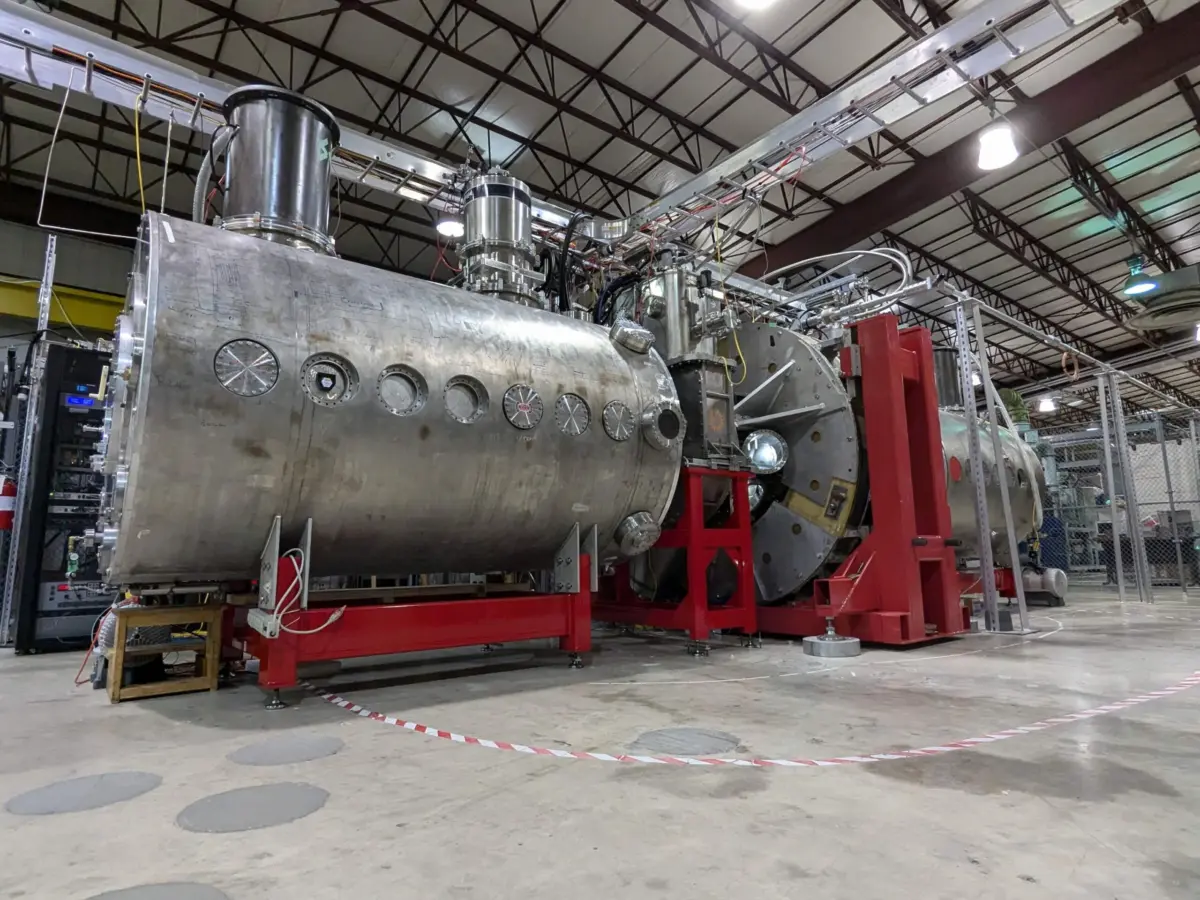
Realta Fusion, which is concurrently converting a historic Oscar Mayer factory in Madison into an advanced research and development facility, emphasized that working hand-in-hand with regional energy providers is the only viable path to rapid commercialization. By aligning with MGE, Realta secures not just a financial backer, but an operational guide capable of navigating the complex terrain of municipal and regional power distribution.
Meanwhile, utility analysts note a profound psychological shift in the boardroom. For decades, legacy power providers viewed clean-tech startups with skepticism, preferring proven, incremental upgrades to fossil infrastructure. Today, the soaring growth curves of industrial power demand have forced a cultural pivot.
As one climate technology researcher observed: "It might take a decade to build a commercial fusion power plant from the ground up. To a tech startup navigating venture capital runways, ten years feels like a lifetime. But to a utility managing multi-generational grid assets, a decade is practically tomorrow."
Furthermore, commercial off-takers are voting with their pocketbooks. The involvement of tech titans like Google and Microsoft—alongside multinational energy players like Eni and RWE—proves that the demand curve for fusion electricity is already locked in long before the first plasma containment vessel is permanently sealed.
Future Outlook: The Road to the 2030s Grid
As the nuclear fusion sector races toward the 2030s, the divergence between scientific milestones and commercial reality will narrow significantly. The success or failure of these early utility partnerships will set the precedent for the global energy market for the remainder of the 21st century.
Near-Term Milestones (2028–2030)
- Helion’s Polaris (2028): As the earliest scheduled commercial-scale plant in the current wave, Helion’s facility in Washington state will serve as the litmus test for whether private fusion can achieve commercial reality and deliver power to enterprise customers like Microsoft on schedule.
- Regulatory Evolution: The Nuclear Regulatory Commission and international equivalents will face unprecedented pressure to finalize a modernized, streamlined regulatory framework tailored specifically to fusion—which operates under vastly different physical safety parameters than traditional uranium fission.
Long-Term Implications (Mid-to-Late 2030s)
By the mid-to-late 2030s, projects like Realta Fusion’s 200-megawatt plant in Wisconsin, Commonwealth Fusion Systems’ Arc in Virginia, Type One Energy’s Infinity Two in Tennessee, and Proxima Fusion’s Stellaris in Germany are scheduled to come online.
If these plants successfully transition from experimental physics to reliable baseload generators, they will fundamentally rewrite the economics of the global electrical grid. Fossil fuels will lose their last remaining justification as the sole guarantors of round-the-clock power.
For now, the marriage between cautious legacy utilities and audacious fusion startups remains an unequal trade of tangible real estate for intangible technological promise. Yet, as the grid strains under the pressures of a decarbonizing, AI-driven world, this high-stakes gamble may prove to be the smartest investment the energy sector has ever made.