







By Chris Kerr | Senior Editor, News
September 3, 2026
Executive Overview
The video game industry is hurtling toward an inflection point that threatens to sever a decades-old bond between players and their physical collections. As platform holders—most notably Sony—signal an aggressive shift toward an all-digital future, the hardware-free horizon is coming into sharper focus. Yet, even as the walls close in on traditional optical media, some developers are refusing to go down quietly.
Speaking at Gamescom 2026, Michal Nowakowski, joint-CEO of The Witcher 4 and Cyberpunk 2077 developer CD Projekt Red (CDPR), addressed the precarious state of physical releases. While acknowledging that console manufacturers hold the ultimate monopoly over manufacturing standards and hardware architecture—such as the presence or absence of disc drives—Nowakowski made it clear that CDPR has no intention of abandoning physical retail entirely.
Instead, the Polish studio is bracing for a creative pivot. If traditional game discs are phased out by hardware ecosystems, CDPR intends to lean into its legacy of rich, collectible boxed editions. These future packages may trade optical media for digital download codes, much like upcoming industry juggernauts such as Grand Theft Auto VI, while continuing to deliver tangible goods that justify the consumer’s investment. This report explores CDPR’s strategy amidst an industry-wide pivot, the broader implications of Sony’s looming 2028 phase-out of physical manufacturing, and what the evolving definition of a "boxed game" means for collectors worldwide.
Detailed Chronology: The Slow Erasure of Optical Media
The erosion of physical media has been decades in the making, but the timeline has accelerated dramatically over the past several years, shifting from a quiet digital migration to aggressive, structural mandates by platform holders.
- The Early 2010s (The Digital Foothold): Platforms like Steam cemented digital distribution on PC, while Xbox Live and PlayStation Network began offering full-game digital storefront downloads. Physical media remained king on consoles due to bandwidth limitations and storage constraints, but the convenience of digital began chipping away at market share.
- The Mid-to-Late 2010s (The All-Digital Console Experiment): Microsoft introduced the Xbox One S All-Digital Edition in 2019, serving as an early industry testbed for a disc-free console. While met with skepticism at the time, it established a precedent for bifurcated hardware generations.
- The Early 2020s (The PS5 and Xbox Series X/S Era): The current console generation launched with optional disc drives, but digital sales rapidly outpaced physical purchases. Publishers noted that digital margins were significantly higher, eliminating the costs of manufacturing, warehousing, and third-party retail revenue sharing.
- Late 2025 / Early 2026 (The Tipping Point): Industry sales metrics confirmed that digital purchases now comprise the vast majority of software transactions across all major console ecosystems. Major upcoming titles, including Rockstar Games’ Grand Theft Auto VI, began signaling hybrid physical-digital approaches—releasing boxes that contain physical goodies and download codes rather than traditional pressed discs.
- The 2028 Mandate (Sony’s Physical Phase-Out): In a seismic shock to the retail sector, Sony announced that it would entirely end the production of physical PlayStation software by January 2028. This move effectively puts a hard expiration date on console game discs for the PlayStation ecosystem.
- Gamescom 2026 (CDPR’s Strategic Stance): Speaking to Game Developer in Cologne, CDPR joint-CEO Michal Nowakowski acknowledged these seismic shifts, clarifying the studio’s stance on navigating platform restrictions while preserving an "affinity" for physical products.
Supporting Context & Metrics: The Shifting Landscape of Software Sales
To understand CD Projekt Red’s balancing act, one must examine the macroeconomic realities driving the console market. The war for digital supremacy has largely been won by convenience, speed, and corporate profit margins.
The Rise of Digital Dominance
Current market telemetry underscores why hardware manufacturers are eager to cut physical ties. Digital sales now account for over 85% to 90% of total software revenue on modern consoles, a dramatic leap from the 50/50 split seen a decade ago. PlayStation 5 hardware sales have soared past 95 million units worldwide, with a rapidly increasing percentage of those systems being digital-only "Slim" or "Pro" iterations that lack an attachable disc drive unless purchased separately.
The Supply Chain and Manufacturing Bottlenecks
Physical media is no longer just a consumer preference; it is a logistical liability. Producing Blu-ray discs requires specialized manufacturing plants, raw materials, and complex international shipping networks. Supply chain volatility, rising fuel costs, and retail space shrinkage at major box-store chains (such as Walmart and Target reducing their physical game footprints) have made traditional distribution increasingly expensive.
Furthermore, console manufacturers control the physical gatekeeping:
- Sony: Controls PlayStation disc manufacturing and dictates optical drive integration.
- Microsoft: Controls Xbox physical and digital publishing pipelines, pushing heavily toward Game Pass subscription models.
- Nintendo: Continues to utilize proprietary cartridges for its hardware, retaining a unique physical ecosystem, though its next-generation hardware plans remain heavily scrutinized regarding digital adoption.
Because developers cannot independently manufacture proprietary console media, they are entirely at the mercy of platform-holder edicts. As Nowakowski bluntly put it: "It’s not like we can go against [them] and secretly press discs in the cellar and then put them out."
Official Statements & Industry Perspectives
The conversation surrounding physical media is fraught with tension between corporate efficiency and consumer sentiment. During our exclusive discussion at Gamescom 2026, Michal Nowakowski offered candid insight into CDPR’s philosophy.
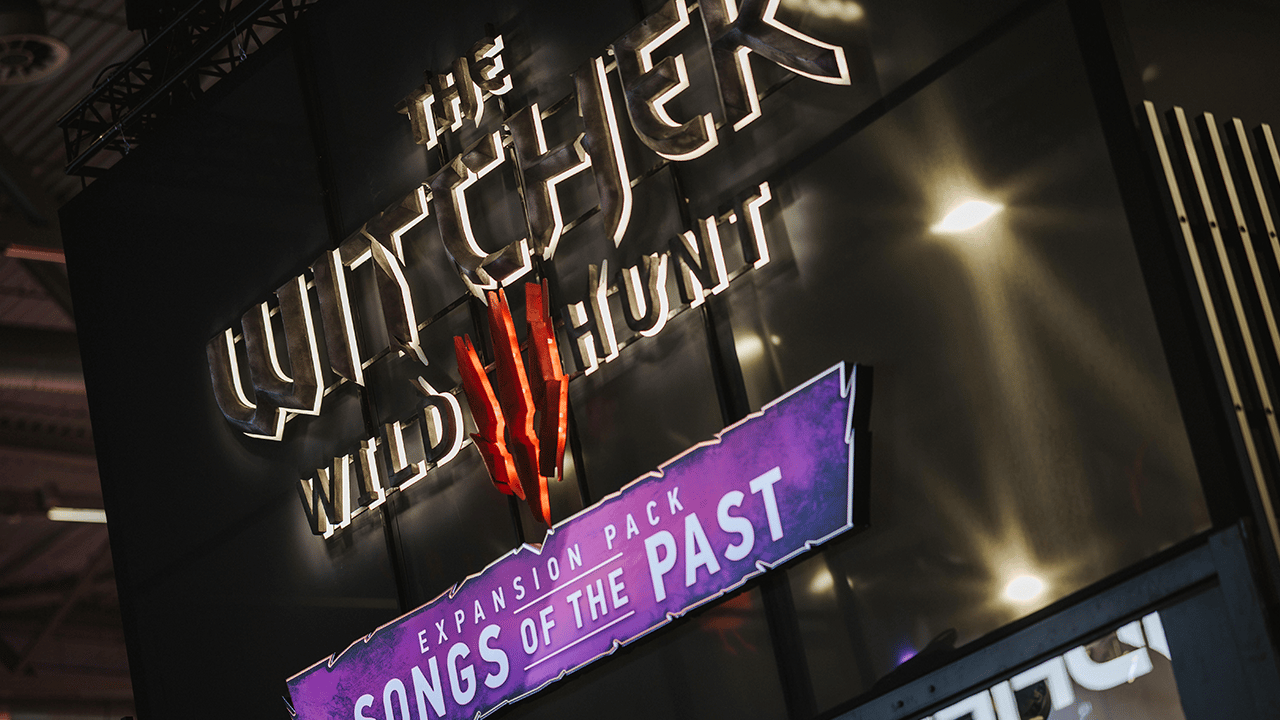
"First of all, it’s not our decision," Nowakowski explained when asked about Sony’s upcoming 2028 cutoff. "What is true is that Xbox, PlayStation, and Nintendo as well control the manufacturing of physical media. It’s not like we can go against [them] and secretly press discs in the cellar and then put them out. If there’s no disc drive that’s obviously another factor."
Despite these systemic limitations, Nowakowski emphasized that CDPR’s internal culture and historical identity remain deeply rooted in physical presentation. The studio wants to ensure that players who value tactile ownership are not left behind.
"What is true, is that we’re going to be there for players with whatever means we have to reach them," Nowakowski said. "If we have choice, it will be broader. If we have less choice, it might not be as broad as it was in the past. But when it comes to physical, we actually have a bit of an affinity with the physical, so what you can definitely expect from us is to put out a box that’s going to make it worth your while."
This sentiment echoes CDPR’s storied history of over-delivering in standard retail packages. When The Witcher 3: Wild Hunt launched in 2015, its standard physical edition famously included:
- The game disc(s)
- An official audio CD soundtrack
- A physical, high-quality game world map
- A comprehensive lore compendium (The Witcher Universe: The Compendium)
- Decorative stickers
- A detailed game manual
By providing tangible artifacts that felt like collector’s items even at standard retail pricing, CDPR built immense goodwill with its player base. Replicating that ethos in an era without optical discs is the studio’s next big challenge.
Future Outlook: The Evolution of the "Boxed" Game
As the industry marches toward 2028 and beyond, the definition of a physical video game release is undergoing a profound metamorphosis. If pressed optical media becomes obsolete due to platform mandates and all-digital hardware, what does a CD Projekt Red physical box look like in the late 2020s and early 2030s?
1. The Code-in-a-Box Standard
As previewed by upcoming mega-releases like Grand Theft Auto VI, the industry is pivoting toward physical boxes that contain a digital download voucher or key rather than a disc. For developers like CDPR, this model preserves shelf space at traditional retail outlets—keeping games visible to casual shoppers—while bypassing the lack of disc drives on modern consoles.
2. Premium Collector’s & Tangible Goodies
If the disc itself is replaced by a digital license, the physical box must compensate by leaning heavily into physical merchandise. Future standard and special editions from CDPR may pivot toward premium physical artifacts:
- Artbooks and conceptual design portfolios
- Enamel pins, medallions, and metal coins
- Physical soundtracks on vinyl or specialized media cards
- Miniature statues and cloth maps
Fans are willing to pay for physical ownership, but as the medium shifts, they are purchasing loot and memorabilia rather than a secure, offline-playable executable file. This raises ongoing preservation concerns among archivists and consumers regarding game ownership rights, server longevity, and digital revocation policies.
3. Navigating Platform Fragmentation
CDPR’s multi-platform strategy—balancing PC (where physical media is virtually dead outside of collector’s editions) with consoles (where physical media is on borrowed time)—will require immense agility. Nowakowski’s comments at Gamescom 2026 prove that while CDPR cannot reverse the tides dictated by Sony, Microsoft, or Nintendo, the studio understands the psychological and emotional value that a box on a shelf holds for its community.
Conclusion
The video game industry is shedding its skin, and the loss of optical media marks the end of an era defined by plastic cases, instruction booklets, and the satisfying click of a disc snapping into a tray. Yet, CD Projekt Red’s commitment proves that the spirit of the physical release does not have to die alongside the disc. By embracing creative alternatives—whether through code-in-box packages laden with high-end collectibles or adapting to whatever manufacturing options platform holders permit—CDPR aims to keep the romance of the retail box alive. Whether consumers will embrace paying full price for a box without a disc remains the defining question of the next console generation.