







EXECUTIVE OVERVIEW
The explosive national expansion of the digital economy—driven by artificial intelligence, cloud computing, and massive data storage needs—has collided head-on with grassroots political reality. According to a comprehensive Data Center Knowledge review of election results, government filings, campaign literature, and local investigative reporting, at least 18 incumbent officeholders lost their bids for reelection between August 2025 and August 2026 after taking documented policy stances or official votes on data center projects.
While the direct causal relationship varies across jurisdictions, the underlying trend is undeniable: what was once treated as a routine economic development victory—bringing server farms, data hubs, and tech-driven tax bases to rural and suburban counties—has morphed into a potent political wedge issue. Challengers are increasingly weaponizing local development disputes against incumbents, tying multi-megawatt facilities directly to anxieties over surging electricity bills, strained water resources, localized land-use conflicts, and perceived government secrecy.
This seismic shift marks a departure from traditional local politics. Data center infrastructure, once sheltered behind technical zoning hearings and economic incentive boards, has broken into mainstream electoral combat. From local utility boards and municipal councils to state legislatures, politicians who once championed these capital-intensive projects are finding themselves out of office, forcing a frantic reassessment within the digital infrastructure industry.
DETAILED CHRONOLOGY: REGIONAL FLASHPOINTS
The electoral backlash against data center development is not isolated to a single region or political party. Instead, it has surfaced in diverse geographic corridors, manifesting distinct local grievances that collectively form a nationwide trend.
Utah: High-Level Casualties in the Intermountain West
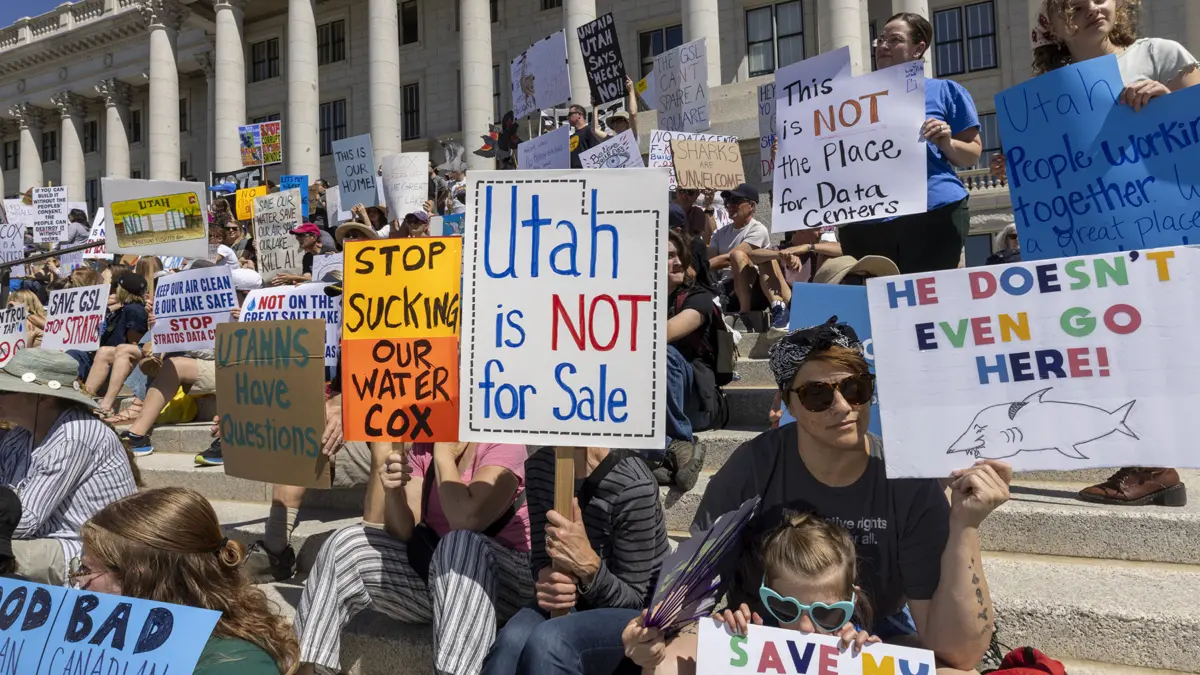
Utah has provided some of the most unequivocal evidence that data center politics can reach far beyond localized municipal zoning boards to unseat senior state leadership.
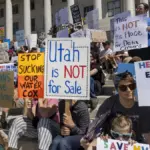
The epicenter of the political fallout centered on the proposed Stratos data center project in Box Elder County. The project faced intense local pushback regarding its projected massive water consumption and environmental footprint. The controversy intensified when local commissioners voted to allow the state’s Military Installation Development Authority (MIDA) to carve out the Stratos project area, effectively overriding local county zoning and land-use rules.
- J. Stuart Adams: Utah State Senate President and MIDA board chairman, Adams faced immense political pressure over the development. Though he attempted to soften his stance on the project’s footprint late in his campaign, he suffered a decisive defeat in his Republican primary challenge against Stephanie Hollist, who made fierce opposition to the Stratos project a cornerstone of her campaign.
- Lee Perry and Boyd Bingham: Both Box Elder County commissioners who voted to advance the project also lost their Republican primaries. Perry offered a rare, unfiltered post-election assessment to The Salt Lake Tribune, stating unequivocally: "Do I think that the data center vote cost me the election? Yes I do."
Missouri: Municipal Tumult and Transparency Deficits
Missouri produced a striking cluster of electoral defeats, highlighting how procedural transparency—or the lack thereof—can amplify public anger over data center proposals.
- Festus City Council: Four incumbent council members—Jimmy Collier, Brian Wehner, Venz, and Jim Tinnin—faced electoral defeat in the wake of a bitterly contested $6 billion data center proposal. Intriguingly, the backlash crossed voting lines: Collier, Venz, and Tinnin voted in favor of the development agreement, while Wehner voted against it. All four were rejected by voters, demonstrating that the political contagion extended beyond simple "pro-project" or "anti-project" binaries, enveloping the entire governing body for its handling of the city’s development process and overall transparency.
- Independence: City council members Jared Fears and Bridget McCandless (the latter running concurrently for mayor) both lost their bids amid protracted community battles over a proposed data center and its associated tax abatement packages. Fears later acknowledged that the project served as a definitive factor in his electoral downfall.
Cross-Country Resistance: North Carolina, Virginia, and Maryland
The wave of backlash rippled across the eastern seaboard and into the Mid-Atlantic, taking on varied stylistic forms depending on local political dynamics.
- North Carolina: In Edgecombe County, challenger David Batts unseated four-term County Commissioner Donald Boswell by running an unapologetically single-issue campaign against the proposed Kingsboro data center. Armed with campaign signs reading "Vote no for data centers," Batts had previously warned commissioners that residents would use the primary process to hold them accountable.
- Virginia: In a high-profile state legislative race, Democratic challenger John McAuliff successfully branded Republican Del. Geary Higgins as "Data Center Geary," transforming the incumbent’s legislative record into an anchor that dragged down his campaign.
- Maryland: The state witnessed a nuanced version of the backlash in Calvert County. Commissioners Todd Ireland, Mark Cox Sr., and Earl “Buddy” Hance lost their Republican primaries after challengers successfully painted them as out-of-touch with growth management, specifically criticizing their opposition to a proposed moratorium on new data center developments. Meanwhile, in Frederick County, Council President Brad Young lost his Democratic primary after the council approved a sweeping zoning expansion opening more than 2,600 acres to prospective data center operators.
SUPPORTING CONTEXT & METRICS: PARSING THE CAUSALITY
To maintain rigorous journalistic standards, analysts emphasize that timing alone does not prove data center friction caused all 18 documented losses. The cases vary in their evidentiary weight:
- Direct Causation: Instances like Box Elder County, Utah, where incumbents explicitly confessed that data center votes sealed their political fate.
- Multifaceted Grievances: Races where data centers served as a powerful proxy or shorthand for broader underlying frustrations regarding rising electricity rates, local tax burdens, infrastructure strain, and the erosion of local zoning control. For instance, Oregon State Sen. Janeen Sollman lost her Democratic primary in a contest heavily entangled with Hillsboro-area data center debates, though labor and education policy disputes also heavily influenced the outcome. Similarly, Georgia Public Service Commissioner Tim Echols lost his reelection bid amid intense public scrutiny over skyrocketing power bills and Georgia Power rate cases—a debate in which data centers occupied center stage regarding who should shoulder the cost of grid expansion.
Crucially, while defeated incumbents have routinely proven reticent to publicly attribute their losses entirely to tech infrastructure, their challengers have shown zero hesitation in making data centers the central pillar of their attacks.
OFFICIAL STATEMENTS & INDUSTRY REFLECTIONS
The data center industry has been forced to confront a sobering reality: its traditional approach to site selection and community relations is failing in an era of hyper-localized political scrutiny.
Mike Casey, President of Tigercomm:
"Most tech companies weren’t built to campaign for what they need to build. But winning a community’s permission to build in its midst is the opposite. It’s one county at a time, it’s heavily retail, and it’s person-driven… Too many developers are trying to bulldoze projects through instead of skillfully campaigning for them. The result is a community relations problem metastasizing into a widespread political crisis."
Industry advocacy groups, however, point to the undeniable macroeconomic utility of the sector. Dan Diorio, Executive Vice President of State Policy and Government Affairs at the Data Center Coalition, highlighted industry economic impact data compiled by PwC, which estimated that the sector supported 5.5 million jobs, contributed $927 billion to U.S. GDP, and generated $204 billion in combined federal, state, and local taxes in 2024. Diorio emphasized that operators are deeply committed to paying fair market rates for the energy they consume and striving to be responsible, long-term corporate partners within their host communities.
Conversely, infrastructure innovators argue that superficial PR campaigns will fail to soothe mounting public anxiety. Dr. Jeff Thramann, Founder and CEO of LT350, asserts that structural design changes are imperative:
"I think fundamental change is required because the impact of huge data centers on a single community is real. A data center can range from an enormous, centralized facility to a closet in an office. The public does not care about the closet because it changes nothing in a community, but they do care about the giant facility that changes an entire community."
Thramann advocates for distributing computing capacity across smaller, decentralized grid circuits rather than concentrating hundreds of megawatts into single monolithic campuses that dramatically alter local landscapes.
FUTURE OUTLOOK: STATE-LEVEL POLICY SHIFTS
Beyond local municipal races, the political toxicity of unchecked data center expansion has compelled governors and state legislators to intervene. Data center policy is rapidly migrating from a sleepy administrative footnote to top-tier statehouse debate.
- Texas: Governor Greg Abbott, historically an aggressive advocate for tech sector investments, has executed a notable pivot. Warning that data center operators had "basically dug their own grave" by failing to secure social license and community backing, Abbott is actively pushing legislation to slow down new developments and protect residential ratepayers from absorbing grid upgrade costs.
- Pennsylvania: Governor Josh Shapiro has introduced stringent environmental and administrative transparency prerequisites for incoming tech infrastructure.
- Ohio: Governor Mike DeWine implemented a strategic pause on new tax-exemption requests for data center operators amid mounting public pushback over local energy markets.
These state-level policy shifts do not signal an outright moratorium on digital infrastructure; rather, they reflect a profound recalibration. Governments are rewriting the rules of engagement—imposing strict conditions on water usage, power procurement, land-use transparency, and tax incentives.
Ultimately, the 18 documented electoral defeats between August 2025 and August 2026 serve as a stark warning to both the tech sector and the politicians who court them. The traditional political bargain—wherein communities traded local disruption for vague promises of distant economic prosperity—has fractured. In the modern political landscape, once an opponent succeeds in converting a complex zoning dispute into a referendum at the ballot box, the true cost of the project outlasts the public hearing, and the political fallout becomes absolute.