








WASHINGTON — In a decisive move designed to inject much-needed momentum into the lagging Artemis program, NASA has chosen to pivot toward a significantly simplified, lightweight spacesuit for its initial return to the lunar surface.
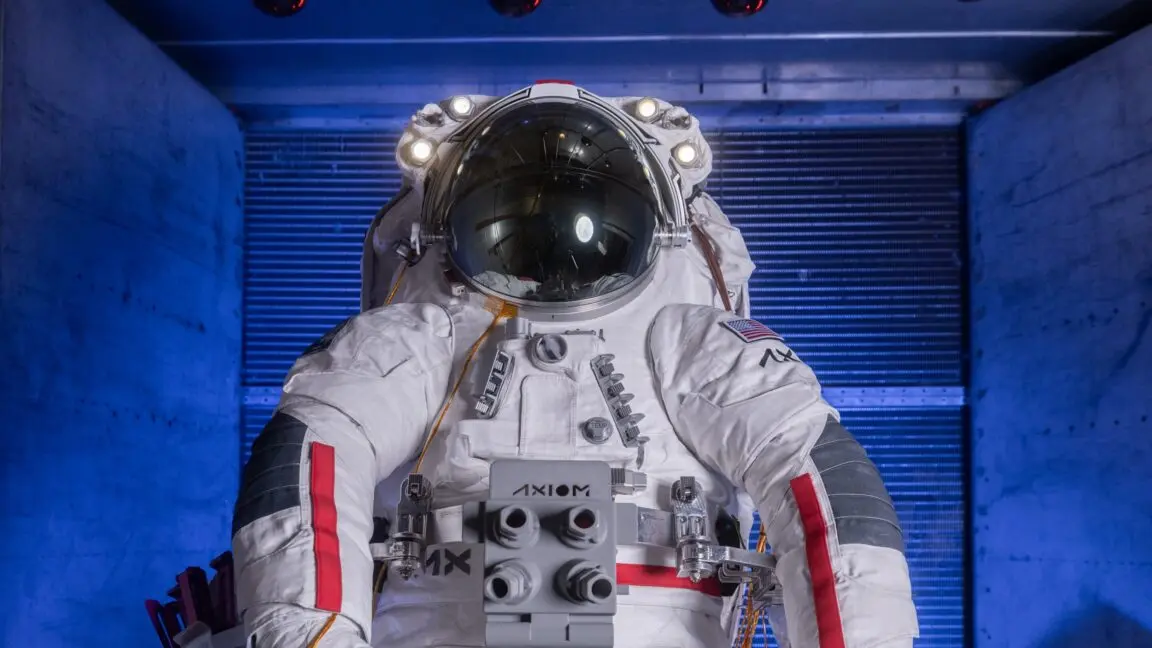
Revealed during an internal agency meeting and confirmed by multiple aerospace industry sources, the decision underpins a broader strategy to accelerate humanity’s return to the Moon as early as 2028. Spearheaded by Artemis Program Manager Jeremy Parsons, NASA is now collaborating with prime contractor Axiom Space to develop a specialized "Sortie Suit" variant. This stripped-down iteration is engineered specifically to shed critical mass, minimize mechanical complexity, and streamline the interface points connecting astronauts to lunar landing vehicles built by both SpaceX and Blue Origin.
The strategic pivot comes at a critical juncture for the United States civil space program. Under the leadership of NASA Administrator Jared Isaacman, who assumed the agency’s helm in December 2025, Washington has initiated a top-to-bottom operational overhaul of the Artemis architecture. Facing ballooning delays, complex legacy bureaucratic structures, and mounting geopolitical pressure from international competitors, Isaacman’s administration has discarded business-as-usual approaches in favor of rapid iteration, commercial partnerships, and aggressive schedule compression.
Executive Overview
The decision to develop the "Sortie Suit" is not merely a technical adjustment; it represents a fundamental philosophical shift in how NASA approaches human lunar surface exploration. For years, the agency’s extravehicular mobility unit (EMU) strategy labored under the weight of multi-functional requirements. The original spacesuits were tasked with supporting everything from short exploration sorties to extended, weeks-long habitation campaigns, resulting in a system that was excessively heavy, mechanically intricate, and difficult to integrate with commercial lander architectures.
By shifting focus to a dedicated "Sortie Suit," NASA and Axiom Space are intentionally narrowing the immediate scope. The primary objective for the initial Artemis landings is simple: safely transport astronauts to the lunar south pole, enable short-duration exploratory walks, conduct essential high-priority science, capture high-definition photographic records, and return safely to the ascent vehicle.
By eliminating superfluous multi-mission requirements for these inaugural flights, engineers can drastically reduce the mass footprint of the life support systems. This reduction directly increases the payload margins available to SpaceX’s Starship Human Landing System (HLS) and Blue Origin’s Blue Moon lander. Furthermore, simplifying the umbilical and mechanical interfaces reduces the probability of operational anomalies during the high-stakes surface operations phase.
This aggressive streamlining is part of a wider, systemic rescue mission orchestrated by Isaacman’s team over the past several months. Recognizing that the original Artemis roadmap had slipped so far behind schedule that China’s crewed lunar program stood a realistic chance of planting its flag first, NASA has embarked on a radical pruning of its critical path. From streamlining the Space Launch System (SLS) manufacturing pipeline to cutting legacy infrastructure like the lunar-orbiting Gateway, the agency is systematically stripping away elements that threaten to delay the primary objective: putting boots back on the Moon.
Detailed Chronology of the Artemis Spacesuit Evolution
To understand the weight of the current pivot, one must examine the turbulent history of NASA’s extravehicular mobility unit (EMU) procurement over the past decade. The road to the lunar surface has been fraught with programmatic missteps, shifting requirements, and industrial departures.
The Era of Internal Development (2010–2022)
For more than a decade, NASA attempted to build the next-generation spacesuit internally under the Exploration Extravehicular Mobility Unit (xEMU) program. Engineers at the Johnson Space Center worked tirelessly to design a suit that could serve both the International Space Station (ISS) spacewalking needs and future lunar surface sorties. However, the program was chronically underfunded relative to its technical complexity, plagued by shifting requirements from changing administrations, and bogged down by internal aerospace procurement bottlenecks. By the early 2020s, a damning report by NASA’s Office of Inspector General (OIG) concluded that the xEMU suits would not be ready in time for even a delayed lunar landing.
The "Spacesuit-as-a-Service" Pivot (2022)
Recognizing that traditional cost-plus contracting models were failing the spacesuit program, NASA made a bold strategic pivot in June 2022. The agency abandoned internal development and awarded spacesuit-as-a-service contracts under the Exploration Extravehicular Services (xEVAS) initiative to two commercial providers: Axiom Space and Collins Aerospace. Under this commercial framework, NASA would not own the hardware outright; instead, it would buy spacesuit services on an as-needed basis, shifting the financial and engineering burdens of design, manufacturing, and maintenance onto private industry.
The Departure of Collins Aerospace (2024)
The dual-provider strategy suffered a major blow in 2024. Collins Aerospace, which had decades of heritage building spacesuits for the Space Shuttle and the ISS, formally dropped out of the xEVAS contract. Industry analysts pointed to insurmountable financial hurdles, difficulties in aligning commercial supply chains with rigid NASA safety mandates, and widening schedule disparities as primary catalysts for the exit. This departure left Axiom Space as the sole remaining commercial provider responsible for outfitting Artemis astronauts for the lunar surface.
The Isaacman Intervention and the "Sortie Suit" Decision (Late 2025–2026)
Following the arrival of Administrator Jared Isaacman in late 2025, a comprehensive audit of the Artemis program was launched. While Axiom remained committed to its contractual obligations, private sector sources and internal NASA monitors grew increasingly vocal about the velocity of the company’s progress. The baseline xEVAS design, while exceptionally capable, was proving heavy and complex to integrate cleanly with the distinct landing architectures being developed independently by SpaceX and Blue Origin.
During an internal agency meeting in early 2026, guided by Artemis Program Manager Jeremy Parsons, the hard choice was made. Rather than forcing a massive, all-encompassing suit to fit early, high-risk missions, NASA formally directed Axiom Space to spin off a specialized, simplified "Sortie Suit" variant. This variant is purpose-built to guarantee mission readiness for the initial 2028 landing window.
Supporting Context & Metrics: Reshaping the Critical Path
The decision to streamline the Axiom spacesuit cannot be viewed in isolation. It is part of a sweeping, synchronized reconfiguration of the entire Artemis program architecture designed to eliminate operational bottlenecks and shave years off the critical path.
1. Pruning the Architectural Bloat
Under Isaacman’s leadership, NASA has taken a hard-nosed, pragmatic look at what is genuinely necessary to achieve a successful lunar landing. This has resulted in several high-profile strategic contractions:
- SLS Production Streamlining: NASA has exerted intense pressure on prime contractors to accelerate the manufacturing cadence of the Space Launch System, cutting red tape and standardizing component testing.
- The De-prioritization of the Lunar Gateway: To alleviate the immense performance and life-support burden placed on commercial lunar landers, NASA has effectively sidelined the Lunar Gateway space station from the critical path of the initial landing missions. Landers will now execute direct-to-surface or near-rectilinear halo orbit operations without requiring intermediate staging infrastructure that added unnecessary mass and mission complexity.
2. The Mechanics of the "Sortie Suit"
To appreciate why a simplified suit is vital, one must look at the math of lunar descent and ascent payloads. Every single kilogram added to a surface spacesuit extracts a heavy penalty from the lander’s mass budget, which in turn limits cargo capacity, scientific instrumentation, and emergency contingency margins.
| Parameter | Baseline xEVAS Suit (Legacy Plan) | New "Sortie Suit" Variant |
|---|---|---|
| Primary Mission Scope | Multi-week exploration, station maintenance, and long sorties | Initial high-priority lunar surface exploration (Sorties) |
| Mechanical Complexity | High (modular for diverse environments and deep maintenance) | Low (optimized specifically for 1/6th gravity surface walks) |
| Lander Interface | Generic, multi-vehicle adaptable (Complex umbilicals) | Streamlined, optimized for SpaceX Starship & Blue Origin HLS |
| System Mass | Heavy (incorporating long-duration life support reserves) | Minimized (shedded non-essential auxiliary hardware) |
By shedding weight and simplifying mechanical joints—particularly in the lower torso and shoulder assemblies—Axiom’s engineers can improve astronaut mobility while simultaneously reducing the mechanical failure points that historically plagued extravehicular mobility units. Furthermore, standardizing clean, simplified interfaces ensures that astronauts can ingress and egress from both SpaceX’s Starship elevator systems and Blue Origin’s ladder architectures with maximum efficiency and minimal risk of snagging or umbilical failure.
Official Statements and Industry Reaction
While the formal announcement was delivered during an internal agency briefing, the ripples of the decision have generated significant commentary across the aerospace sector, drawing both cautious optimism and critical scrutiny.
Proponents of the pivot argue that NASA is finally displaying the pragmatic agility required to win the modern space race.
"For too long, NASA programs have suffered from ‘requirements creep,’ where a spacesuit or a rocket has to be everything to everyone, ultimately resulting in a product that arrives years late and billions over budget," noted a senior aerospace policy analyst based in Washington. "Jared Isaacman and Jeremy Parsons are making the hard, utilitarian choices. If you want to beat China to the south pole by 2028, you don’t need a luxury-class spacesuit for the first visit. You need a reliable, lightweight survival shell that gets the job done."
However, industrial observers have also raised valid questions regarding long-term program evolution. Critics point out that developing a specialized "Sortie Suit" for early missions could theoretically divert engineering bandwidth away from the development of the heavier, sustained-operations suits required later in the decade when Artemis transitions from brief exploratory visits to permanent, semi-industrial habitation.
Axiom Space, for its part, has navigated the shifting directives with corporate discretion. In public statements, company leadership has repeatedly affirmed its dedication to meeting NASA’s timeline. Company engineers are actively working to balance the competing demands of the original xEVAS contract requirements with the newly prioritized, streamlined mandate demanded by the 2028 landing target.
Future Outlook: The Road to 2028 and Beyond
As the aerospace industry looks toward the horizon, the stakes could not be higher. The decision to introduce the "Sortie Suit" represents a watershed moment for the Artemis program—a clear signal that schedule discipline has officially superseded bureaucratic perfectionism.
Over the next 24 to 36 months, the pressure on Axiom Space will be intense. The company must successfully transition the Sortie Suit from conceptual design through rigorous ground testing, thermal-vacuum chamber trials, and integrated fit-checks with both SpaceX and Blue Origin engineering teams. Every interface must be validated; every gram of excess mass must be mercilessly trimmed.
Concurrently, NASA must maintain its newly aggressive posture across the rest of the program. With the SLS production line tightening, the Lunar Gateway removed as an immediate hurdle, and lander development proceeding at a feverish pace under commercial partnerships, the pieces of the Artemis puzzle are finally falling into a coherent, executable alignment.
If the "Sortie Suit" gamble pays off, NASA will not only secure its technological footprint on the scientifically rich, ice-laden terrain of the lunar south pole by 2028; it will also validate a revolutionary new procurement and engineering paradigm. By learning to embrace simplicity, commercial speed, and ruthless prioritization, NASA may well secure America’s preeminence in the next great era of human space exploration—proving that when it comes to the Moon, less weight can ultimately mean a much faster leap forward.